Big game
Fallow deer
Dama dama
- Group
- Big game
- Size class
- Medium (10–70 kg)
- Family
- Cervidae
Range
- Europe
- North America
- Oceania
- South America
Habitat
- Forest
- Farmland
Range
Countries it is found in
42 countries
- Albania
- Australia
- Austria
- Belarus
- Belgium
- Bosnia & Herzegovina
- Bulgaria
- Croatia
- Czechia
- Denmark
- Estonia
- Finland
- France
- Germany
- Greece
- Hungary
- Ireland
- Israel
- Italy
- Kosovo
- Latvia
- Liechtenstein
- Lithuania
- Luxembourg
Range from:ASM Mammal Diversity Database, GBIF occurrence records — read 2026-08-05
Chapter 01
Overview
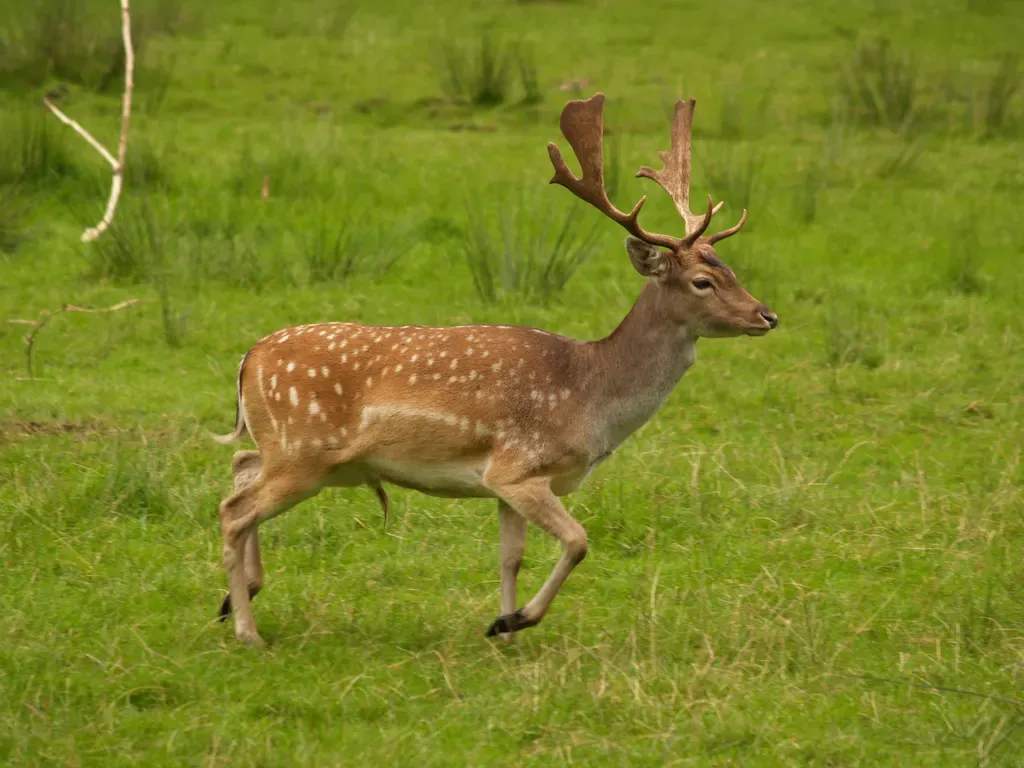
The European fallow deer (Dama dama) is one of two living fallow deer, alongside the Persian fallow deer. It is historically native to Turkey and possibly the Italian and Balkan peninsulas and Rhodes. During the Pleistocene it lived across much of Europe, reaching as far north as the British Isles in the Last Interglacial, before the Last Glacial Period collapsed its range back into refugia in Anatolia and probably the Balkans. Its present spread across Europe is a human reintroduction to that prehistoric distribution, and it has been introduced well beyond it. Its social organisation is unusually plastic: group size tracks habitat, herds are largest just before the rut and smallest when they are does with fawns, and for much of the year the sexes stay apart, with bachelor groups and mixed groups both occurring. It favours older forest broken by grass and varied vegetation, but tolerates conditions from cool and wet to hot and dry.
Chapter 02
Identification
Bucks are 140–160 cm long, 85–95 cm at the shoulder and typically 60–100 kg; does are 130–150 cm long, 75–85 cm at the shoulder and 30–50 kg. Regional variation is wide — bucks in southern England average about 66 kg, does about 45 kg — and the largest bucks anywhere reach 190 cm and 150 kg. Fawns are born at around 30 cm and 3–4 kg. Lifespan is twelve to sixteen years. Coat colour is the complication. Four main variants occur: common, menil, melanistic and leucistic. Leucistic animals are almost white and are not albinos; melanistic ones are very dark. A herd can hold several variants at once, so colour alone identifies nothing. Bucks give a low-frequency vocalisation known as a groan, produced by the shape of the vocal tract.
On the table
Meat & cooking
Table grade 5 of 55/5
- Sold as meat in a legal market
- Has a named traditional dish
- Published way to handle and cook it
- Eaten in more than one country
- No known health advisory
Traditional preparations
- Dovhjortsstek
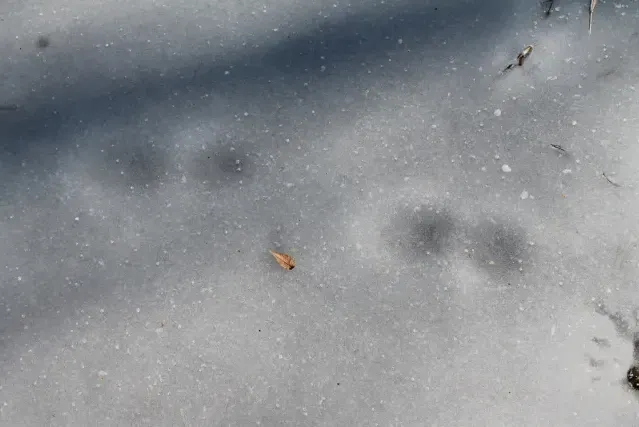
- Fallow venison is fine-grained and mild, and the haunch and saddle are treated much as red deer — roasted quickly and served pink. Venison — Wikipedia
- Game charcuterie
- The shoulder and trim from park-culled fallow are commonly turned into sausage and air-dried meat. Charcuterie — Wikipedia
Sources
Sources: European fallow deer — Wikipedia — read 2026-08-05
Cross-reference
Related species
Its closest relatives in the compendium, nearest kinship first.
Big game
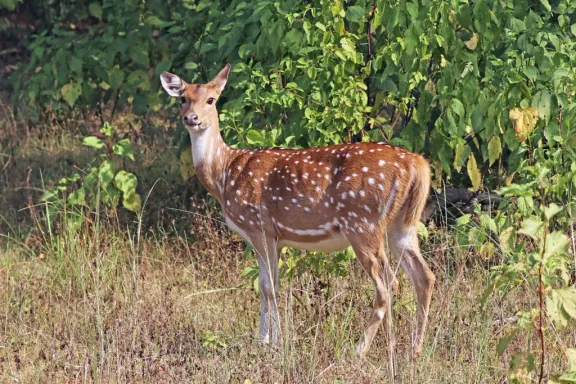
Axis deer (chital)
Axis axis
Same subfamily (Cervinae)
Big game
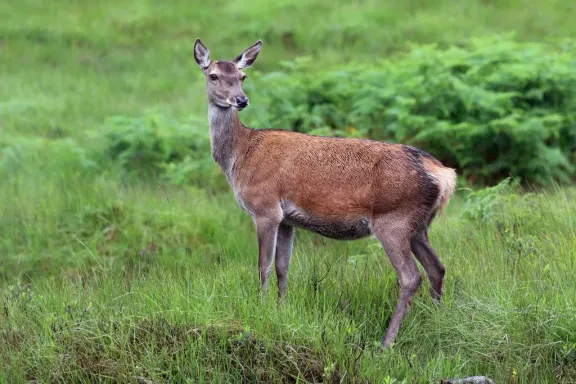
Red deer
Cervus elaphus
Same subfamily (Cervinae)
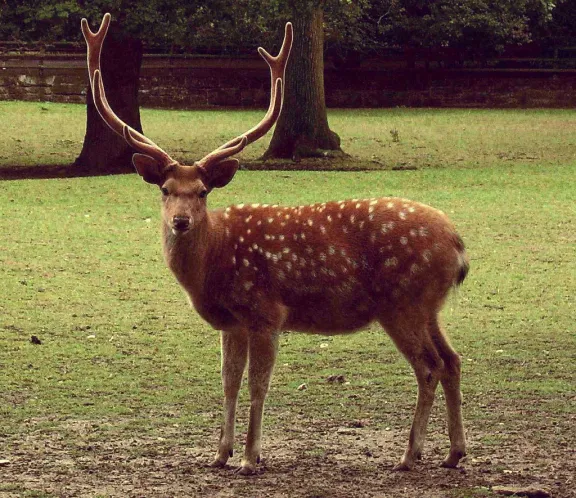
Big game
Sika deer
Cervus nippon
Same subfamily (Cervinae)
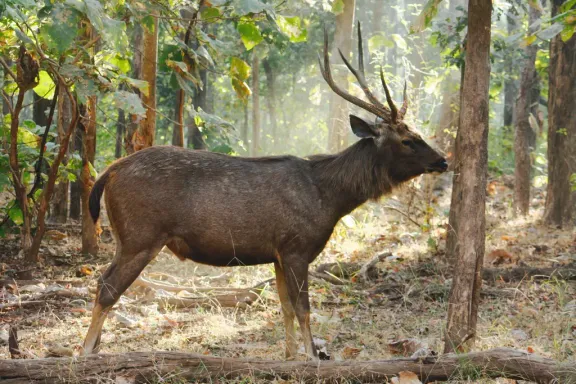
Big game
Sambar deer
Rusa unicolor
Same subfamily (Cervinae)
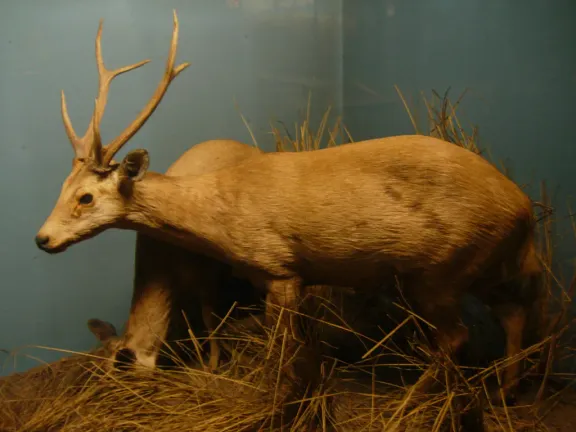
Big game
Hog deer
Axis porcinus
Same subfamily (Cervinae)
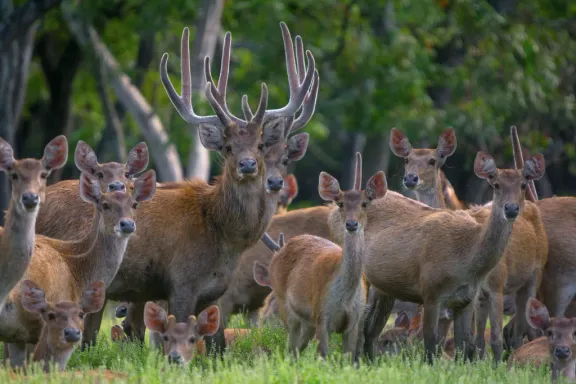
Big game
Rusa deer
Rusa timorensis
Same subfamily (Cervinae)