Photo:MPFCC BY-SA 4.0
Waterfowl
Great cormorant
Phalacrocorax carbo
- Group
- Waterfowl
- Size class
- Small (under 10 kg)
- Family
- Phalacrocoracidae
Range
- Europe
- Asia
Habitat
- Coast
- Wetland
Range
Countries it is found in
136 countries
- Afghanistan
- Åland Islands
- Albania
- Algeria
- Andorra
- Angola
- Armenia
- Australia
- Austria
- Azerbaijan
- Bahrain
- Bangladesh
- Belarus
- Belgium
- Bhutan
- Bosnia & Herzegovina
- Botswana
- Brunei
- Bulgaria
- Burundi
- Cambodia
- Canada
- Chad
- China
Range from:Wikipedia country bird lists, GBIF occurrence records — read 2026-08-05
Chapter 01
Overview
The great cormorant (Phalacrocorax carbo) is a large, widespread seabird of the Old World, Australasia and the Atlantic coast of North America, feeding at sea inshore, in estuaries and on lakes and rivers. Linnaeus described it in 1758 as Pelecanus carbo; the genus name means 'bald raven' and carbo is Latin for charcoal. Two subspecies occur in Sweden: the continental P. c. sinensis, sometimes called mellanskarv, which makes up almost the whole breeding population, and the Atlantic P. c. carbo, mainly a winter visitor. Persecution wiped the cormorant out of Sweden at the end of the 19th century. It returned around the 1940s with a colony in Kalmarsund, spread rapidly from the late 1980s, and reached about 44,000 breeding pairs a year in 2006–2009 before falling back slightly. It is protected under the EU Birds Directive, and Naturvårdsverket judges that it has a favourable conservation status in Sweden.
Chapter 02
Identification
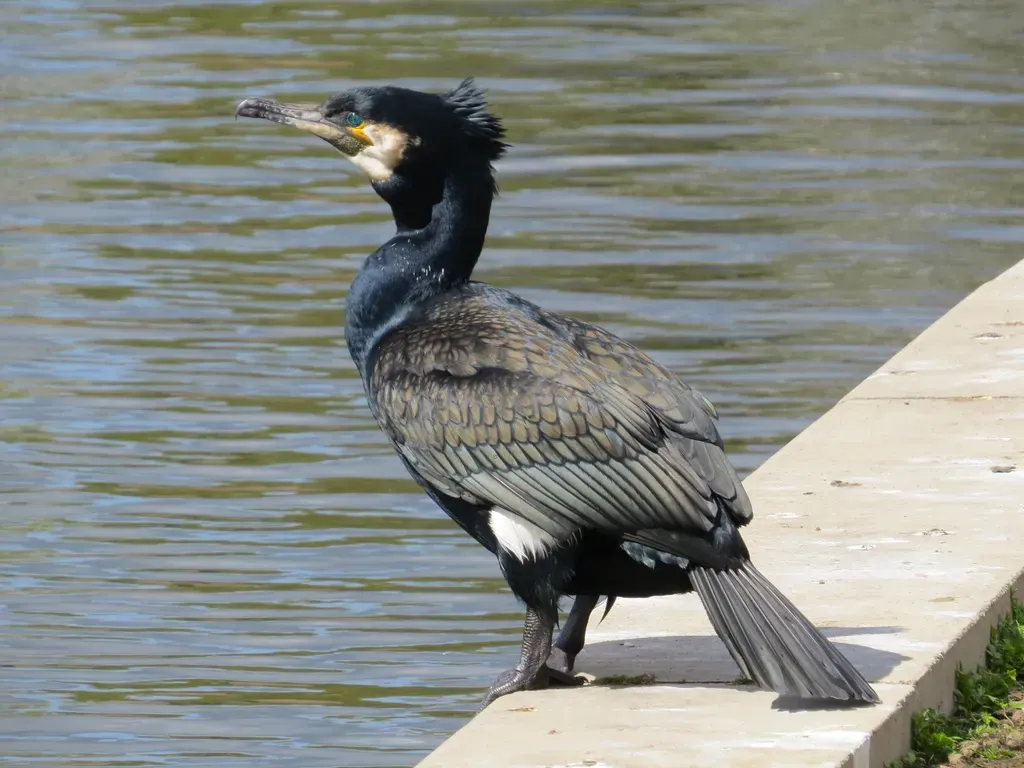
A big, dark waterbird 70–102 cm long with a 121–160 cm wingspan; weight varies across the range from 1.5 to 5.3 kg, and the Swedish sinensis birds weigh about 2.5 kg. The plumage is largely black with bronze-green and purple gloss, the long bill is strongly hooked and has yellow bare skin at its base, and the adult's eyes are deep sea-green. The feet are fully webbed between all four toes. In the breeding season adults show a white throat patch, white plumes on head and neck and a white patch on the thigh, all of which are lost in winter. Juveniles are brownish-black with pale to whitish underparts and take three to four years to reach adult plumage. It is silent except in the breeding colonies, where it makes various guttural calls.
Chapter 03
Behaviour
Cormorants nest in colonies by wetlands, rivers and sheltered coasts, reusing the same site year after year and building stick nests in trees, on cliff ledges or on the ground on predator-free islands. Three to five pale blue or green eggs are incubated for about 28–31 days. In Sweden the white-tailed eagle is a natural predator and in places takes many of the chicks. The cormorant fishes by foot-propelled diving, staying down for one to three minutes and reaching depths of 9.5 m, and in winter it selects larger fish. Because its outer feathers take in water, it is often seen standing with its wings spread to dry them.
Chapter 04
Hunting
Many fishermen see the cormorant as a competitor, and it was hunted almost to extinction in the past; research suggests it has little effect on fish stocks, but there is no consensus. In Norway it is a traditional game bird, and about 10,000 are shot to be eaten each year. In the United Kingdom licences are issued to cull set numbers. In Asia cormorants are still used to catch fish. In Sweden the storskarv has no open season, but bilaga 4 of the hunting ordinance allows skyddsjakt on the hunter's own initiative, never closer than 300 m to a nesting site of cormorant, white-tailed eagle or osprey: at fixed and movable fishing gear (not hand gear) and within 300 m of it from 1 August to the end of February; at fish farms and release sites, from seven days before to seven days after a release, all year; in fish protection areas from 1 August to the end of February; and at airports all year. From 1 July 2027 the gear season runs to 15 April, fish protection areas are open all year, and the Baltic and fresh water up to the first migration barrier in Norrbotten and Västerbotten are added from 1 August to 15 May. Beyond that, the länsstyrelse decides on skyddsjakt; Naturvårdsverket notes that hunting to regulate the population, detached from damage, is not allowed, and that seldom more than half the birds allocated in such decisions are shot.
Field data
Tracks
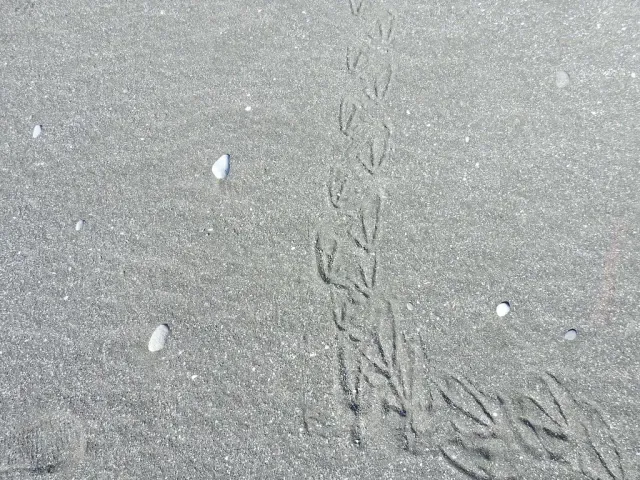
A photograph of real sign left by Great cormorant. Prints vary with gait, ground and how long they have been there — treat this as one example, not a template.
Track photo:Emily RobertsCC BY
On the table
Meat & cooking
Table grade 1 of 51/5
- Sold as meat in a legal market
- Has a named traditional dish
- Published way to handle and cook it
- Eaten in more than one country
- No known health advisory
Sources
Sources: Great cormorant — Wikipedia, Storskarv — Wikipedia (svenska), Jaktförordning (1987:905) — Sveriges riksdag, Naturvårdsverket: Förvaltningsplan för skarv — read 2026-10-29