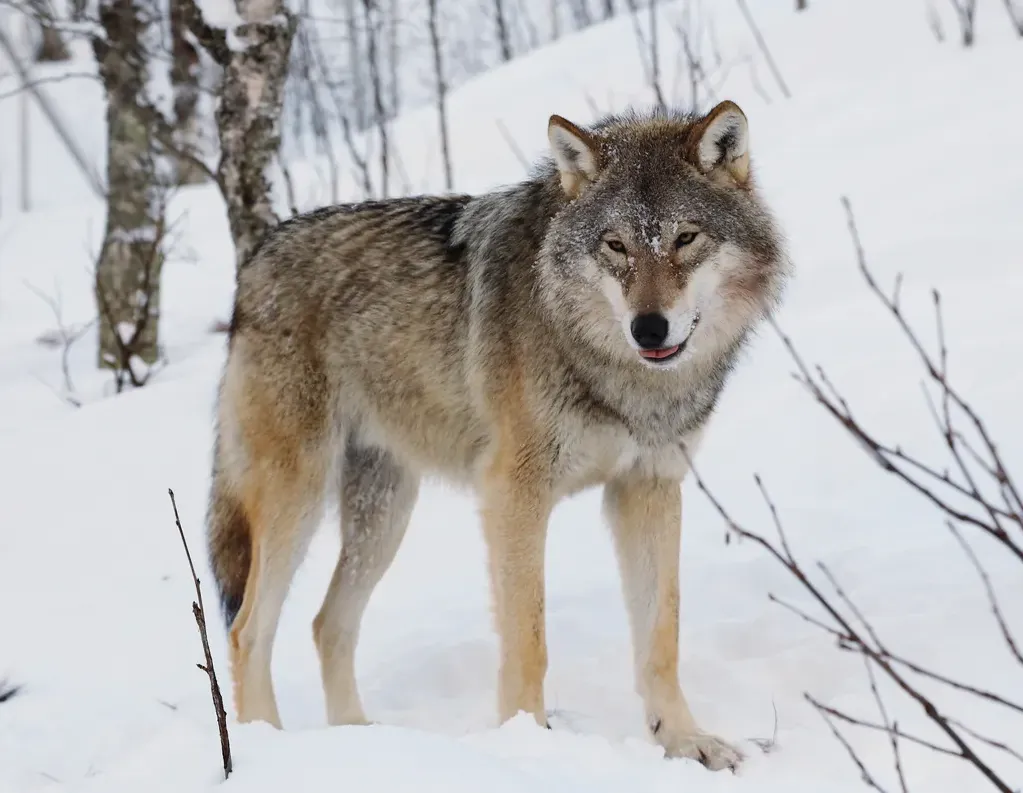
Photo:User:Mas3cfCC BY-SA 4.0
Predators & furbearers
Gray wolf
Canis lupus
- Group
- Predators & furbearers
- Size class
- Medium (10–70 kg)
- Family
- Canidae
Range
- North America
- Europe
- Asia
Habitat
- Boreal forest
- Tundra
- Forest
Range
Countries it is found in
99 countries
- Afghanistan
- Albania
- Algeria
- Argentina
- Armenia
- Australia
- Austria
- Azerbaijan
- Belarus
- Belgium
- Bhutan
- Bolivia
- Bosnia & Herzegovina
- Brazil
- Bulgaria
- Cambodia
- Canada
- Chile
- China
- Colombia
- Costa Rica
- Croatia
- Czechia
- Denmark
Range from:ASM Mammal Diversity Database, GBIF occurrence records — read 2026-08-05
Chapter 01
Overview
The wolf (Canis lupus) is the largest wild member of the dog family, native to Eurasia and North America. More than thirty subspecies are recognised. Deliberate persecution over livestock predation and fear of attacks has cut its range to about a third of its historic extent: it is locally extinct across much of western Europe, the United States and Mexico, and entirely gone from the British Isles and Japan. What is left occupies mostly wilderness and remote country, from sea level to 3,000 m, across forest, inland wetland, shrubland, grassland including Arctic tundra, pasture, desert and rocky peaks. Where a wolf settles depends on prey abundance, snow conditions, livestock and road densities, human presence and terrain. The global population was estimated at 300,000 in 2003, and declines have been arrested since the 1970s through legal protection, changing land use and rural depopulation. The IUCN lists it as least concern; CITES Appendix II regulates international trade in the species and its parts.
Chapter 02
Identification
The largest living canid, told from coyotes and jackals by a broader snout, shorter ears, shorter torso and longer tail. It is slender and powerfully built, with a deep rib cage, a sloping back and a heavily muscled neck. The legs are moderately longer than other canids', which is what lets it move fast and cross the deep snow covering most of its range in winter, though shorter-legged forms occur in some populations. The ears are relatively small and triangular; the head large and heavy with a wide forehead, strong jaws and a long blunt muzzle. The skull runs 230–280 mm long and 130–150 mm wide, with heavy, large teeth. The coat is usually mottled white, brown, grey and black, though Arctic subspecies may be almost entirely white.
Chapter 03
Behaviour
The wolf is a social animal, and its basic unit is a mated pair with their offspring. Average pack size is eight in North America and 5.5 in Europe; across Eurasia a pack is typically a family of eight — two adults, juveniles and yearlings — sometimes two or three such families together, with exceptional packs of up to 42 recorded. Offspring usually stay 10 to 54 months. Cortisol rises measurably across a pack when a member dies. Pairs are monogamous and usually stay together for life; if one dies the other finds a new mate quickly. Wolves mature at two and are sexually mature from three, though the age of first breeding depends heavily on food supply. Oestrus and rut begin in the second half of winter and last two weeks. Dens are dug or adapted in summer from natural shelter — rock fissures, overhangs, cavities. As a pack hunter it feeds predominantly on ungulates, specialising in the vulnerable individuals of large prey: a pack of fifteen can bring down an adult moose. Diet varies by continent — large wild ungulates and medium mammals in North America, medium wild ungulates and domestic species in Europe and Asia.
Chapter 04
Hunting
Single wolves and mated pairs typically have higher hunting success rates than large packs, and lone wolves have occasionally been recorded killing moose, bison and muskox unaided. Optimal pack size depends on the game: four wolves for elk, a large pack for bison. Hunting pack size tracks how many pups survived the previous winter, adult survival, and the rate at which wolves disperse away. Wolves work their territory along the same trails for long periods. They are nocturnal predators — in winter a pack starts hunting in the twilight of early evening and works all night, covering tens of kilometres, though large prey is sometimes taken by day. In summer they tend to hunt individually.

Field data
Tracks
A photograph of real sign left by Gray wolf. Prints vary with gait, ground and how long they have been there — treat this as one example, not a template.
Track photo:Brodie Cass TalbottCC BY
On the table
Meat & cooking
Table grade 1 of 51/5
- Sold as meat in a legal market
- Has a named traditional dish
- Published way to handle and cook it
- Eaten in more than one country
- No known health advisory
Before you eat it: Livsmedelsverket names wolf, lynx, fox and wolverine — along with wild boar, bear and seal — as the Swedish wild animals most likely to carry trichinella. There is no established culinary use for this species in Sweden, and meat from any trichinella-carrying animal must be tested before it is eaten; the parasite dies at around 60–65 °C in an oven but needs over 70 °C on a grill, and some cold-tolerant strains survive freezing.
Sources
Sources: Wolf — Wikipedia, Livsmedelsverket: Trikiner — read 2026-08-05
Cross-reference
Related species
Its closest relatives in the compendium, nearest kinship first.
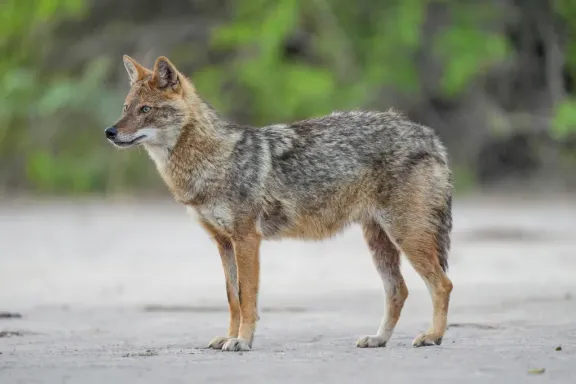
Predators & furbearers
Golden jackal
Canis aureus
Same genus (Canis)
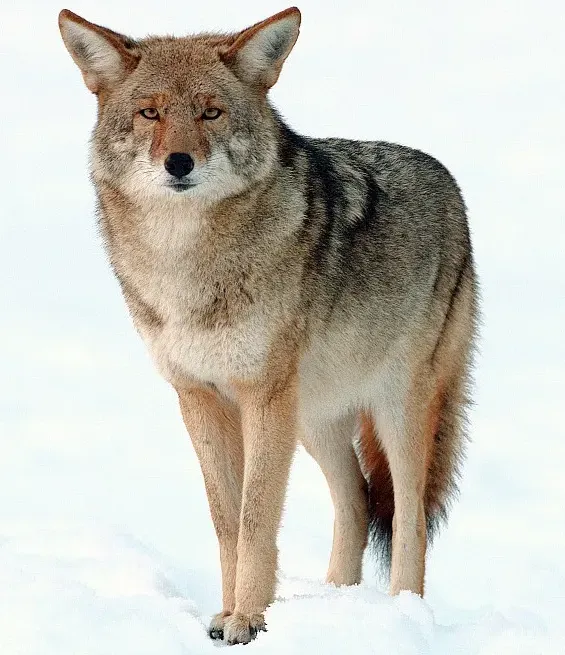
Predators & furbearers
Coyote
Canis latrans
Same genus (Canis)
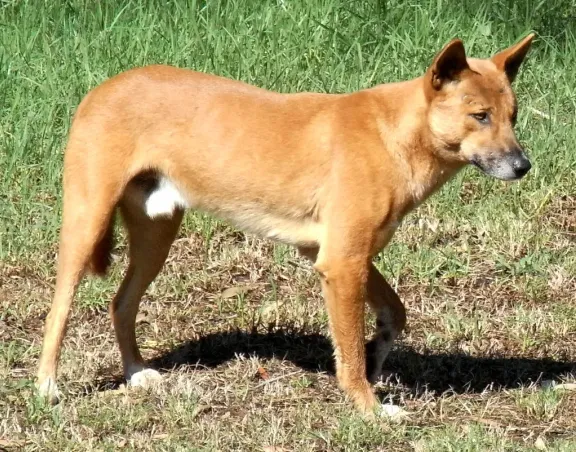
Predators & furbearers
Dingo
Canis familiaris dingo
Same genus (Canis)
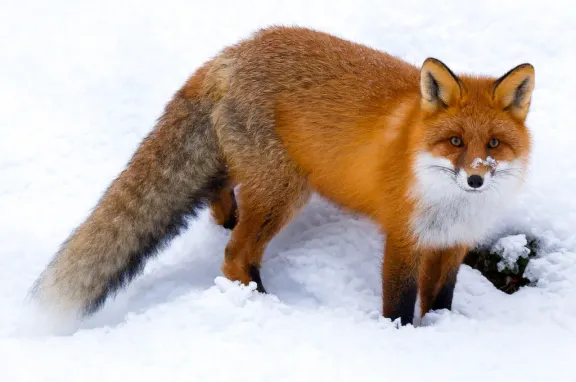
Predators & furbearers
Red fox
Vulpes vulpes
Same family (Canidae)
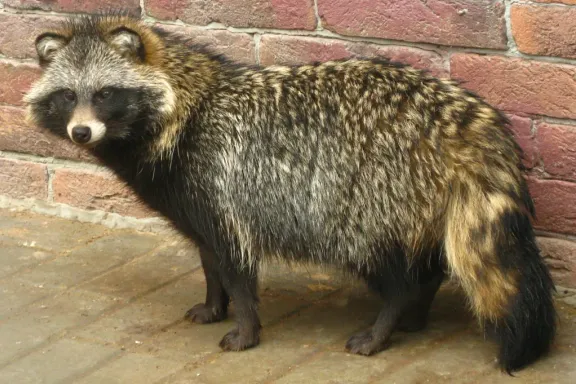
Predators & furbearers
Raccoon dog
Nyctereutes procyonoides
Same family (Canidae)
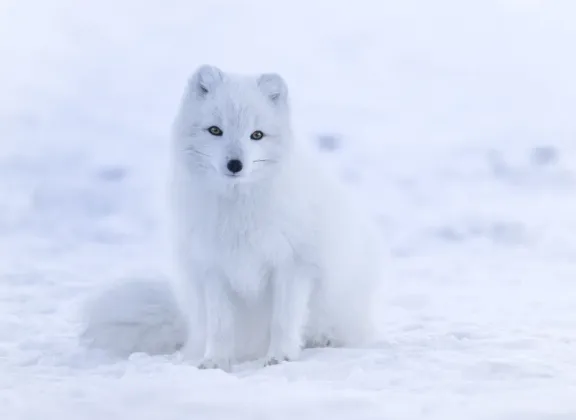
Predators & furbearers
Arctic fox
Vulpes lagopus
Same family (Canidae)