Predators & furbearers
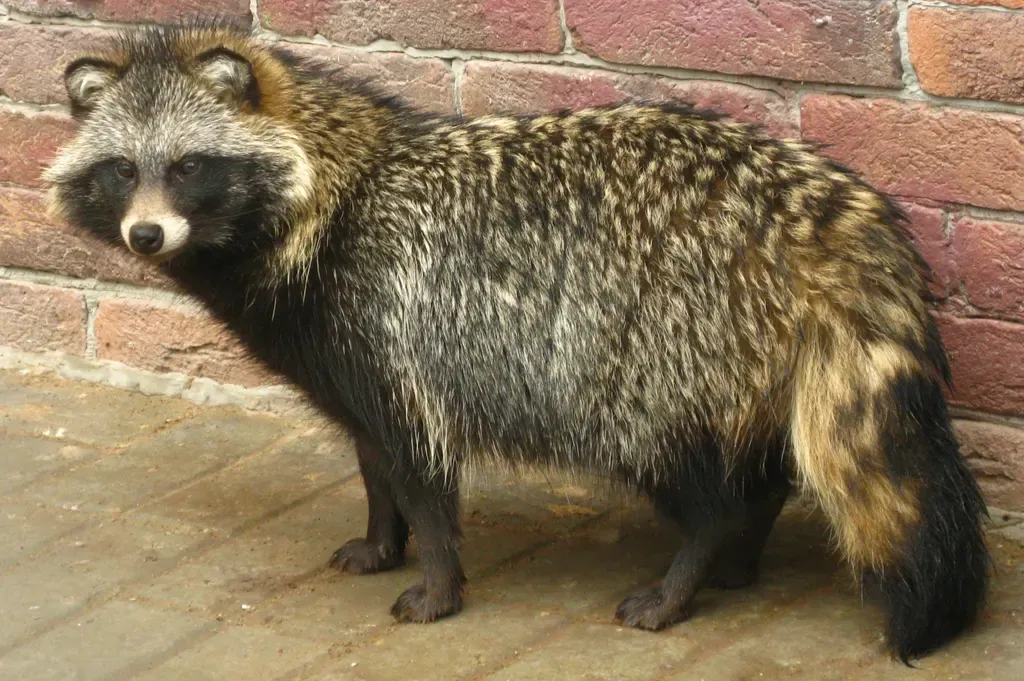
Raccoon dog
Nyctereutes procyonoides
- Group
- Predators & furbearers
- Size class
- Small (under 10 kg)
- Family
- Canidae
Range
- Europe
- Asia
Habitat
- Wetland
- Forest
Range
Countries it is found in
15 countries
- China
- Denmark
- Estonia
- Finland
- Germany
- Japan
- Lithuania
- Mongolia
- North Korea
- Poland
- Romania
- Russia
- South Korea
- Ukraine
- Vietnam
Range from:ASM Mammal Diversity Database, GBIF occurrence records — read 2026-08-05
Chapter 01
Overview
The common raccoon dog (Nyctereutes procyonoides) is a heavy-set, fox-like canid native to East Asia, named for its raccoon-like face markings but most closely related to foxes. It is widespread in its native range and invasive in Europe, where it was introduced for the fur trade. It is unusual among canids in two respects: it hibernates through cold winters, and it can climb trees. Four subspecies are recognised; the Japanese raccoon dog, once treated as a fifth, is now thought to be a distinct species.
Chapter 02
Identification
The skull closely resembles those of South American foxes, particularly the crab-eating fox, though genetic work shows they are not close relatives. It is small but sturdily built and moderately elongated, with narrow zygomatic arches and well-developed projections, the sagittal crest especially prominent in old animals. The dentition reflects the omnivorous diet: small, weak canines and carnassials, flat molars, and intestines 1.5 to 2 times longer than other canids'. The torso is long and the legs short.
Chapter 03
Behaviour
An omnivore feeding on insects, rodents, amphibians, birds, fish, reptiles, molluscs, crabs, sea urchins, human refuse, carrion and eggs, as well as fruit, nuts and berries. Voles predominate among rodent prey in swampy country and are replaced by gerbils on flatland such as Astrakhan. Frogs are the commonest amphibian taken; it can eat toads with toxic skin secretions. Mating begins from early February to late April depending on location. Raccoon dogs are monogamous and pairs usually form in autumn, though captive males have mated with four or five females. Males fight briefly but not fatally over mates. Oestrus lasts from a few hours to six days, during which a female may mate up to five times, and females come into oestrus again after 20–24 days even when pregnant. Gestation is 61–70 days, with pups born in April and May.
Chapter 04
Hunting
Raccoon dogs damage game bird populations, particularly in floodplains and along estuary shorelines, where they feed almost exclusively on eggs and chicks through the spring. Birds make up 15–20 per cent of their diet in Lithuania, 46 per cent on the Oka river floodlands and 48.6 per cent in the Voronezh reserve. They also harm the muskrat trade by destroying nests and eating the young, and in Ukraine they damage kitchen gardens, melon crops, vineyards and corn seedlings. They are typically hunted from November until the snow deepens. In the Far East they are hunted at night with Laikas and mongrels. In their introduced range they are usually taken incidentally during hunts for other species. Dogs are much the most efficient method, with success rates of 80–90 per cent against 8–10 per cent with guns and 5–7 per cent with traps.
Field data
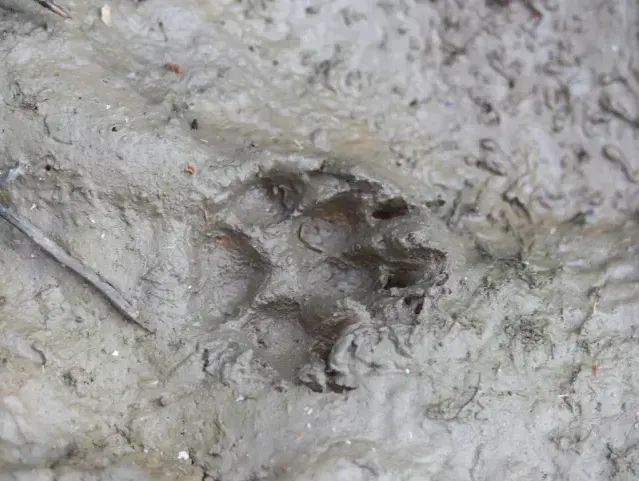
Tracks
A photograph of real sign left by Raccoon dog. Prints vary with gait, ground and how long they have been there — treat this as one example, not a template.
Track photo:no rights reservedCC0
Sources
Sources: Common raccoon dog — Wikipedia — read 2026-08-05
Cross-reference
Related species
Its closest relatives in the compendium, nearest kinship first.
Predators & furbearers
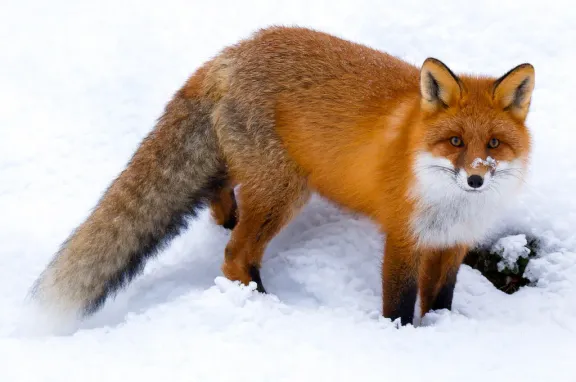
Red fox
Vulpes vulpes
Same family (Canidae)
Predators & furbearers
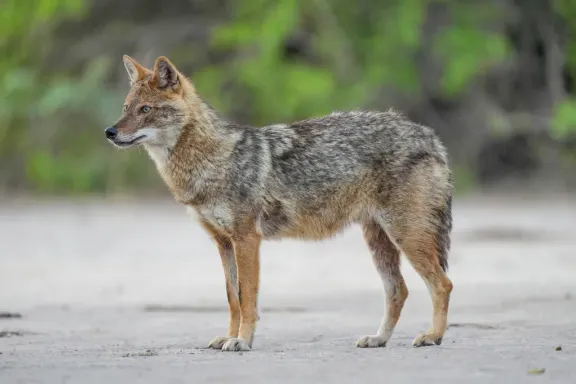
Golden jackal
Canis aureus
Same family (Canidae)
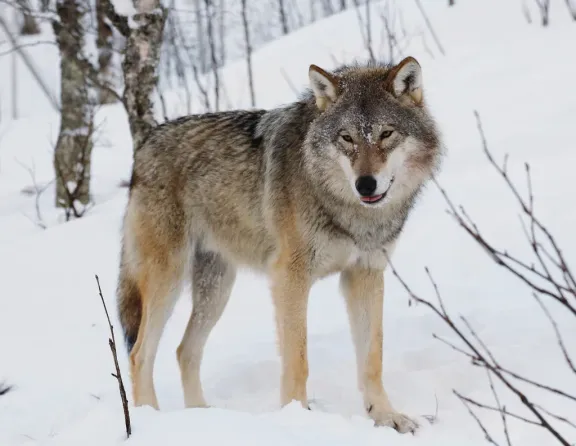
Predators & furbearers
Gray wolf
Canis lupus
Same family (Canidae)
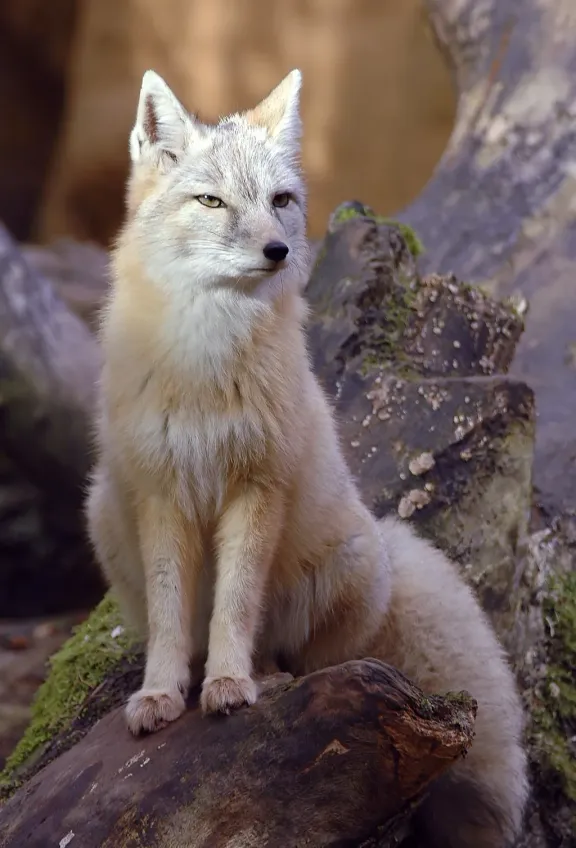
Predators & furbearers
Corsac fox
Vulpes corsac
Same family (Canidae)

Predators & furbearers
Arctic fox
Vulpes lagopus
Same family (Canidae)
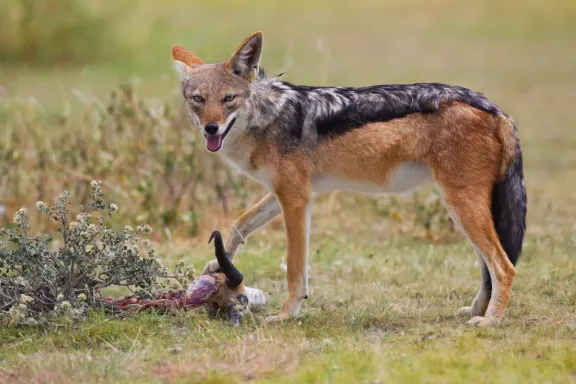
Predators & furbearers
Black-backed jackal
Lupulella mesomelas
Same family (Canidae)