Predators & furbearers
Arctic fox
Vulpes lagopus
- Group
- Predators & furbearers
- Size class
- Small (under 10 kg)
- Family
- Canidae
Range
- Arctic
- North America
Habitat
- Tundra
Range
Countries it is found in
9 countries
- Canada
- Finland
- Greenland
- Iceland
- Norway
- Russia
- Svalbard & Jan Mayen
- Sweden
- United States
Range from:ASM Mammal Diversity Database, GBIF occurrence records — read 2026-08-05
Chapter 01
Overview
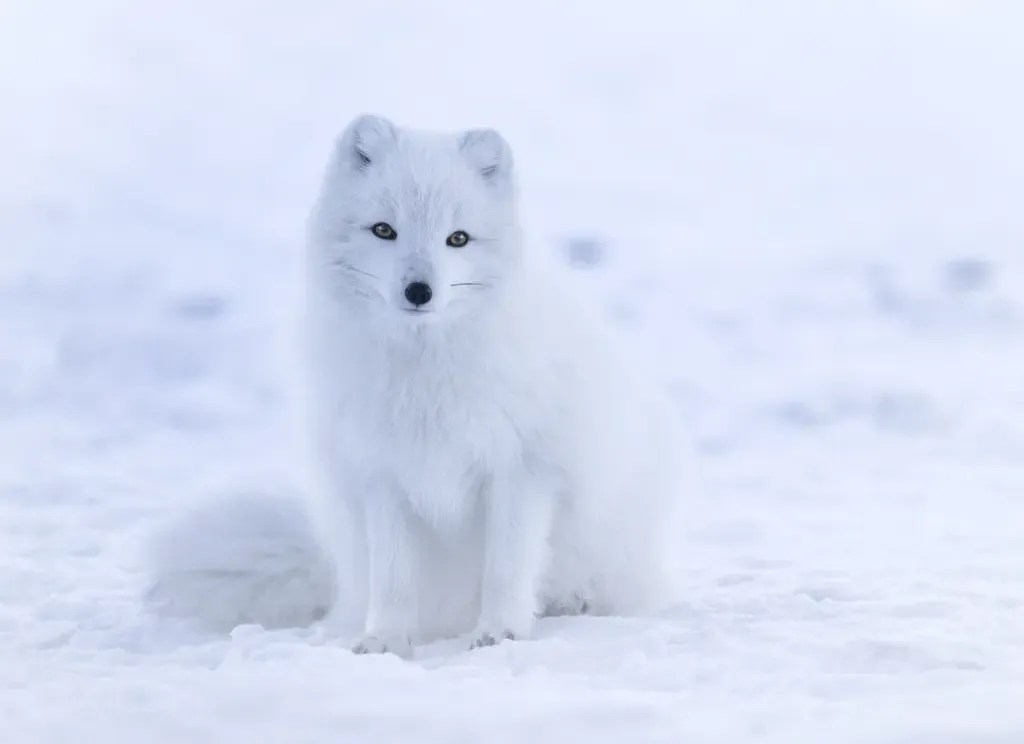
The Arctic fox (Vulpes lagopus), also called the white, polar or snow fox, is a small fox of the Arctic tundra with a circumpolar range: Iceland, Fennoscandia, Svalbard, northern Russia, the Bering Sea islands, Greenland, Alaska and Canada south to Hudson Bay, with outposts in Canadian boreal forest and on the Kenai Peninsula. Linnaeus described it in 1758 as Canis lagopus from a type specimen taken in Swedish Lapland; lagopus means 'hare-foot', for its furred soles. It is the only land mammal native to Iceland, which it reached over the frozen sea at the end of the last ice age, and it was introduced to the Aleutians for fur farming. The world population runs to several hundred thousand and the IUCN lists the species as least concern, but the Fennoscandian population is threatened. Extreme fur prices around 1900 drove hunting even through population lows; Sweden protected the fox in 1928, Norway in 1930 and Finland in 1940, yet around 2000 Sweden held only 40–60 animals. Naturvårdsverket classes it as starkt hotad in Sweden. Its 2025 survey counted 97 litters in Fennoscandia — 56 in Sweden, 38 in Norway and 3 in Finland — and about 526 adults, down from 582 the year before, with rising inbreeding in several subpopulations.
Chapter 02
Identification
Smaller than a red fox, standing 25–30 cm at the shoulder, with a rounded body, short muzzle and legs and short, thick ears that keep heat in. Males average 3.5 kg and 55 cm head and body, females 2.9 kg and 52 cm; the bushy tail is about a third of the body length, and foxes further north are smaller. Two genetic colour morphs occur. The white morph is brown above and pale below in summer and pure white in winter; it lives mostly inland. The blue morph is dark brown or grey in summer and only slightly paler in winter, and keeps to the coasts, where its colour matches the cliffs — in Alaska it is the commoner form on the Aleutian and Pribilof Islands. The winter coat is twice as long as the summer coat and 70 percent fine underfur.
Chapter 03
Behaviour
Arctic foxes eat almost any small animal they find — lemmings and voles above all, but also hares, birds, eggs, fish, carrion and, in April and May, ringed seal pups in their snow dens — together with berries and seaweed. They follow polar bears and wolves to scavenge, and cache food: in Canada they gather snow goose eggs at 2.7–7.3 an hour and store most of them, still eating some a year later. They do not hibernate but build up fat in autumn, sometimes adding more than half their body weight. They raise their young in large, south-facing dens with many entrances, often in eskers, which may be used for decades or centuries. Breeding is in April and May, gestation about 52 days, and litters of up to 25 pups are the largest of any carnivore; white-morph foxes breed in step with the 3–5 year lemming cycle and may not breed at all in poor years. Pairs are mostly monogamous. Some travel enormous distances: a yearling female tagged on Svalbard in 2019 crossed the ice to Greenland in 21 days and went on to Ellesmere Island, 3,506 km in 76 days.
Chapter 04
Hunting
Fur drove the Arctic fox hunt, with blue pelts the most valuable, and uncontrolled trapping has almost wiped out two subpopulations; foxes were even released on fox-free Aleutian islands in the 1920s to raise more blue foxes, at the cost of the Aleutian Canada goose. In Alaska people still hunt and trap them, and the Alaska Department of Fish and Game names human harvest as an important cause of death where that happens. The fox is still hunted in Iceland, where it is seen as a threat to sheep farming, and on Svalbard; neither population appears threatened. In Sweden the fjällräv has no open season and is statens vilt under section 33 of the Hunting Ordinance: a fox found dead or killed belongs to the state. Hunting serves its protection instead — Naturvårdsverket's action programme pays for feeding at dens and for hunting red foxes, which kill Arctic foxes and compete with them for food and spread mange, and bans hunting in some areas to keep dogs away and leave the ptarmigan for the foxes.
Field data
Tracks
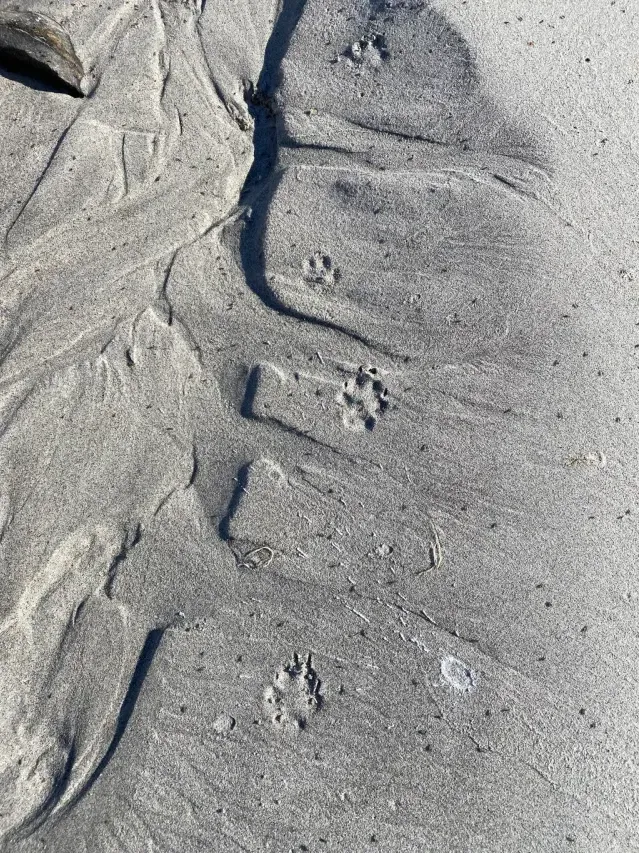
A photograph of real sign left by Arctic fox. Prints vary with gait, ground and how long they have been there — treat this as one example, not a template.
Track photo:Ingvild RiskaCC BY
Sources
Sources: Arctic fox — Wikipedia, Fjällräv — Wikipedia (sv), Naturvårdsverket: Fjällräv, antal föryngringar i Sverige, Norge och Finland, Naturvårdsverket: Färre fjällrävar i årets inventering – men långsiktig trend pekar uppåt (2025-12-17), Alaska Department of Fish and Game: Arctic fox species profile, Jaktförordning (1987:905) — Sveriges riksdag — read 2026-10-29
Cross-reference
Related species
Its closest relatives in the compendium, nearest kinship first.
Predators & furbearers
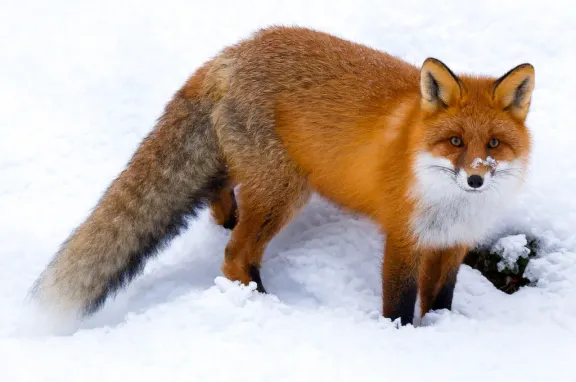
Red fox
Vulpes vulpes
Same genus (Vulpes)
Predators & furbearers
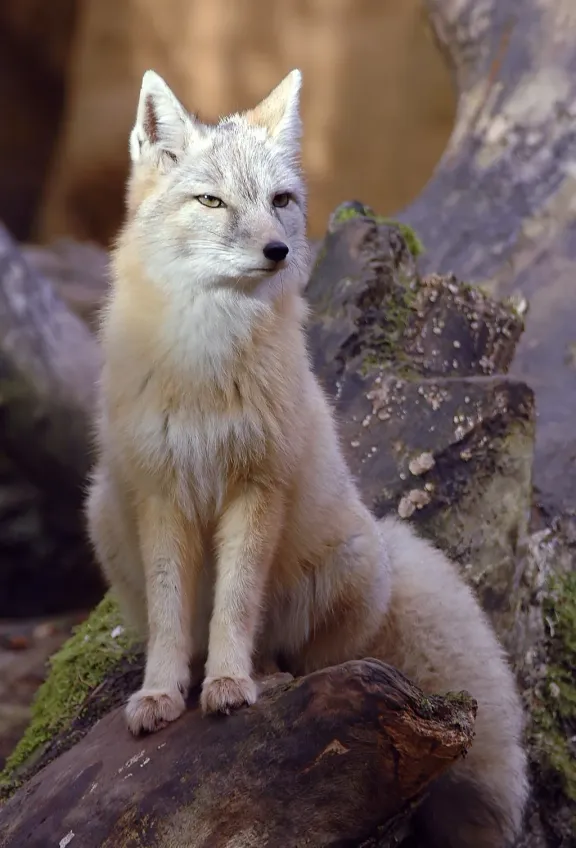
Corsac fox
Vulpes corsac
Same genus (Vulpes)
Predators & furbearers
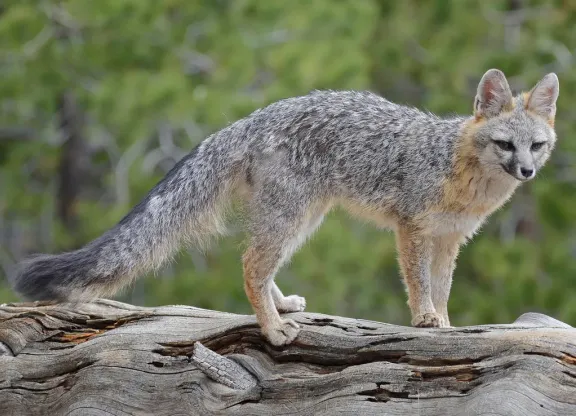
Gray fox
Urocyon cinereoargenteus
Same family (Canidae)
Predators & furbearers
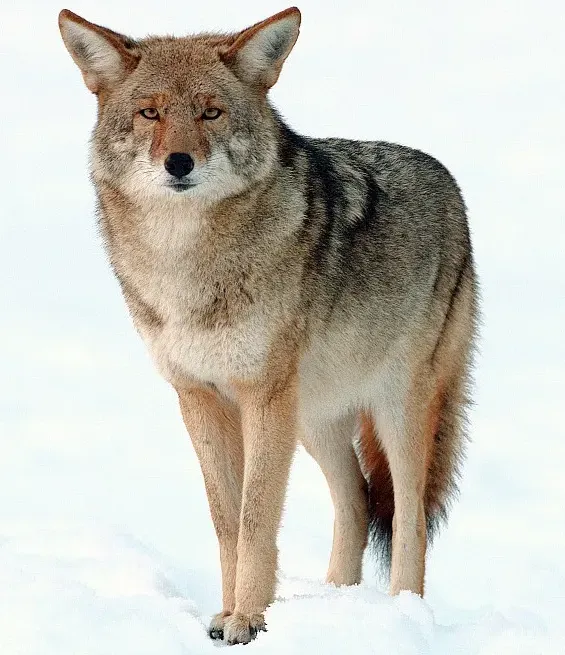
Coyote
Canis latrans
Same family (Canidae)
Predators & furbearers
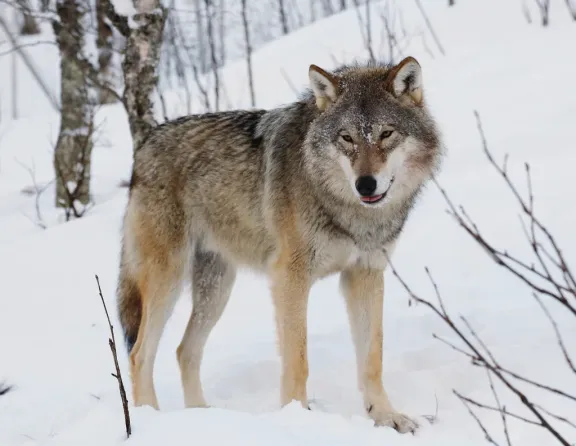
Gray wolf
Canis lupus
Same family (Canidae)
Predators & furbearers
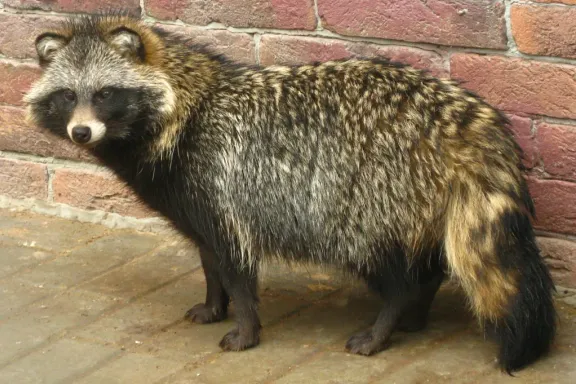
Raccoon dog
Nyctereutes procyonoides
Same family (Canidae)