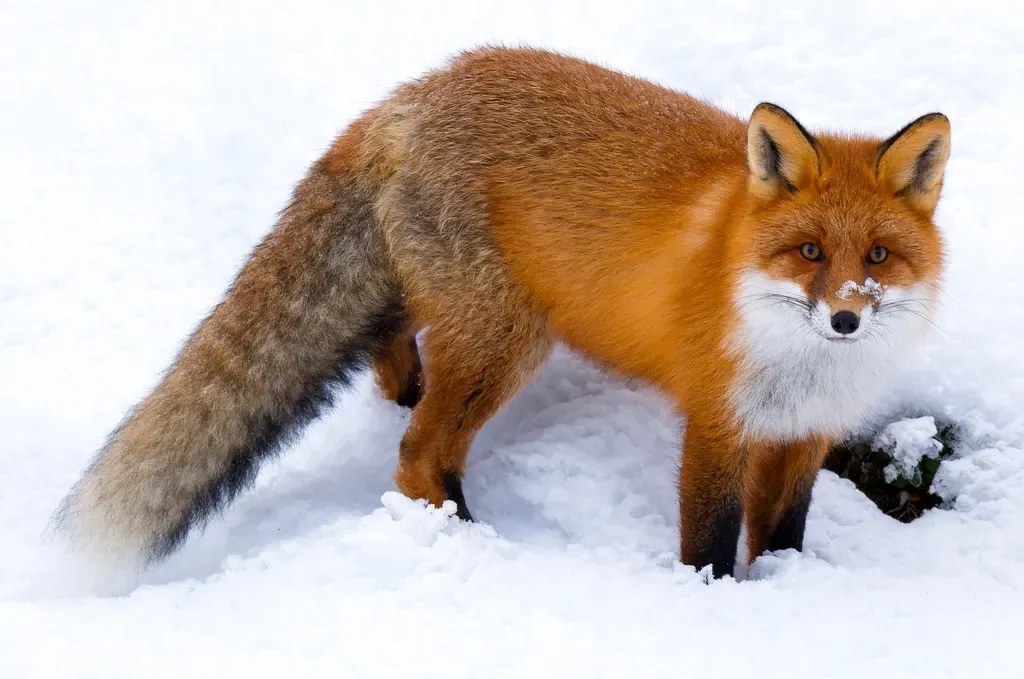
Photo:ClaudiaTenCC BY-SA 4.0
Predators & furbearers
Red fox
Vulpes vulpes
- Group
- Predators & furbearers
- Size class
- Small (under 10 kg)
- Family
- Canidae
Range
- Europe
- North America
- Asia
- Oceania
Habitat
- Farmland
- Forest
Range
Countries it is found in
83 countries
- Afghanistan
- Albania
- Algeria
- Andorra
- Armenia
- Australia
- Austria
- Azerbaijan
- Bangladesh
- Belarus
- Belgium
- Bhutan
- Bosnia & Herzegovina
- Bulgaria
- Canada
- China
- Croatia
- Cyprus
- Czechia
- Denmark
- Egypt
- Estonia
- Finland
- France
Range from:ASM Mammal Diversity Database, GBIF occurrence records — read 2026-08-05
Chapter 01
Overview
The red fox (Vulpes vulpes) is the largest of the true foxes and the most widely distributed member of the order Carnivora — present on every continent except South America and Antarctica, across a range of nearly 70 million km² reaching as far north as the Arctic Circle. It originated in Eurasia in the Middle Pleistocene at least 400,000 years ago and reached North America before 130,000 years ago. Its range has expanded alongside human settlement. Introduced to Australia, where it preys on native small and medium rodents and marsupials, it is included on the list of the world's 100 worst invasive species, though the IUCN lists it as least concern. It is a prohibited new organism in New Zealand and may not be imported. It has been strikingly successful at colonising built-up ground, particularly lower-density suburbs. It first entered British cities in the 1930s, reaching Bristol and London in the 1940s, Melbourne by the 1930s and Zurich only in the 1980s.
Chapter 02
Identification
Told from other foxes by its size as much as anything. The subspecies question is unusually messy: the third edition of Mammal Species of the World lists 45 as valid, a 46th was identified in 2010 from mitochondrial haplotypes in the Sacramento Valley, and a 2018 treatment recognises 30 Old World and nine North American subspecies. Substantial gene-pool mixing goes on between them. British red foxes have crossbred extensively with animals imported from Germany, France, Belgium, Sardinia and possibly Siberia and Scandinavia, and genetic studies find very little difference across Europe — consistent with an animal agile enough to cover a great deal of ground.
Chapter 03
Behaviour
Red foxes either hold stable home ranges or live itinerant with no fixed base. They mark with urine — the dog fox raising a hind leg and spraying forward, the vixen squatting and spraying between her hind legs — and use up to twelve different urination postures to place a mark precisely. Empty cache sites get marked too, as a reminder not to waste time investigating them again. Marking rates rise in males through late summer and autumn and are otherwise similar between the sexes. They live in family groups sharing a territory. Breeding is once a year in spring. Two months before oestrus, typically in December, the vixen's reproductive organs change shape and size; by oestrus the uterine horns have doubled and the ovaries grown half again. Sperm formation in males begins in August or September, with the testicles heaviest from December to February. Oestrus lasts three weeks, mating often takes place in burrows, and the copulatory tie may last more than an hour. Gestation is 49–58 days. Foxes are largely monogamous, though DNA from one population showed considerable polygyny, incest and mixed-paternity litters. The diet is omnivorous and extremely varied — over 300 animal species, typically mammals up to 3.5 kg, with a daily requirement of about 500 g. It hunts its preferred prey when that is abundant and falls back on other prey, seeds and fruit when it is not. Surplus killing occurs: in one breeding season four foxes were each recorded killing around 200 black-headed gulls. Urban foxes are most active at dusk and dawn, seldom seen by day, and den up at night.
Chapter 04
Hunting
Fox hunting is old. The earliest historical records date to the 4th century BC — Alexander the Great hunted foxes, and a seal from 350 BC shows a Persian horseman spearing one. Xenophon, who held hunting to be part of a cultured man's education, promoted killing foxes as pests because they distracted hounds from hares. The Romans were hunting them by AD 80. Through the European Dark Ages the fox was secondary game, then gradually rose in standing. Cnut the Great reclassified foxes as Beasts of the Chase, a lower category than Beasts of Venery, and by the late 1200s Edward I kept a royal pack of foxhounds and a specialist fox huntsman — the animal had shifted from vermin to game.
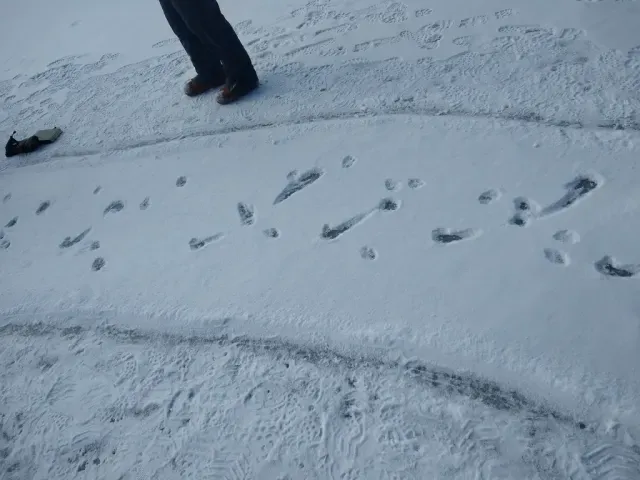
Field data
Tracks
A photograph of real sign left by Red fox. Prints vary with gait, ground and how long they have been there — treat this as one example, not a template.
Track photo:Mark ApgarCC BY
On the table
Meat & cooking
Table grade 1 of 51/5
- Sold as meat in a legal market
- Has a named traditional dish
- Published way to handle and cook it
- Eaten in more than one country
- No known health advisory
Before you eat it: Livsmedelsverket names wolf, lynx, fox and wolverine — along with wild boar, bear and seal — as the Swedish wild animals most likely to carry trichinella. There is no established culinary use for this species in Sweden, and meat from any trichinella-carrying animal must be tested before it is eaten; the parasite dies at around 60–65 °C in an oven but needs over 70 °C on a grill, and some cold-tolerant strains survive freezing.
Sources
Sources: Red fox — Wikipedia, Livsmedelsverket: Trikiner — read 2026-08-05
Cross-reference
Related species
Its closest relatives in the compendium, nearest kinship first.
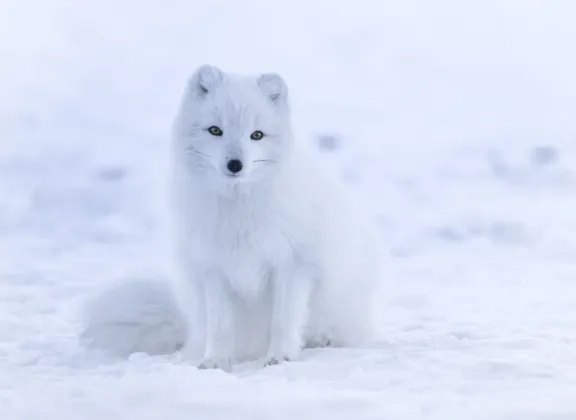
Predators & furbearers
Arctic fox
Vulpes lagopus
Same genus (Vulpes)
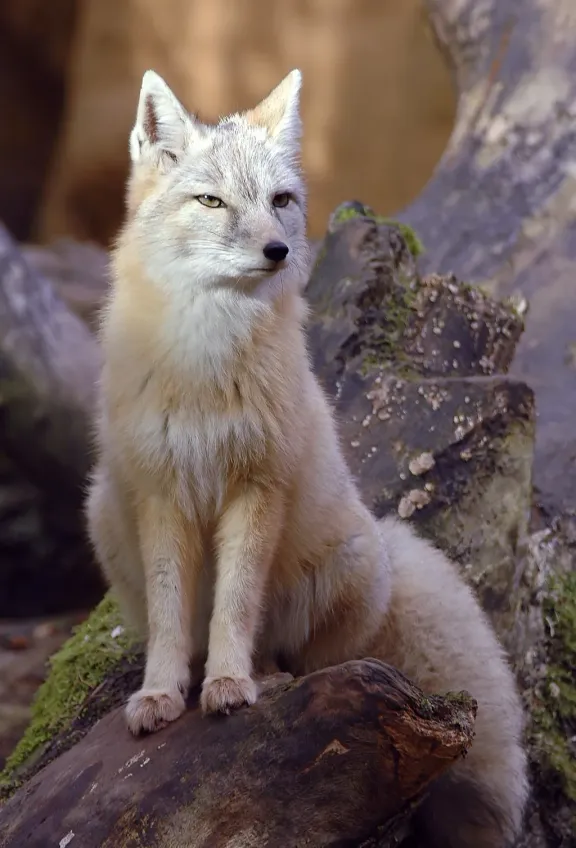
Predators & furbearers
Corsac fox
Vulpes corsac
Same genus (Vulpes)
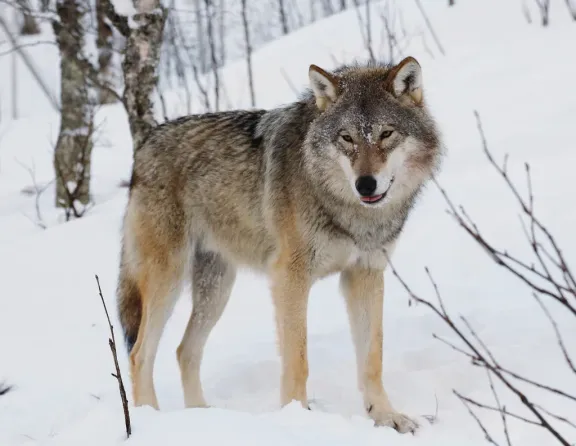
Predators & furbearers
Gray wolf
Canis lupus
Same family (Canidae)
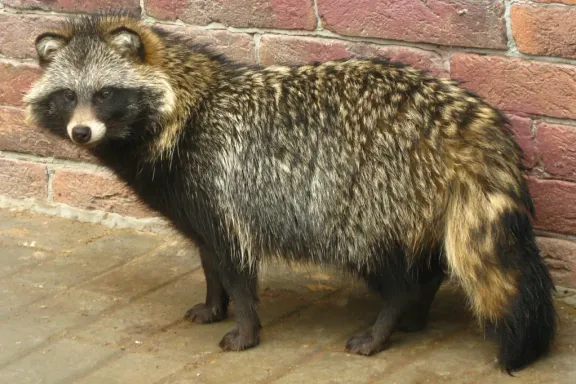
Predators & furbearers
Raccoon dog
Nyctereutes procyonoides
Same family (Canidae)
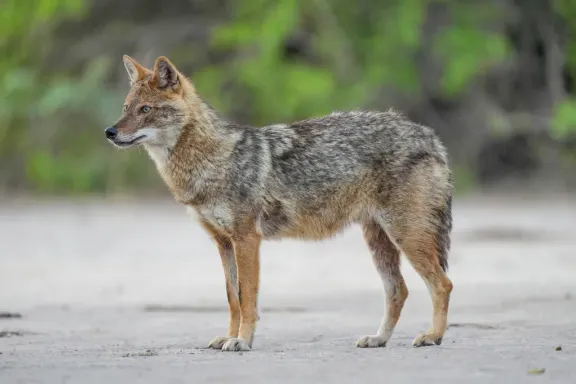
Predators & furbearers
Golden jackal
Canis aureus
Same family (Canidae)
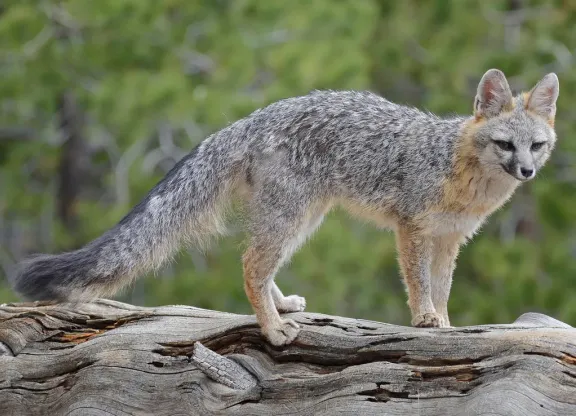
Predators & furbearers
Gray fox
Urocyon cinereoargenteus
Same family (Canidae)