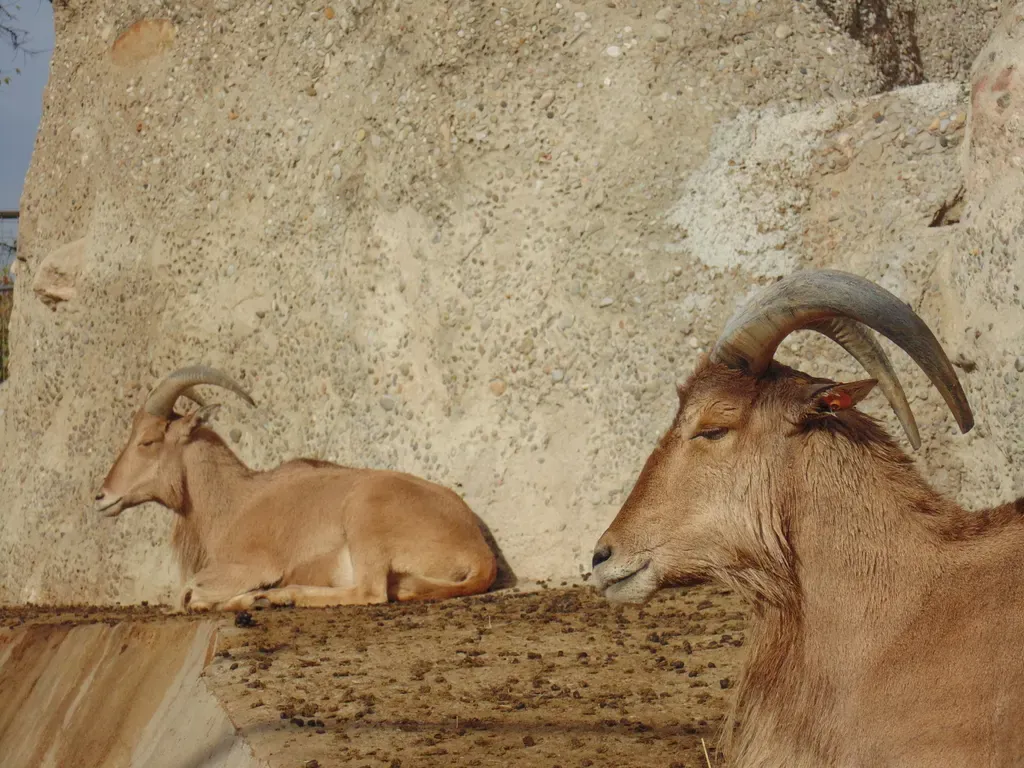
Photo:User:LauritaCC BY-SA 4.0
Big game
Aoudad (Barbary sheep)
Ammotragus lervia
- Group
- Big game
- Size class
- Large (70–300 kg)
- Family
- Bovidae
Range
- Africa
- North America
- Europe
Habitat
- Mountain
- Desert
Range
Countries it is found in
11 countries
- Algeria
- Chad
- Egypt
- Libya
- Mali
- Mauritania
- Morocco
- Niger
- Spain
- Sudan
- Tunisia
Range from:ASM Mammal Diversity Database, GBIF occurrence records — read 2026-08-05
Chapter 01
Overview
The Barbary sheep (Ammotragus lervia), also called aoudad after its Berber name, is a caprine of rocky mountains in North Africa and parts of West Africa, and the only species in its genus; some authors fold it into the goat genus Capra. Six subspecies have been described, and its native range rings the barren centre of the Sahara, from Morocco and Western Sahara through Algeria, Tunisia, Libya, Mauritania, Mali, Niger and Chad to Egypt and the Red Sea Hills. The Egyptian subspecies was thought extinct in the wild but still survives in Egypt's eastern desert. It is rare at home and declining there from hunting, legal and otherwise, and the loss of habitat. Abroad it has done well: it was introduced to southeastern Spain, the southwestern United States, La Palma in the Canary Islands and Croatia, and Queensland counts it a pest species even though it has not yet been recorded in Australia.
Chapter 02
Identification
A sandy-brown wild sheep that darkens with age, with a slightly paler belly and a darker line along the back; the upper parts and outer legs are a uniform reddish or greyish brown. Shaggy hair hangs from the throat, reaching down to the chest in males, with a sparse mane. Animals stand 75 to 110 cm at the shoulder, are around 1.5 m long and weigh 30 to 145 kg; Swedish Wikipedia gives ewes 40 to 55 kg and rams 100 to 145 kg. The horns are triangular in cross-section and fairly smooth, wrinkled only slightly at the base in older animals. They curve outwards, back and then in, and can exceed 76 cm in length; ewes carry somewhat smaller horns.
Chapter 03
Behaviour
Barbary sheep live in arid mountains, steep rocky slopes and canyons, where they graze and browse grasses, bushes and lichens. They can take all the water they need from their food, but will drink and wallow when water is there. They are active in the early morning and late afternoon and rest through the heat of the day, move constantly along the mountain ranges, and are very agile, clearing more than 2 m from a standing jump. At the first sign of danger they usually flee uphill. They live alone or in small groups of a few ewes and their young led by a dominant ram, and rams fight with their horns for control of the group. Most matings fall between September and November; after 154 to 161 days a single lamb is born between March and May. The main predators in North Africa were the Barbary leopard, Barbary lion and caracal; today humans, feral dogs, overgrazing by livestock and drought are the threats.
Chapter 04
Hunting
In the Sahara the aoudad is hunted for its meat, pelt and hide, and as rifles replaced older methods the population fell sharply; the IUCN lists the species as vulnerable. In Spain it was introduced to the Sierra Espuña Regional Park in 1970 as a game species, and private game estates spread it further, into Alicante, Almería, Granada and Murcia. In Texas, 42 Barbary sheep were released in the Palo Duro Canyon in the winter of 1957–58 to draw hunters to the region. Texas Parks and Wildlife classes the aoudad as an exotic animal: on private land there are no closed seasons, bag or possession limits or required methods, but a hunting licence and the landowner's permission are required.
Sources
Sources: Barbary sheep — Wikipedia, Manfår — Wikipedia (sv), Texas Parks & Wildlife Department: Nongame, Exotic, Endangered, Threatened & Protected Species — read 2026-10-29
Cross-reference
Related species
Its closest relatives in the compendium, nearest kinship first.
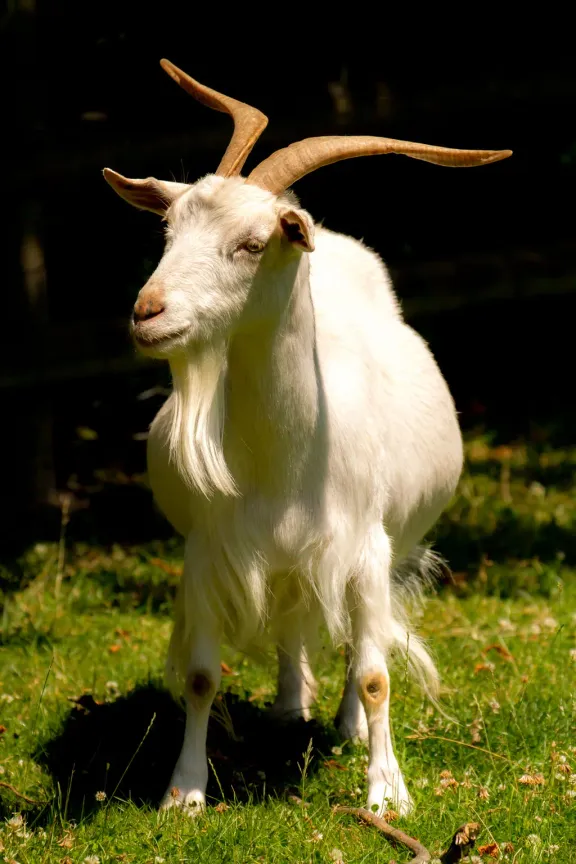
Big game
Feral goat
Capra hircus
Same subfamily (Caprinae)
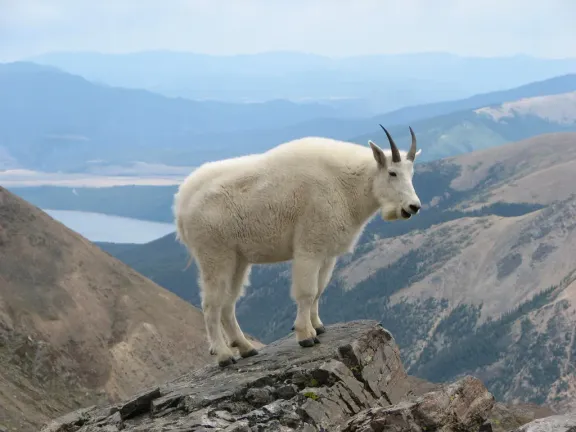
Big game
Mountain goat
Oreamnos americanus
Same subfamily (Caprinae)
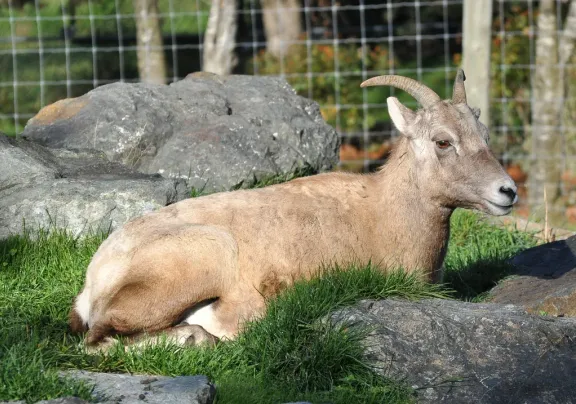
Big game
Bighorn sheep
Ovis canadensis
Same subfamily (Caprinae)
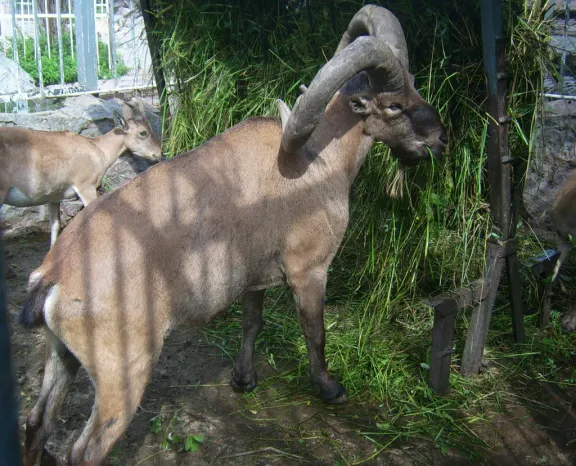
Big game
East Caucasian tur
Capra cylindricornis
Same subfamily (Caprinae)
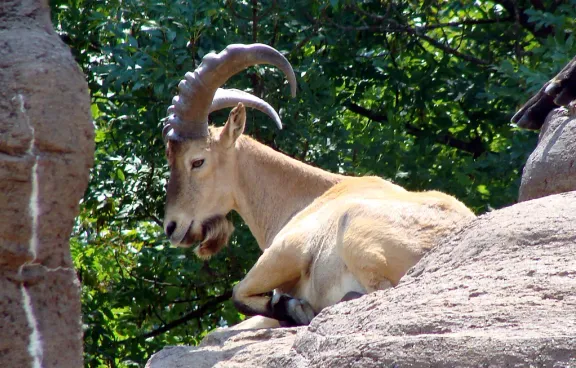
Big game
West Caucasian tur
Capra caucasica
Same subfamily (Caprinae)
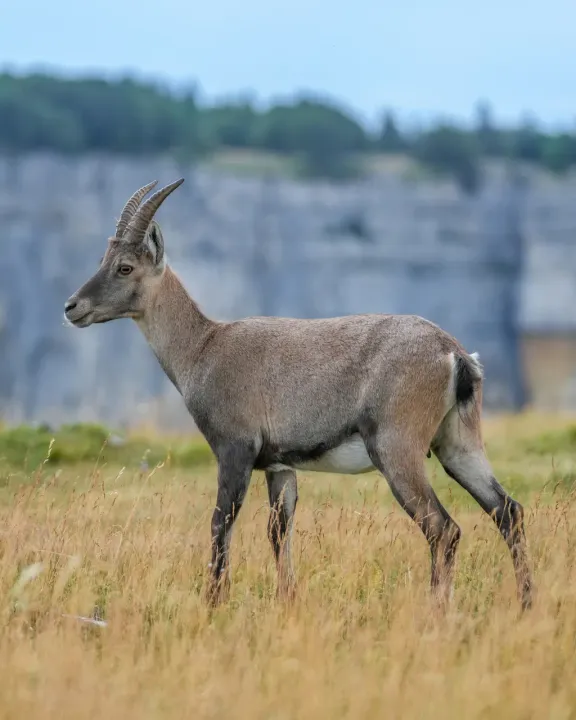
Big game
Alpine ibex
Capra ibex
Same subfamily (Caprinae)