Big game
West Caucasian tur
Capra caucasica
- Group
- Big game
- Size class
- Large (70–300 kg)
- Family
- Bovidae
Range
- Europe
- Asia
Habitat
- Mountain
Range
Countries it is found in
2 countries
- Georgia
- Russia
Range from:ASM Mammal Diversity Database — read 2026-08-05
Chapter 01
Overview
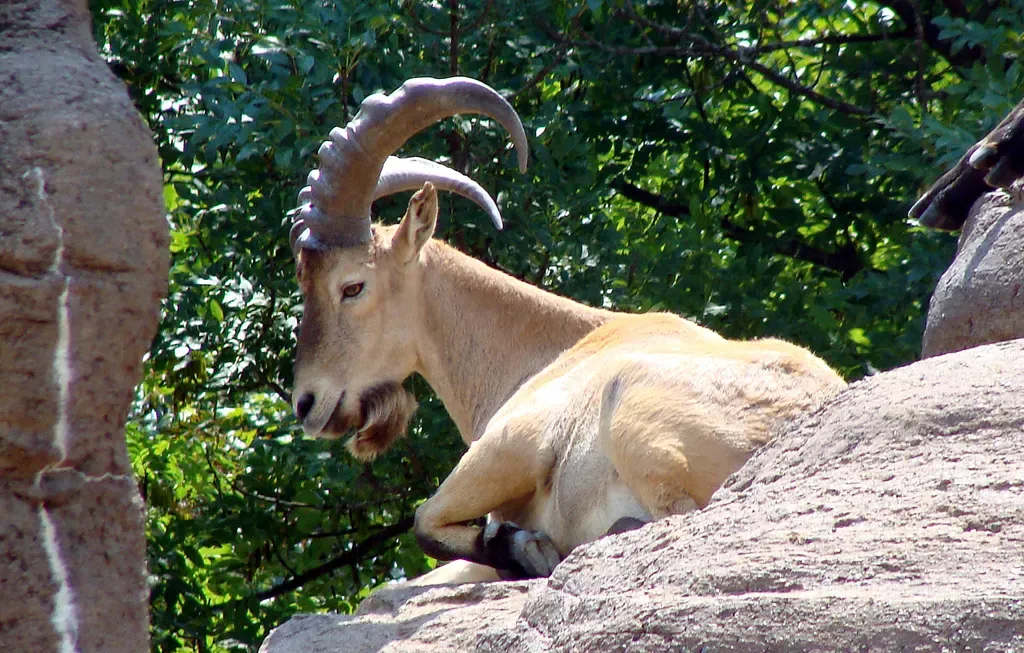
The West Caucasian tur (Capra caucasica), also called the Caucasian ibex, is a wild goat of the western half of the Caucasus, in Georgia and European Russia. The East Caucasian tur is sometimes treated as a subspecies of it, but genetic studies support keeping the two apart, and an intermediate Mid-Caucasian form lives between them; hybrids explain much of the outward resemblance. It lives in rough mountain terrain between 800 and 4,000 m, in a range of about 4,500 km² along the Russian–Georgian border. It once lived much lower and over a far larger area, and in the Pleistocene reached as far as southern France, but people and climate change have pushed it upwards. The IUCN lists it as endangered, with the wild population estimated at 3,000 to 4,000 and falling because of livestock grazing, poaching and harsh winters.
Chapter 02
Identification
A heavy, robust goat with a large but narrow body and short legs, standing up to about 1 m at the shoulder. Males weigh around 65 kg — Swedish Wikipedia gives 65 to 100 kg for males and 50 to 60 kg for females. The coat is chestnut above with a yellowish belly and darker legs in summer, and greyish brown all over in winter; the bucks' beard is usually short and broad. The horns are scimitar-shaped and heavily ridged, shorter, thicker and more curved than an Alpine ibex's, around 70 cm in males and up to about 75 cm, and much smaller in females.
Chapter 03
Behaviour
The West Caucasian tur feeds in the open at night, mainly on grasses and leaves, and shelters during the day. Herds number about ten in summer and grow to about twenty in winter. The rut runs from November to January, and kids are born from May to July. Its predators are wolves and lynx, and Persian leopards and brown bears may also take it. Many turs die in avalanches.
Chapter 04
Hunting
Hunting expeditions are one of the pressures on the West Caucasian tur. In Russia it may legally be hunted from August to November, while in Georgia it is fully protected. It is also poached for meat, skin and horns — the horns are made into the drinking horns called kantsi — and poaching is one of the reasons the population is declining.
Sources
Sources: West Caucasian tur — Wikipedia, Västkaukasisk stenbock — Wikipedia (sv) — read 2026-10-29
Cross-reference
Related species
Its closest relatives in the compendium, nearest kinship first.
Big game
East Caucasian tur
Capra cylindricornis
Same genus (Capra)
Big game
Siberian ibex
Capra sibirica
Same genus (Capra)
Big game
Alpine ibex
Capra ibex
Same genus (Capra)
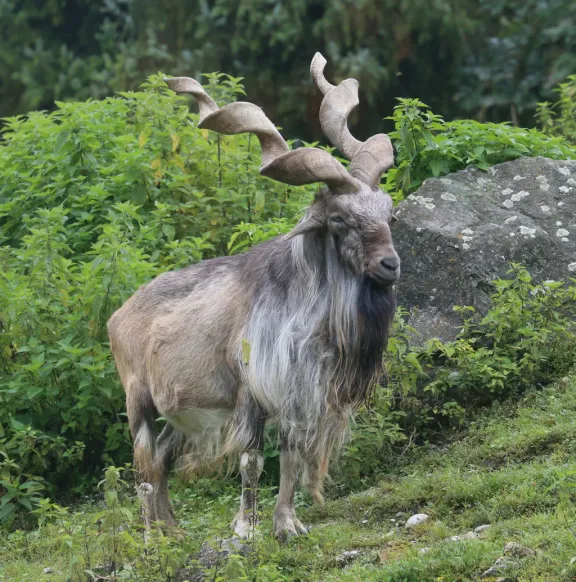
Big game
Markhor
Capra falconeri
Same genus (Capra)
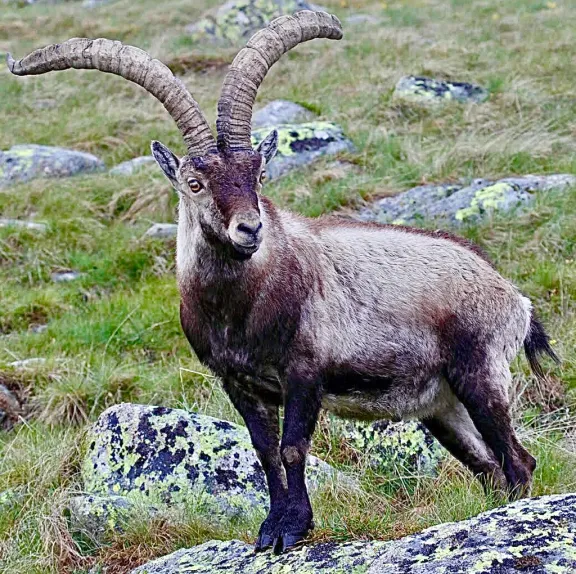
Big game
Iberian ibex
Capra pyrenaica
Same genus (Capra)
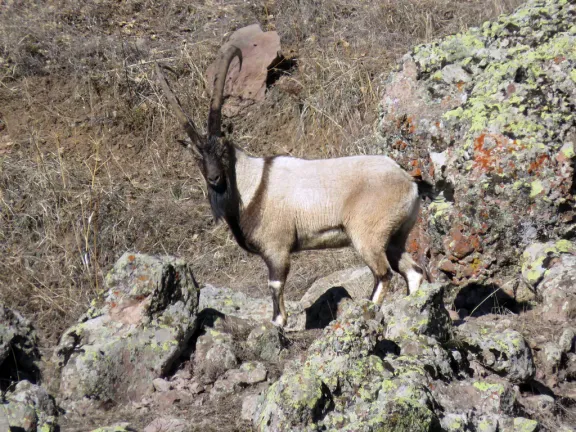
Big game
Bezoar ibex
Capra aegagrus
Same genus (Capra)