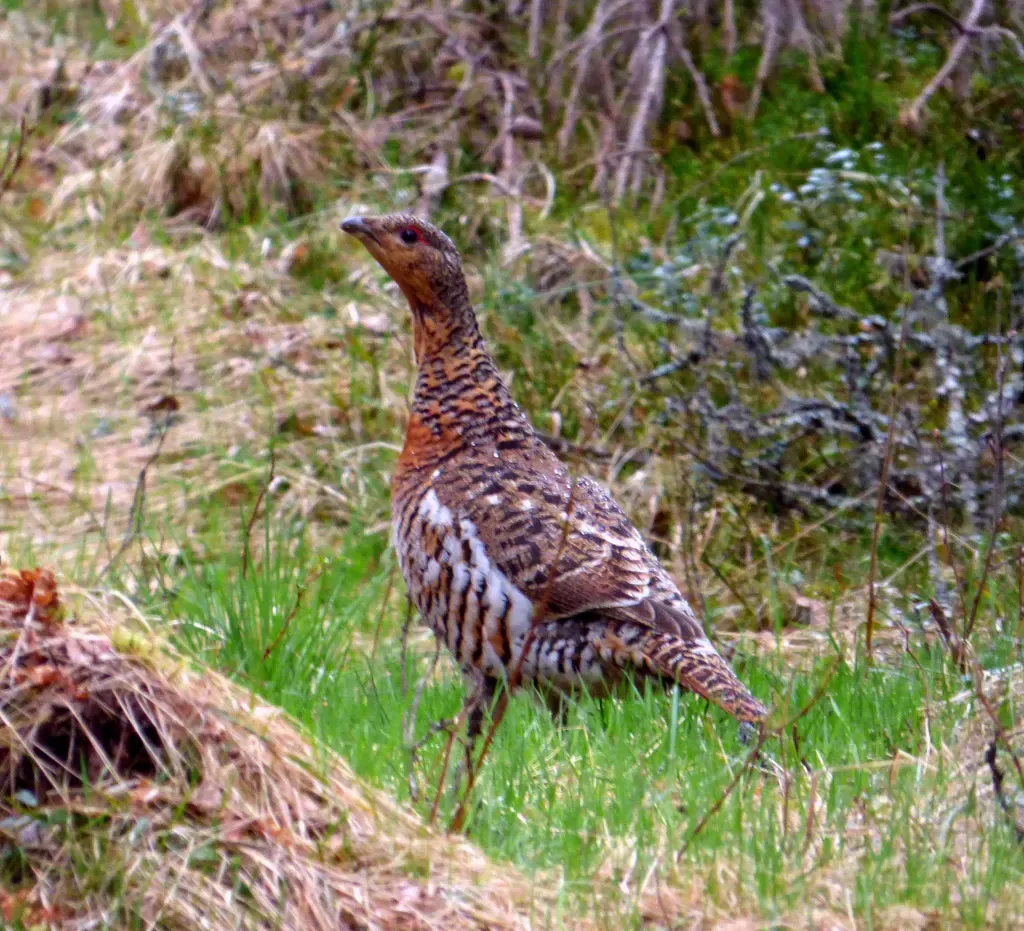
Upland birds
Western capercaillie
Tetrao urogallus
- Group
- Upland birds
- Size class
- Small (under 10 kg)
- Family
- Phasianidae
Range
- Europe
- Asia
Habitat
- Boreal forest
Range
Countries it is found in
35 countries
- Albania
- Andorra
- Austria
- Belarus
- Bosnia & Herzegovina
- Bulgaria
- China
- Croatia
- Czechia
- Estonia
- Finland
- France
- Germany
- Greece
- Ireland
- Italy
- Kazakhstan
- Latvia
- Liechtenstein
- Lithuania
- Mongolia
- Montenegro
- Norway
- Poland
Range from:Wikipedia country bird lists — read 2026-08-05
Chapter 01
Overview
The western capercaillie (Tetrao urogallus) is the largest of all living grouse, found across Europe and the Palearctic. It is a primarily ground-dwelling forest bird, renowned for its courtship display, and it is one of two species in the genus Tetrao alongside the black-billed capercaillie. It is a non-migratory resident that breeds in mature conifer forest of diverse species composition and relatively open canopy. Globally the IUCN rates it least concern, on an estimated 1.5 to 2 million birds in Europe alone, but the central European populations are declining, fragmented or gone. In Germany it is red-listed and no longer found in the lower mountains of Bavaria; the Scottish population went extinct and was reintroduced from Swedish stock, then declined greatly again from the 1960s through deer fencing, predation and lack of habitat. The name is a corruption of the Scottish Gaelic capall coille, 'horse of the woodland'.
Chapter 02
Identification
One of the most sexually dimorphic birds alive — among living species only the larger bustards and a few pheasants exceed it. Cocks are 74 to 85 cm long with a 90 to 125 cm wingspan and average 4.1 kg, the largest wild birds reaching 100 cm and 6.7 kg. Hens weigh about half as much. The cock's body feathers are dark grey to dark brown with dark metallic green on the breast; the belly and undertail coverts run from black to white depending on race, with the amount of white on the underparts increasing from west to east across the eight recognised subspecies. The hen is much smaller and cryptic.
Chapter 03
Behaviour
The capercaillie is a habitat specialist, adapted to old coniferous forest with rich interior structure and dense ground vegetation of bilberry under a light canopy. It feeds mainly on bilberry, finds cover in young growth and uses the open spaces to fly — and it hardly uses any other forest type at all. It is not an elegant flier. Body weight and short rounded wings mean take-off produces a sudden thundering noise that deters predators, and the bird avoids young dense forest when flying, resting in short glides with its feathers whistling. It is a highly specialised herbivore, living almost entirely on bilberry leaves and berries with some grass seed and fresh sedge shoots in summer, and mostly conifer needles in winter when snow cuts off the ground vegetation. Chicks depend on protein-rich insects in their first weeks, so the weather decides the brood: dry and warm lets them grow fast, cold and rain kills them.
Field data
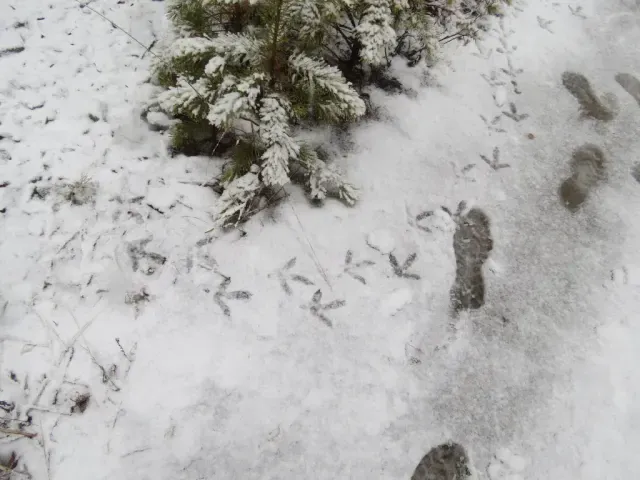
Tracks
A photograph of real sign left by Western capercaillie. Prints vary with gait, ground and how long they have been there — treat this as one example, not a template.
Track photo:Дарья ОрловаCC BY
On the table
Meat & cooking
Table grade 5 of 55/5
- Sold as meat in a legal market
- Has a named traditional dish
- Published way to handle and cook it
- Eaten in more than one country
- No known health advisory
Traditional preparations
- Salmis
- The classic French treatment of game birds — roasted briefly, then jointed and finished in a sauce built from the carcass. Salmis — Wikipedia
- Game pie
- Legs and trim, the parts that dry out on a fast roast, go into raised and braised game pies. Game pie — Wikipedia
Sources
Sources: Western capercaillie — Wikipedia — read 2026-08-05
Cross-reference
Related species
Its closest relatives in the compendium, nearest kinship first.
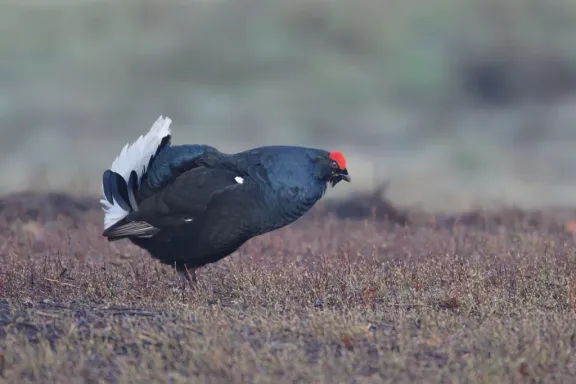
Upland birds
Black grouse
Lyrurus tetrix
Same subfamily (Tetraoninae)
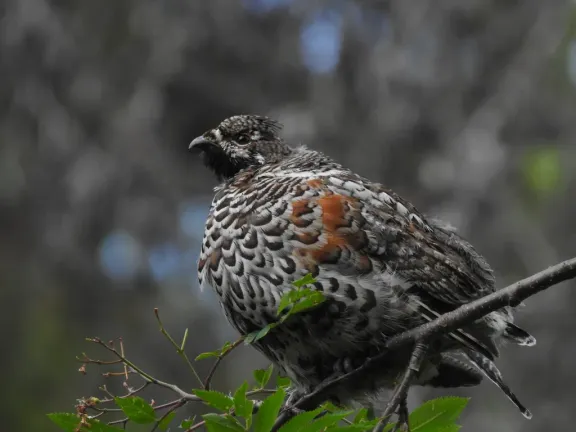
Upland birds
Hazel grouse
Tetrastes bonasia
Same subfamily (Tetraoninae)
Upland birds
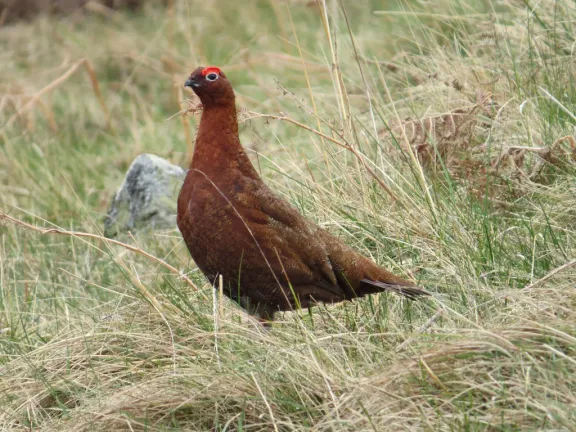
Red grouse
Lagopus lagopus scotica
Same subfamily (Tetraoninae)
Upland birds
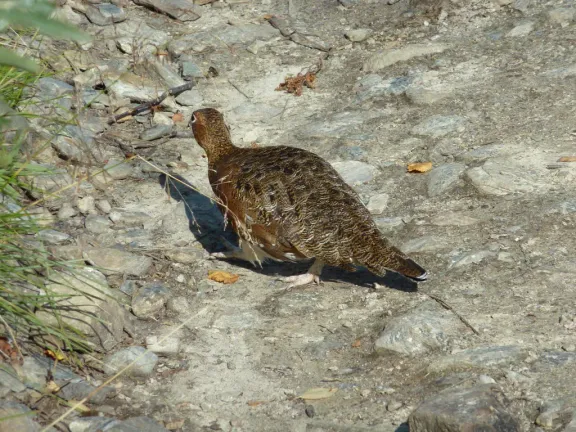
Willow ptarmigan
Lagopus lagopus
Same subfamily (Tetraoninae)
Upland birds
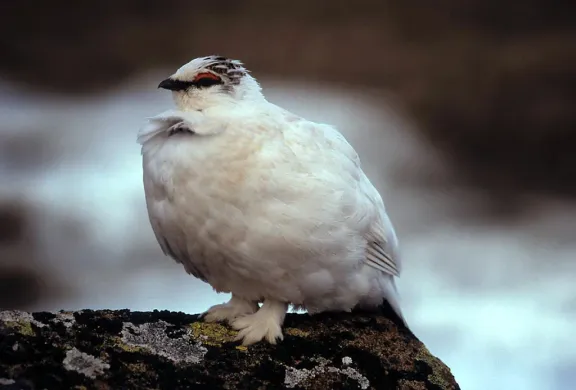
Rock ptarmigan
Lagopus muta
Same subfamily (Tetraoninae)
Upland birds
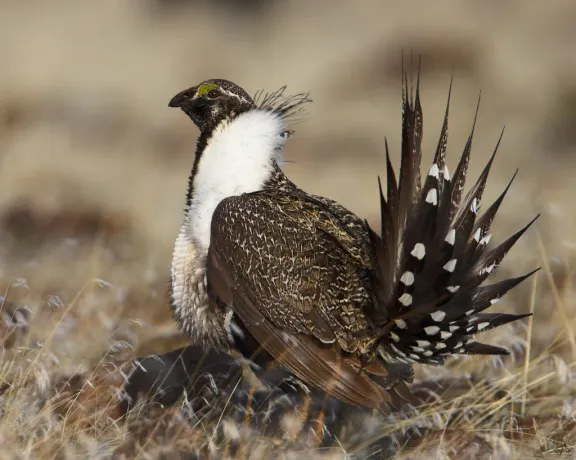
Greater sage-grouse
Centrocercus urophasianus
Same subfamily (Tetraoninae)