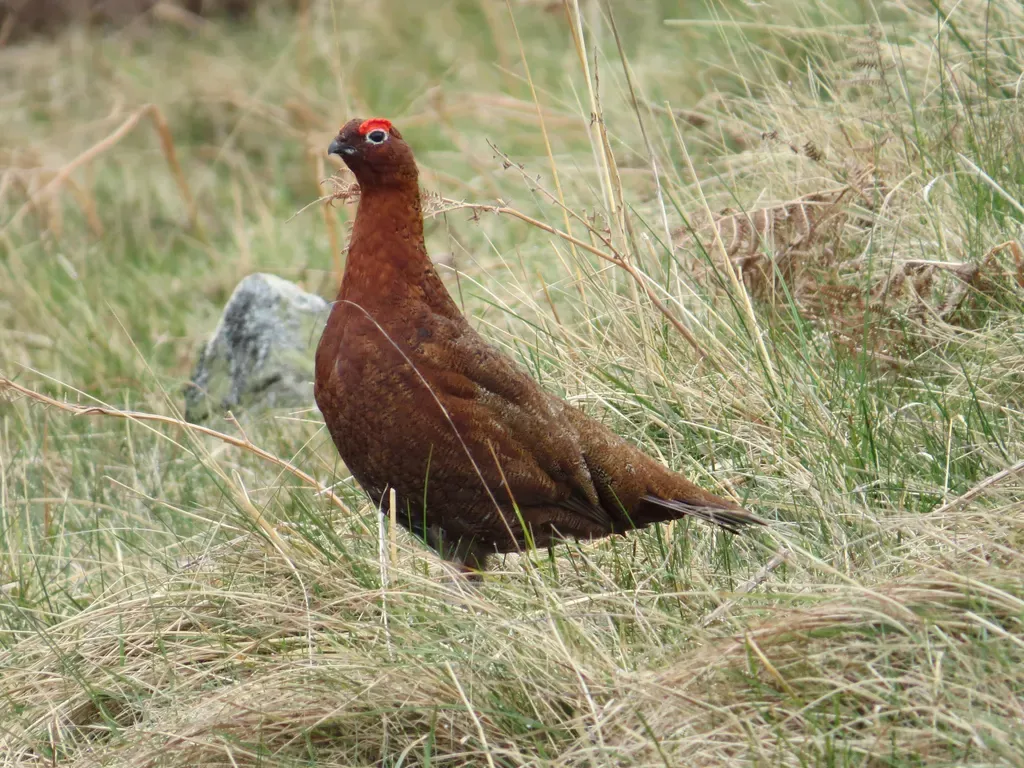
Photo:MPFCC BY-SA 3.0
Upland birds
Red grouse
Lagopus lagopus scotica
- Group
- Upland birds
- Size class
- Small (under 10 kg)
- Family
- Phasianidae
Range
- Europe
Habitat
- Scrub
- Mountain
Range
Countries it is found in
2 countries
- Isle of Man
- United Kingdom
Range from:GBIF occurrence records — read 2026-08-05
Chapter 01
Overview
The red grouse (Lagopus scotica) is a medium-sized grouse of treeless heather moorland, endemic to Great Britain and Ireland, also known as the moorcock, moorfowl or moorbird. It was long classed as a subspecies of the willow grouse, which it closely resembles in form, call and behaviour, but major authorities have treated it as a species of its own since 2024 on genetic and plumage grounds. Lagopus means 'hare-foot', after the feathered feet; scotica means 'of Scotland'. The British population is estimated at 250,000 pairs and Ireland's at 1,000–5,000. Numbers have fallen in recent years through overgrazing of heather, new conifer plantations and fewer upland gamekeepers. In 1861 nine pairs were released near Gothenburg, and more followed in the 1860s, including 50 birds bought from Aberdeenshire by the Swedish forestry board; they are said to have bred, but how long they lasted is unclear.
Chapter 02
Identification
Told from the willow grouse and the rock ptarmigan by its reddish-brown plumage all year round: it never moults into white winter dress and has no white wing feathers. The tail is black, the legs white, with white stripes under the wings and red combs above the eyes. Females are less red than males with smaller combs; juveniles are duller and lack them. Irish birds are slightly paler, the females yellower. The call is a rapid 'chut-chut-chut…' or the familiar 'go-back, go-back, go-back', and the wings whirr when a bird is flushed.
Chapter 03
Behaviour
The adult is mainly herbivorous, living on the shoots, seeds and flowers of heather, with berries, cereals and sometimes insects. In harsh winters birds may come down to farmland and eat hawthorn berries from hedgerows. Populations run in cycles, rising to very high densities before crashing; the parasitic threadworm Trichostrongylus tenuis is thought to be the main driver. Pairs form in autumn, and males grow more territorial through the winter. The nest is a shallow scrape up to 20 cm across, lined with vegetation; six to nine glossy pale yellow eggs with dark brown spots are laid mainly in April and May and incubated for 19–25 days. Chicks can fly at 12–13 days and are full grown at 30–35.
Chapter 04
Hunting
The red grouse is shot in large numbers during a season that opens on 12 August, the 'Glorious Twelfth', and ends on 10 December (30 November in Northern Ireland). It is shot in two ways: walked-up, where the guns advance in a line and flush the birds, and driven, where beaters drive the grouse over 8–10 guns hidden in a line of butts. Birds can fly at up to 130 km/h, which makes them difficult targets. Many moors are managed for high grouse densities through controlled heather burning, heavy control of foxes, stoats and crows, and medicated grit against the threadworm. These practices, and illegal persecution of raptors on some moors, are widely criticised by conservation groups. Under the EU Birds Directive the red grouse is an Annex II species that may be hunted under national law provided population levels are not threatened.
On the table
Meat & cooking
Table grade 4 of 54/5
- Sold as meat in a legal market
- Has a named traditional dish
- Published way to handle and cook it
- Eaten in more than one country
- No known health advisory
Traditional preparations
- Roast grouse
- Like most game birds the grouse is hung for several days before it is eaten, and roasting is the commonest way to cook it. Lady Clark of Tillypronie's 1909 cookery book roasts old birds with a piece of bread inside, discarded before serving, and puts them on toast with gravy served apart. Red grouse — Wikipedia
- Grouse pie
- Mrs Beeton's Book of Household Management of 1861 gives simple recipes for grouse and partridge pie among its game dishes. Game pie — Wikipedia
Sources
Sources: Red grouse — Wikipedia, Moripa — Wikipedia, Driven grouse shooting — Wikipedia, Game pie — Wikipedia — read 2026-10-29
Cross-reference
Related species
Its closest relatives in the compendium, nearest kinship first.
Upland birds
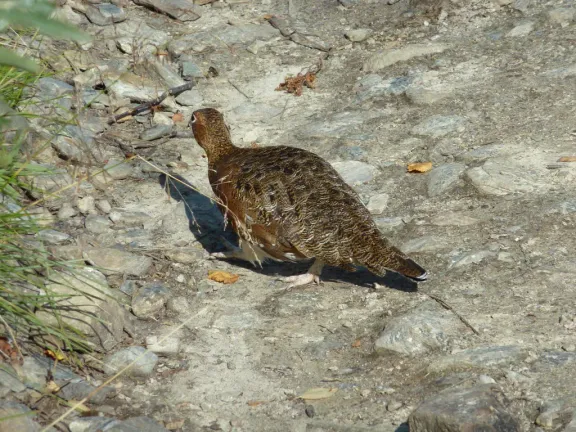
Willow ptarmigan
Lagopus lagopus
Same genus (Lagopus)
Upland birds
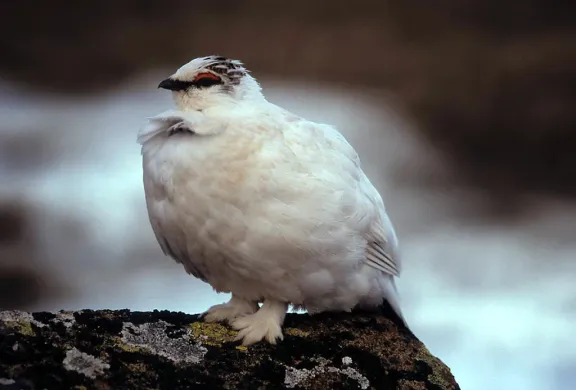
Rock ptarmigan
Lagopus muta
Same genus (Lagopus)
Upland birds
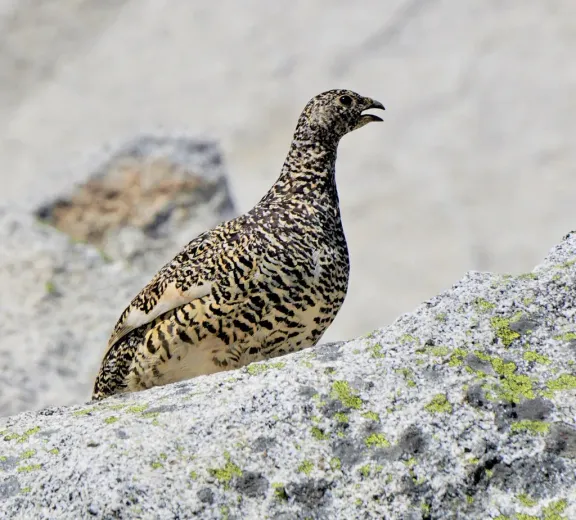
White-tailed ptarmigan
Lagopus leucura
Same genus (Lagopus)
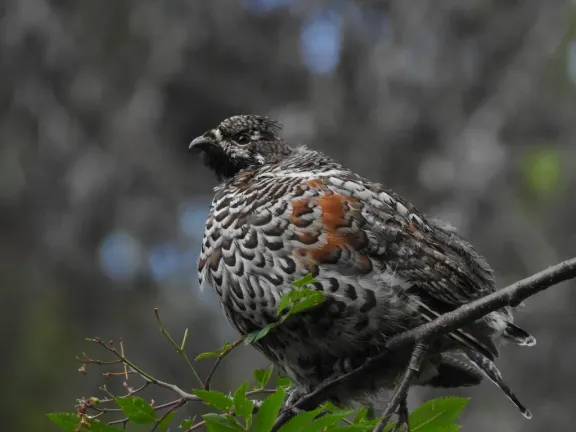
Upland birds
Hazel grouse
Tetrastes bonasia
Same subfamily (Tetraoninae)
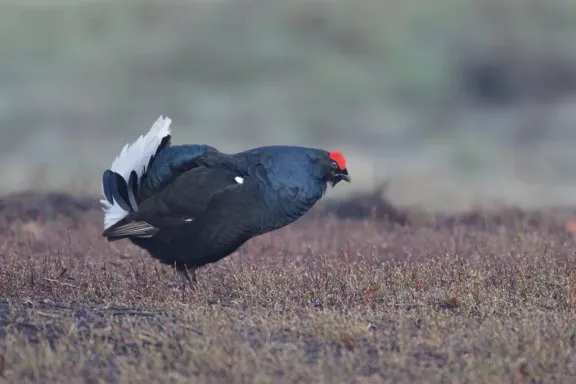
Upland birds
Black grouse
Lyrurus tetrix
Same subfamily (Tetraoninae)
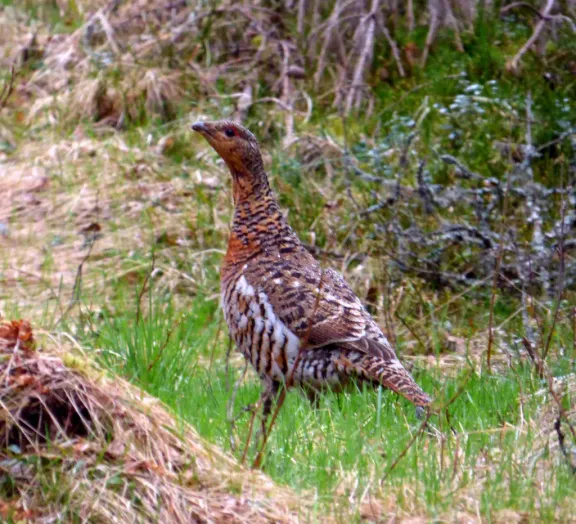
Upland birds
Western capercaillie
Tetrao urogallus
Same subfamily (Tetraoninae)