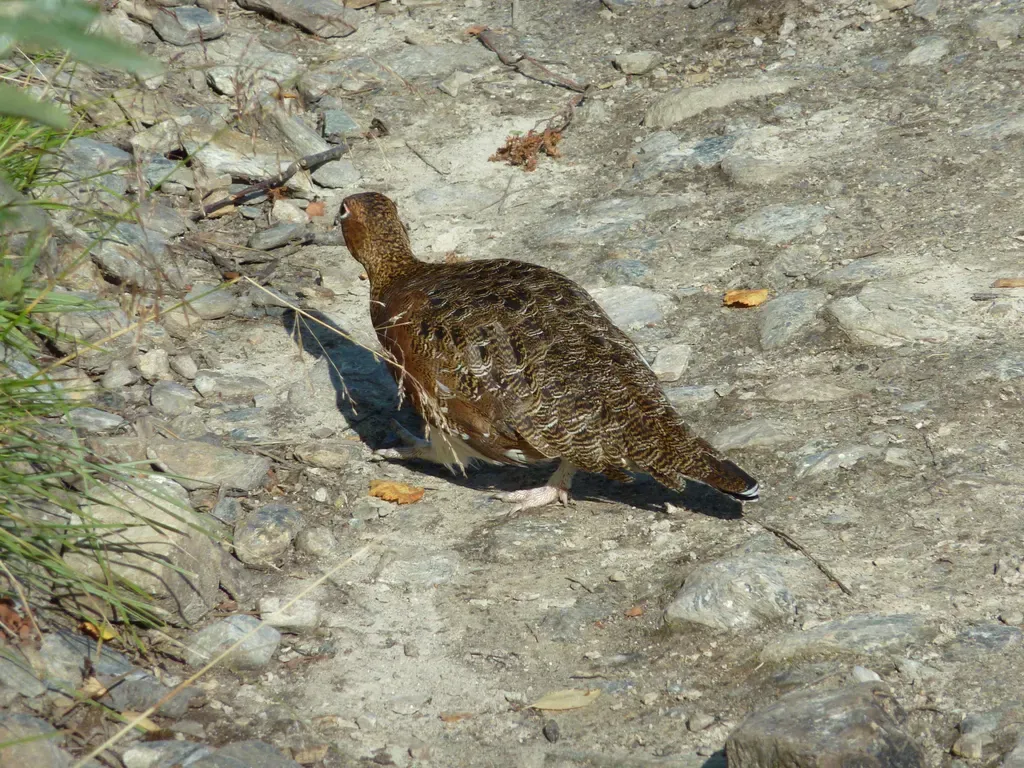
Photo:DjibounCC BY-SA 4.0
Upland birds
Willow ptarmigan
Lagopus lagopus
- Group
- Upland birds
- Size class
- Small (under 10 kg)
- Family
- Phasianidae
Range
- Europe
- North America
- Arctic
Habitat
- Tundra
- Boreal forest
Range
Countries it is found in
13 countries
- Belarus
- Canada
- Estonia
- Finland
- Greenland
- Kazakhstan
- Kyrgyzstan
- Latvia
- Norway
- Poland
- Russia
- Sweden
- United States
Range from:Wikipedia country bird lists — read 2026-08-05
Chapter 01
Overview
The willow ptarmigan (Lagopus lagopus), also called willow grouse, breeds in birch and other forest and on moorland across northern Europe, and on the tundra of Scandinavia, Siberia, Alaska and Canada — particularly Newfoundland and Labrador and Quebec. It is the state bird of Alaska. It is the most numerous of the three ptarmigan species. Linnaeus described it in 1758; the genus name Lagopus is Latin from the Greek for 'hare-footed', after the feathered legs.
Chapter 02
Identification
A medium to large ground bird, 35 to 44 cm long with a 60 to 65 cm wingspan, weighing 430 to 810 g. Males and females are about the same size. It is deep-chested with a fairly long neck, a broad bill, short feathered legs and a moderately short rounded tail. In summer the birds are largely brown with dappled plumage, the male showing a reddish hue to neck and breast; in winter they turn white with some black in the tail.
Chapter 03
Behaviour
Cocks are territorial, arriving on the breeding ground in April and May and defending their patch aggressively against other males. When the hens arrive a few weeks later the cock displays with aerial manoeuvres, strutting and tail-fanning. Once she has chosen a mate and a site, the hen lays six to ten eggs in a shallow scrape on the ground, usually hidden at the edge of a clearing. A small minority of cocks are polygynous. The diet is varied and seasonal, and herbivorous for most of the bird's life — chicks may take insects early because undeveloped caeca leave them unable to digest plant material. Summer food is berries, flowers, leaves, twigs and seeds. In Alaska the mainstay at all times of year is willow: leaves in summer, and buds, twigs and catkins for the rest.

Field data
Tracks
A photograph of real sign left by Willow ptarmigan. Prints vary with gait, ground and how long they have been there — treat this as one example, not a template.
Track photo:Kate SenatskayaCC BY
On the table
Meat & cooking
Table grade 5 of 55/5
- Sold as meat in a legal market
- Has a named traditional dish
- Published way to handle and cook it
- Eaten in more than one country
- No known health advisory
Traditional preparations
- Salmis
- The classic French treatment of game birds — roasted briefly, then jointed and finished in a sauce built from the carcass. Salmis — Wikipedia
- Game pie
- Legs and trim, the parts that dry out on a fast roast, go into raised and braised game pies. Game pie — Wikipedia
Sources
Sources: Willow ptarmigan — Wikipedia — read 2026-08-05
Cross-reference
Related species
Its closest relatives in the compendium, nearest kinship first.
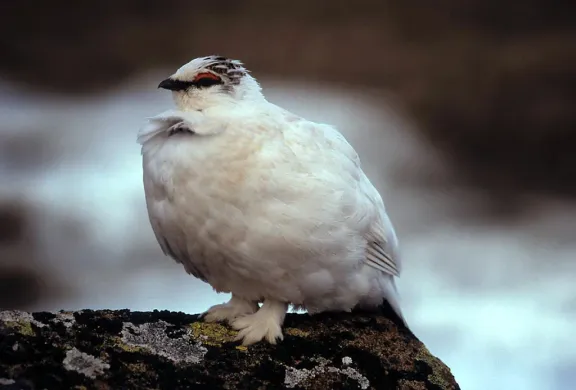
Upland birds
Rock ptarmigan
Lagopus muta
Same genus (Lagopus)
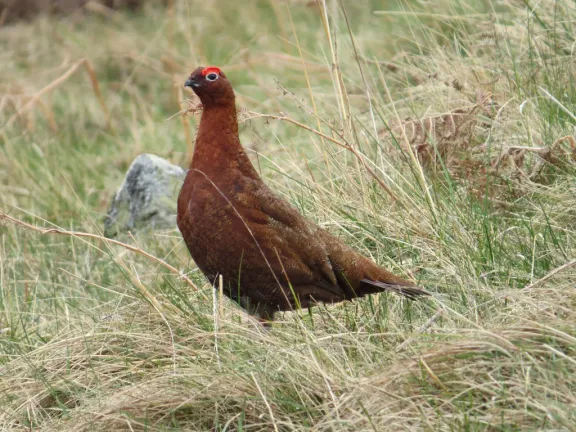
Upland birds
Red grouse
Lagopus lagopus scotica
Same genus (Lagopus)
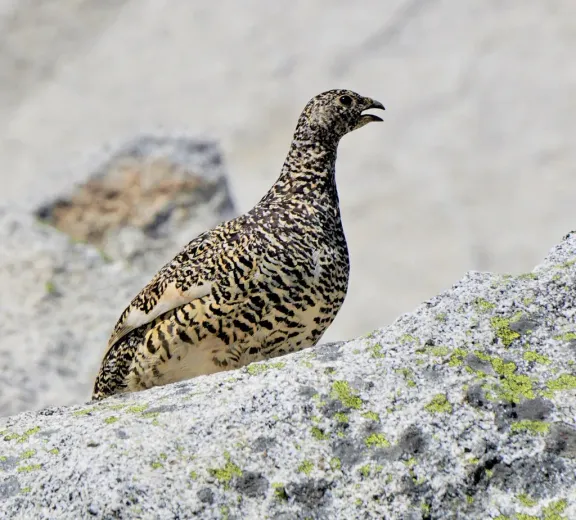
Upland birds
White-tailed ptarmigan
Lagopus leucura
Same genus (Lagopus)
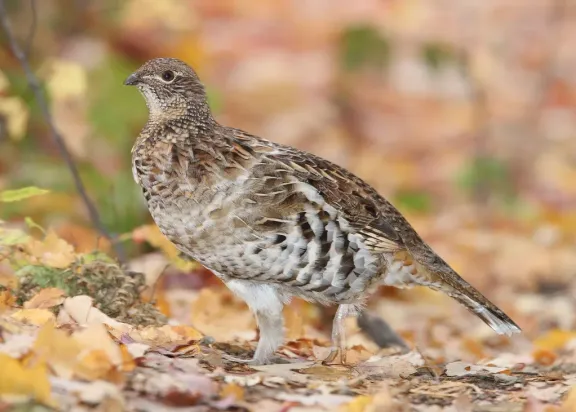
Upland birds
Ruffed grouse
Bonasa umbellus
Same subfamily (Tetraoninae)
Upland birds
Spruce grouse
Falcipennis canadensis
Same subfamily (Tetraoninae)
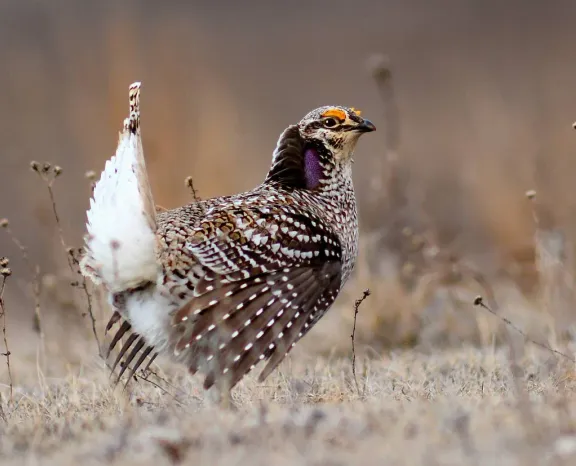
Upland birds
Sharp-tailed grouse
Tympanuchus phasianellus
Same subfamily (Tetraoninae)