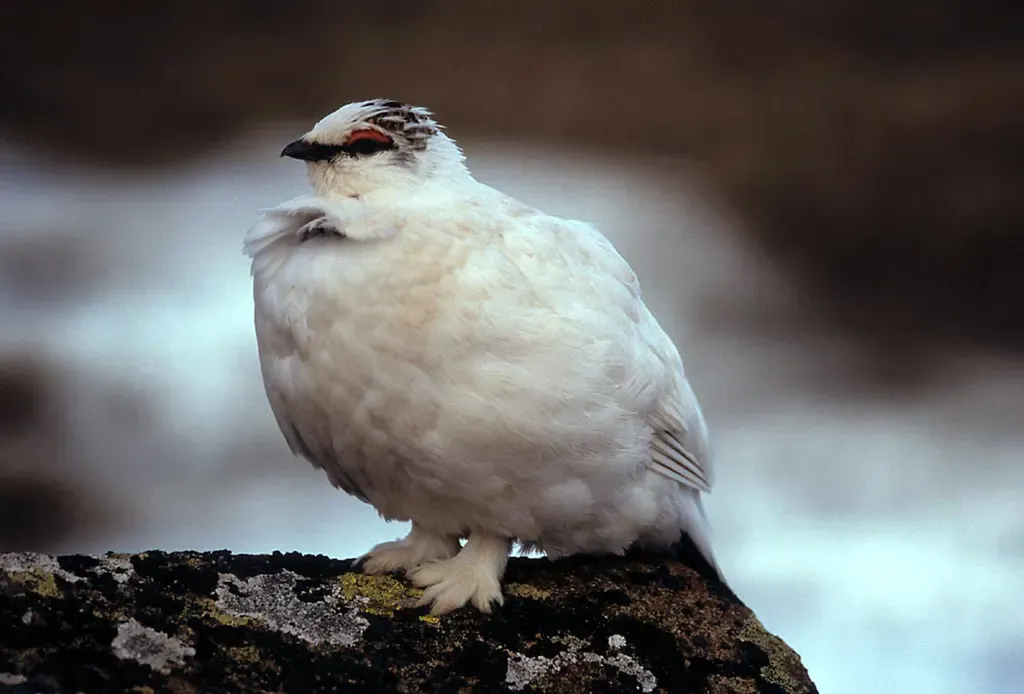
Photo:Tim BowmanPublic domain
Upland birds
Rock ptarmigan
Lagopus muta
- Group
- Upland birds
- Size class
- Small (under 10 kg)
- Family
- Phasianidae
Range
- Europe
- North America
- Arctic
Habitat
- Tundra
- Mountain
Range
Countries it is found in
22 countries
- Andorra
- Austria
- Canada
- Finland
- France
- Germany
- Greenland
- Iceland
- Italy
- Japan
- Kazakhstan
- Liechtenstein
- Monaco
- Norway
- Russia
- Slovenia
- Spain
- Svalbard & Jan Mayen
- Sweden
- Switzerland
- United Kingdom
- United States
Range from:Wikipedia country bird lists, GBIF occurrence records — read 2026-08-05
Chapter 01
Overview
The rock ptarmigan (Lagopus muta) is a medium-sized game bird of the grouse tribe, known simply as the ptarmigan in Europe. It is the official bird of Nunavut, where it is the aqiggiq, and the official game bird of Newfoundland and Labrador. In Japan it is the raichō, 'thunder bird', official bird of Gifu, Nagano and Toyama prefectures and a protected species nationwide. The species name muta is Neo-Latin for 'mute', after the male's simple croaking song.
Chapter 02
Identification
34–36 cm long with an 8 cm tail and a 54–60 cm wingspan, weighing 440–640 g — about ten per cent smaller than the willow ptarmigan. It is camouflaged to the season, moulting from white in winter to grey and brown in spring and summer. The breeding male has greyish upperparts with white wings and underparts. In winter the plumage turns completely white except for the black outer tail feathers and the black eye line, which is the mark that separates it from a willow ptarmigan in the same country.
Chapter 03
Behaviour
Largely sedentary, particularly in isolated southern populations such as Japan and Scotland, which manage no more than limited altitudinal movement to lower, more sheltered ground in winter. Further north it disperses more, and in the Arctic the movements are considerable — birds have been found wintering in Iceland with Greenland-origin minerals in their gizzards, having crossed the 300 km Denmark Strait, and one ringed in summer on Disko Island off western Greenland was recovered over 1,000 km away. Food varies enormously by region. In Alaska the winter staple is aspen buds and dwarf birch and willow buds and catkins, shifting in spring to crowberry and lingonberry. The greatest variety comes in early summer — willow leaves, the leaves and flowers of mountain avens and locoweed — with berries, bistort seeds and birch buds from late summer.
Field data
Tracks
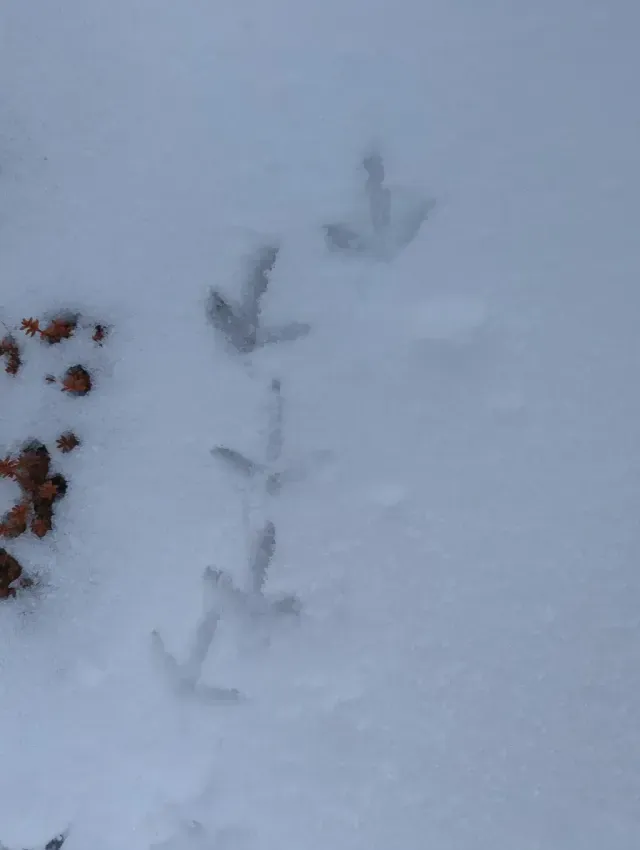
A photograph of real sign left by Rock ptarmigan. Prints vary with gait, ground and how long they have been there — treat this as one example, not a template.
Track photo:Louis BackstromCC BY
On the table
Meat & cooking
Table grade 5 of 55/5
- Sold as meat in a legal market
- Has a named traditional dish
- Published way to handle and cook it
- Eaten in more than one country
- No known health advisory
Traditional preparations
- Icelandic festive ptarmigan
- Rock ptarmigan meat is a popular part of festive meals in Icelandic cuisine. Hunting was banned there in 2003 and 2004 over a declining population and has been allowed again since 2005 on selected days revised yearly, with all trade in the bird illegal. Grouse — Wikipedia
- Salmis
- The classic French treatment of game birds — roasted briefly, then jointed and finished in a sauce built from the carcass. Salmis — Wikipedia
Sources
Sources: Rock ptarmigan — Wikipedia — read 2026-08-05
Cross-reference
Related species
Its closest relatives in the compendium, nearest kinship first.
Upland birds
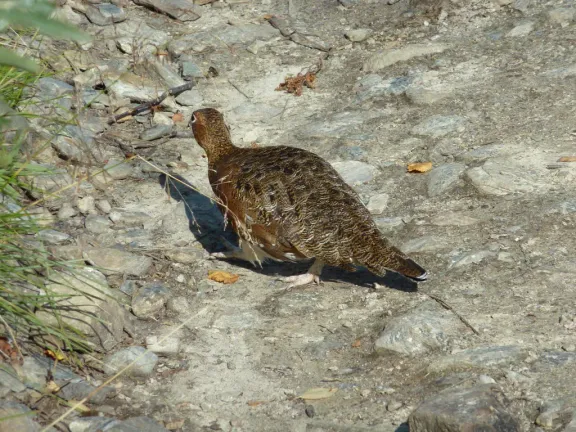
Willow ptarmigan
Lagopus lagopus
Same genus (Lagopus)
Upland birds
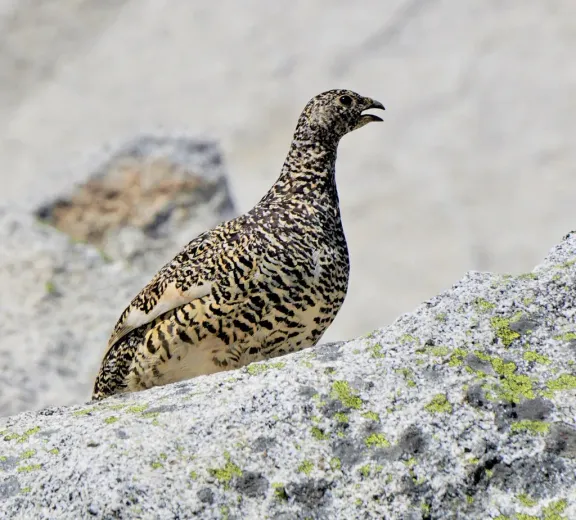
White-tailed ptarmigan
Lagopus leucura
Same genus (Lagopus)
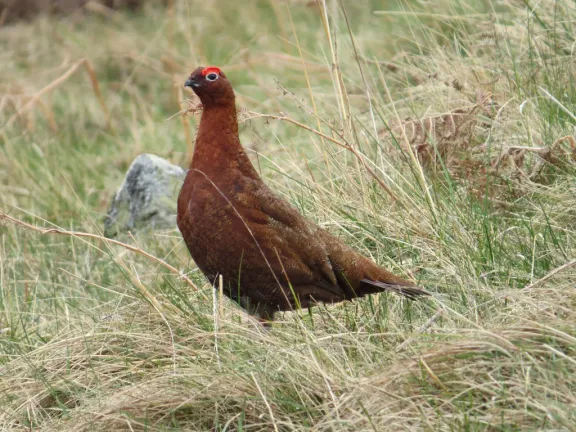
Upland birds
Red grouse
Lagopus lagopus scotica
Same genus (Lagopus)
Upland birds
Spruce grouse
Falcipennis canadensis
Same subfamily (Tetraoninae)
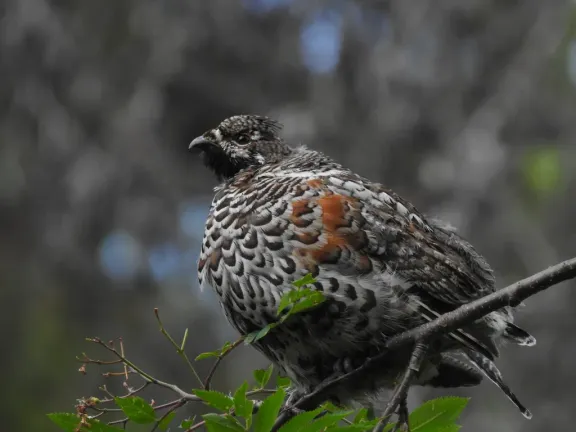
Upland birds
Hazel grouse
Tetrastes bonasia
Same subfamily (Tetraoninae)
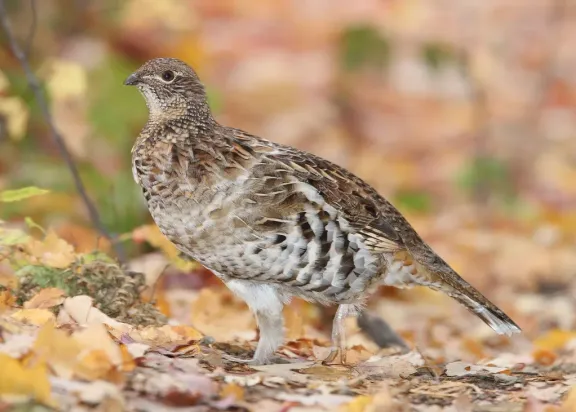
Upland birds
Ruffed grouse
Bonasa umbellus
Same subfamily (Tetraoninae)