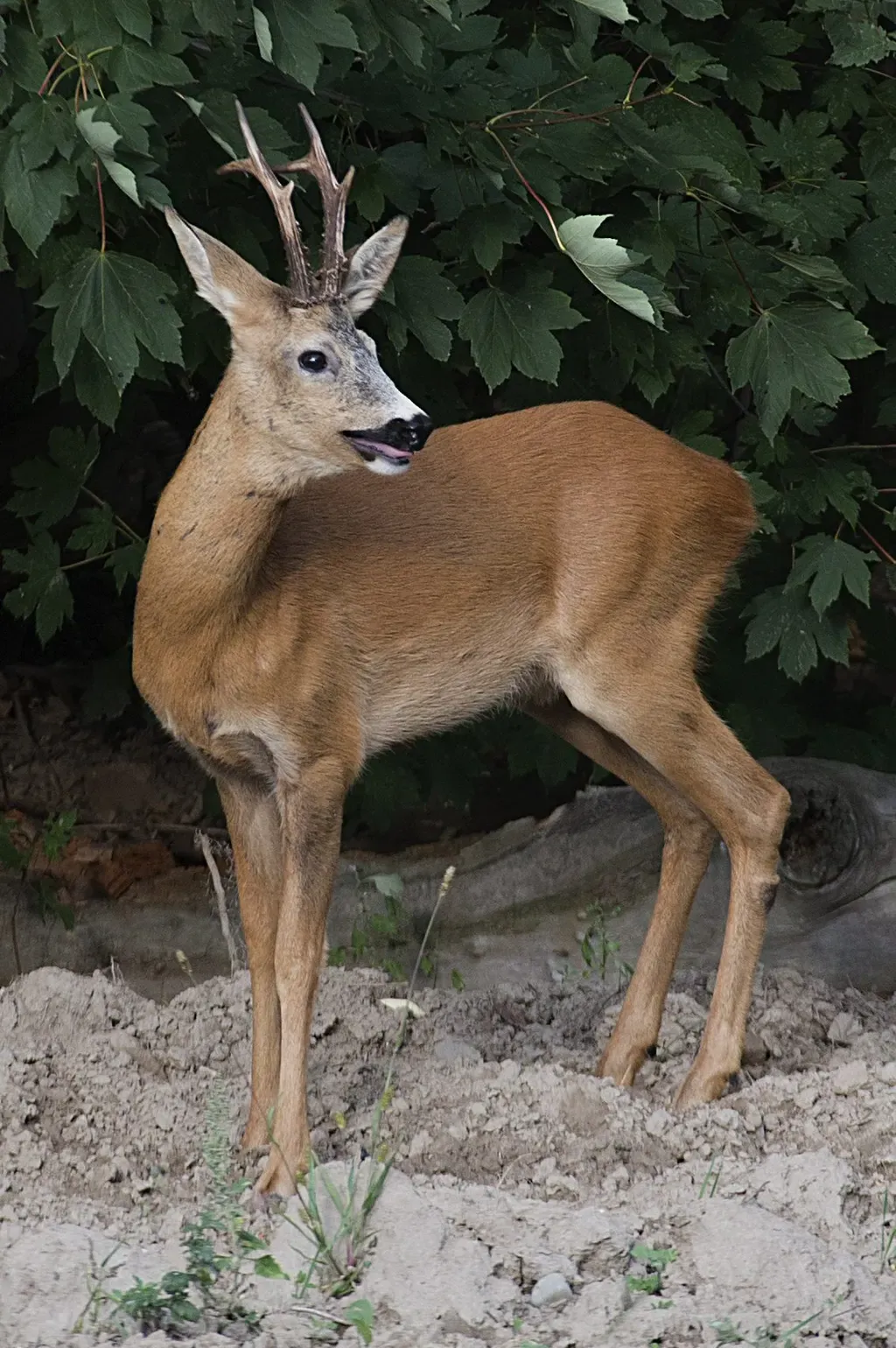
Photo:JerzystrzeleckiCC BY 3.0
Big game
Roe deer
Capreolus capreolus
- Group
- Big game
- Size class
- Medium (10–70 kg)
- Family
- Cervidae
Range
- Europe
- Asia
Habitat
- Forest
- Farmland
Range
Countries it is found in
47 countries
- Åland Islands
- Albania
- Andorra
- Armenia
- Austria
- Azerbaijan
- Belarus
- Belgium
- Bosnia & Herzegovina
- Bulgaria
- Croatia
- Czechia
- Denmark
- Estonia
- Finland
- France
- Georgia
- Germany
- Greece
- Hungary
- Iran
- Iraq
- Italy
- Kosovo
Range from:ASM Mammal Diversity Database, GBIF occurrence records — read 2026-08-05
Chapter 01
Overview
The roe deer (Capreolus capreolus) is a small, reddish and grey-brown deer, well adapted to cold, and the most widespread deer in Europe — found from the Mediterranean to Scandinavia and from Scotland to the Caucasus, reaching east as far as northern Iran. It is absent from northernmost Scandinavia, Iceland, Ireland and the Mediterranean islands, and in the south it is largely confined to high ground. It is a pioneer species, at home in early-succession country: open farmland, ground above the tree line, and anywhere with food and cover within reach. It retreats into dense woodland or bramble to rest, but is opportunistic enough that a hedgerow will do, and roe in southern Bohemia live in almost entirely open farmland. Populations are increasing throughout Europe and the IUCN lists it as least concern. A roe can live to twenty, but seven or eight years is normal; mortality in the first weeks and the first winter runs as high as 90 per cent.
Chapter 02
Identification
A small deer: 95–135 cm long, 63–67 cm at the shoulder, averaging 20–25 kg, with weights across its range spanning 15–35 kg. Where hunting or predators hold density down, bucks are slightly larger than does; under other conditions the sexes are much the same size or the male is slightly smaller. Bucks in good condition grow antlers 20–25 cm long with two or three points, rarely four. The rump patch is the field mark worth knowing: white and heart-shaped on a doe, kidney-shaped on a buck. Both flash it when alarmed.
Chapter 03
Behaviour
Roe manage risk by lying up in cover through the day and moving into the open at night and at dawn and dusk, when there is less about. A roe scrapes leaf litter aside to make a bed. Alarmed, it barks — a sound much like a dog — and flares the rump patch. Does give a high 'pheep' whine to draw bucks during the July and August rut. The doe often goes looking first and leads the buck back into her territory before mating. Roe are territorial, and while a buck's and a doe's ranges may overlap, animals of the same sex are not tolerated. Courtship chases flatten the underbrush into circles and figures of eight one to three metres across, known as roe rings. Bucks clash over territory in early summer and mate in early autumn; after delayed implantation the doe gives birth the following June, usually to two spotted fawns of 0.8–2.5 kg. Feeding is on grass, leaves, berries and young shoots, with a marked preference for tender grass that has had rain on it the day before — and roe will generally not enter a field that holds or has held livestock.
Field data
Tracks
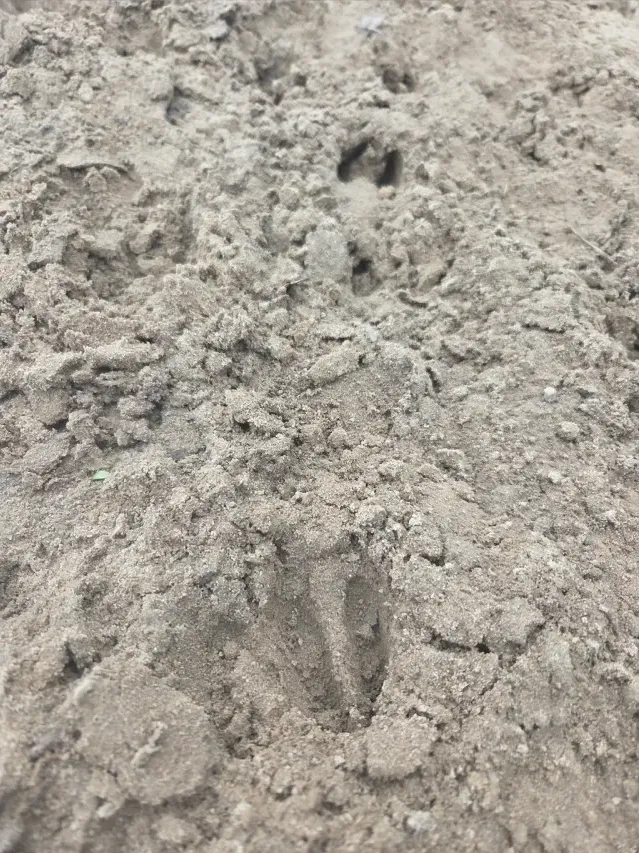
A photograph of real sign left by Roe deer. Prints vary with gait, ground and how long they have been there — treat this as one example, not a template.
Track photo:ChristopheCC BY
On the table
Meat & cooking
Table grade 5 of 55/5
- Sold as meat in a legal market
- Has a named traditional dish
- Published way to handle and cook it
- Eaten in more than one country
- No known health advisory
Traditional preparations
- Rådjursstek
- The saddle and haunch are the prized cuts across Europe; roe is the mildest of the European venisons and is usually roasted rare rather than braised. Venison — Wikipedia
- Game pie
- Shoulder and neck, the cuts that repay slow cooking, go into raised and braised game pies throughout Britain and northern Europe. Game pie — Wikipedia
Sources
Sources: Roe deer — Wikipedia — read 2026-08-05
Cross-reference
Related species
Its closest relatives in the compendium, nearest kinship first.
Big game
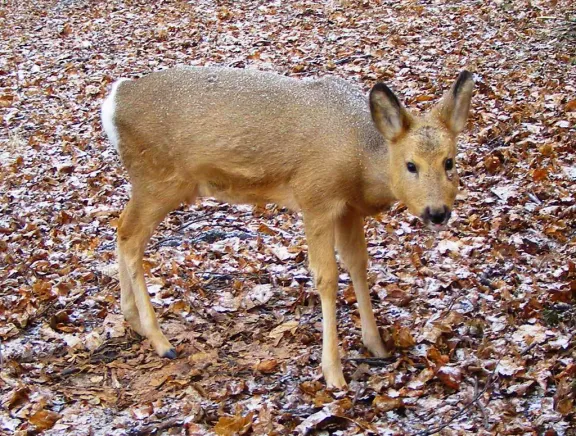
Siberian roe deer
Capreolus pygargus
Same genus (Capreolus)
Big game
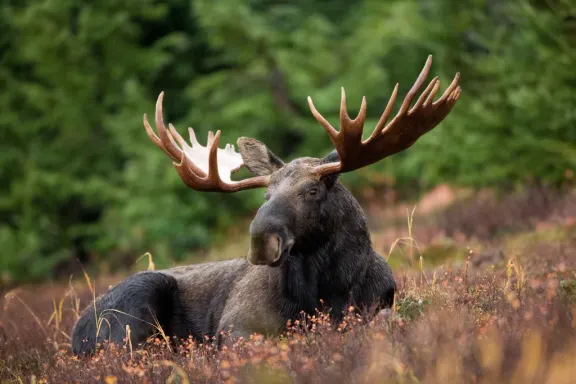
Moose
Alces alces
Same subfamily (Odocoileinae)
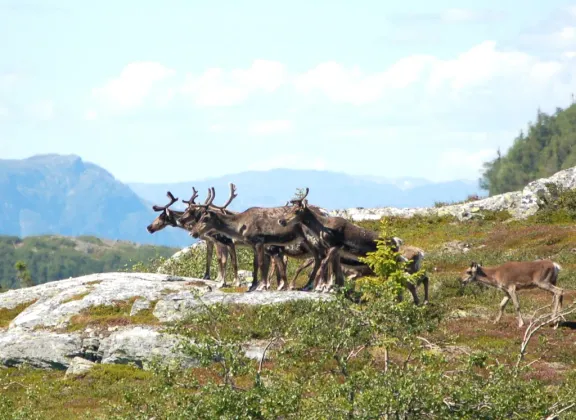
Big game
Reindeer
Rangifer tarandus tarandus
Same subfamily (Odocoileinae)
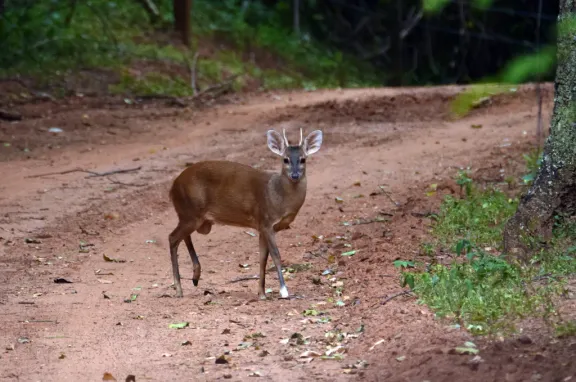
Big game
Grey brocket deer
Mazama gouazoubira
Same subfamily (Odocoileinae)
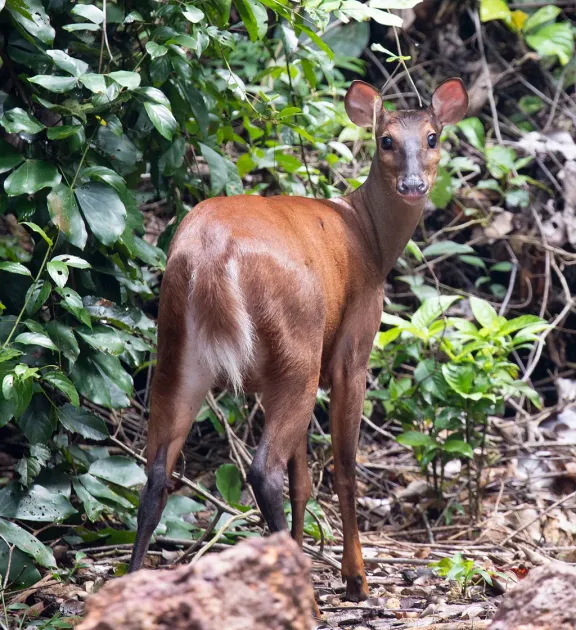
Big game
Red brocket deer
Mazama americana
Same subfamily (Odocoileinae)
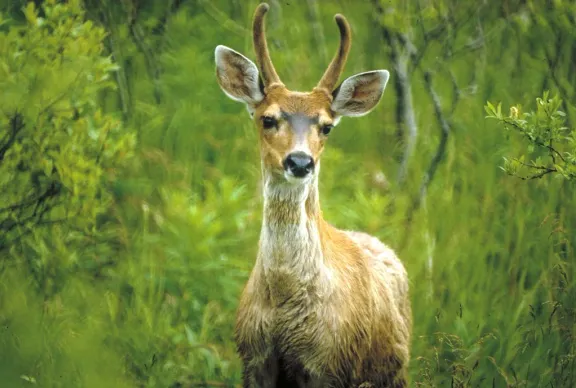
Big game
Sitka blacktail deer
Odocoileus hemionus sitkensis
Same subfamily (Odocoileinae)