Big game
Moose
Alces alces
- Group
- Big game
- Size class
- Giant (300 kg+)
- Family
- Cervidae
Range
- North America
- Europe
- Asia
Habitat
- Boreal forest
- Wetland
Range
Countries it is found in
23 countries
- Belarus
- Canada
- China
- Croatia
- Czechia
- Denmark
- Estonia
- Finland
- Germany
- Hungary
- Kazakhstan
- Latvia
- Lithuania
- Moldova
- Mongolia
- Norway
- Poland
- Romania
- Russia
- Slovakia
- Sweden
- Ukraine
- United States
Range from:ASM Mammal Diversity Database, GBIF occurrence records — read 2026-08-05
Chapter 01
Overview
The moose (Alces alces) is the largest and tallest living deer, and the only species in the genus Alces. It is a cold-adapted animal of the circumpolar boreal forest and the temperate broadleaf and mixed forests of the northern hemisphere, thriving in cool temperate and subarctic climates. It is not a scarce animal. Canada holds an estimated 500,000 to 1,000,000, and the United States around 300,000, of which Alaska alone accounted for roughly 200,000 in a 2011 state estimate. Hunting has shaped the relationship between moose and people in both Eurasia and North America for as long as the two have shared ground.
Chapter 02
Identification
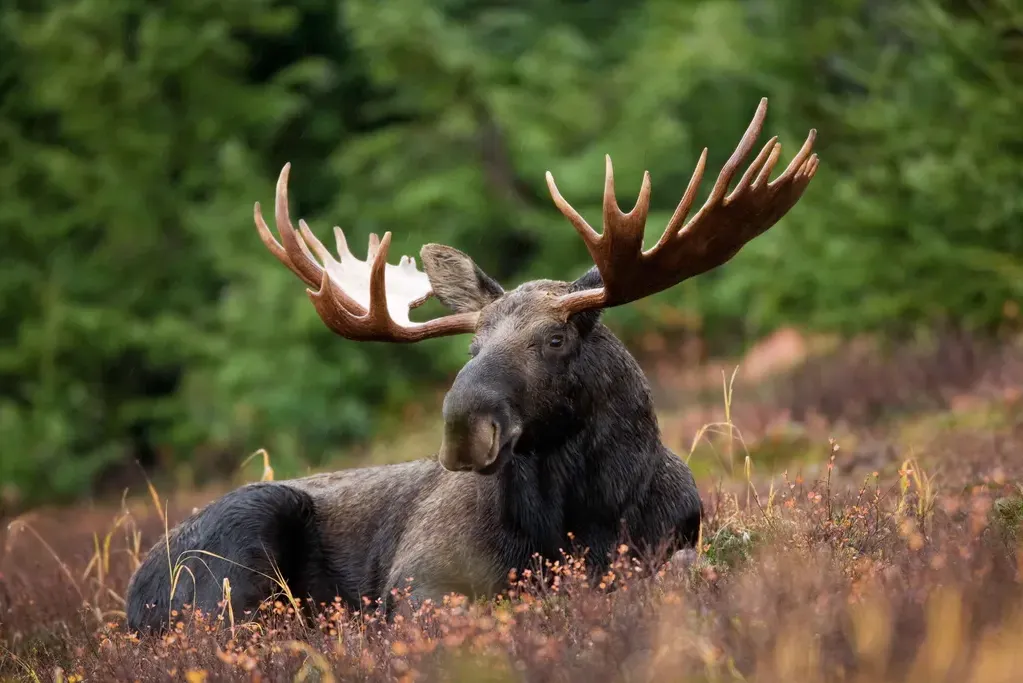
An adult stands 1.4–2.1 m at the shoulder, more than 30 cm taller on average than the next largest deer. Bulls normally weigh 380–700 kg and cows 200–490 kg, varying with race, age and condition. The tail is vestigial at 6–8 cm — too short, unlike other ungulates, to swish away insects. The surest mark is the antler. Most bull moose carry broad, palmate antlers, flat blades with tines along the outer edge, where every other deer carries pointed, twig-like beams. Antler size and the symmetry of the points track a bull's diet and age, and cows appear to select on both. Northern European populations show the palmate pattern; southerly ones tend not to.
Chapter 03
Behaviour
Moose are mostly diurnal and generally solitary, the strongest bond being between a cow and her calf. They rarely gather, though several may be in close company during the mating season. The rut runs through September and October. Mature bulls stop feeding altogether for about two weeks of it, a fast attributed to neurophysiological changes that redeploy their sense of smell towards cow urine. Both sexes call: bulls produce heavy grunts audible up to 500 m, cows a wail-like sound. Bulls fight for access, first assessing one another and often settling it without contact. They are browsers rather than grazers. An adult needs about 96 megajoules a day and may eat 32 kg of food to get it — forbs, willow and birch shoots on land, and as much as half the diet in aquatic plants such as lilies and pondweed, which are poorer in energy but carry the sodium the land plants lack. In winter that salt hunger draws them onto gritted roads. Heat is the real constraint: a thick coat and low surface-to-volume ratio make them superb in cold and poor in warmth, so in hot weather they seek shade, wind or water, and a cow that fails to feed through a hot summer may not calve.
Field data
Tracks
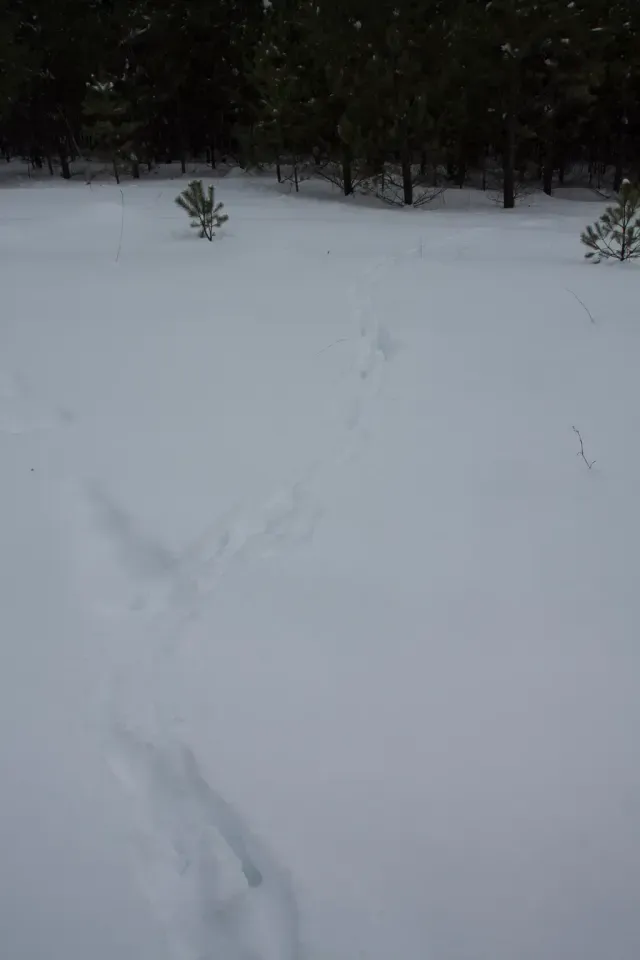
A photograph of real sign left by Moose. Prints vary with gait, ground and how long they have been there — treat this as one example, not a template.
Track photo:Полина ПолежанкинаCC BY
On the table
Meat & cooking
Table grade 4 of 54/5
- Sold as meat in a legal market
- Has a named traditional dish
- Published way to handle and cook it
- Eaten in more than one country
- No known health advisory
Before you eat it: Liver and kidney from moose accumulate cadmium and are not recommended for eating; the muscle meat is not affected. Livsmedelsverket lists game offal among the foods that contribute most to cadmium intake.
Traditional preparations
- Älgstek
- The classic Nordic roast — a haunch or saddle larded and roasted, served with cream sauce and pressgurka. Venison from moose is lean enough that it is usually barded or cooked to a low internal temperature. Venison — Wikipedia
- Game charcuterie
- Moose is widely turned into cured sausage and air-dried meat across Scandinavia, the shoulder and neck going to mince and sausage while the loin is kept whole. Charcuterie — Wikipedia
Sources
Sources: Moose — Wikipedia, Livsmedelsverket: Kadmium — read 2026-08-05
Cross-reference
Related species
Its closest relatives in the compendium, nearest kinship first.
Big game
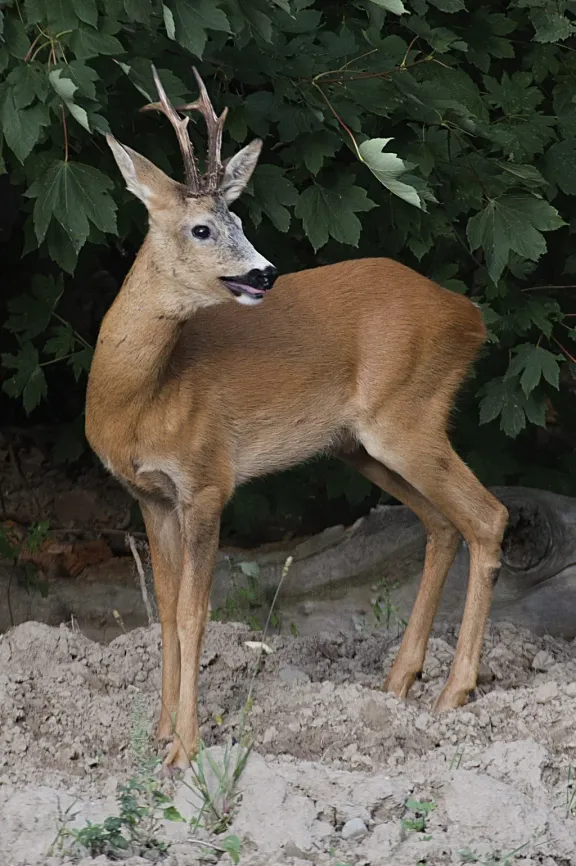
Roe deer
Capreolus capreolus
Same subfamily (Odocoileinae)
Big game
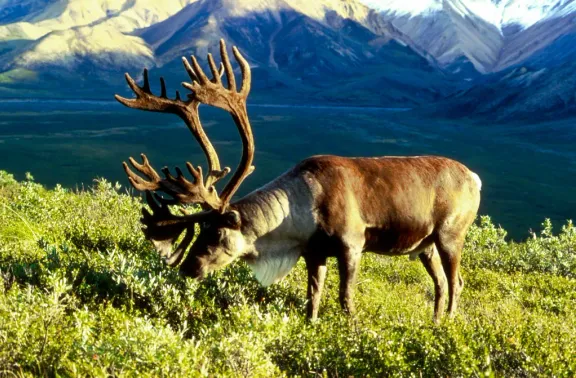
Caribou
Rangifer tarandus granti
Same subfamily (Odocoileinae)
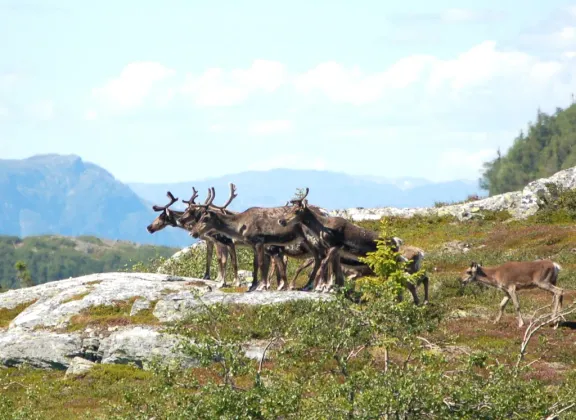
Big game
Reindeer
Rangifer tarandus tarandus
Same subfamily (Odocoileinae)
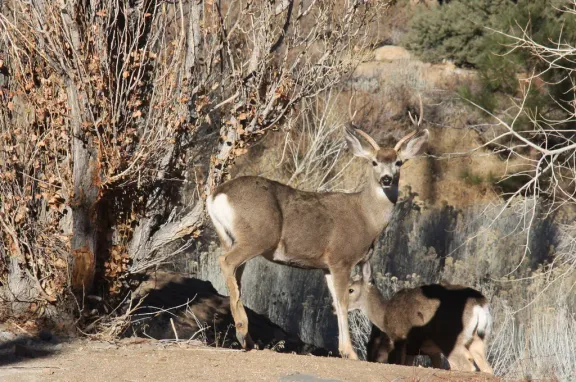
Big game
Mule deer
Odocoileus hemionus
Same subfamily (Odocoileinae)
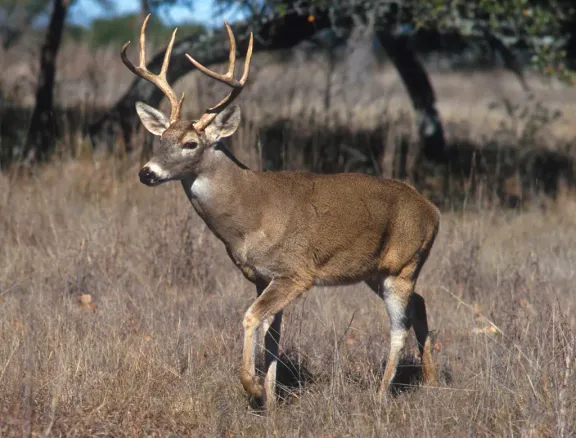
Big game
Whitetail deer
Odocoileus virginianus
Same subfamily (Odocoileinae)
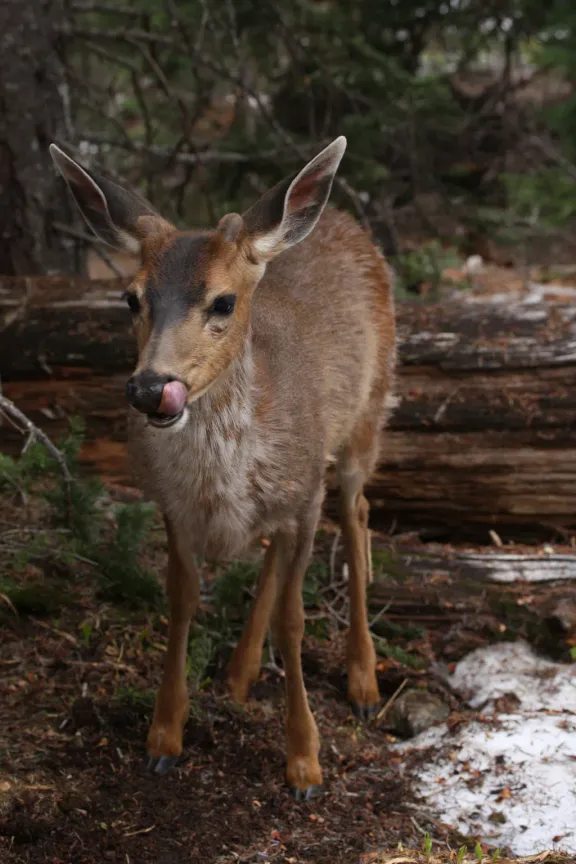
Big game
Columbian blacktail deer
Odocoileus hemionus columbianus
Same subfamily (Odocoileinae)