Big game
Reindeer
Rangifer tarandus tarandus
- Group
- Big game
- Size class
- Large (70–300 kg)
- Family
- Cervidae
Range
- Europe
- Arctic
Habitat
- Tundra
- Boreal forest
Range
Countries it is found in
4 countries
- Finland
- Iceland
- Norway
- Sweden
Range from:GBIF occurrence records — read 2026-08-05
Chapter 01
Overview
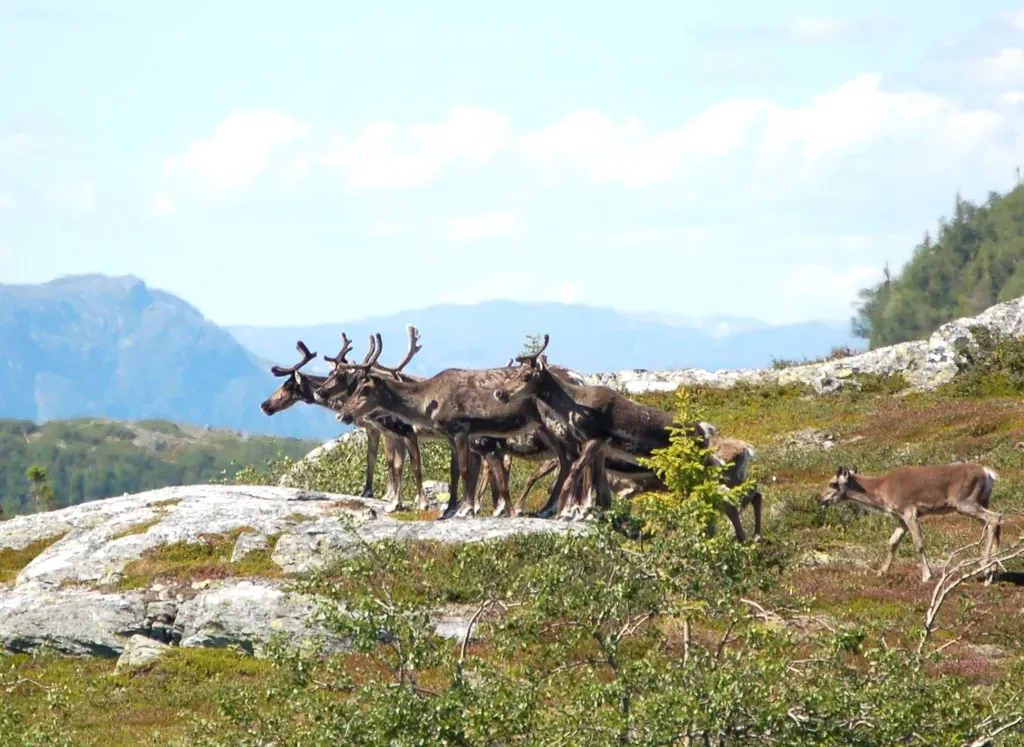
The mountain reindeer (Rangifer tarandus tarandus) — fjellrein or villrein in Norwegian — is a mid-sized to large subspecies of reindeer native to the western Scandinavian peninsula. Genuinely wild mountain reindeer are now found only in western Scandinavia, with the largest populations in central and southern Norway: 70,000 to 80,000 in total, concentrated in Sør-Trøndelag, Nord-Trøndelag and northern Hedmark, with a smaller herd of 6,000 to 7,000 on the Hardangervidda. The herd is a managed one, and its recovery is recent. Wild reindeer in Norway were completely protected from 1902 to 1906; the population fell again anyway, and by the 1920s stood at roughly 2,700. Quotas introduced in the 1930s, together with migration, brought it back above 30,000 by the mid-1990s. Mountain reindeer are commonly hunted today for meat and as trophies.
Chapter 02
Identification
A medium to large even-toed ungulate carrying a thick double coat against the Norwegian winter. Bulls average 70 to 150 kg, cows 40 to 100 kg. Both sexes carry antlers — unusually among deer — but cows do not fight each other with them; they use them to defend food or ground from intruders. The summer coat is mostly pale brown with a white rump, and in some genetic variants black legs and a creamy-white neck. The winter coat runs from cream-white with beige shoulders and back to entirely cream-white. The physiology is built for cold. Reindeer haemoglobin unloads oxygen efficiently even at very low temperatures, which matters because the limbs are routinely held far colder than the body core — regional heterothermy. In warm weather they switch from nasal to open-mouth breathing to shed heat.
Field data
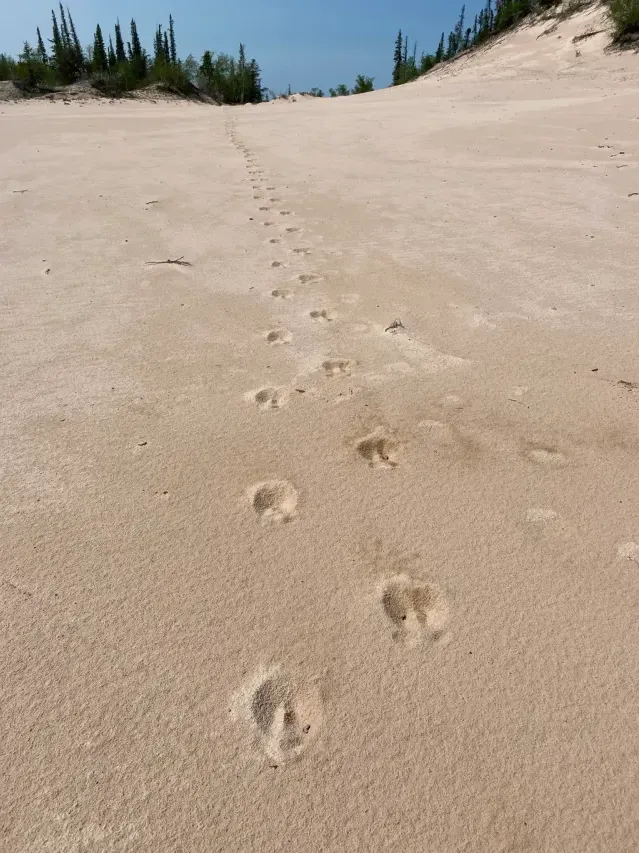
Tracks
A photograph of real sign left by Reindeer. Prints vary with gait, ground and how long they have been there — treat this as one example, not a template.
Track photo:LeeAnn LatremouilleCC BY
On the table
Meat & cooking
Table grade 4 of 54/5
- Sold as meat in a legal market
- Has a named traditional dish
- Published way to handle and cook it
- Eaten in more than one country
- No known health advisory
Before you eat it: Liver and kidney from reindeer accumulate cadmium and are not recommended for eating; the muscle meat is not affected. Livsmedelsverket counts game offal among the main contributors to dietary cadmium.
Traditional preparations
- Renskav
- Frozen reindeer meat shaved thin and fried hard and fast, the everyday Sámi and northern Nordic preparation, usually finished with cream and served with lingonberries and potato. Sautéed reindeer — Wikipedia
- Cured and smoked reindeer
- Salting, drying and cold-smoking are the traditional way of keeping the meat, and the loin and haunch are still preserved this way across northern Scandinavia. Charcuterie — Wikipedia
Sources
Sources: Mountain reindeer — Wikipedia, Livsmedelsverket: Kadmium — read 2026-08-05
Cross-reference
Related species
Its closest relatives in the compendium, nearest kinship first.
Big game
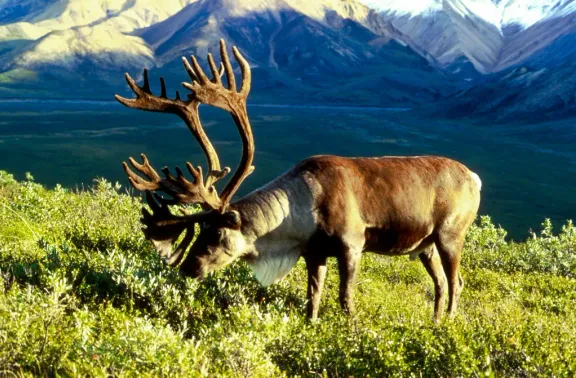
Caribou
Rangifer tarandus granti
Same genus (Rangifer)
Big game
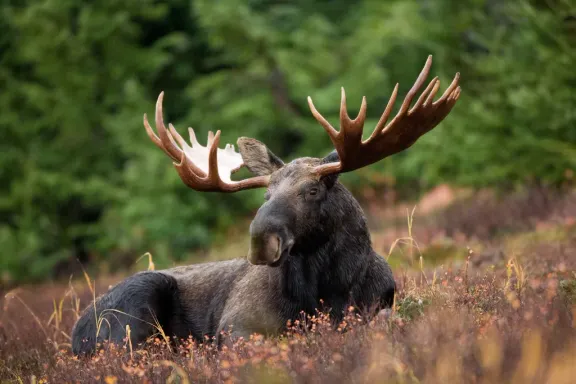
Moose
Alces alces
Same subfamily (Odocoileinae)
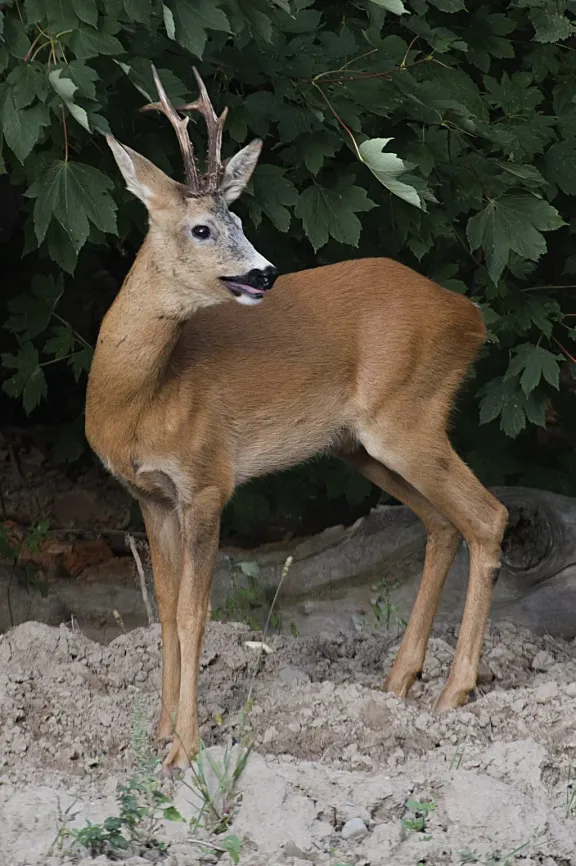
Big game
Roe deer
Capreolus capreolus
Same subfamily (Odocoileinae)
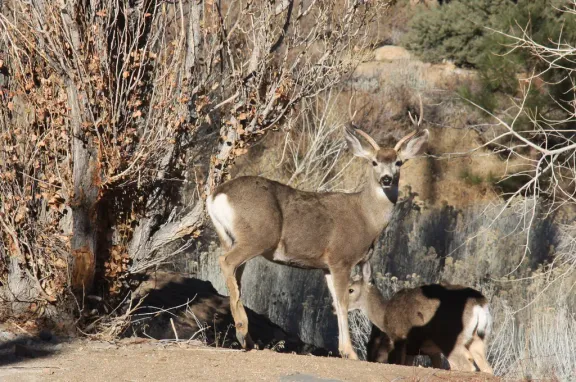
Big game
Mule deer
Odocoileus hemionus
Same subfamily (Odocoileinae)
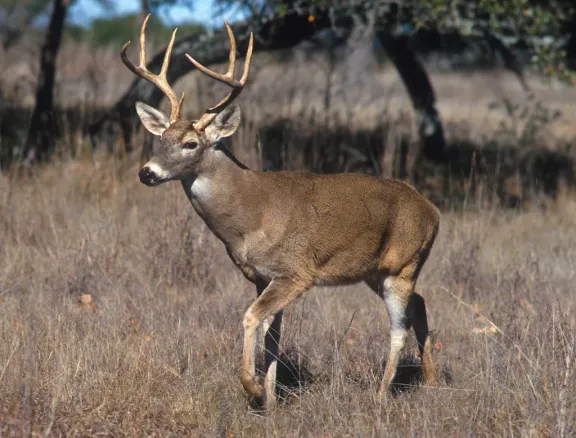
Big game
Whitetail deer
Odocoileus virginianus
Same subfamily (Odocoileinae)
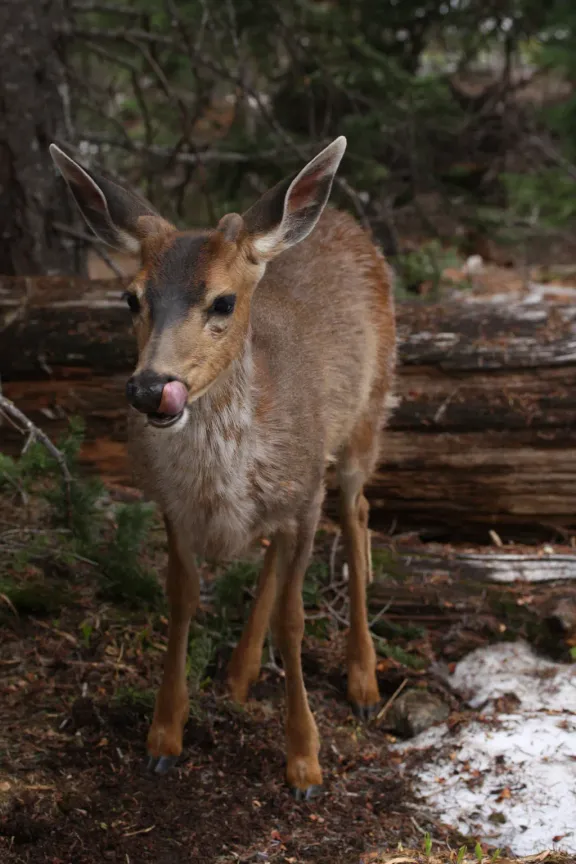
Big game
Columbian blacktail deer
Odocoileus hemionus columbianus
Same subfamily (Odocoileinae)