Big game
Caribou
Rangifer tarandus granti
- Group
- Big game
- Size class
- Large (70–300 kg)
- Family
- Cervidae
Range
- North America
- Arctic
Habitat
- Tundra
Range
Countries it is found in
3 countries
- Canada
- Greenland
- United States
Range from:GBIF occurrence records — read 2026-08-05
Chapter 01
Overview
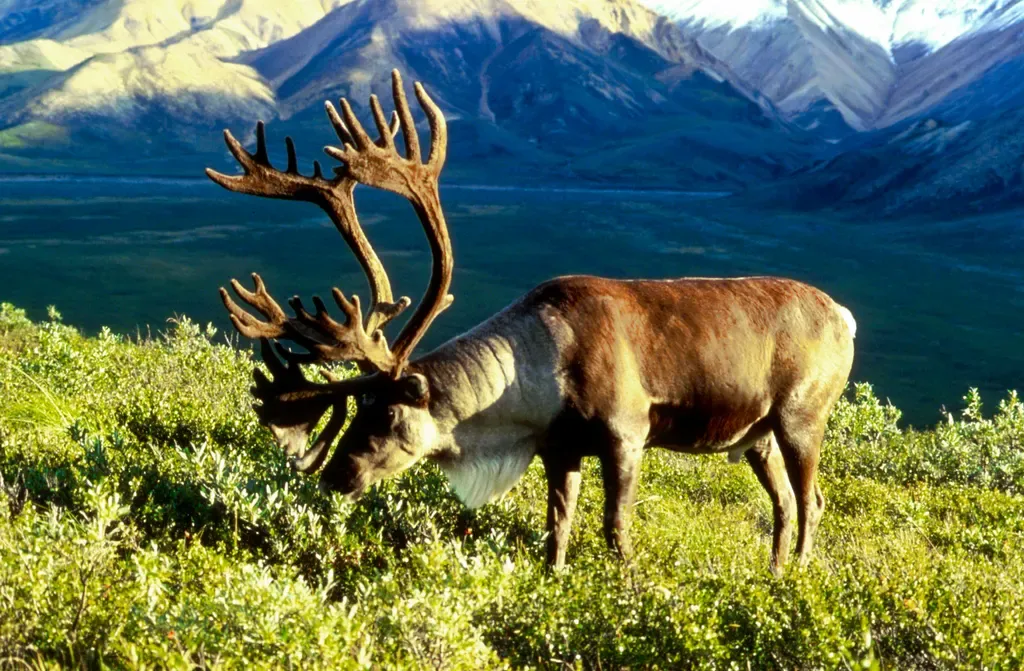
Caribou is the North American name for the reindeer, Rangifer tarandus: all caribou and reindeer are one species, and in Alaska and Canada only the semi-domesticated form is called reindeer. Alaska's herds are mostly barren-ground caribou, with one small herd of woodland caribou, the Chisana herd, that crosses into Canada; Canada has the Peary, woodland and barren-ground forms. Alaskan caribou were long filed as Grant's caribou, R. t. granti, but that name now belongs to a small, genetically distinct population at the western end of the Alaska Peninsula and nearby islands. Alaska holds about 750,000 wild caribou in 31 herds, each named for and defined by its own calving grounds. The largest, as of 2011, were the Western Arctic Herd at about 325,000 and the Porcupine herd at about 169,000; the Porcupine herd, shared with Yukon, reached a record of about 218,000 in a 2017 photocensus. Elsewhere the picture is darker: the George River herd of Labrador fell from 800,000–900,000 in the 1990s to under 9,000 by 2018, boreal woodland caribou are listed as threatened in Canada, and caribou are now considered gone from the contiguous United States.
Chapter 02
Identification
Caribou are the only deer in which both sexes grow antlers. Those of adult bulls are large and massive; cows' are much shorter, slenderer and more irregular. In late autumn the coat is clove-brown with a white neck, rump and feet, often with a white stripe along the flank. The large, concave hooves spread wide to carry the animal over snow and soft tundra and serve as paddles when it swims. In Alaska adult bulls average 159 to 182 kg, with weights up to 318 kg recorded, and mature cows 80 to 120 kg; caribou in the north and southwest of the state are generally smaller than those of the Interior and the south. Calves are born dark chocolate to reddish brown at about 6 kg and may double their weight in 10 to 15 days.
Chapter 03
Behaviour
Large herds migrate long distances between summer and winter range — up to 640 km — while smaller herds may not migrate at all; once on the move caribou can cover 80 km a day. The Porcupine herd's yearly round trip between the boreal forests of Alaska and Yukon and its calving grounds on the Beaufort Sea coastal plain is the longest land migration of any land mammal. In summer caribou eat willow leaves, sedges, flowering tundra plants and mushrooms, and from September switch to lichens, dried sedges and small shrubs. Calving comes in mid to late May in Interior Alaska and in early June in the north and southwest; cows calve together in a short window, swamping wolves, grizzly bears and golden eagles with more calves than they can take. Afterwards the herds gather in huge aggregations on windy mountains and coasts to escape mosquitoes and warble flies. Bulls shed velvet in late August and early September, their necks swell, and the rut follows in late September, or mid to late October in the Western Arctic Herd. Bulls hold no harem; each guards a space around himself.
Chapter 04
Hunting
Caribou are still hunted across Greenland and North America, and for Inuit, northern First Nations, Alaska Natives and the Kalaallit they remain an important source of food, clothing, shelter and tools. The Gwichʼin have depended on the Porcupine herd for millennia, and in the 1980s wrote their traditional management into tribal law, with limits on the harvest and on the number taken per trip and rules for processing and transporting the meat. The Inupiat, Inuvialuit, Hän and Northern Tutchone hunt the herd too. Alaska hunters shoot about 22,000 caribou a year for food, and a few thousand more hunters, mostly from the lower 48 states, Europe and Mexico, come each autumn; the meat of caribou taken by non-residents must also be used for food. The Porcupine herd is managed jointly by the Alaska Department of Fish and Game, Canadian wildlife agencies and Indigenous peoples through the Porcupine Caribou Management Board, set up in 1985, which publishes an annual harvest report; a 1987 US–Canada agreement protects the herd's habitat and migration routes.
Field data
Tracks
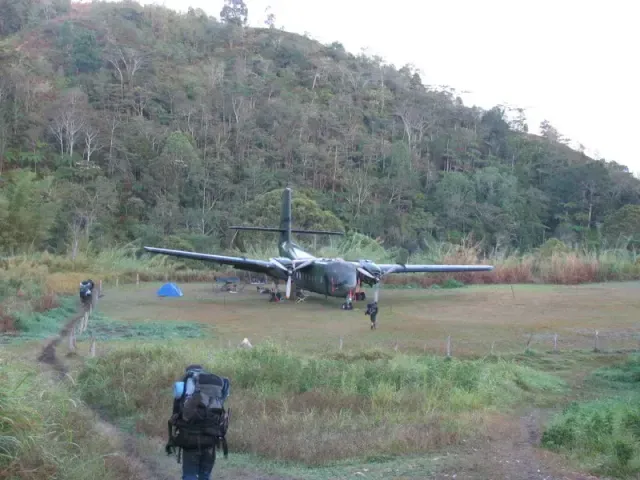
A photograph of real sign left by Caribou. Prints vary with gait, ground and how long they have been there — treat this as one example, not a template.
Track photo:Arthur ChapmanCC BY 2.0
On the table
Meat & cooking
Table grade 4 of 54/5
- Sold as meat in a legal market
- Has a named traditional dish
- Published way to handle and cook it
- Eaten in more than one country
- No known health advisory
Before you eat it: Livsmedelsverket names liver and kidney among the foods highest in cadmium: it advises against kidney from adult game, says adults can eat game liver about once a week, and that children should eat neither. The muscle meat is not the concern.
Traditional preparations
- Dried caribou meat
- The Caribou Inuit of Nunavut's Kivalliq Region lived on caribou all year round and ate the meat dried through the winter. Reindeer — Wikipedia
- Reindeer sausage
- In Alaska, as in Finland, reindeer sausage — reindeer being, as Alaskans use the word, the herded form of the same species — is sold in supermarkets and grocery stores. Reindeer — Wikipedia
Sources
Sources: Porcupine caribou — Wikipedia, Reindeer — Wikipedia, Ren — Wikipedia (sv), Alaska Department of Fish and Game: Caribou species profile, Alaska Department of Fish and Game: Caribou uses, Livsmedelsverket: Kadmium — read 2026-10-29
Cross-reference
Related species
Its closest relatives in the compendium, nearest kinship first.
Big game
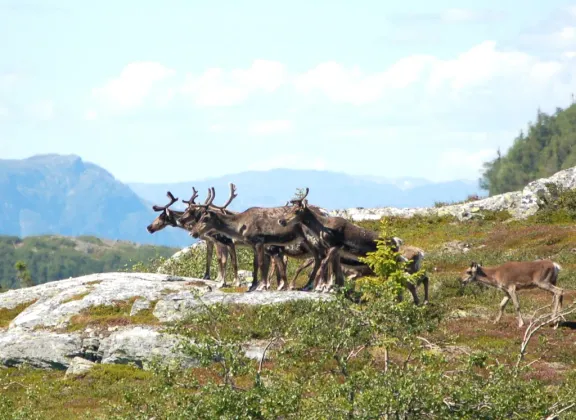
Reindeer
Rangifer tarandus tarandus
Same genus (Rangifer)
Big game
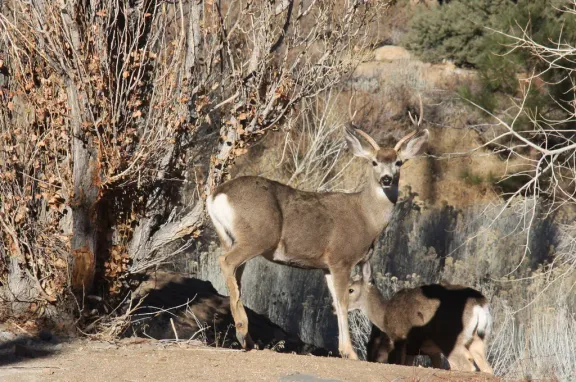
Mule deer
Odocoileus hemionus
Same subfamily (Odocoileinae)
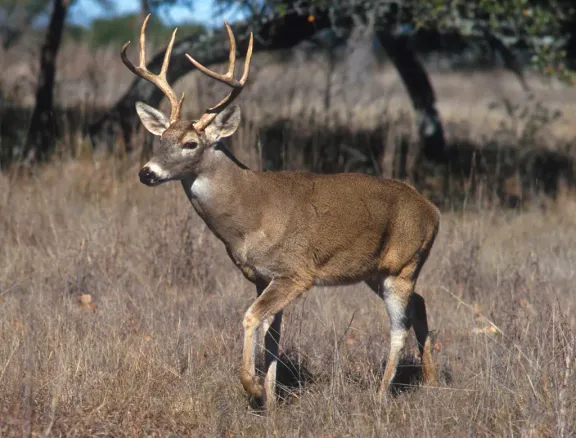
Big game
Whitetail deer
Odocoileus virginianus
Same subfamily (Odocoileinae)
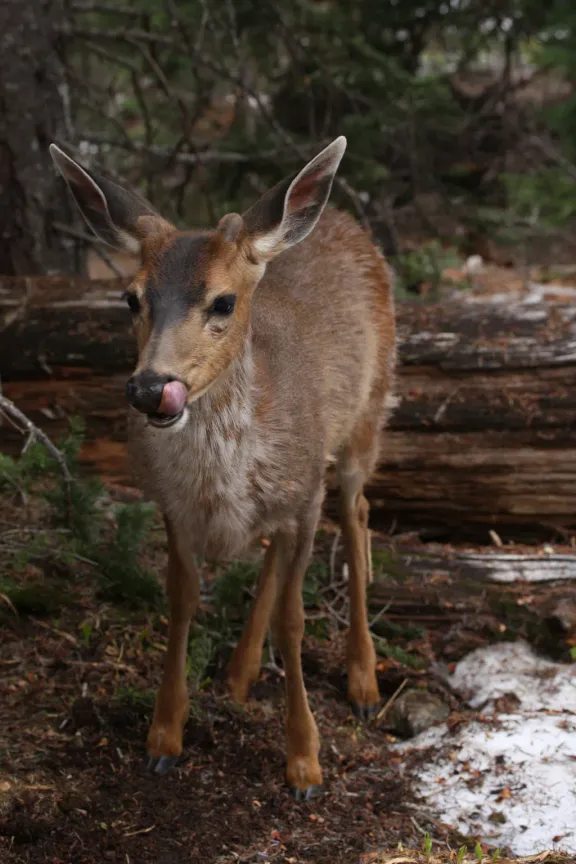
Big game
Columbian blacktail deer
Odocoileus hemionus columbianus
Same subfamily (Odocoileinae)
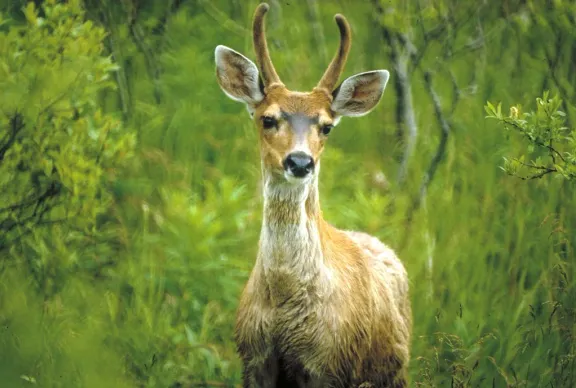
Big game
Sitka blacktail deer
Odocoileus hemionus sitkensis
Same subfamily (Odocoileinae)
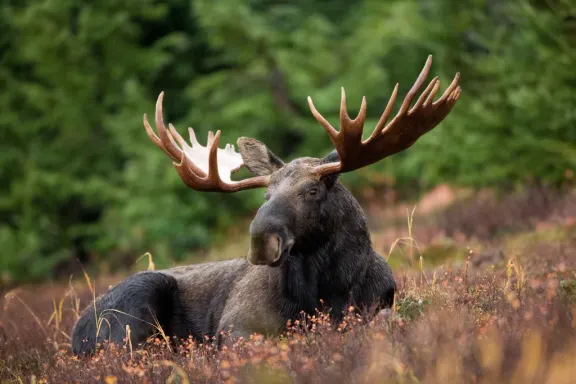
Big game
Moose
Alces alces
Same subfamily (Odocoileinae)