Photo:Ivolga yaCC BY-SA 4.0
Big game
Siberian roe deer
Capreolus pygargus
- Group
- Big game
- Size class
- Medium (10–70 kg)
- Family
- Cervidae
Range
- Asia
Habitat
- Forest
- Grassland
Range
Countries it is found in
8 countries
- China
- Kazakhstan
- Kyrgyzstan
- Mongolia
- North Korea
- Russia
- South Korea
- Uzbekistan
Range from:ASM Mammal Diversity Database — read 2026-08-05
Chapter 01
Overview
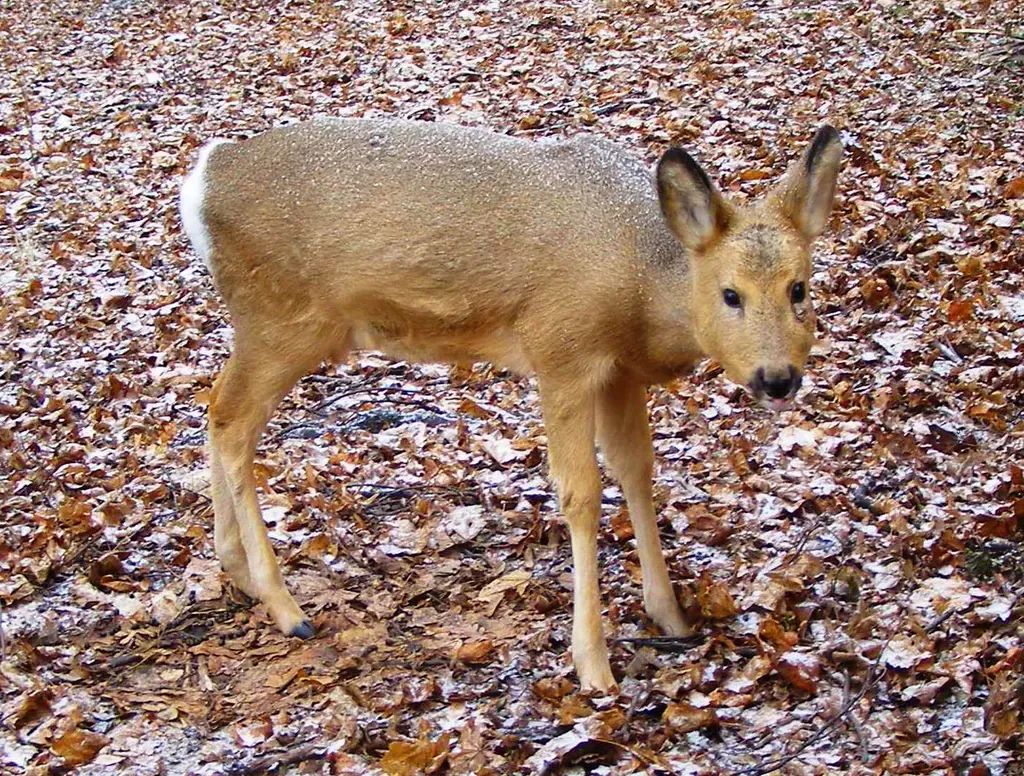
The Siberian roe deer (Capreolus pygargus), also called the eastern or Asian roe deer, lives in the temperate zone of north-eastern and Central Asia: Siberia and Mongolia, Kazakhstan, the Tian Shan of Kyrgyzstan, eastern Tibet, the Korean Peninsula and the forests of northern China. It was long treated as the same species as the European roe deer and is now held to be a separate one, with two subspecies, C. p. pygargus and the Tian Shan race C. p. tianschanicus. The name pygargus, chosen by Peter Simon Pallas in the late 18th century, means white-rumped. Fossils show it once reached the northern Caucasus and eastern Ukraine. Overhunting in the late 19th and early 20th centuries shrank the range in Eastern Europe, northern Kazakhstan, western Siberia and the north of eastern Siberia. Today the two roe species meet in the Caucasus, the Siberian on the northern flank and the European on the southern. It lives in forest and steppe, reaches high densities in tall-grass meadows and floodplains, and copes with severe extremes of weather. Escapees from Woburn may briefly have gone wild in England early in the 20th century, but were gone by 1945.
Chapter 02
Identification
A medium-sized, lightly built roe with a long neck and large ears, larger than the European roe deer: up to about 146 cm in body length and 59 kg, the biggest animals coming from the Urals and northern Kazakhstan, followed by those of Transbaikal, the Amur and Primorye. The antlers are larger and more branched than the European roe's — three tines a side, set wide apart and slanting upward, cast in autumn or early winter and regrown soon after. In summer the coat is reddish. In winter northern animals turn light grey, southern ones greyish brown and ochre. The belly is creamy and the rump patch white. Fawns are spotted.
Chapter 03
Behaviour
It eats more than 600 kinds of plant, mostly herbs, then woody species and grasses, and takes most of its water from moist food rather than drinking. In summer its need for sodium brings it to natural salt licks; in winter, when food is poor, its metabolism slows. Some populations make mass migrations between summer and winter ranges. It can clear up to 15 m in a jump. The rut runs in August and September. Bucks mark territory with scent from glands in the skin of the head, rubbed on trees, shrubs and tall grass, and by fraying trees with their antlers. Six calls are known, from squeaks and whistles to barks and screams. The fertilised egg rests until it implants in January, and gestation lasts 280 to 300 days; does usually have two young, weaned at four to five months. Predators include the Amur leopard, lynx, snow leopard, wolf and Siberian tiger.
Field data
Tracks
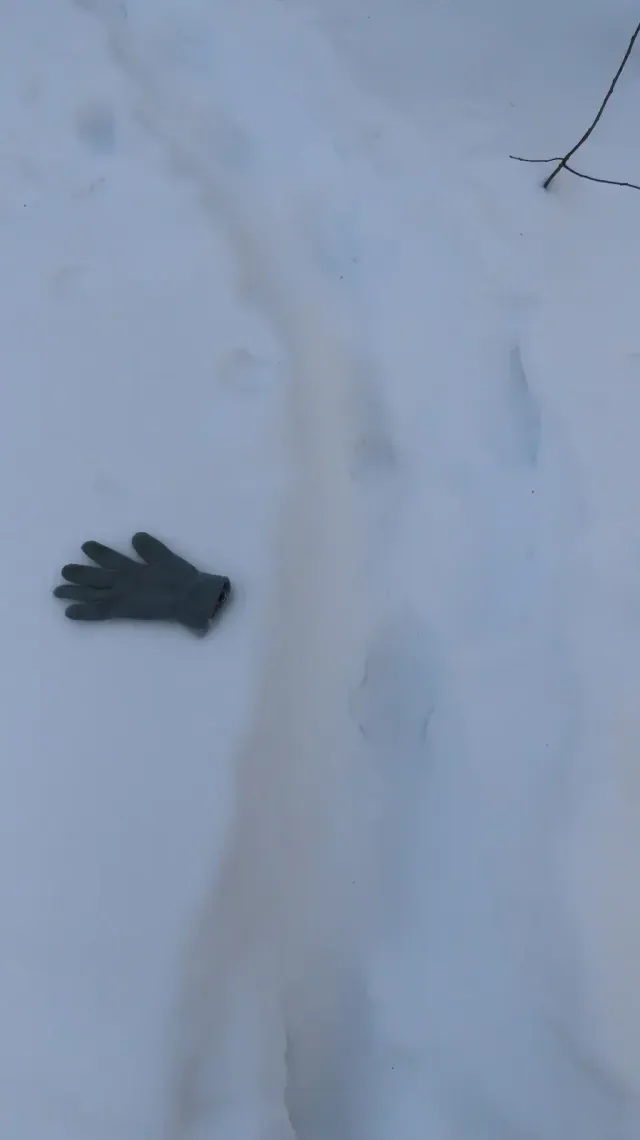
A photograph of real sign left by Siberian roe deer. Prints vary with gait, ground and how long they have been there — treat this as one example, not a template.
Track photo:Елена А. КизиловаCC BY
Sources
Sources: Siberian roe deer — Wikipedia, Sibiriskt rådjur — Wikipedia (sv) — read 2026-10-29
Cross-reference
Related species
Its closest relatives in the compendium, nearest kinship first.
Big game
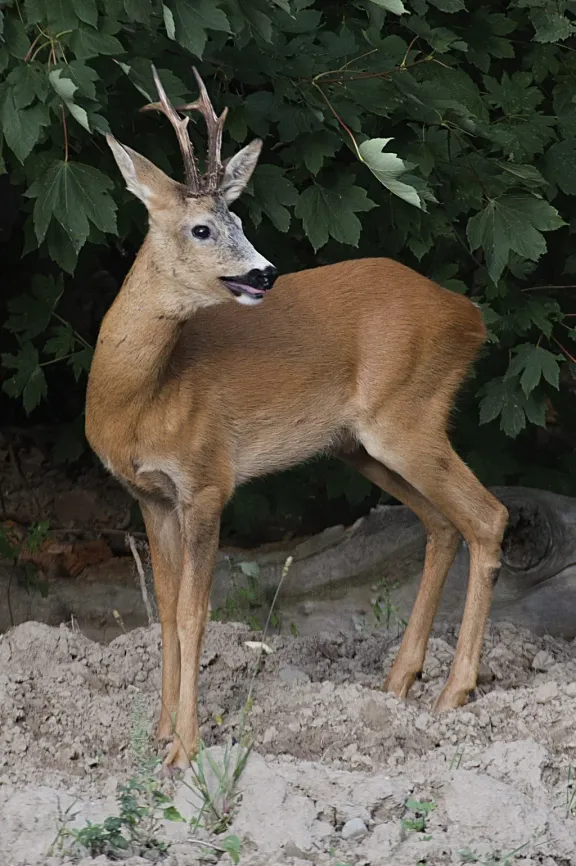
Roe deer
Capreolus capreolus
Same genus (Capreolus)
Big game
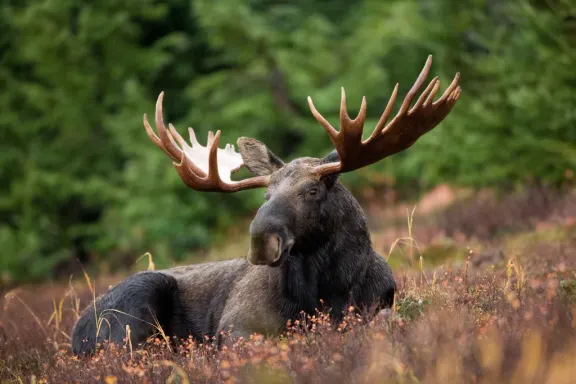
Moose
Alces alces
Same subfamily (Odocoileinae)
Big game
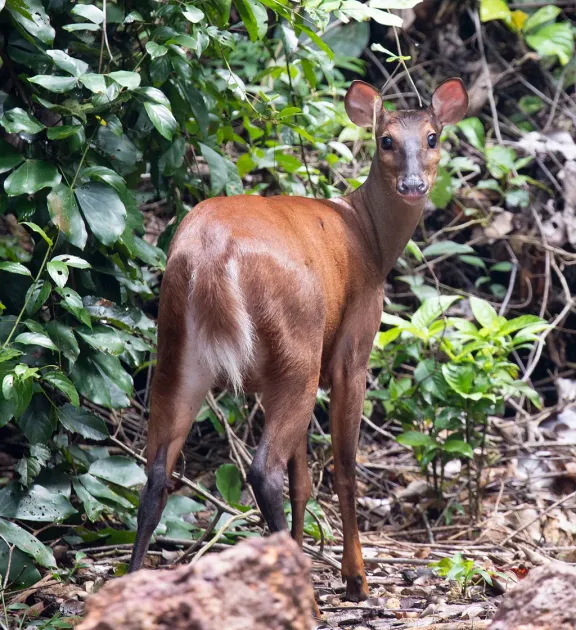
Red brocket deer
Mazama americana
Same subfamily (Odocoileinae)
Big game
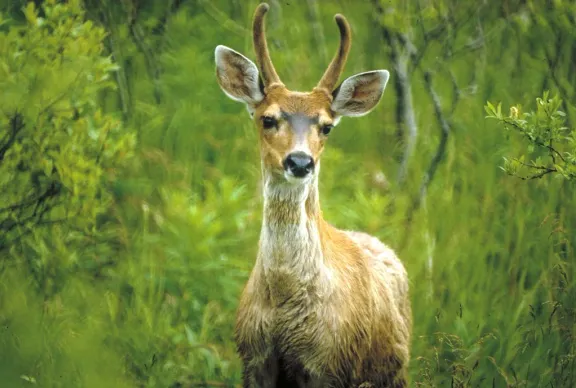
Sitka blacktail deer
Odocoileus hemionus sitkensis
Same subfamily (Odocoileinae)
Big game
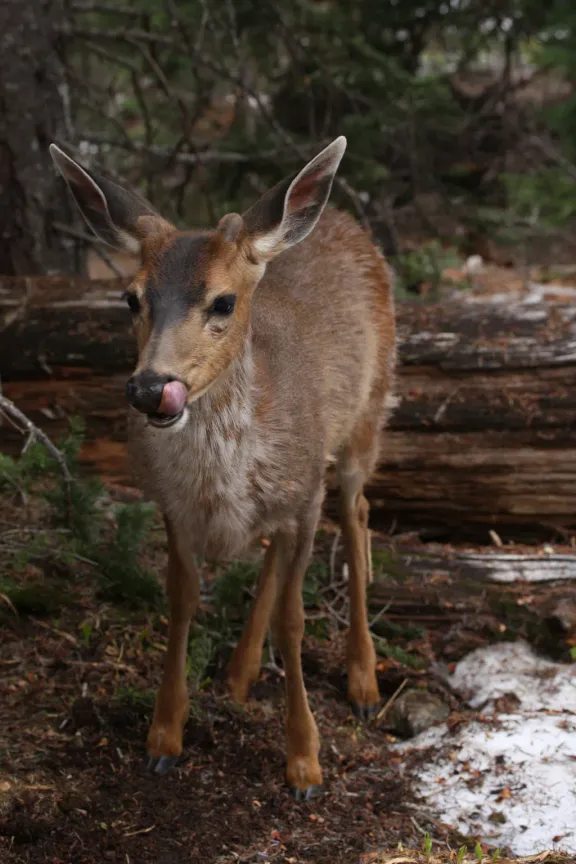
Columbian blacktail deer
Odocoileus hemionus columbianus
Same subfamily (Odocoileinae)
Big game
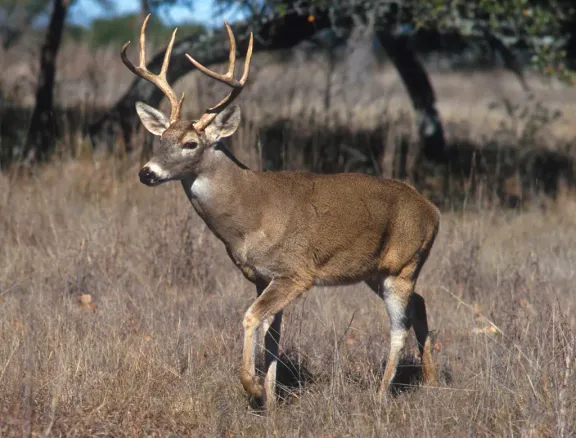
Whitetail deer
Odocoileus virginianus
Same subfamily (Odocoileinae)