Big game
Bezoar ibex
Capra aegagrus
- Group
- Big game
- Size class
- Medium (10–70 kg)
- Family
- Bovidae
Range
- Asia
Habitat
- Mountain
Range
Countries it is found in
11 countries
- Armenia
- Azerbaijan
- Georgia
- Iran
- Iraq
- Japan
- Kenya
- Pakistan
- Russia
- Türkiye
- Turkmenistan
Range from:ASM Mammal Diversity Database, GBIF occurrence records — read 2026-08-05
Chapter 01
Overview
The wild goat (Capra aegagrus), whose nominate form is the bezoar ibex (C. a. aegagrus), is the ancestor of the domestic goat. It lives in forest, scrub and rocky country from Turkey and the Caucasus to Iran, Turkmenistan, Afghanistan and Pakistan, up to about 4,200 m. In Turkey it occurs up to 3,250 m in the Taurus and Anti-Taurus; in the Caucasus in montane forest in Dagestan, Chechnya and Georgia up to 2,700 m; and it is recorded in Armenia's Zangezur Mountains and Khosrov reserve, Azerbaijan's Nakhchivan, Iran, the Kopet Dag of Turkmenistan and Pakistan's Kirthar National Park, home of the Sindh ibex (C. a. blythi). Domestic goats existed at least 6,000 years before Christ, and finds in Iran suggest domestication 8,000 or 10,000 years BC. The Cretan kri-kri, once counted a wild goat subspecies, is now regarded as a feral domestic goat. The IUCN lists the wild goat as near threatened, threatened by habitat destruction, poaching, logging and competition with livestock — including domestic goats.
Chapter 02
Identification
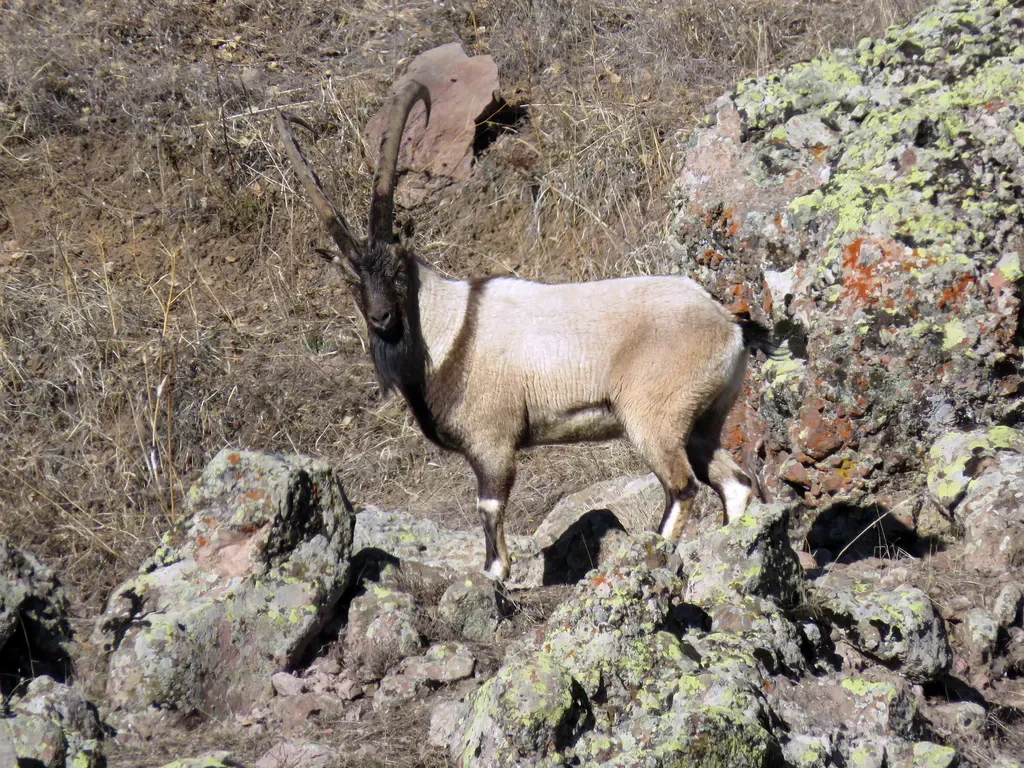
A robust goat with strong legs and broad hooves, 1.2–1.6 m long with a 15–20 cm tail, 0.7–1.0 m at the shoulder and 25–95 kg in weight. In winter males often carry a silvery-white coat above, with the underside and parts of the face blackish-brown, a dark stripe along the back and another across the shoulder from back to chest; by summer the coat is shorter and more reddish-brown. Females are yellowish-brown all year, also with a dark dorsal stripe. Both sexes have horns, the male's far larger: shaped like a backward-curving sabre, they reach 1.3 m, while the female's are 20–30 cm, comparatively thin and only slightly curved.
Chapter 03
Behaviour
Wild goats feed mainly from dawn into the morning and from late afternoon to dusk; in especially hot regions they rest all day and are active at night. They eat grasses, herbs and other plant matter. Females spend their lives in groups with their young and other females, leaving only to give birth; males form their own groups of four or five with a marked hierarchy. In Kirthar National Park groups of two to 131 were seen, with two females to each male. In Dagestan males start courting in mid-December and the rut lasts until the third week of January; older males drive younger ones from the female herds. After about 170 days one to three kids are born, which can walk within a day and are weaned at around six months. Females mature at 1½–2½ years and males at 3½–4; wild goats live 12 to 22 years.
Chapter 04
Hunting
The wild goat is hunted for its meat, and poaching is named first among the threats to its populations. In Turkey the Ministry of Agriculture and Forestry sells hunting rights by tender: in 2021 it offered 45 wild goats, two in Isparta's Sütçüler district and 43 in seven districts of Antalya, expecting 3 million lira in total, and the announcement drew calls on social media and from local environmental groups for the tender to be cancelled and hunting banned nationwide.
Field data
Tracks
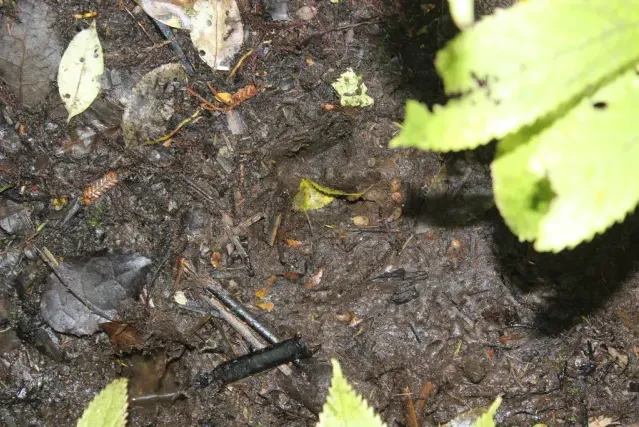
A photograph of real sign left by Bezoar ibex. Prints vary with gait, ground and how long they have been there — treat this as one example, not a template.
Track photo:Joe DillonCC BY
On the table
Meat & cooking
Table grade 1 of 51/5
- Sold as meat in a legal market
- Has a named traditional dish
- Published way to handle and cook it
- Eaten in more than one country
- No known health advisory
Sources
Sources: Wild goat — Wikipedia, Vildget — Wikipedia (sv), Duvar English: Turkish ministry announces tender for hunting of 45 wild goats (25 May 2021) — read 2026-10-29
Cross-reference
Related species
Its closest relatives in the compendium, nearest kinship first.
Big game
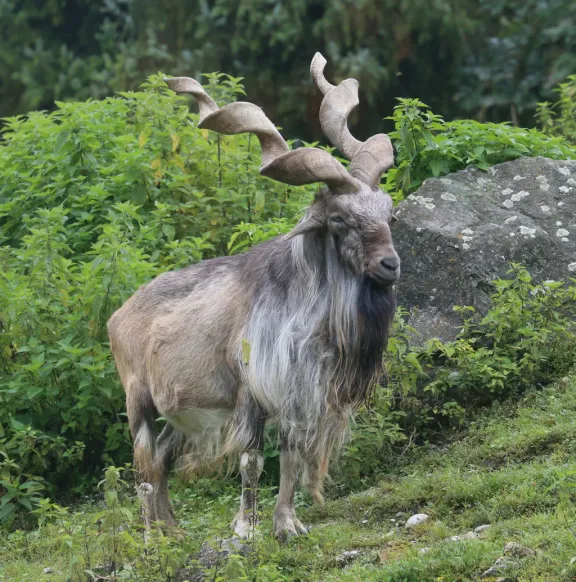
Markhor
Capra falconeri
Same genus (Capra)
Big game
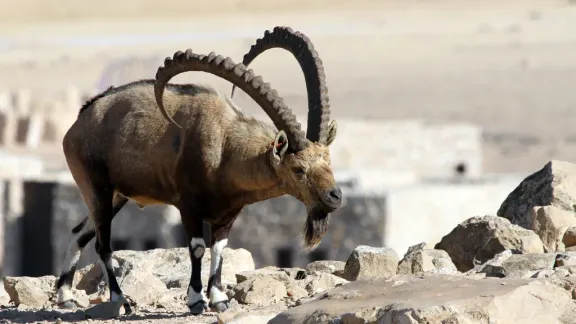
Nubian ibex
Capra nubiana
Same genus (Capra)
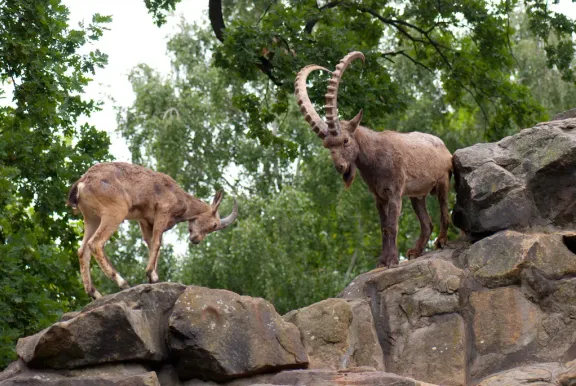
Big game
Siberian ibex
Capra sibirica
Same genus (Capra)
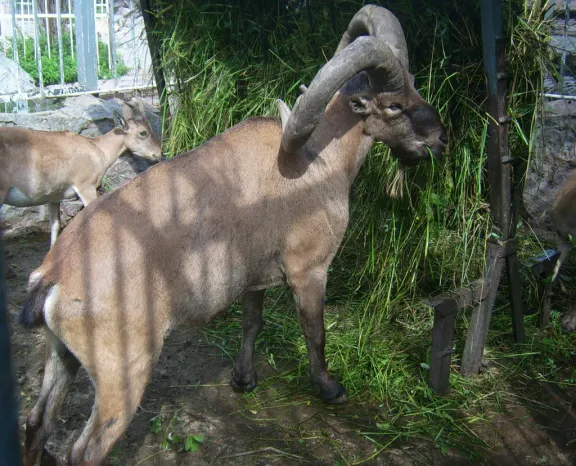
Big game
East Caucasian tur
Capra cylindricornis
Same genus (Capra)
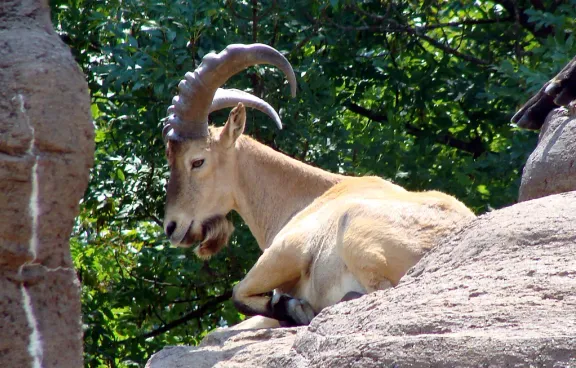
Big game
West Caucasian tur
Capra caucasica
Same genus (Capra)
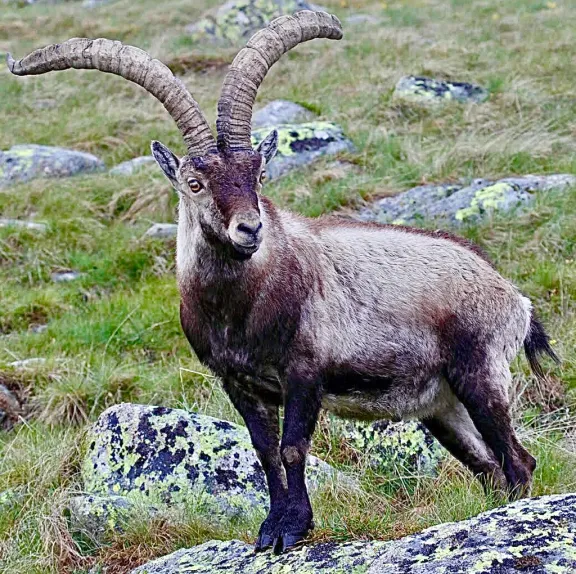
Big game
Iberian ibex
Capra pyrenaica
Same genus (Capra)