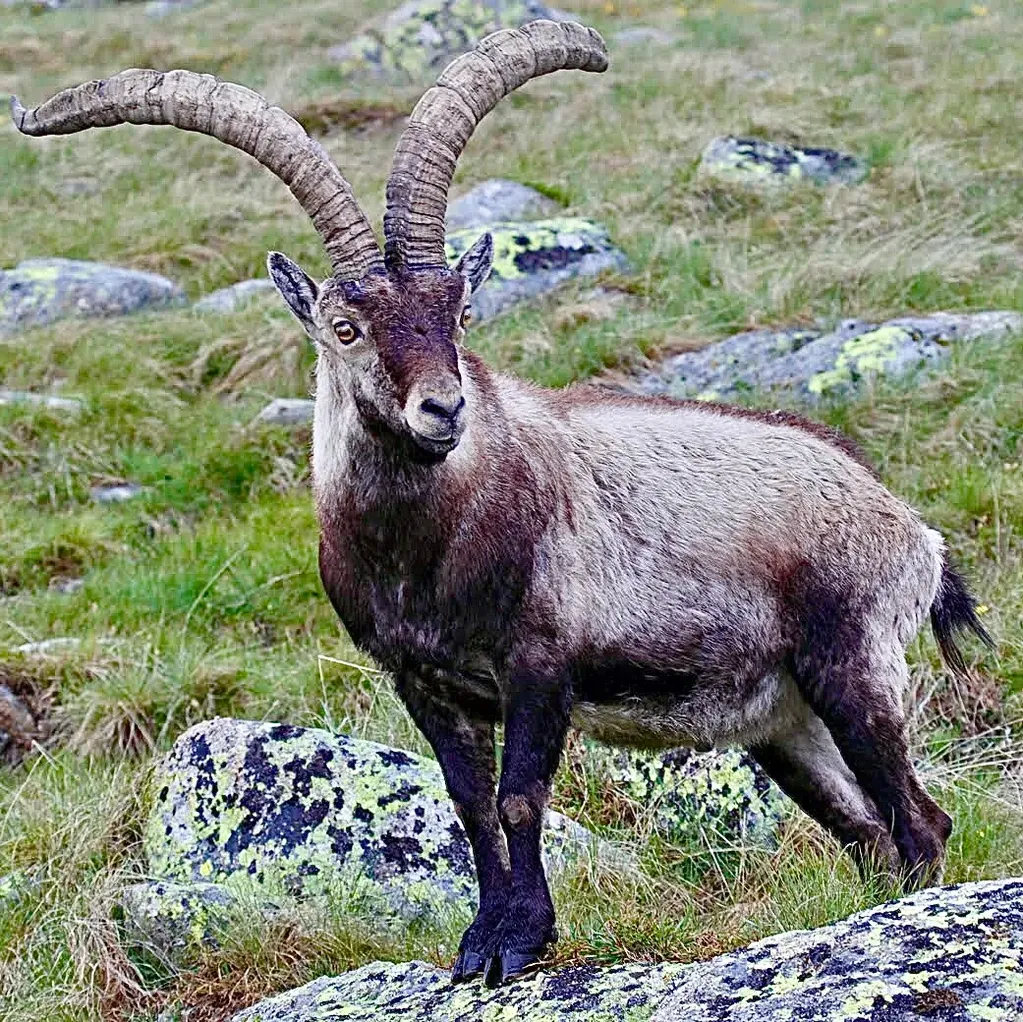
Photo:Juan LacruzCC BY-SA 3.0
Big game
Iberian ibex
Capra pyrenaica
- Group
- Big game
- Size class
- Medium (10–70 kg)
- Family
- Bovidae
Range
- Europe
Habitat
- Mountain
Range
Countries it is found in
2 countries
- Portugal
- Spain
Range from:ASM Mammal Diversity Database — read 2026-08-05
Chapter 01
Overview
The Iberian ibex (Capra pyrenaica), also called the Spanish ibex or Iberian wild goat, is endemic to the Iberian Peninsula. Of its four described subspecies two are extinct: the Portuguese ibex died out around 1890 and the Pyrenean ibex in January 2000, when the last female died in Ordesa National Park. A clone of her was born alive in 2003 — the first taxon to be "un-extinct" — but died minutes after birth from a defect in its lungs. The two surviving subspecies, the southeastern or Beceite ibex and the western or Gredos ibex, live in Spain and northern Portugal, with a small reintroduced population in the French Pyrenees. Together the populations number more than 100,000, the Iberian System alone holding over 50,000 and the Sierra Nevada about 15,000, and the IUCN has listed the species as least concern since 2008.
Chapter 02
Identification
Smaller and slighter than the Alpine ibex: 100–140 cm in body length, 65–75 cm at the shoulder and around 40 kg. The coat is light brown, paler or reddish in summer. Large, flexible hooves on short legs let it run and leap on bare, steep rock out of reach of predators. The male's horns are the mark — they curve out and up, then back and inward, and depending on subspecies either up again or down, reaching 75 cm. Females have very short, almost straight horns. Males are larger and heavier than females, and the female's bones ossify nearly two years earlier.
Chapter 03
Behaviour
A mixed feeder between browser and grazer, eating grasses, herbs and leaves in proportions that shift with altitude, region and season. It stores fat around the kidneys in the productive warm months to draw on through winter, moving less to forage when food is scarce and more in spring. It forms two kinds of group, male-only and females with young, which come together for the rut in November and December; mixed groups are common through the rest of the winter. After about six months a single kid, rarely twins, is born in April or May. When one spots a predator it stands erect with ears and head pointed at it and gives an explosive whistle, and the group flees in a coordinated run to a rocky slope, led by an experienced female or male.
Chapter 04
Hunting
Hunting pressure, together with farming and habitat deterioration, drove the long decline of the species over the last centuries; the Gredos ibex was almost gone by 1905, when protection of the last dozen animals let it recover. Hunting is still listed alongside tourism among the human disturbances that threaten its future, and sarcoptic mange outbreaks in southern Spain have become the main destabilising factor in many populations.
Sources
Sources: Iberian ibex — Wikipedia, Iberisk stenbock — Wikipedia (sv) — read 2026-10-29
Cross-reference
Related species
Its closest relatives in the compendium, nearest kinship first.
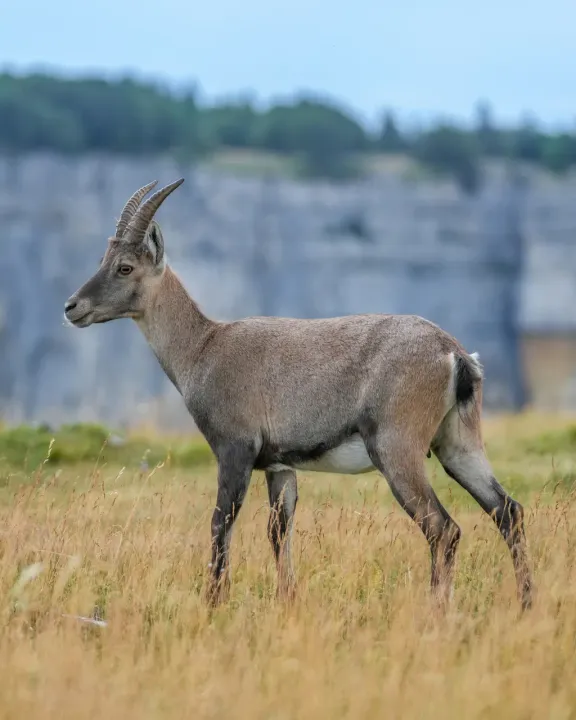
Big game
Alpine ibex
Capra ibex
Same genus (Capra)
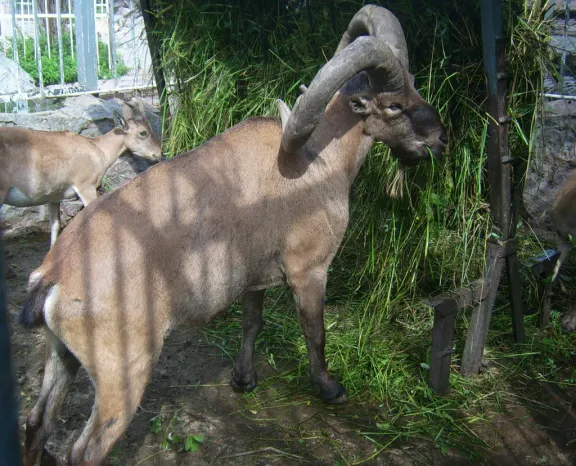
Big game
East Caucasian tur
Capra cylindricornis
Same genus (Capra)
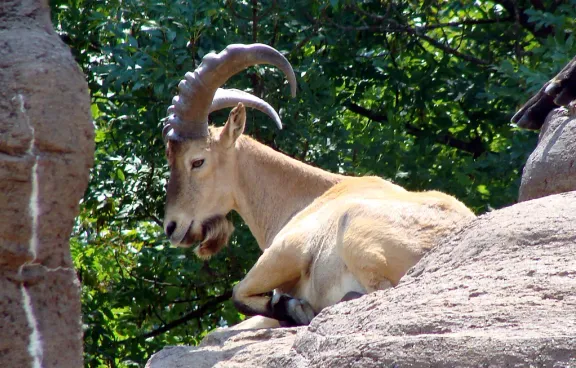
Big game
West Caucasian tur
Capra caucasica
Same genus (Capra)
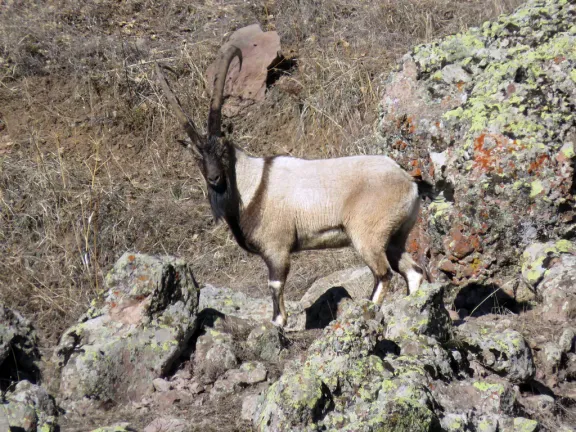
Big game
Bezoar ibex
Capra aegagrus
Same genus (Capra)
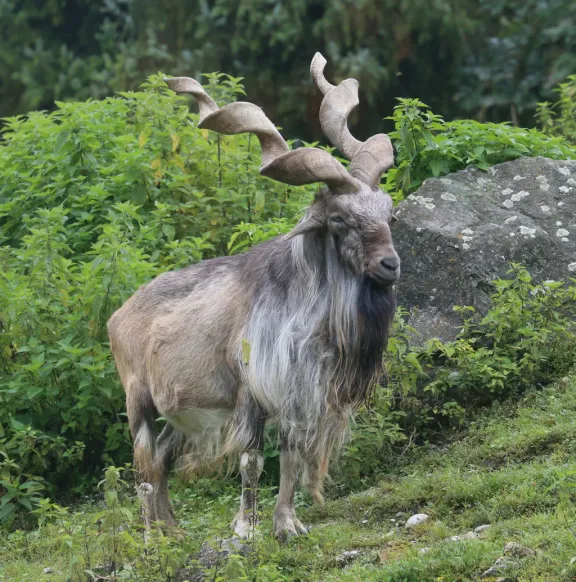
Big game
Markhor
Capra falconeri
Same genus (Capra)
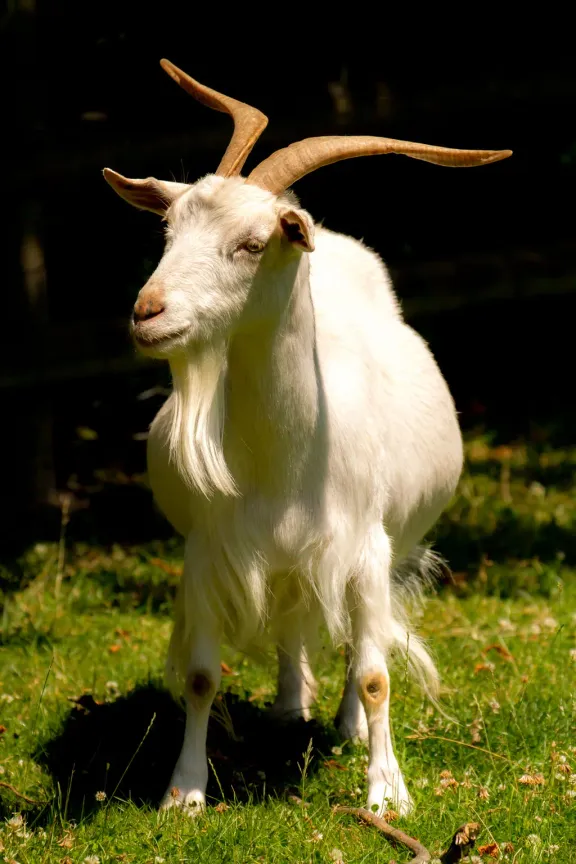
Big game
Feral goat
Capra hircus
Same genus (Capra)