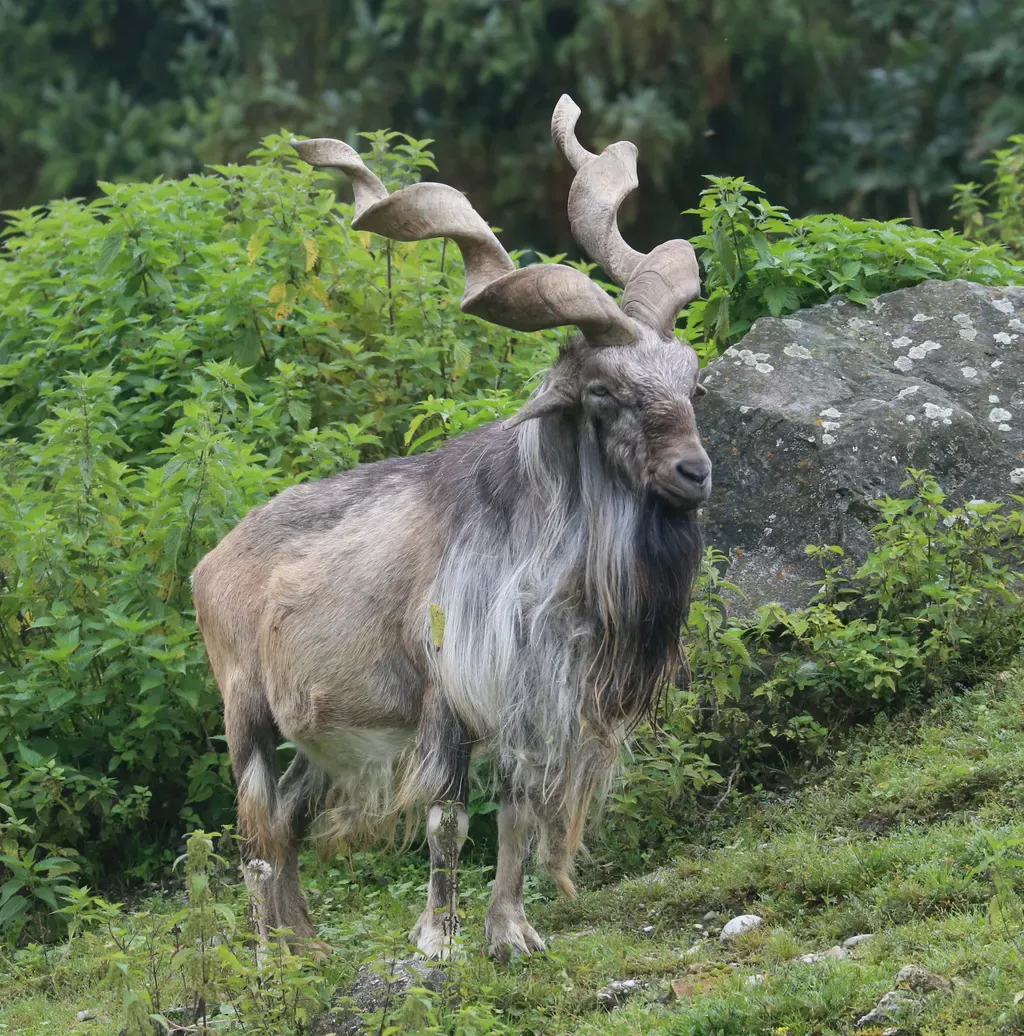
Photo:Rufus46CC BY-SA 3.0
Big game
Markhor
Capra falconeri
- Group
- Big game
- Size class
- Large (70–300 kg)
- Family
- Bovidae
Range
- Asia
Habitat
- Mountain
Range
Countries it is found in
6 countries
- Afghanistan
- India
- Pakistan
- Tajikistan
- Turkmenistan
- Uzbekistan
Range from:ASM Mammal Diversity Database — read 2026-08-05
Chapter 01
Overview
The markhor (Capra falconeri) is a large wild goat of the mountains where Central and South Asia meet, including the Karakoram and the Himalayas, found in Turkmenistan, Uzbekistan, Tajikistan, Afghanistan, Pakistan and India. It is the national animal of Pakistan, where it is also called the screw-horned goat. The name is usually read as Persian for "snake eater", after an old belief that it kills and eats snakes. It lives at 600 to 3,600 m in scrub forest of oak, pine and juniper, generally a little below the Siberian ibex where the two share a range. Three subspecies are recognised: the Astor markhor (C. f. falconeri) with large, flat, widely branching horns, the Kabul markhor (C. f. megaceros) with a slight corkscrew, and the Bukharan markhor (C. f. heptneri) of Tajikistan, Uzbekistan and Turkmenistan, now reduced to two or three scattered populations. The IUCN has listed the species as near threatened since 2015; in 2013 the population was estimated at 5,800 and expected to be stable given ongoing conservation. The largest population lives in Chitral National Park in Pakistan, and in 2024 the UN General Assembly made 24 May the International Day of Markhor.
Chapter 02
Identification
Adults stand 65 to 115 cm at the shoulder — the tallest of the wild goats — measure 132 to 186 cm and weigh 32 to 110 kg, males 80–110 kg and females only 32–50 kg; the Siberian ibex is longer and heavier. The coat is grizzled light brown to black, short and smooth in summer and longer and thicker in winter, with black and white fur on the lower legs. Males have long hair on the chin, throat, chest and shanks; females are redder, short-haired, with a short black beard and no mane. Both sexes carry tightly curled, corkscrew horns that rise close together from the head and spread towards the tips. A male's can reach 160 cm, a female's about 25 cm.
Chapter 03
Behaviour
The markhor is diurnal and most active in the early morning and late afternoon. It grazes in spring and summer and browses in winter, sometimes standing on its hind legs to reach high branches. Females and young live in herds of about nine, occasionally up to 100, while adult males are largely solitary. Early in the season both sexes may be found on open grassy patches among the forest; in summer the males keep to the forest while the females climb to the highest rocky ridges, and in spring females stay near cliffs to protect their young. The alarm call is much like the bleat of a domestic goat. The rut falls in winter, when males fight by lunging, locking horns and trying to push each other off balance. After 135–170 days one or two kids, occasionally three, are born, and they stay with their mother at least until the next rut.
Chapter 04
Hunting
In British India the markhor ranked among the most challenging game, for the danger of stalking it in steep mountain terrain. Today the law differs by country. In India it is a fully protected Schedule I species and hunting is illegal, though it is poached for food and for horns believed to be medicinal. In Afghanistan hunting it is illegal, but it has been traditionally hunted in Nuristan and Laghman. In Pakistan hunting is legal as part of conservation: expensive government licences allow old males past breeding age to be shot, and the community conservancies built on this approach have protected the markhor better than unenforced reserves — Tajikistan's Dashtijum reserves of 1973 suffer common poaching. Gilgit-Baltistan's trophy hunting programme was launched in 1990. For the 2025–26 season it offered four Astore markhor permits, with the base price raised to US$200,000 from US$150,000; the previous season's highest bid was US$161,000, and nearly 80 per cent of revenues are allocated to conservation and development.
On the table
Meat & cooking
Table grade 1 of 51/5
- Sold as meat in a legal market
- Has a named traditional dish
- Published way to handle and cook it
- Eaten in more than one country
- No known health advisory
Sources
Sources: Markhor — Wikipedia, Skruvhornsget — Wikipedia (sv), ProPakistani: Gilgit-Baltistan Increases Markhor Trophy Hunting Permit Fee to $200,000 (3 September 2025) — read 2026-10-29
Cross-reference
Related species
Its closest relatives in the compendium, nearest kinship first.
Big game
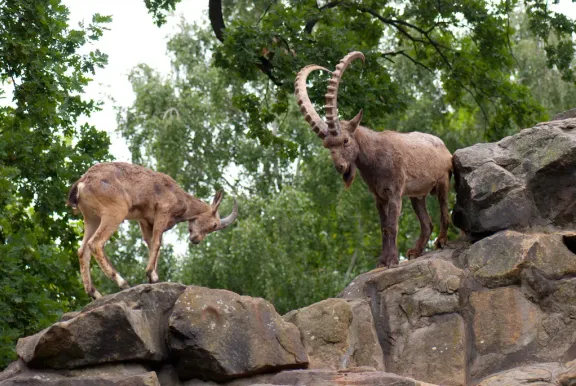
Siberian ibex
Capra sibirica
Same genus (Capra)
Big game
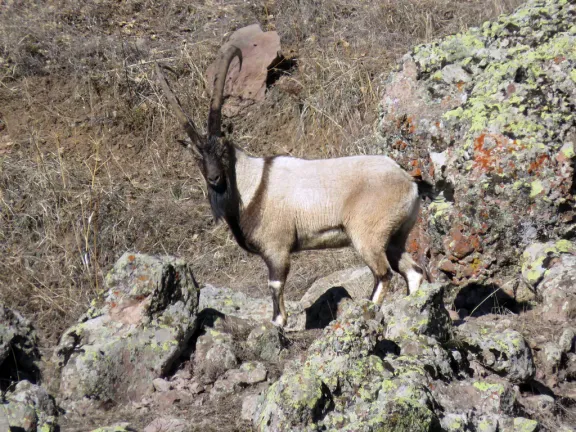
Bezoar ibex
Capra aegagrus
Same genus (Capra)
Big game
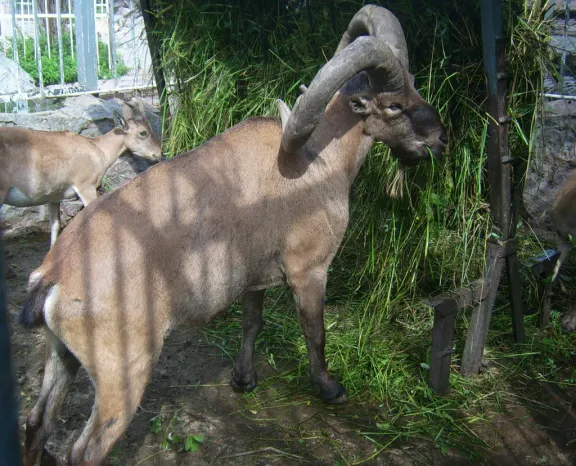
East Caucasian tur
Capra cylindricornis
Same genus (Capra)
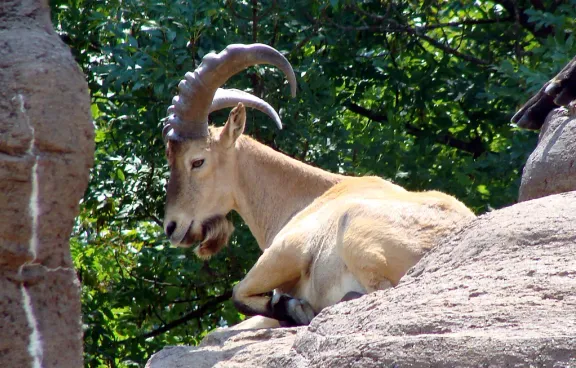
Big game
West Caucasian tur
Capra caucasica
Same genus (Capra)
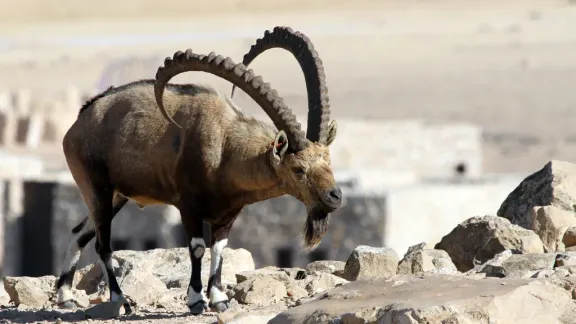
Big game
Nubian ibex
Capra nubiana
Same genus (Capra)
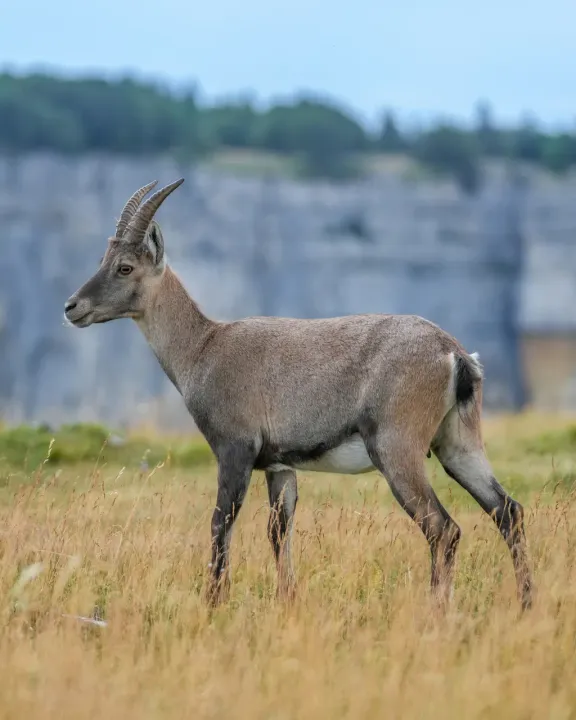
Big game
Alpine ibex
Capra ibex
Same genus (Capra)