Big game
Siberian ibex
Capra sibirica
- Group
- Big game
- Size class
- Large (70–300 kg)
- Family
- Bovidae
Range
- Asia
Habitat
- Mountain
Range
Countries it is found in
10 countries
- Afghanistan
- China
- India
- Kazakhstan
- Kyrgyzstan
- Mongolia
- Pakistan
- Russia
- Tajikistan
- Uzbekistan
Range from:ASM Mammal Diversity Database — read 2026-08-05
Chapter 01
Overview
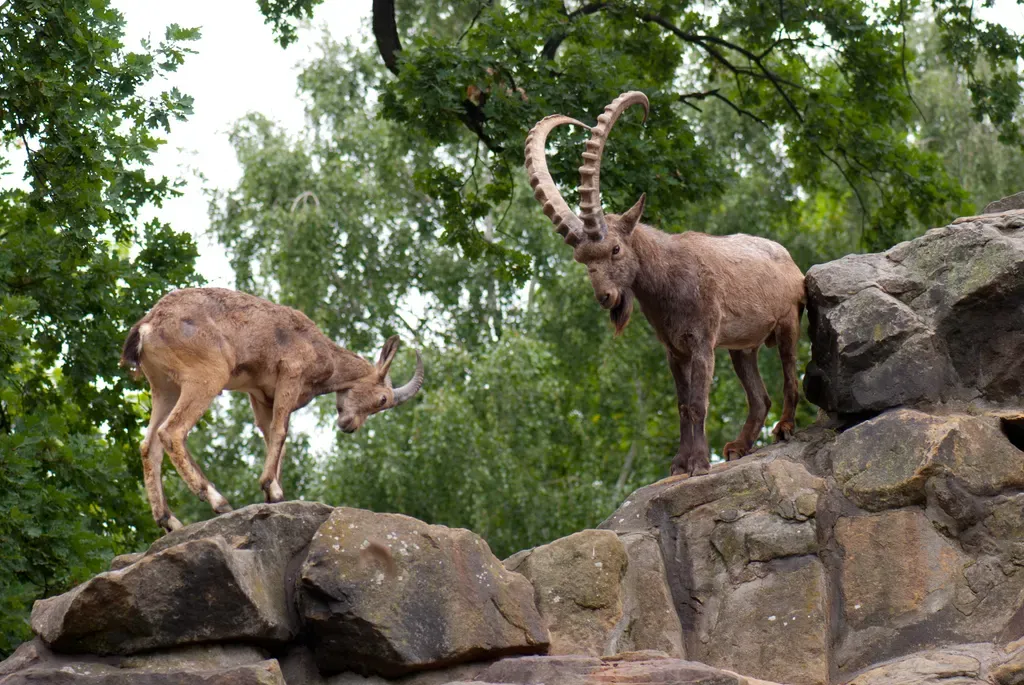
The Siberian ibex (Capra sibirica) — also called the Altai, Asian, Central Asian, Gobi, Himalayan, Mongolian or Tian Shan ibex — is by far the most widely distributed wild goat. It ranges across Central Asia: Afghanistan, western and northern China, northwestern India, southeastern Kazakhstan, Kyrgyzstan, Tajikistan, eastern Uzbekistan, Mongolia, northern Pakistan and south-central Russia. It was long treated as a subspecies of the Alpine ibex, and whether it is one species or a complex of distinct ones is still not settled; some authorities recognise four subspecies, others none. It lives mostly above the tree line, on steep slopes and scree, alpine meadow, high steppe and semi-desert, usually at 2,000–5,000 m in summer, though in the Gobi it comes down to hills of 700 m. In 1978, 40 were released in the Canadian River canyon of New Mexico, where a small population has established itself. The IUCN lists it as near threatened, with low densities in most areas and an overall decline, but reliable data are scarce.
Chapter 02
Identification
The longest and heaviest member of the genus Capra, though the markhor stands slightly taller. Males stand 88–110 cm at the shoulder and weigh 60–130 kg; females are much smaller at 67–92 cm and 34–56 kg. The nose is straight in profile, the back straight, and the male's neck thick and muscular. Both sexes are bearded, the male much more so, and both have a scent gland about 3 cm across beneath the tail. A grown male's horns are black and typically about 115 cm long, exceptionally 148 cm, with large transverse ridges on the front; the female's are grey-brown and average 27 cm. Annual growth rings show on both. Colour varies from dark brown to light tan, sometimes reddish, usually with a darker stripe down the back; in winter mature males turn much darker with white patches, some with a saddle-like mark. The pale summer coat comes in between April and July and darkens to full winter condition by about December.
Chapter 03
Behaviour
Mainly active by day, the ibex grazes through the morning and late afternoon, spending an hour or more at each spot. In spring and summer it eats mostly grasses and sedges; in winter more tall herbs, and the twigs and needles of aspen, spruce, juniper and willow, pawing through snow to reach food. It visits salt licks in summer, seeks shade at the tree line on hot days but does not enter forest, and descends to lower slopes in winter. Herds are usually 5–30 animals, larger in the rut, and mostly single-sex outside it. The rut runs from late October to early January. Males court for over 30 minutes at a time and rear up to clash horns for dominance, ending the rut emaciated. After 170–180 days a single kid of about 3 kg is born, with twins in up to 14 per cent of births. Males mature at eighteen months but take nine years to reach full size, and live about ten years in the wild; females live up to seventeen. Himalayan wolves, dholes, snow leopards and brown bears are the main predators, and lynx, foxes and eagles take young.
Chapter 04
Hunting
The Siberian ibex is a common quarry across its whole range, and its hunting is shown on prehistoric rock carvings in the region; it is taken for meat, hide and other body parts. In Pakistan's Gilgit-Baltistan, where the official 2024–25 survey counted 7,294 Himalayan ibex, it is the mainstay of the trophy hunting programme launched in 1990: for the 2025–26 season 100 Himalayan ibex permits were put up for auction at a base price of US$10,000, up from US$5,500, with nearly 80 per cent of revenues allocated to conservation and development. In Kyrgyzstan, by contrast, the Ministry of Natural Resources announced in January 2023 a three-year ban, from 2023 to 2026, on hunting mountain goats, wild sheep, roe deer and snowcocks, applying to citizens and foreigners alike.
On the table
Meat & cooking
Table grade 2 of 52/5
- Sold as meat in a legal market
- Has a named traditional dish
- Published way to handle and cook it
- Eaten in more than one country
- No known health advisory
Sources
Sources: Siberian ibex — Wikipedia, Sibirisk stenbock — Wikipedia (sv), ProPakistani: Gilgit-Baltistan Increases Markhor Trophy Hunting Permit Fee to $200,000 (3 September 2025), 24.kg: Kyrgyzstan imposes ban on hunting mountain goats, wild sheep, roe deer (27 January 2023) — read 2026-10-29
Cross-reference
Related species
Its closest relatives in the compendium, nearest kinship first.
Big game
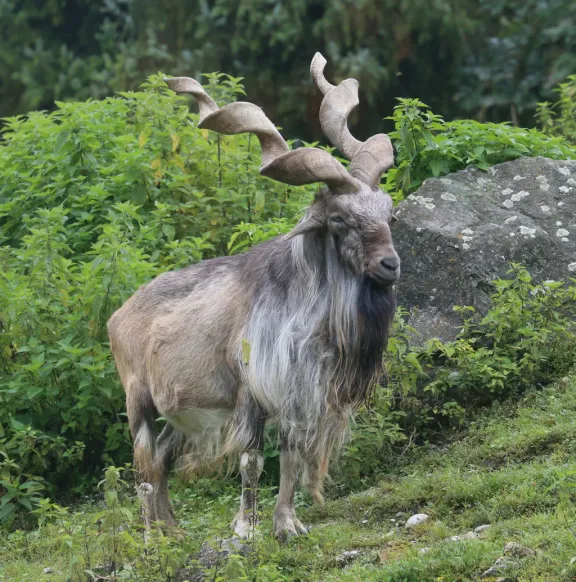
Markhor
Capra falconeri
Same genus (Capra)
Big game
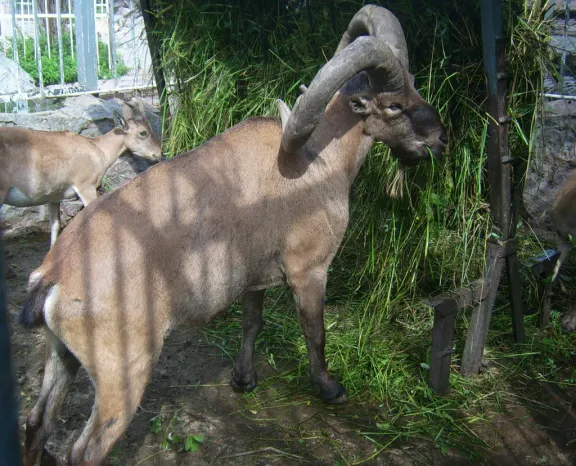
East Caucasian tur
Capra cylindricornis
Same genus (Capra)
Big game
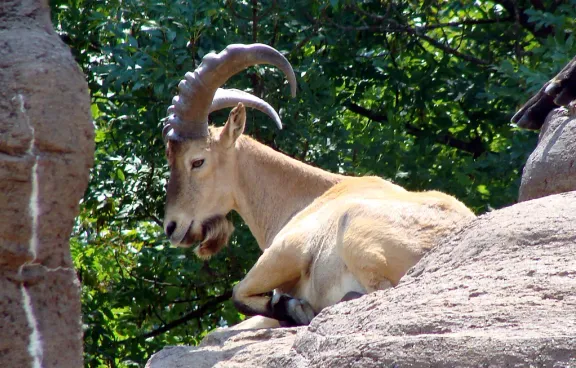
West Caucasian tur
Capra caucasica
Same genus (Capra)
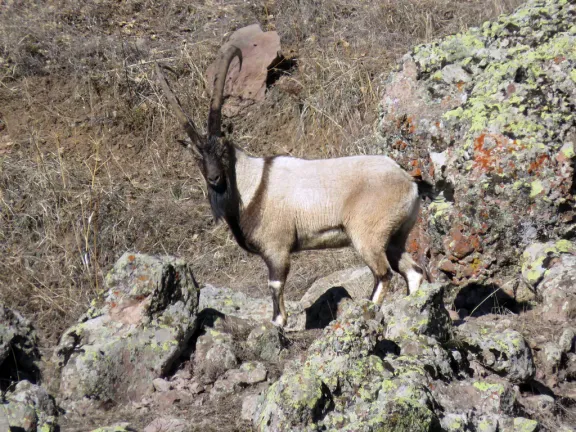
Big game
Bezoar ibex
Capra aegagrus
Same genus (Capra)
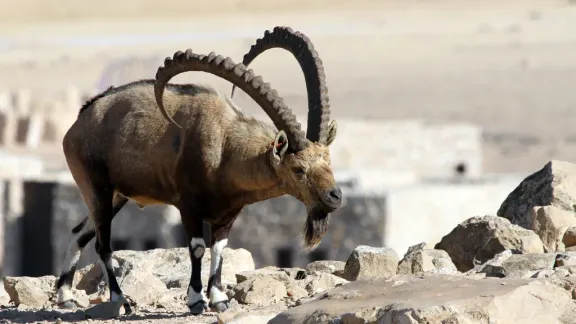
Big game
Nubian ibex
Capra nubiana
Same genus (Capra)
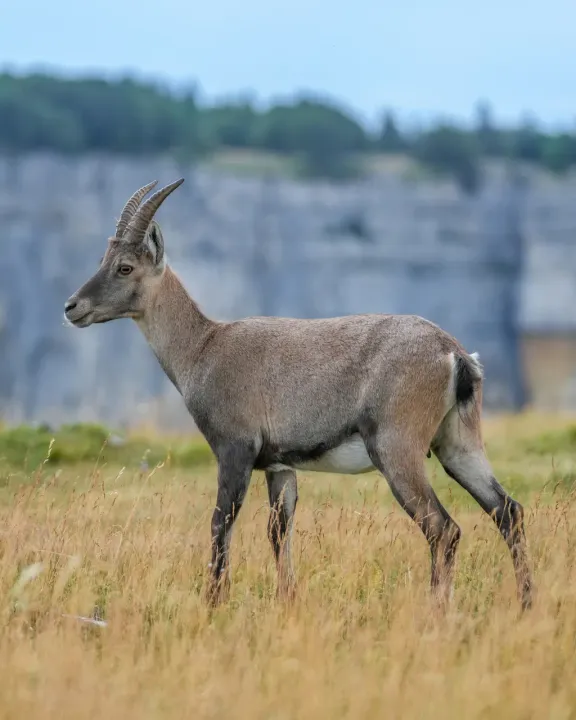
Big game
Alpine ibex
Capra ibex
Same genus (Capra)