Big game
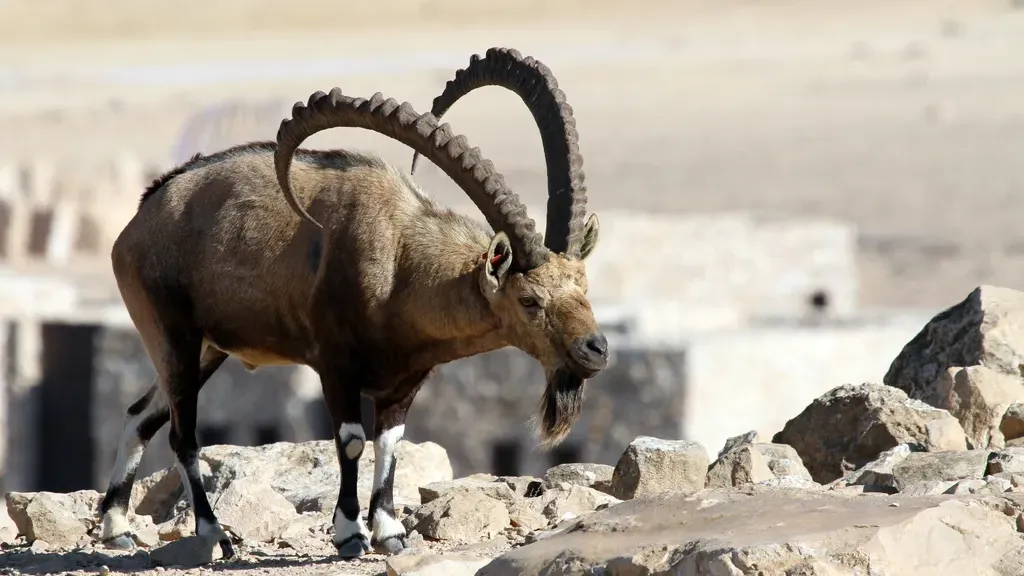
Nubian ibex
Capra nubiana
- Group
- Big game
- Size class
- Medium (10–70 kg)
- Family
- Bovidae
Range
- Africa
- Asia
Habitat
- Desert
- Mountain
Range
Countries it is found in
9 countries
- Egypt
- Israel
- Jordan
- Oman
- Palestinian Territories
- Saudi Arabia
- Sudan
- Syria
- Yemen
Range from:ASM Mammal Diversity Database — read 2026-08-05
Chapter 01
Overview
The Nubian ibex (Capra nubiana) is a desert goat of the mountains of north-eastern Africa and the Middle East. Long counted a subspecies of the Alpine ibex, it is now recognised as a species of its own. Its range today lies in Egypt, Jordan, Oman, Israel, Palestine, Saudi Arabia and Sudan; it is extinct in Syria, was lost from Lebanon in the mid-19th century and is being reintroduced there, and its presence in Ethiopia, Eritrea and Yemen is uncertain. The wild population is put at about 4,500 mature animals and the IUCN lists it as vulnerable. Competition with livestock for water and fodder, hunting, climate change, habitat fragmentation and destruction all weigh on it. Israel and Palestine hold some 1,200–1,500, Egypt 600–1,250, Oman 700–1,350 and Jordan 480–600, while the Hawtat bani Tamim reserve in Saudi Arabia has lost three quarters of its ibex to poaching since 2005.
Chapter 02
Identification
The smallest of the ibexes, standing about 65–75 cm at the shoulder. Males are far bigger than females, weighing 52–74.7 kg against 25.3–32.7 kg. The coat is light tan with a white belly, black-and-white patterned legs, a pale rump and a dark brown tail; males carry a dark brown mane down the back and grow a beard from two or three years old that lengthens and darkens with age. In the autumn rut mature males put on a very dark brown rutting coat on breast and flanks, though not every male does. The horns are long and thin, sweeping up, back and down. In males they reach about 1 m and carry large ridges that keep locked horns from sliding in a fight; females' reach about 30 cm. Male horn growth levels off at seven to eight years, and the number of ridges tracks the animal's age.
Chapter 03
Behaviour
Active by day, it rests at night in shallow scrapes dug on cliff sides, and never strays far from cliffs: the farther from them it feeds, the more watchful it becomes. It climbs and leaps easily, crossing several metres in a single bound, and moves along cliffs in single file on well-worn trails. It eats mainly grasses and leaves, notably acacia, rearing up on its hind legs or even climbing into trees to reach them. In winter rains it spreads onto open plateaus; in the dry summer it gathers round shaded oases. Herds of females, young and males up to about three, usually up to 20 strong, keep near permanent water and follow a dominance hierarchy; adult males live alone or in loose bands of up to eight. Males join the herds for a six- to eight-week rut in October and November, and big males fight with loud clashes of horn. After five months one or two kids are born between March and July, most in late March and April. Kids can stand within 15 minutes, gather in crèches for several weeks and are weaned at about four months. Predators include the Arabian leopard, wolf, caracal and golden eagle.
Chapter 04
Hunting
Bedouin traditionally hunted the ibex for its meat and skin, and were often hired as hunters and guides by British and Egyptian officials; more recently some Bedouin in Sinai have worked as its protectors. In Israel the ibex was hunted close to extinction after the First World War, and when the state was founded hunting was outlawed and reserves set up, after which the population recovered; the Nature and Parks Authority now investigates poaching and enforces strict anti-poaching measures. Elsewhere poaching drives the declines in Egypt, Oman and Saudi Arabia, and hunting is the main threat in Jordan, where captive breeding and reintroduction have rebuilt a population once nearly wiped out.
Sources
Sources: Nubian ibex — Wikipedia, Nubisk stenbock — Wikipedia (sv) — read 2026-10-29
Cross-reference
Related species
Its closest relatives in the compendium, nearest kinship first.
Big game
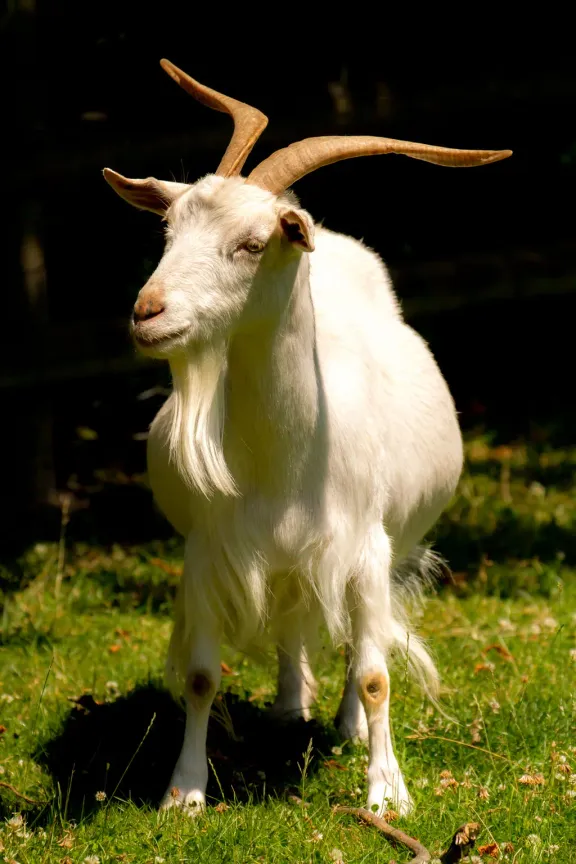
Feral goat
Capra hircus
Same genus (Capra)
Big game
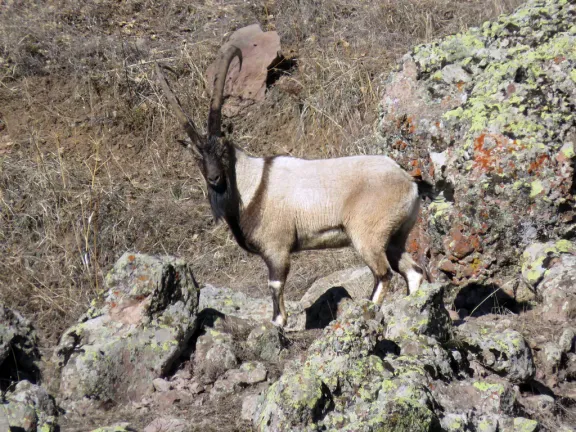
Bezoar ibex
Capra aegagrus
Same genus (Capra)
Big game
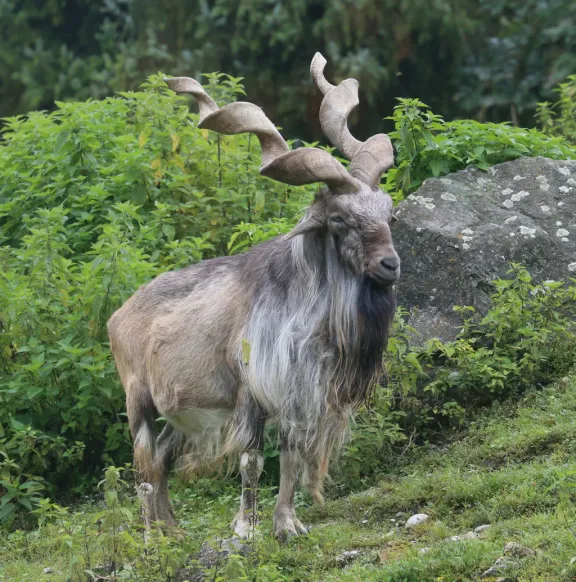
Markhor
Capra falconeri
Same genus (Capra)
Big game
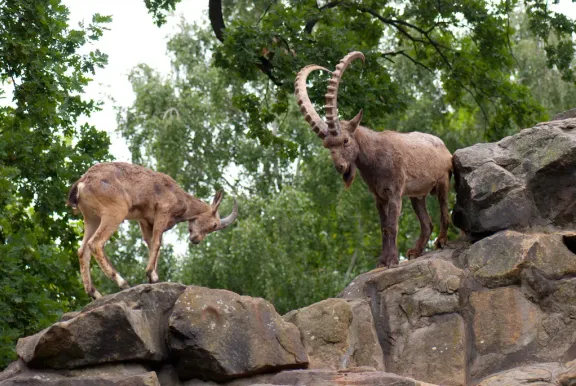
Siberian ibex
Capra sibirica
Same genus (Capra)
Big game
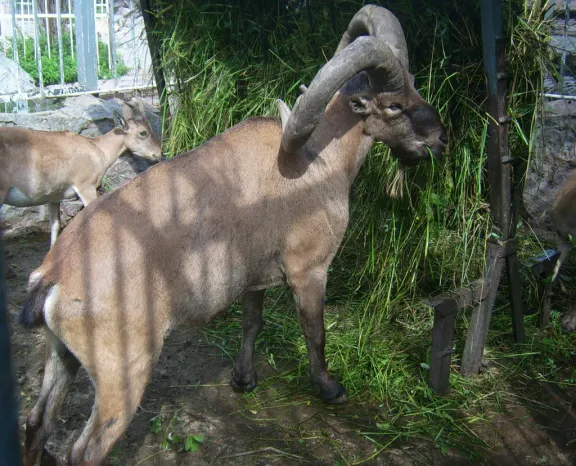
East Caucasian tur
Capra cylindricornis
Same genus (Capra)
Big game
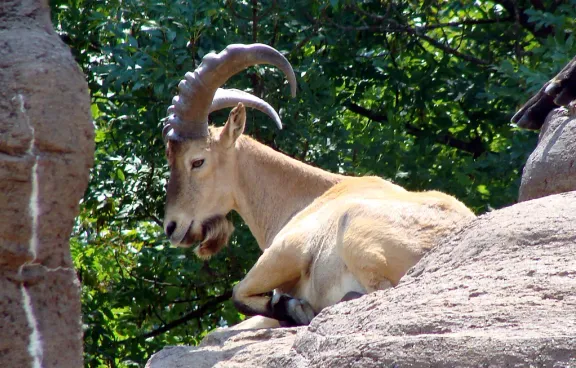
West Caucasian tur
Capra caucasica
Same genus (Capra)