Waterfowl
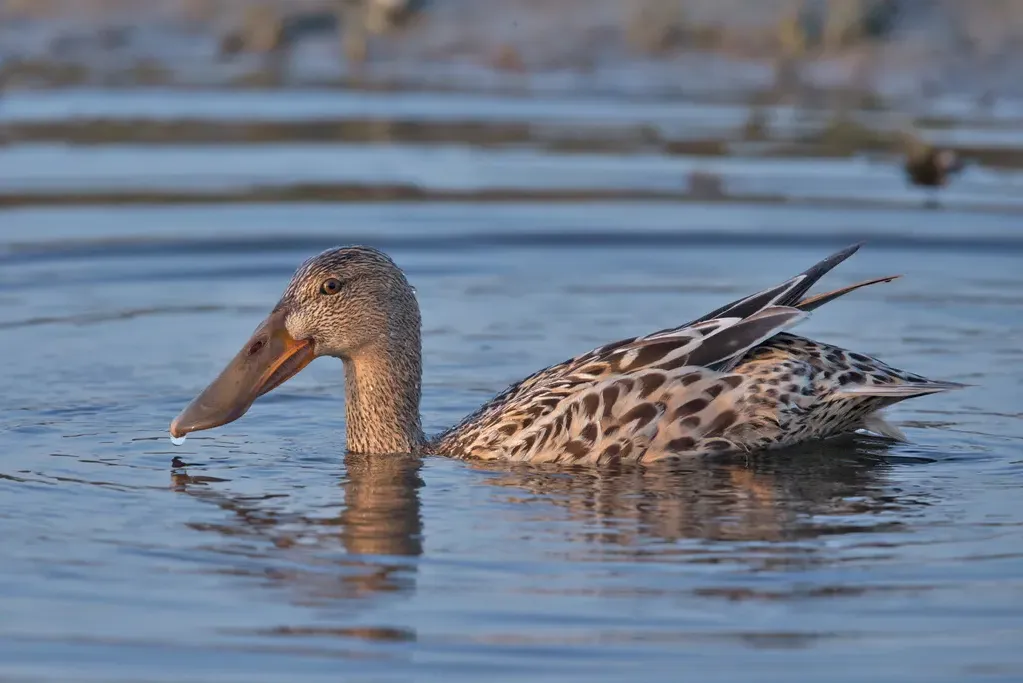
Northern shoveler
Spatula clypeata
- Group
- Waterfowl
- Size class
- Small (under 10 kg)
- Family
- Anatidae
Range
- North America
- Europe
- Asia
Habitat
- Wetland
Range
Countries it is found in
146 countries
- Afghanistan
- Albania
- Algeria
- Andorra
- Anguilla
- Argentina
- Armenia
- Aruba
- Austria
- Azerbaijan
- Bahamas
- Bahrain
- Bangladesh
- Belarus
- Belgium
- Belize
- Bermuda
- Bhutan
- Bolivia
- Bosnia & Herzegovina
- Brunei
- Bulgaria
- Canada
- Cayman Islands
Range from:Wikipedia country bird lists, GBIF occurrence records — read 2026-08-05
Chapter 01
Overview
The northern shoveler (Spatula clypeata) is a common and widespread duck that breeds in northern Europe, across the Palearctic and over most of North America, and winters in southern Europe, the Indian subcontinent, Southeast Asia, Central America, the Caribbean and northern South America. Linnaeus described it in 1758 as Anas clypeata, 'shield-bearing'; a 2009 study of mitochondrial DNA split the old genus Anas, and the shoveler moved to the revived Spatula, Latin for 'spoon'. No living subspecies are recognised. It is a bird of open wetlands such as wet grassland and marshes with some emergent vegetation. Birds wintering in India make the hard crossing of the Himalayas. It is listed as least concern and covered by AEWA; in North America it is the third most abundant duck after the mallard and blue-winged teal, and numbers there had risen to more than 5 million by 2015.
Chapter 02
Identification
Unmistakable in the Northern Hemisphere for its large, spatulate bill. The breeding drake has a dark green, faintly iridescent head that looks black at a distance or in poor light, a white breast, chestnut belly and flanks and a black bill; in flight pale blue forewings show, separated from the green speculum by a white bar. In early autumn the drake has a white crescent on each side of the face, and in eclipse he resembles the female but keeps the pale blue forewing. The female is mottled brown like other dabblers and similar to a female mallard, but the long, broad grey bill, tinged orange along the cutting edge, gives her away, and her forewing is grey. Shovelers are 44–52 cm long with a 70–84 cm wingspan and weigh 500–800 g. Both sexes have bright orange-red legs. It is a fairly quiet duck: the drake gives a clunking call, the female a mallard-like quack.
Chapter 03
Behaviour
Shovelers feed by dabbling, often swinging the bill from side to side to strain food from the water. Comb-like lamellae along the edge of the wide, flat bill act as sieves, letting them skim crustaceans and plankton from the surface — a specialisation that spares them competition with other dabbling ducks for most of the year and makes invertebrate-rich, mud-bottomed marshes their habitat of choice. Outside the breeding season they keep to small flocks. The nest is a shallow hollow on the ground lined with vegetation and down, in grassy areas away from open water, and the hen usually lays about nine eggs. Drakes are strongly territorial in the breeding season and defend their territory and mates; courtship is elaborate on the water and in the air, and a dozen or more drakes may chase a single hen. Despite their stocky look, shovelers are nimble fliers.
Chapter 04
Hunting
In Sweden the shoveler has no open season in the Hunting Ordinance, either in its current form or in the version that takes effect on 1 July 2027, which opens a season for the gadwall but not for the shoveler.
On the table
Meat & cooking
Table grade 4 of 54/5
- Sold as meat in a legal market
- Has a named traditional dish
- Published way to handle and cook it
- Eaten in more than one country
- No known health advisory
Traditional preparations
- Roast wild duck
- The shoveler is named among the wild ducks commonly eaten in Europe; wild duck is usually roasted briefly and served rare. Duck as food — Wikipedia
- Salmis
- Roast game bird, duck among them, sliced rare and reheated in a sauce of the roasting juices or game stock enriched with wine or brandy. Salmis — Wikipedia
Sources
Sources: Northern shoveler — Wikipedia, Jaktförordning (1987:905) — Sveriges riksdag — read 2026-10-29
Cross-reference
Related species
Its closest relatives in the compendium, nearest kinship first.
Waterfowl
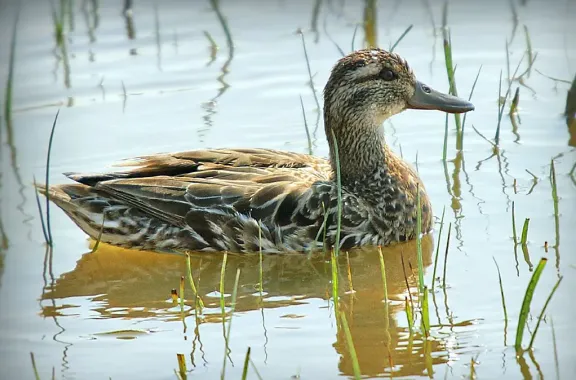
Garganey
Spatula querquedula
Same genus (Spatula)
Waterfowl
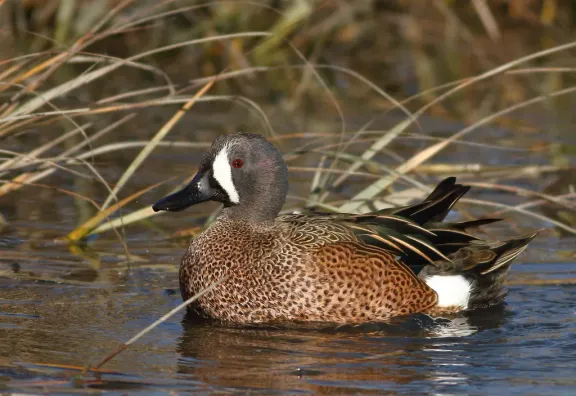
Blue-winged teal
Spatula discors
Same genus (Spatula)
Waterfowl
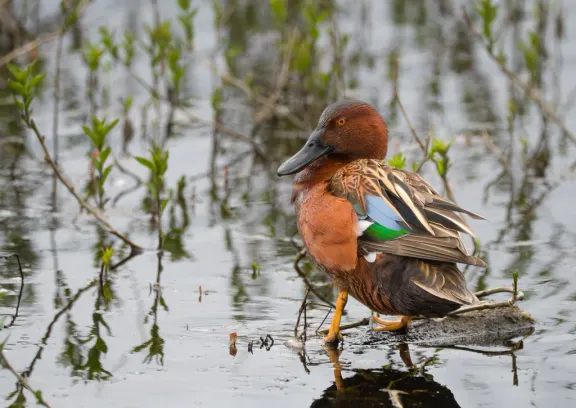
Cinnamon teal
Spatula cyanoptera
Same genus (Spatula)
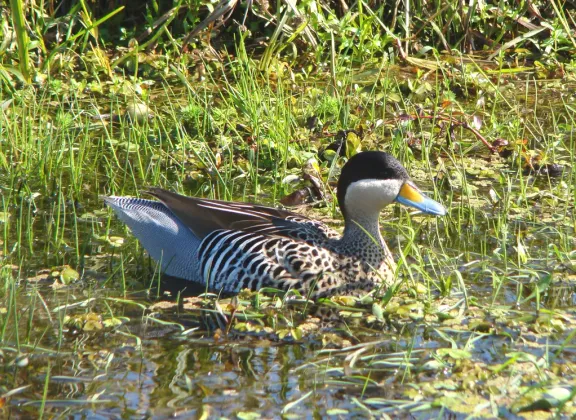
Waterfowl
Silver teal
Spatula versicolor
Same genus (Spatula)
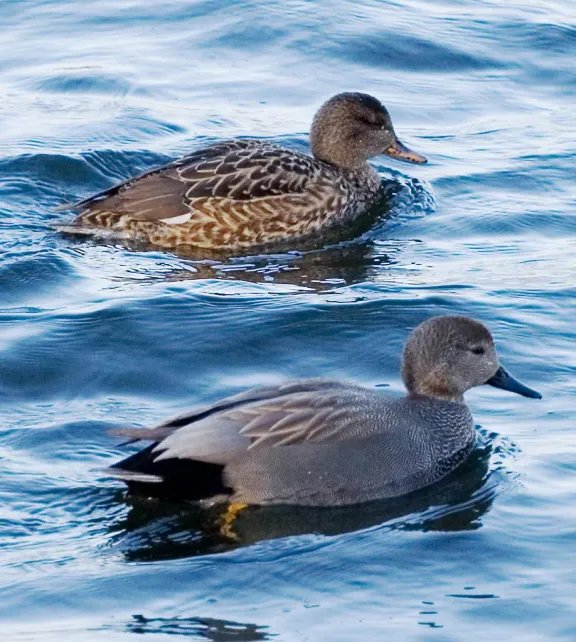
Waterfowl
Gadwall
Mareca strepera
Same subfamily (Anatinae)
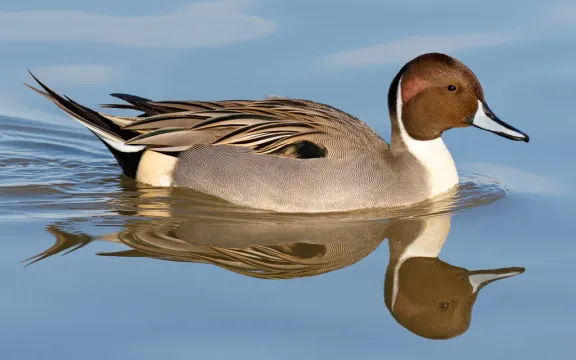
Waterfowl
Northern pintail
Anas acuta
Same subfamily (Anatinae)