Waterfowl
Northern pintail
Anas acuta
- Group
- Waterfowl
- Size class
- Small (under 10 kg)
- Family
- Anatidae
Range
- North America
- Europe
- Asia
Habitat
- Wetland
Range
Countries it is found in
137 countries
- Afghanistan
- Albania
- Algeria
- Armenia
- Aruba
- Austria
- Azerbaijan
- Bahamas
- Bahrain
- Bangladesh
- Belarus
- Belgium
- Belize
- Benin
- Bermuda
- Bhutan
- Bosnia & Herzegovina
- Brazil
- Brunei
- Bulgaria
- Cambodia
- Canada
- Chad
- China
Range from:Wikipedia country bird lists, GBIF occurrence records — read 2026-08-05
Chapter 01
Overview
The northern pintail (Anas acuta) breeds across the northern Palearctic, as far south as about Poland and Mongolia, and in Canada, Alaska and the Midwestern United States, and winters south of that range almost to the equator — Panama, northern sub-Saharan Africa and tropical South Asia. Unusually for a bird with so large a range it has no geographical subspecies. Ringed birds show long crossings: one caught in Labrador was shot in England nine days later. Its breeding habitat is open, treeless wetland — wet grassland, lake shores, tundra — and in winter sheltered estuaries, brackish marshes and coastal lagoons. With a world population of about 4.8–4.9 million the IUCN does not count it as globally threatened, but it is endangered in Europe and has declined across much of the Palearctic, Russia included. In North America the breeding population fell from over 10 million in 1957 to 3.5 million in 1964, and avian botulism killed an estimated 1.5 million waterbirds, most of them pintails, in 1997.
Chapter 02
Identification
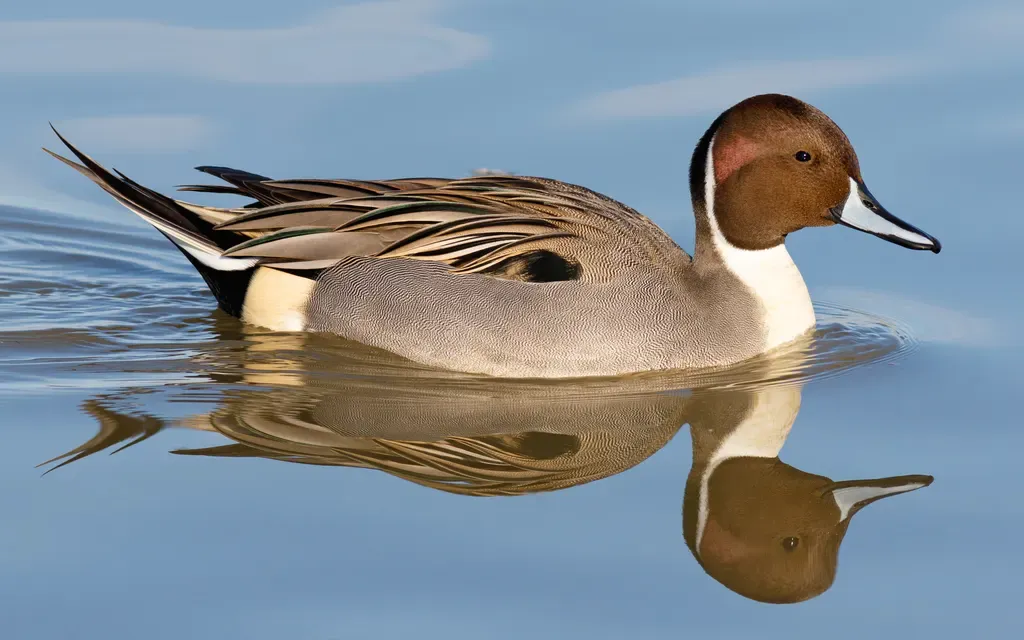
A fairly large but slender duck with a long neck and, in the drake, a long tail. Drakes are 59–76 cm long and weigh 450–1,360 g, ducks 51–64 cm and 454–1,135 g, with an 80–95 cm wingspan. The breeding drake is unmistakable: chocolate-brown head, white breast with a white stripe running up the side of the neck, grey upperparts with long black-centred shoulder feathers, a yellow patch before the black undertail and central tail feathers up to 10 cm longer than the rest. Both sexes have a bluish bill and blue-grey legs. The female is scalloped and mottled light brown with a plainer grey-brown head and a shorter pointed tail, but her shape, long neck and long grey bill still give her away; her dark brown speculum has a broad white trailing edge visible at a great distance. In flight the wings are slightly swept back. The drake's call is a soft proop-proop whistle, like a teal's; the female quacks like a mallard and croaks when flushed.
Chapter 03
Behaviour
The pintail dabbles and upends in shallow water, mostly in the evening or at night, and spends much of the day resting. Its long neck reaches food on bottoms up to 30 cm deep, beyond a mallard's reach. In winter it lives mainly on seeds and rhizomes of water plants, sometimes grain from fields; in the breeding season mostly on aquatic insects, molluscs and crustaceans. Outside the breeding season it gathers in very large mixed flocks with other ducks. It is among the earliest ducks to breed, pairing on migration or even in winter quarters. Breeding runs from April to June; the nest is a shallow scrape lined with plant material and down, hidden in vegetation on dry ground, often some way from water. The female lays seven to nine cream eggs and incubates them alone for 22–24 days, and the chicks fledge at 46–47 days. The oldest recorded pintail, a Dutch bird, lived 27 years and 5 months.
Chapter 04
Hunting
The pintail is a popular game species for its speed, its agility and its excellent eating qualities, and it is hunted throughout its range. Hunting combined with other pressures has reduced numbers, and local restrictions have been brought in at times to protect the species. Lead shot that collects on the bottom of lakes and wetlands is a major cause of lead poisoning in bottom-feeding waterfowl; a Spanish study found pintail and pochard had the highest rates of lead-shot ingestion, and in the United States, Canada and many western European countries all waterfowl shot must now be non-toxic. In Sweden the pintail has no open season in the Hunting Ordinance, either in its current form or in the version that takes effect on 1 July 2027.
On the table
Meat & cooking
Table grade 4 of 54/5
- Sold as meat in a legal market
- Has a named traditional dish
- Published way to handle and cook it
- Eaten in more than one country
- No known health advisory
Traditional preparations
- Roast wild duck
- The pintail is named among the wild ducks commonly eaten in Europe; wild duck is usually roasted briefly and served rare. Duck as food — Wikipedia
- Salmis
- Roast game bird, duck among them, sliced rare and reheated in a sauce of the roasting juices or game stock enriched with wine or brandy. Salmis — Wikipedia
Sources
Sources: Northern pintail — Wikipedia, Jaktförordning (1987:905) — Sveriges riksdag — read 2026-10-29
Cross-reference
Related species
Its closest relatives in the compendium, nearest kinship first.
Waterfowl
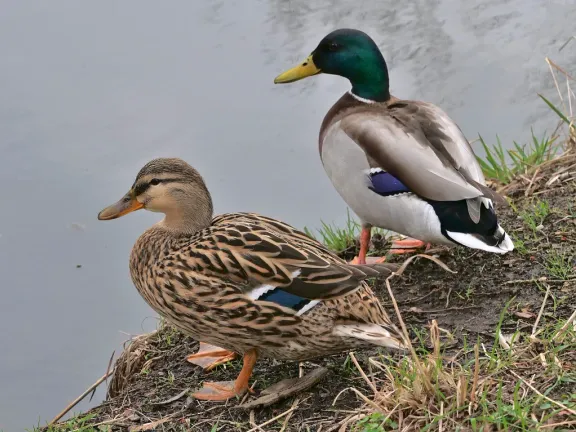
Mallard
Anas platyrhynchos
Same genus (Anas)
Waterfowl
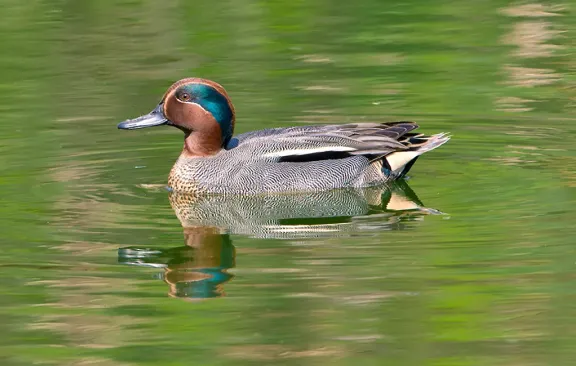
Eurasian teal
Anas crecca
Same genus (Anas)
Waterfowl
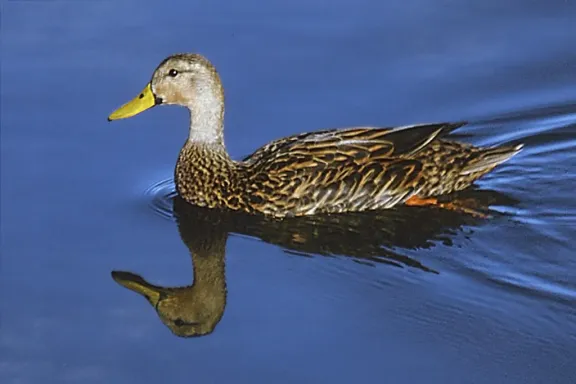
Mottled duck
Anas fulvigula
Same genus (Anas)
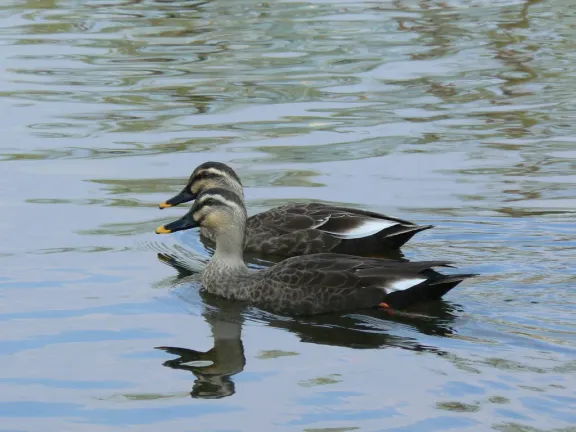
Waterfowl
Eastern spot-billed duck
Anas zonorhyncha
Same genus (Anas)
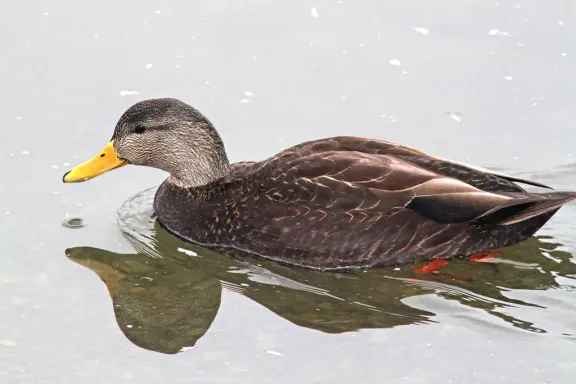
Waterfowl
American black duck
Anas rubripes
Same genus (Anas)
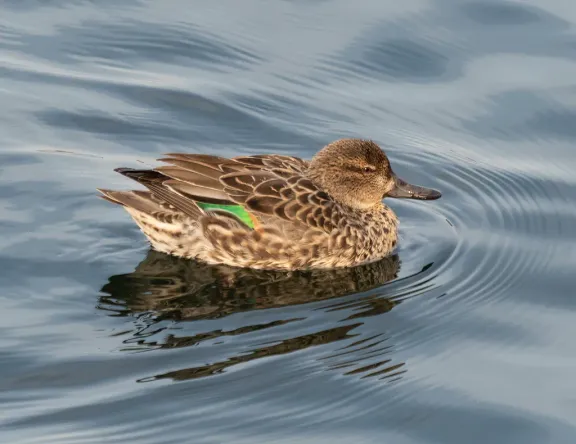
Waterfowl
Green-winged teal
Anas carolinensis
Same genus (Anas)