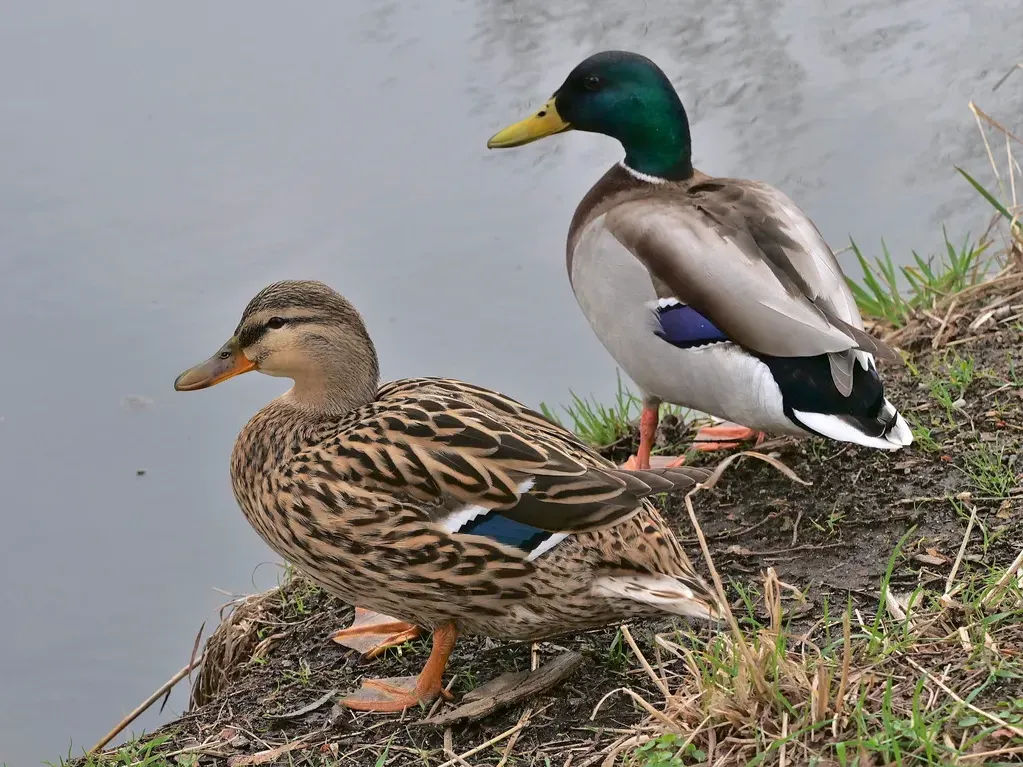
Waterfowl
Mallard
Anas platyrhynchos
- Group
- Waterfowl
- Size class
- Small (under 10 kg)
- Family
- Anatidae
Range
- North America
- Europe
- Asia
Habitat
- Wetland
Range
Countries it is found in
123 countries
- Afghanistan
- Åland Islands
- Albania
- Algeria
- Andorra
- Armenia
- Austria
- Azerbaijan
- Bahamas
- Bahrain
- Bangladesh
- Barbados
- Belarus
- Belgium
- Bermuda
- Bhutan
- Bosnia & Herzegovina
- British Indian Ocean Territory
- Brunei
- Bulgaria
- Canada
- China
- Costa Rica
- Croatia
Range from:Wikipedia country bird lists, GBIF occurrence records — read 2026-08-05
Chapter 01
Overview
The mallard (Anas platyrhynchos), or wild duck, is a dabbling duck breeding throughout the temperate and subtropical Americas, Eurasia and North Africa, and introduced to New Zealand, Australia, Peru, Brazil, Uruguay, Argentina, Chile, Colombia, the Falklands and South Africa. It lives in wetlands and eats water plants and small animals. Linnaeus described it in 1758 and gave it two names; Anas boschas was generally preferred until 1906, when Einar Lönnberg established that A. platyrhynchos had priority for appearing on an earlier page.
Chapter 02
Identification
A medium-large duck, heavier than most other dabblers: 50–65 cm long, of which the body is about two-thirds, with an 81–98 cm wingspan and a weight of 0.7–1.6 kg. The wing chord runs 25.7 to 30.6 cm, the bill 4.4 to 6.1 cm and the tarsus 4.1 to 4.8 cm. Two subspecies are currently accepted. Several ducks once treated as mallard subspecies are now separate species in their own right — Laysan duck, Hawaiian duck, mottled duck, American black duck and Mexican duck.
Chapter 03
Behaviour
The mallard is omnivorous and very flexible about food, with the diet shifting according to the stage of the breeding cycle, short-term availability, nutrient needs and competition both within and between species. Much of it is gastropods, insects — beetles, flies, moths, dragonflies, caddisflies — and crustaceans. Pairs usually form in October and November in the northern hemisphere and hold until the female lays at the start of the nesting season around the beginning of spring. She is then left by the drake, who joins other males to wait out the moult beginning in June. In the brief window before that, the drakes are still sexually potent.
Chapter 04
Hunting
Mallards are among the most commonly shot species in waterfowl hunting, simply on the strength of their numbers. The ground considered ideal is shallow water where the birds can be found foraging. Hunting can cause populations to decline in some places, at some times and in some populations, and in certain countries the mallard may be legally shot but is subject to restriction.
Field data
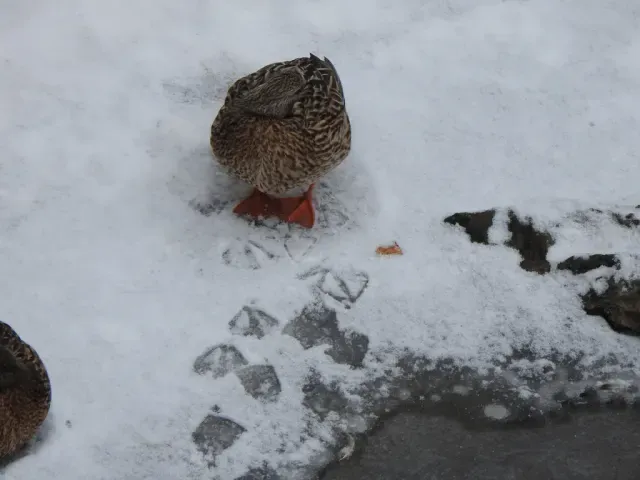
Tracks
A photograph of real sign left by Mallard. Prints vary with gait, ground and how long they have been there — treat this as one example, not a template.
Track photo:Liren VargheseCC BY
On the table
Meat & cooking
Table grade 5 of 55/5
- Sold as meat in a legal market
- Has a named traditional dish
- Published way to handle and cook it
- Eaten in more than one country
- No known health advisory
Traditional preparations
- Roast wild duck
- Wild duck is roasted fast and served pink; the breast is the cut, the legs being better braised or confited. Duck as food — Wikipedia
- Salmis
- The classic French treatment of wildfowl — briefly roasted, jointed, then finished in a sauce built from the carcass. Salmis — Wikipedia
Sources
Sources: Mallard — Wikipedia — read 2026-08-05
Cross-reference
Related species
Its closest relatives in the compendium, nearest kinship first.
Waterfowl
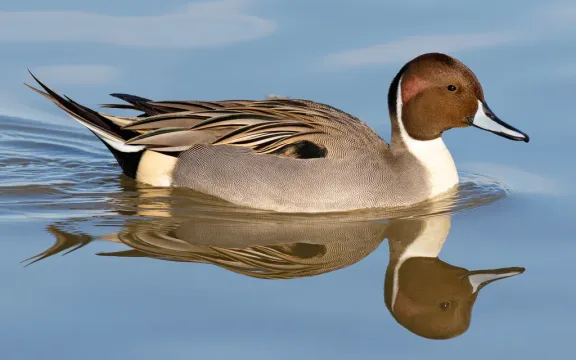
Northern pintail
Anas acuta
Same genus (Anas)
Waterfowl
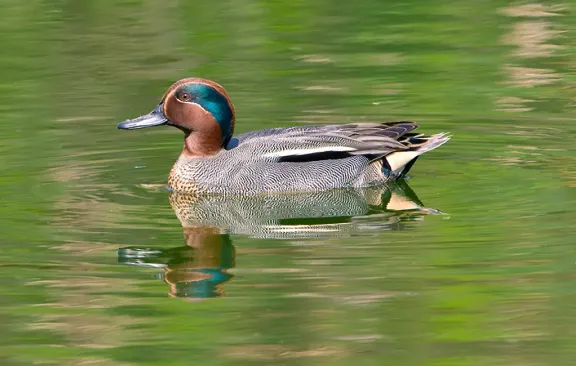
Eurasian teal
Anas crecca
Same genus (Anas)
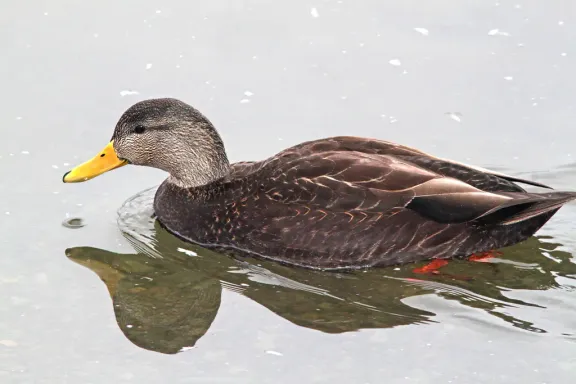
Waterfowl
American black duck
Anas rubripes
Same genus (Anas)
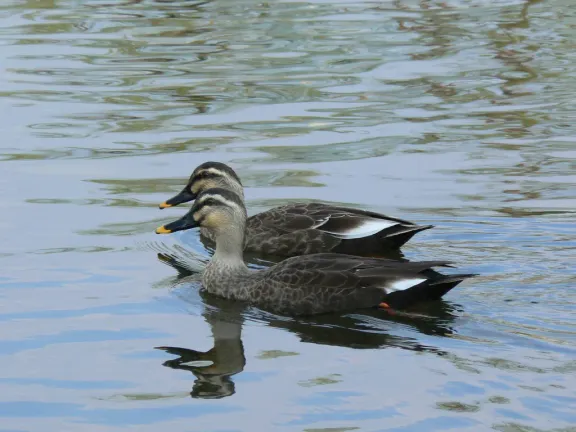
Waterfowl
Eastern spot-billed duck
Anas zonorhyncha
Same genus (Anas)
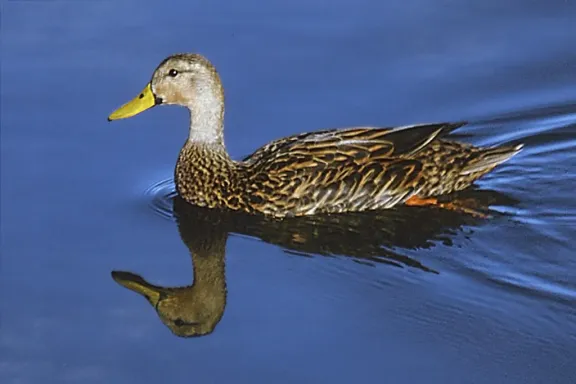
Waterfowl
Mottled duck
Anas fulvigula
Same genus (Anas)
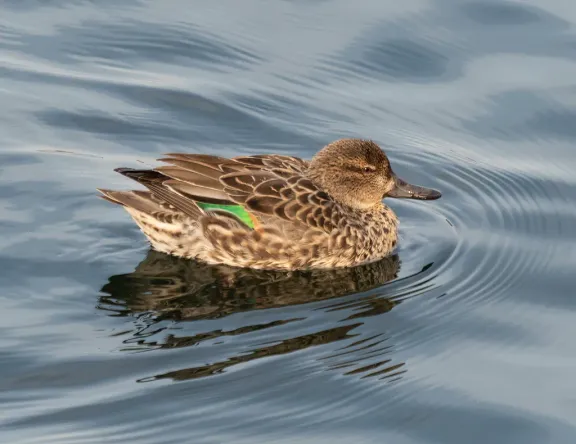
Waterfowl
Green-winged teal
Anas carolinensis
Same genus (Anas)