Small game
Nutria (coypu)
Myocastor coypus
- Group
- Small game
- Size class
- Small (under 10 kg)
- Family
- Myocastoridae
Range
- South America
- North America
- Europe
Habitat
- Wetland
Range
Countries it is found in
25 countries
- Argentina
- Austria
- Belgium
- Bolivia
- Brazil
- Bulgaria
- Chile
- Croatia
- Czechia
- France
- Germany
- Greece
- Hungary
- Israel
- Italy
- Japan
- Luxembourg
- Netherlands
- Paraguay
- Russia
- Serbia
- Slovakia
- Slovenia
- United States
Range from:ASM Mammal Diversity Database, GBIF occurrence records — read 2026-08-05
Chapter 01
Overview
The nutria or coypu (Myocastor coypus) is a herbivorous, semiaquatic rodent native to subtropical and temperate South America — Chile, Argentina, Uruguay, Paraguay and the south of Brazil and Bolivia. The genus name means 'mouse-beaver'. Fur farmers took it to North America, Europe and Asia, escapes and releases built wild populations, and since 2016 it has been on the EU list of invasive alien species of Union concern. It lives mostly in freshwater marshes, less often brackish ones, in burrows of its own or those left by beavers and muskrats. Each animal eats about a quarter of its body weight a day, all year, digging out roots and rhizomes and leaving 'eat-outs' stripped of vegetation. Cold winters freeze the tail and can kill the animal, so populations outside South America shrink and grow with the winters — those in the Scandinavian countries died out in the 1980s.
Chapter 02
Identification
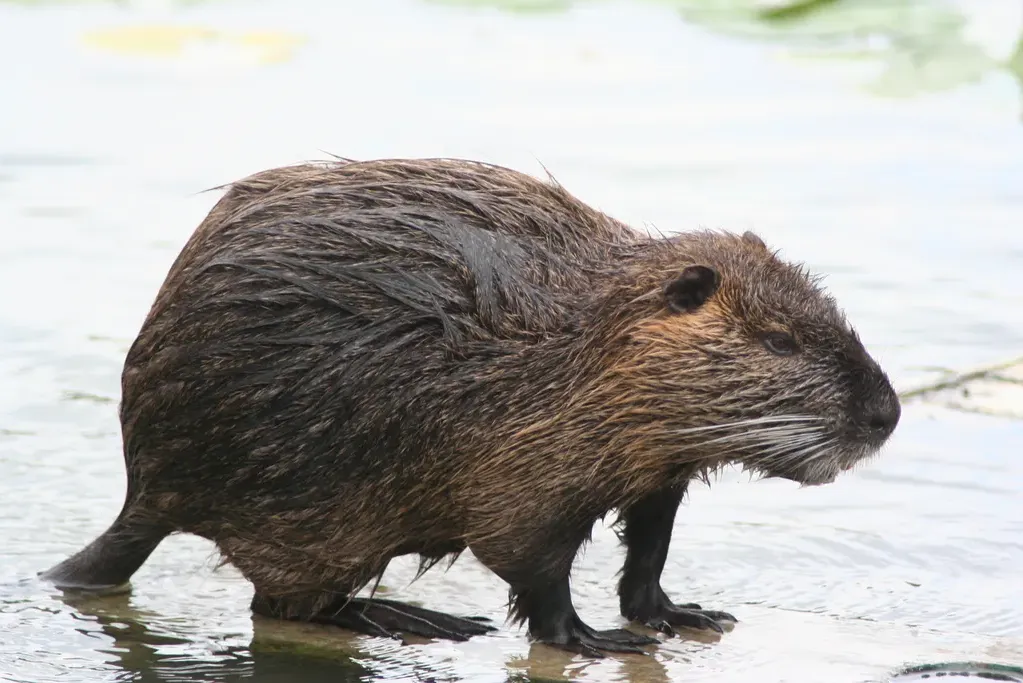
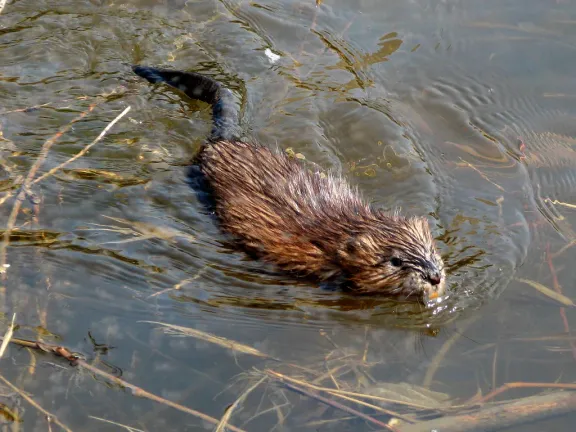
Something like a very large rat, or a beaver with a thin, round, hairless tail. Adults usually weigh 4.5–7 kg, though 16–17 kg is possible, with a body of 40–60 cm and a tail of 30–45 cm. The coat has three layers: long guard hairs, a coarse dark brown middle layer and a soft, dense grey underfur, itself called nutria in the fur trade. Three marks identify it: a white patch on the muzzle, webbed hind feet and large, bright orange-yellow incisors, stained by iron in the enamel. Long whiskers stand out on each side of the muzzle, and males and females look alike. It is easily mistaken for a muskrat, which is smaller and has a tail flattened from side to side, or for a small beaver, whose tail is flat and paddle-shaped; the nutria's tail is round.
Chapter 03
Behaviour
Nutrias are mainly crepuscular or nocturnal, most active around dusk and towards midnight, and forage by day only when food is short. They live in colonies, one male sharing a den with three or four females and their young, and build feeding platforms of cut vegetation in the water. They can be territorial, and will bite people and dogs when caught or cornered. They breed fast: females can mature at three months, gestation lasts 130 days, a litter averages four young, and a female can mate again within two days of giving birth, averaging two litters a year. The young are born furred and open-eyed and swim and eat plants with their parents within hours. Few live long in the wild; one study found that 80 per cent die in their first year.
Chapter 04
Hunting
Overharvest for fur in South America led to the first nutria farms in the late 19th and early 20th centuries, and farmed animals were often released to provide a game animal. Introduced populations are now controlled mainly by trapping and shooting. Britain eradicated the nutria with trapping campaigns, the last of which ended in 1989; in the 1962–1965 campaign live traps let non-target animals go while every nutria caught was shot. Louisiana's Coastwide Nutria Control Program has paid a bounty per tail since 2002 — $6 as of 2019 — and a licensed hunter or trapper may take any number; 445,963 tails were turned in during the 2009–2010 season. In Sweden the nutria is among the alien game species — with muskrat, mink and raccoon — that the Hunting Ordinance allows to be hunted all year round to prevent the damage they cause.
Field data
Tracks
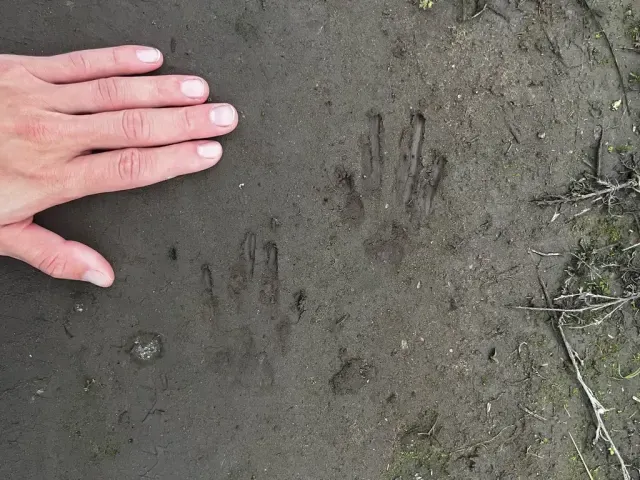
A photograph of real sign left by Nutria (coypu). Prints vary with gait, ground and how long they have been there — treat this as one example, not a template.
Track photo:Valentín AlfanoCC BY
On the table
Meat & cooking
Table grade 3 of 53/5
- Sold as meat in a legal market
- Has a named traditional dish
- Published way to handle and cook it
- Eaten in more than one country
- No known health advisory
Before you eat it: Few pathogens are associated with nutria meat, but it should be heated properly in cooking to kill them; some populations carry zoonotic pathogens, including pathogenic Leptospira.
Sources
Sources: Nutria — Wikipedia, Jaktförordning (1987:905) — Sveriges riksdag — read 2026-10-29
Cross-reference
Related species
Its closest relatives in the compendium, nearest kinship first.
Small game
Muskrat
Ondatra zibethicus
Same order (Rodentia)
Small game
Eastern gray squirrel
Sciurus carolinensis
Same order (Rodentia)
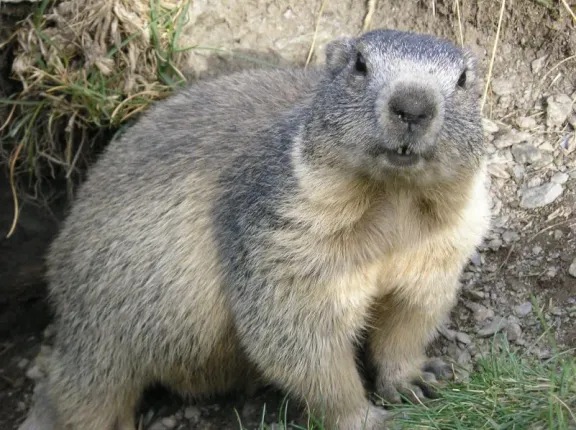
Small game
Alpine marmot
Marmota marmota
Same order (Rodentia)
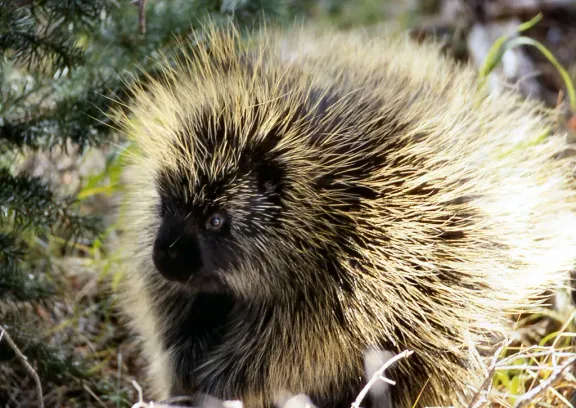
Small game
North American porcupine
Erethizon dorsatum
Same order (Rodentia)
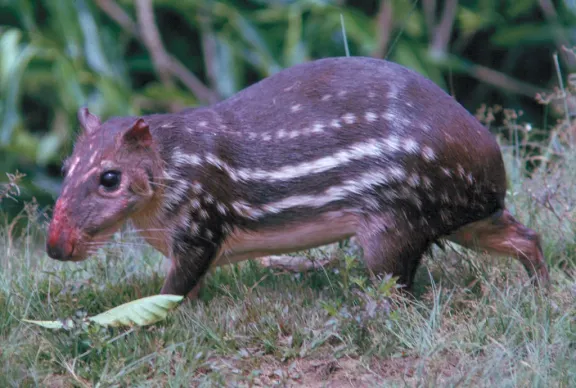
Small game
Lowland paca
Cuniculus paca
Same order (Rodentia)
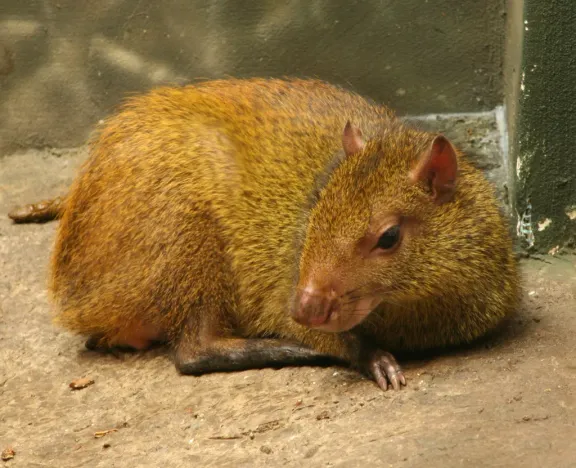
Small game
Red-rumped agouti
Dasyprocta leporina
Same order (Rodentia)