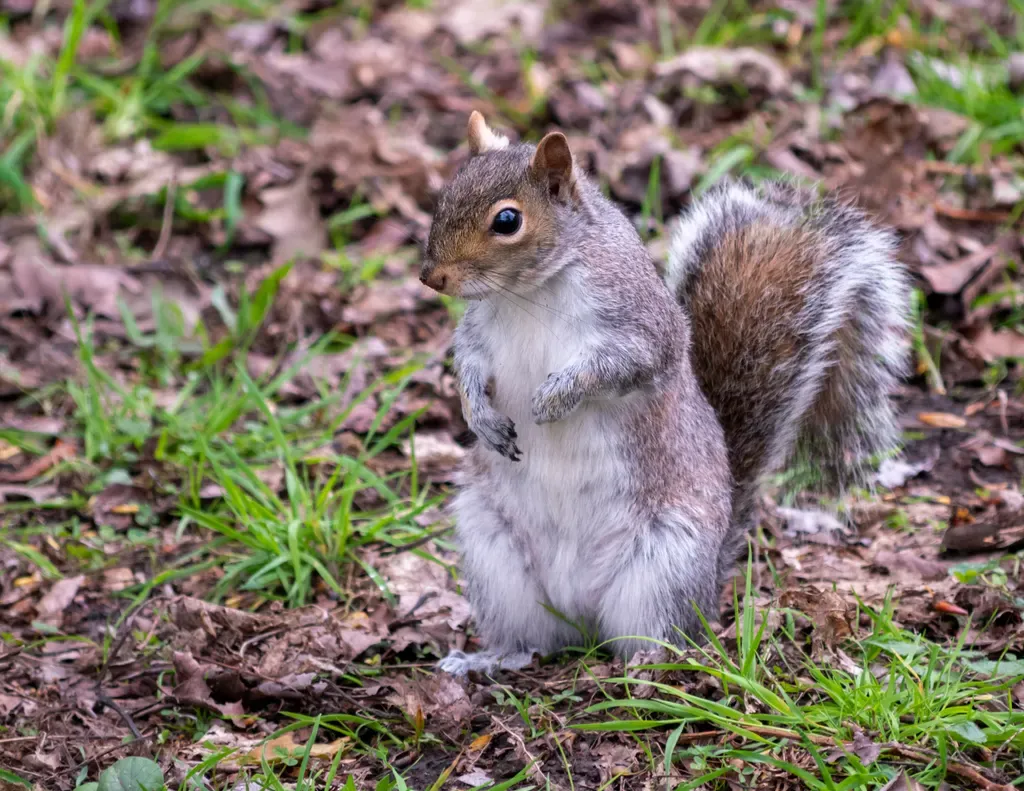
Small game
Eastern gray squirrel
Sciurus carolinensis
- Group
- Small game
- Size class
- Small (under 10 kg)
- Family
- Sciuridae
Range
- North America
- Europe
Habitat
- Forest
Range
Countries it is found in
6 countries
- Canada
- Ireland
- Italy
- South Africa
- United Kingdom
- United States
Range from:ASM Mammal Diversity Database, GBIF occurrence records — read 2026-08-05
Chapter 01
Overview
The eastern gray squirrel (Sciurus carolinensis) is a tree squirrel native to the eastern and midwestern United States and the southern parts of Canada's central provinces, where it is one of the most important natural regenerators of the forest. It needs mature, dense woodland and prefers oak and hickory over conifers for their mast, but it also lives in parks, gardens and farmland close to people. Introduced to Britain, Ireland, Italy, South Africa and the western United States and Canada, it has displaced the native red squirrel across much of Britain and competes with it in Ireland and Italy, helped by its greater size, its ability to store fat for winter and squirrelpox, which it carries unharmed but which kills red squirrels. Since 2016 it has been on the EU list of invasive alien species of Union concern, so it may not be imported, bred, transported, sold or released anywhere in the Union.
Chapter 02
Identification
Mostly grey fur with brown flecks and streaks, a white underside — the fox squirrel's is brownish-orange — and a large bushy tail. Head and body measure 23–30 cm and the tail 19–25 cm, and adults weigh 400–600 g, with no difference in size or colour between the sexes. Almost wholly black animals predominate in some areas, such as much of southeastern Canada, and both black and white ones are common in towns. Like all squirrels it shows four toes on the forefeet and five on the hind feet, and the hind pad often does not print. When the animal bounds, the front prints land behind the hind ones, and a bounding stride can be 60–90 cm long.
Chapter 03
Behaviour
One of the very few mammals that can come down a tree head first, turning its hind feet so the claws point backwards. It builds dreys of dry leaves and twigs, 30–60 cm across, in the forks of trees, or uses a hollow in a trunk or large branch. Depending on the season it is active by day or at dawn and dusk, and it does not hibernate. It eats seeds and nuts — acorns, walnuts, hazelnuts — buds, flowers, berries, bark and fungi, and also insects, eggs, small birds, frogs and other small rodents. Stripping bark for the soft tissue beneath damages trees; in Europe sycamore and beech suffer most. Breeding seasons run December–February and May–June; after a 44-day gestation one to four young are usual, and only one in four survives its first year.
Chapter 04
Hunting
Gray squirrels were eaten by Native Americans, and the meat is still popular with hunters across most of the species' range in North America. In Britain, where the grey squirrel is classed as a pest and a captured one may not be released, a campaign from 2006 under the slogan 'Save a red, eat a grey!' tried to bring squirrel meat back to market, with celebrity chefs, cookbook recipes and the Forestry Commission supplying restaurants, factories and butchers. On islands that still hold red squirrels, such as Anglesey, Brownsea and the Isle of Wight, programmes work to remove grey squirrels and keep them out so that the reds can recover.

On the table
Meat & cooking
Table grade 3 of 53/5
- Sold as meat in a legal market
- Has a named traditional dish
- Published way to handle and cook it
- Eaten in more than one country
- No known health advisory
Before you eat it: Physicians in the United States have warned that squirrel brains should not be eaten, because of the risk that they may carry Creutzfeldt–Jakob disease.
Sources
Sources: Eastern gray squirrel — Wikipedia — read 2026-10-29
Cross-reference
Related species
Its closest relatives in the compendium, nearest kinship first.
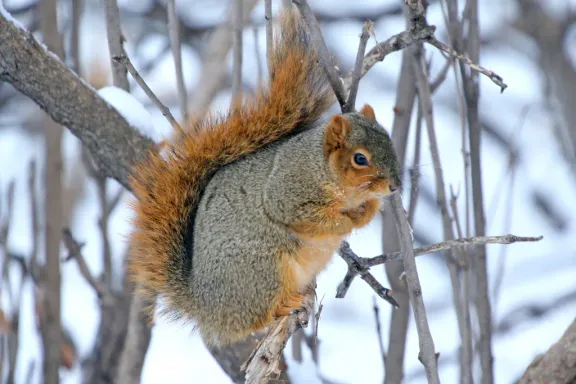
Small game
Fox squirrel
Sciurus niger
Same genus (Sciurus)
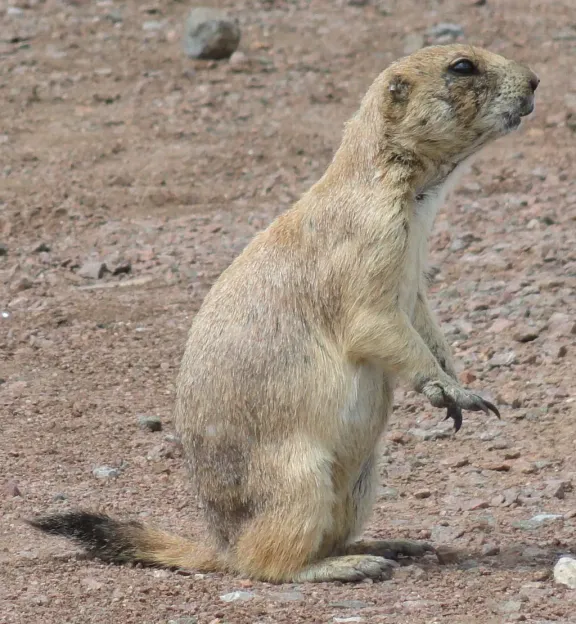
Small game
Black-tailed prairie dog
Cynomys ludovicianus
Same family (Sciuridae)
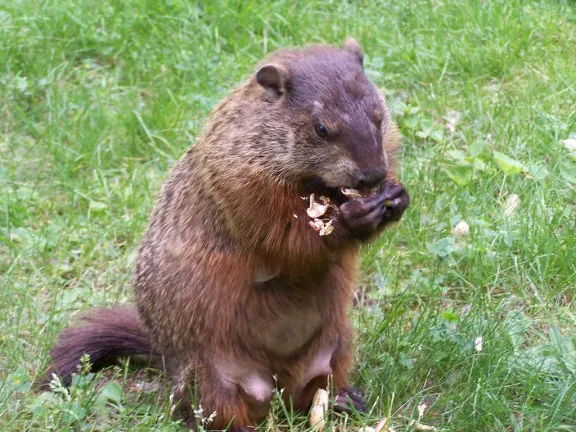
Small game
Groundhog
Marmota monax
Same family (Sciuridae)
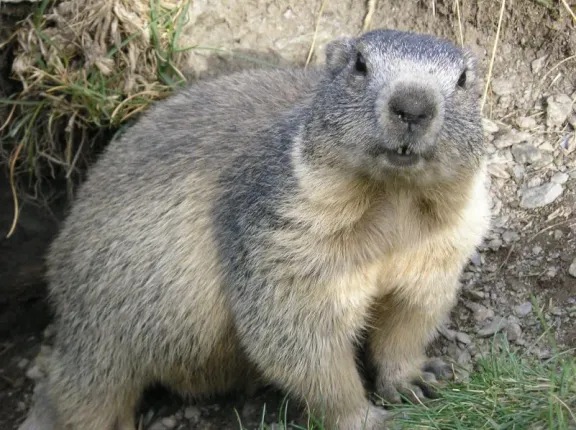
Small game
Alpine marmot
Marmota marmota
Same family (Sciuridae)
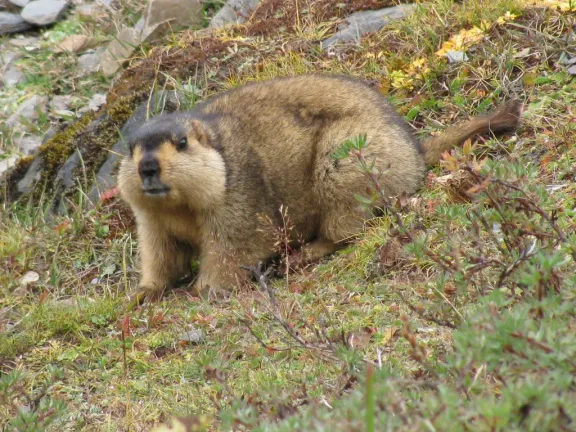
Small game
Himalayan marmot
Marmota himalayana
Same family (Sciuridae)
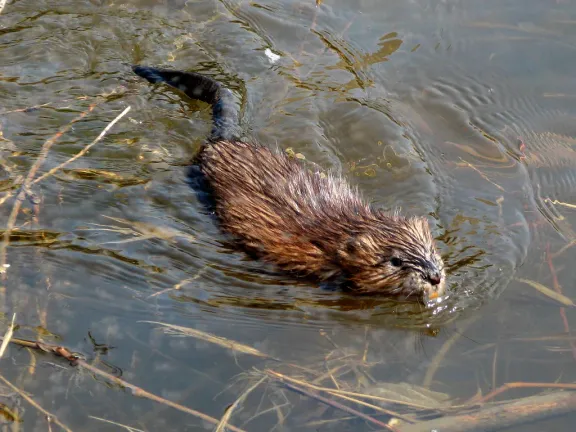
Small game
Muskrat
Ondatra zibethicus
Same order (Rodentia)