Small game
Alpine marmot
Marmota marmota
- Group
- Small game
- Size class
- Small (under 10 kg)
- Family
- Sciuridae
Range
- Europe
Habitat
- Mountain
Range
Countries it is found in
12 countries
- Andorra
- Austria
- France
- Germany
- Italy
- Liechtenstein
- Poland
- Romania
- Slovakia
- Slovenia
- Spain
- Switzerland
Range from:ASM Mammal Diversity Database, GBIF occurrence records — read 2026-08-05
Chapter 01
Overview
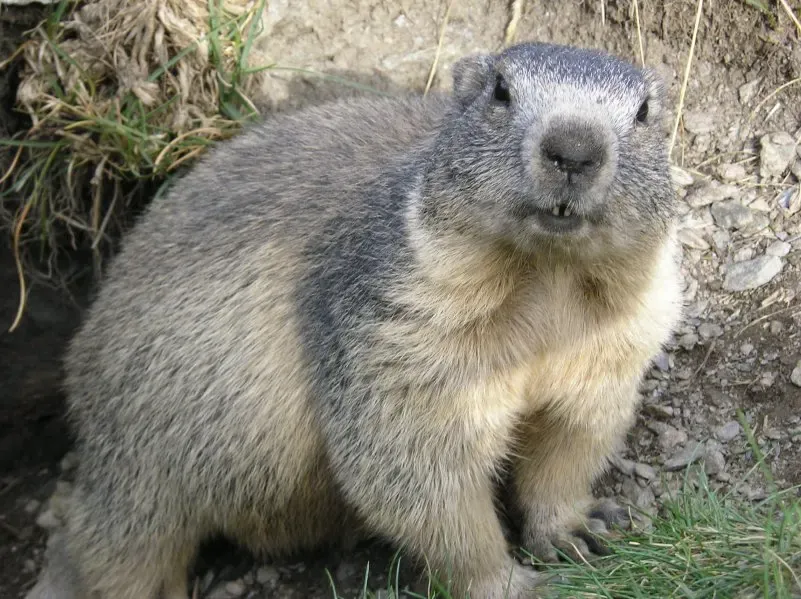
The alpine marmot (Marmota marmota) is a large ground-dwelling squirrel of the mountains of central and southern Europe, living between 800 and 3,200 m in the Alps, Carpathians, Tatras and Northern Apennines. Its core range runs through the Alps of France, Italy, Switzerland, Germany, Slovenia and Austria, and it has been introduced to the Pyrenees — where it had died out at the end of the Pleistocene and was brought back successfully in 1948 — the Massif Central, Jura, Vosges, Black Forest, Apennines and Romanian Carpathians. The Tatra marmot is an endemic subspecies. It prefers alpine meadows and high pastures, preferably steep, rocky, south-facing slopes, where colonies dig deep burrow systems in well-drained soil or rock that may be handed down through many generations.
Chapter 02
Identification
Head and body measure 43–73 cm with a tail of 13–20 cm, and weight swings from 1.9 to 8 kg — far lighter in spring after hibernation than in autumn before it. It is sometimes called the heaviest squirrel, though other marmots weigh as much. The coat mixes blonde, reddish and dark grey fur, the tail has a black tip, and the body sits on short legs. All the fingers have claws except the thumbs, which have nails. The teeth are orange-yellow.
Chapter 03
Behaviour
Colonies are family groups of 15 to 20 around a dominant, monogamous breeding pair, friendly among themselves — they greet by rubbing noses — and fiercely defensive against outsiders, warding them off with tail-beating, teeth-chattering and scent marks. A marmot often sits upright to keep watch, and a series of loud whistles sends the colony running for cover. Lying flat on a rock is not sunbathing but cooling: marmots are very sensitive to heat and may not feed at all on very warm days. They eat young grasses and herbs, grain, insects, spiders and worms, holding food in their forepaws. Hibernation lasts six to nine months, from as early as October, in a hay-lined chamber whose entrance is sealed with earth and droppings. The group huddles together, heart rate falls to five beats a minute and breathing to one to three breaths. Mating follows soon after emergence in spring, and the dominant female suppresses breeding by subordinates. After 33–34 days she bears one to seven blind young, usually three.
Chapter 04
Hunting
Alpine marmots were once widely hunted for food and for their fat, which is believed to ease rheumatism when rubbed on the skin, and they were also hunted for their fur. Hunting for sport and for fat still goes on, and because they reproduce slowly it is a danger to the species if insufficiently regulated. The species as a whole is not threatened, but some sub-populations are, such as those in the Jura and in Germany, and a very small population at Rodna in Romania is threatened by poaching.
Field data
Tracks
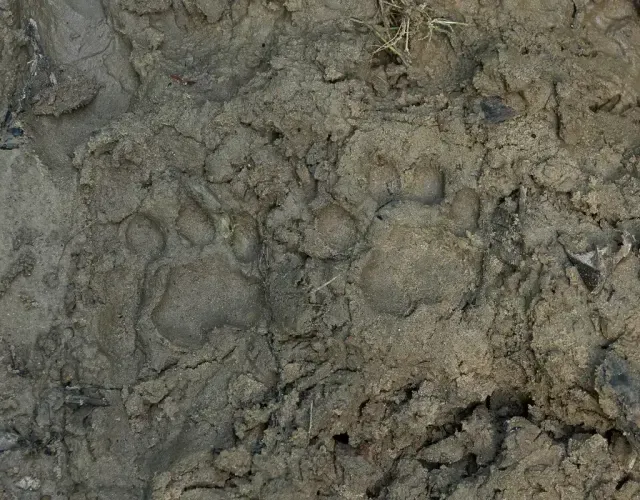
A photograph of real sign left by Alpine marmot. Prints vary with gait, ground and how long they have been there — treat this as one example, not a template.
Track photo:Rejoice GassahCC BY
On the table
Meat & cooking
Table grade 1 of 51/5
- Sold as meat in a legal market
- Has a named traditional dish
- Published way to handle and cook it
- Eaten in more than one country
- No known health advisory
Sources
Sources: Alpine marmot — Wikipedia, Alpmurmeldjur — Wikipedia (sv) — read 2026-10-29
Cross-reference
Related species
Its closest relatives in the compendium, nearest kinship first.
Small game
Himalayan marmot
Marmota himalayana
Same genus (Marmota)
Small game
Groundhog
Marmota monax
Same genus (Marmota)
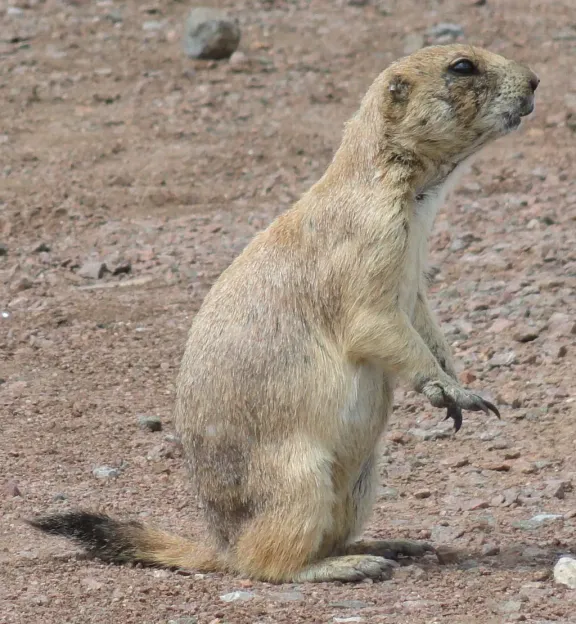
Small game
Black-tailed prairie dog
Cynomys ludovicianus
Same tribe (Marmotini)
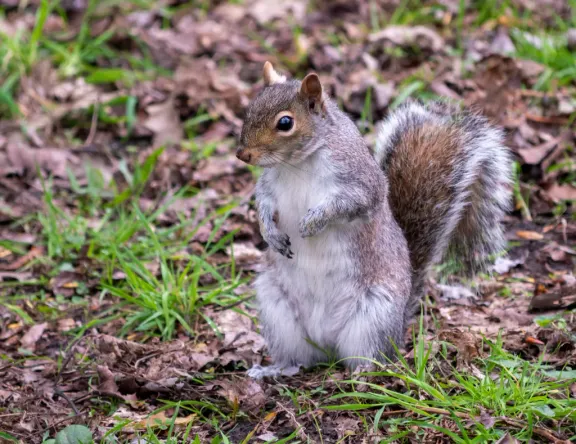
Small game
Eastern gray squirrel
Sciurus carolinensis
Same family (Sciuridae)
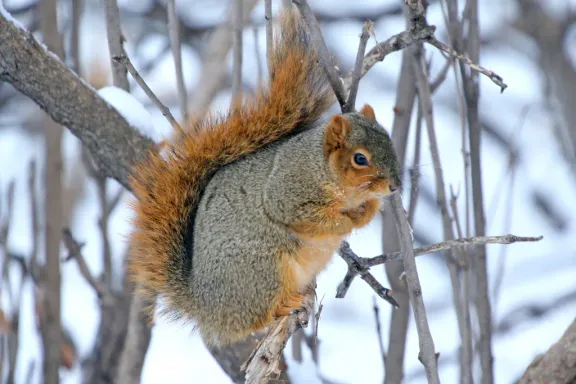
Small game
Fox squirrel
Sciurus niger
Same family (Sciuridae)
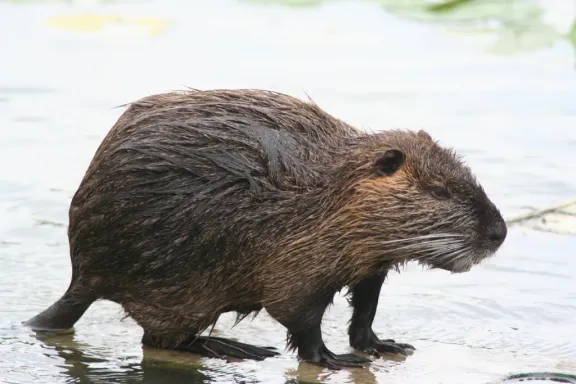
Small game
Nutria (coypu)
Myocastor coypus
Same order (Rodentia)