Small game
Muskrat
Ondatra zibethicus
- Group
- Small game
- Size class
- Small (under 10 kg)
- Family
- Cricetidae
Range
- North America
- Europe
Habitat
- Wetland
Range
Countries it is found in
19 countries
- Austria
- Belarus
- Belgium
- Canada
- China
- Czechia
- Finland
- France
- Germany
- Kazakhstan
- Liechtenstein
- Luxembourg
- Mexico
- Netherlands
- Poland
- Romania
- Russia
- Ukraine
- United States
Range from:ASM Mammal Diversity Database, GBIF occurrence records — read 2026-08-05
Chapter 01
Overview
The muskrat (Ondatra zibethicus) is a medium-sized semiaquatic rodent, the only living species of its genus and the largest of the subfamily Arvicolinae, which is otherwise mostly voles and lemmings. It is native to most of Canada, the United States and a small part of northern Mexico, and lives in fresh and saline wetlands, rivers, lakes and ponds. Where it becomes abundant it can strip much of a wetland's vegetation, and it is thought to shape the plant life of prairie wetlands in particular. It was brought to Europe for fur farming early in the 20th century — five animals were released at Dobříš in Bohemia in 1905 — and is now invasive in northwestern Europe; since 2017 it has been on the EU list of invasive alien species of Union concern. It reached northern Sweden from Finland in the 1950s and was at times numerous in Norrbotten and Västerbotten, but has since largely vanished from much of that range, probably through disease. The main population now lies at its southern front in Västernorrland, around Härnösand south of the High Coast.
Chapter 02
Identification
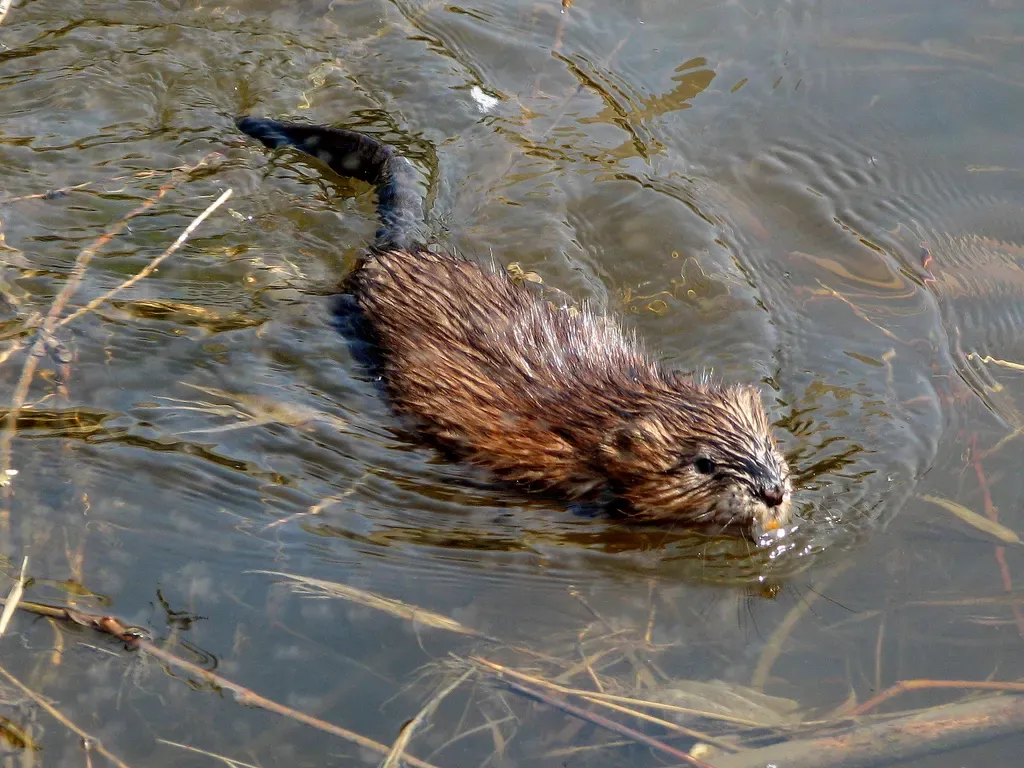
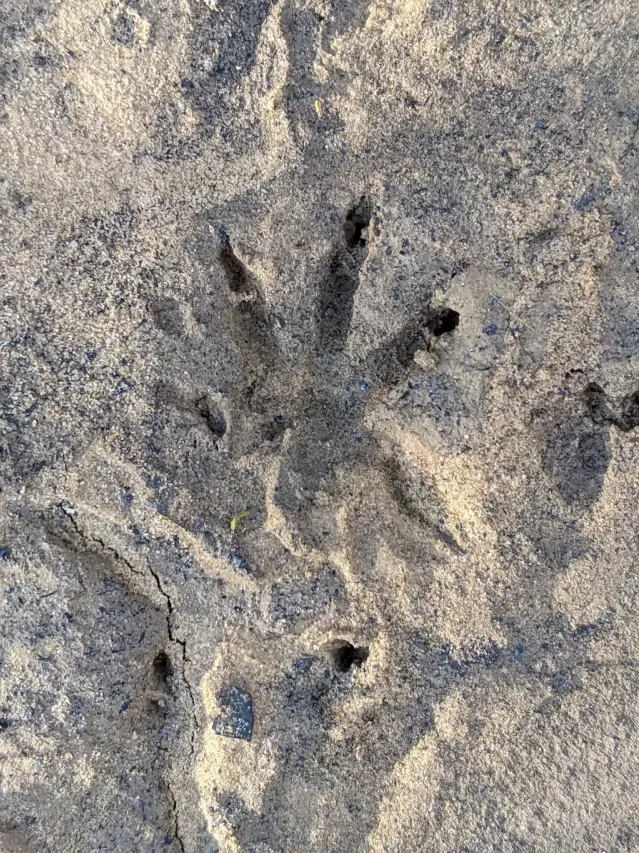
An adult is 40–70 cm long, half of it tail, and weighs 0.6–2 kg — about four times as heavy as a brown rat, though only slightly longer, and much smaller than a beaver, with which it often shares water. Svenska Jägareförbundet describes it as the size of a small rabbit and reddish-brown. The short, thick fur is medium to dark brown or black, a little lighter on the belly, and greys with age; its two layers keep out cold water. The tail gives it away: long, covered in scales rather than hair and flattened from side to side, a shape unique to the muskrat. It drags on land, which makes the tracks easy to recognise. The partly webbed hind feet do the swimming while the tail steers. The musk glands sit in the tail.
Chapter 03
Behaviour
Muskrats live in families of a male, a female and their young, and in spring they fight other muskrats over territory and mates, often to injury or death. They burrow into banks with an underwater entrance 15–20 cm wide, or in marshes build push-ups of vegetation and mud up to 90 cm high, plugging the openings daily in snowy country. They also build feeding platforms of cut vegetation in the water. Most active at night and around dawn and dusk, they live on cattail and other water plants, which make up about 95 per cent of the diet, with freshwater mussels, frogs, crayfish, fish and small turtles taken as well. They store no food for winter and keep following their own trails under the ice, and can stay under water for 12 to 17 minutes. In Sweden mating takes place at ice-out, and foxes and mink are important enemies.
Chapter 04
Hunting
Muskrat fur is warm and becomes prime in northern North America at the beginning of December. Trapping it became an important industry there in the early 20th century, when the fur was trimmed, dyed and sold widely as 'Hudson seal'. In Belgium, France and the Netherlands, where burrowing damages the dikes the low countries depend on, the muskrat is trapped, poisoned and hunted to hold numbers down. In Sweden the muskrat may be hunted all year round by the holder of the hunting right. On a commission from Naturvårdsverket, Svenska Jägareförbundet has since 2018 worked to eradicate the population south of the High Coast with traps and firearms, after training its field staff in the Netherlands; the High Coast itself is a hard barrier for animals moving south. Sightings, lodges and dug burrows south of the High Coast and in Jämtland should be reported to Jägareförbundet.
Field data
Tracks
A photograph of real sign left by Muskrat. Prints vary with gait, ground and how long they have been there — treat this as one example, not a template.
Track photo:no rights reservedCC0
On the table
Meat & cooking
Table grade 3 of 53/5
- Sold as meat in a legal market
- Has a named traditional dish
- Published way to handle and cook it
- Eaten in more than one country
- No known health advisory
Traditional preparations
- Lenten muskrat dinner
- Along the Detroit River a dispensation dating back to at least the early 19th century lets Catholics eat muskrat on Fridays in Lent; the musk glands are removed, the carcass cleaned, parboiled for four hours with onion and garlic and then fried. Muskrat — Wikipedia
Sources
Sources: Muskrat — Wikipedia, Svenska Jägareförbundet: Bisam (Ondatra zibethicus), Svenska Jägareförbundet: Bisam — artpresentation — read 2026-10-29
Cross-reference
Related species
Its closest relatives in the compendium, nearest kinship first.
Small game
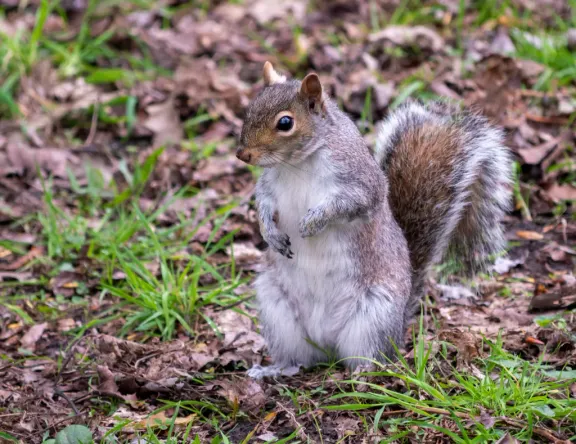
Eastern gray squirrel
Sciurus carolinensis
Same order (Rodentia)
Small game
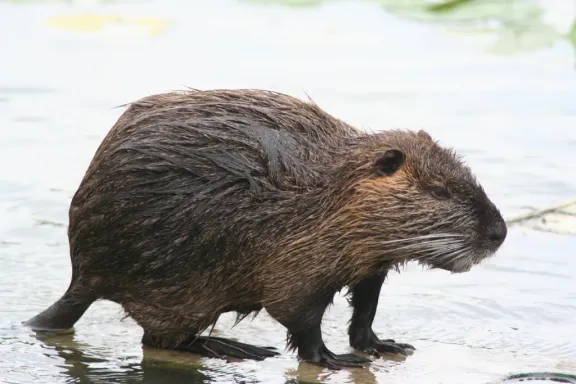
Nutria (coypu)
Myocastor coypus
Same order (Rodentia)
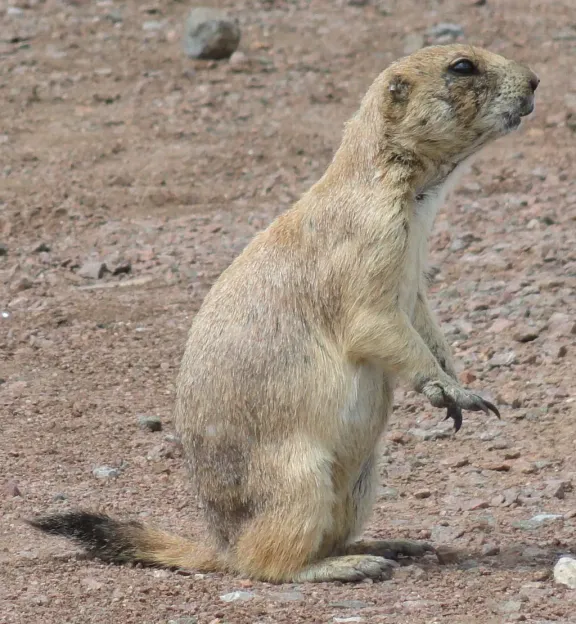
Small game
Black-tailed prairie dog
Cynomys ludovicianus
Same order (Rodentia)
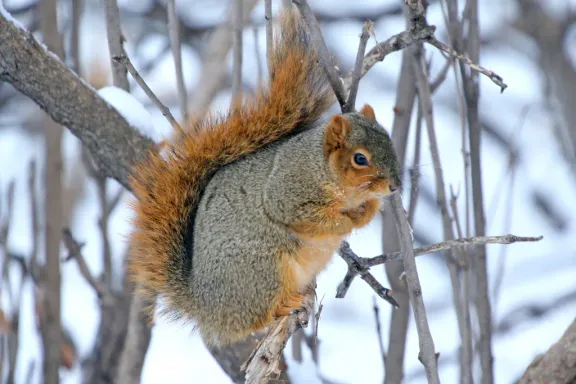
Small game
Fox squirrel
Sciurus niger
Same order (Rodentia)
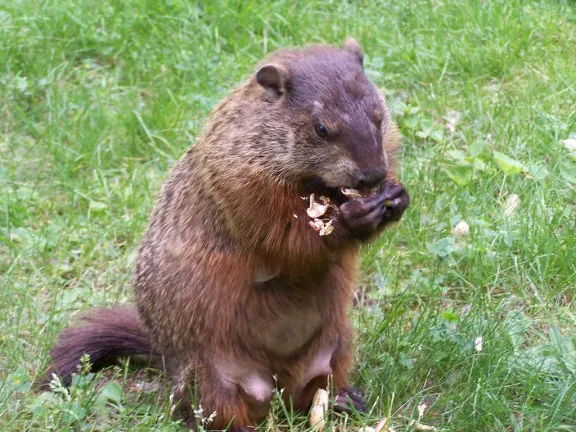
Small game
Groundhog
Marmota monax
Same order (Rodentia)
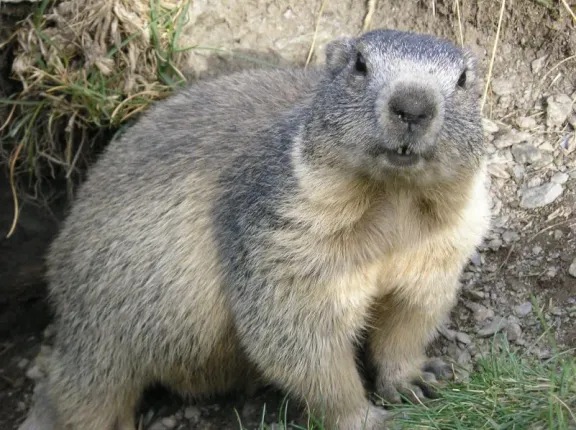
Small game
Alpine marmot
Marmota marmota
Same order (Rodentia)