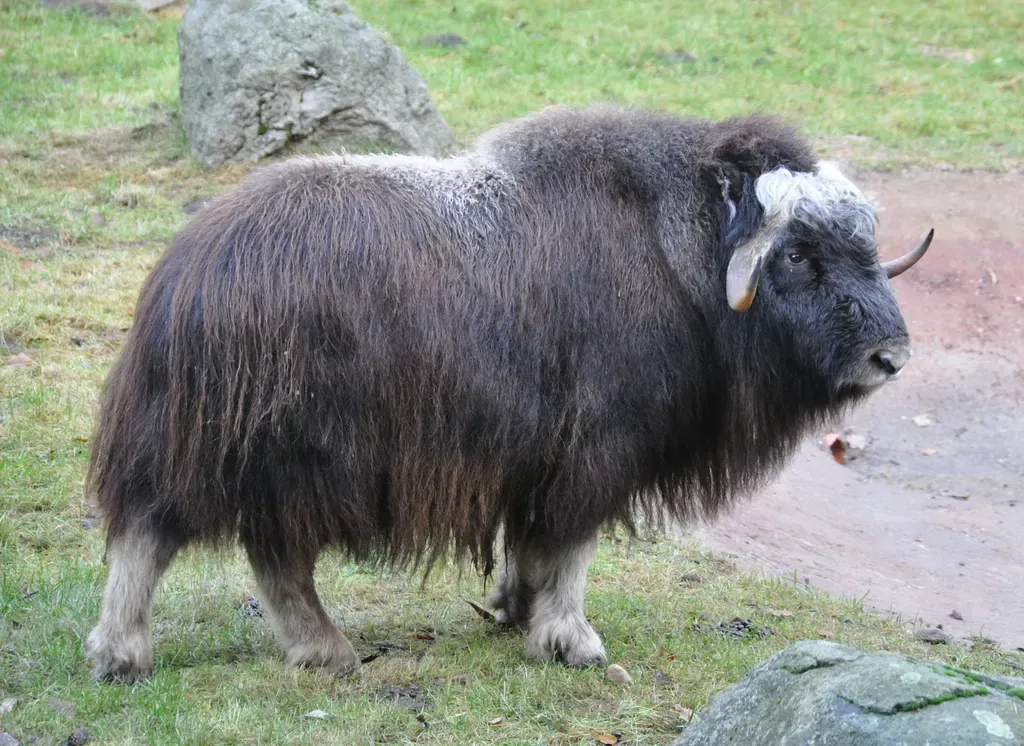
Photo:QuartlCC BY-SA 3.0
Big game
Muskox
Ovibos moschatus
- Group
- Big game
- Size class
- Large (70–300 kg)
- Family
- Bovidae
Range
- North America
- Arctic
Habitat
- Tundra
Range
Countries it is found in
4 countries
- Canada
- Greenland
- Norway
- United States
Range from:ASM Mammal Diversity Database, GBIF occurrence records — read 2026-08-05
Chapter 01
Overview
The muskox (Ovibos moschatus) is an Arctic bovid named for the strong odour bulls give off in the rut; its Inuktitut name umingmak means the bearded one. It lives chiefly in Greenland, the Canadian Arctic of the Northwest Territories and Nunavut, and Alaska. It once ranged across Eurasia too, its last natural records there dating to about 2,700 years ago. Alaska's muskoxen were gone by the 1920s, a loss blamed mainly on overhunting; in 1930, 34 animals caught in East Greenland were brought to Fairbanks and then moved to Nunivak Island, and every muskox in Alaska descends from them. The world population is put at 80,000 to 125,000, about 47,000 of them on Banks Island. Release programmes have spread it widely: Nunivak stock went on to the Seward Peninsula, the Arctic National Wildlife Refuge, Wrangel Island and the Taymyr Peninsula, where 11,000 to 14,000 now live, and Quebec's herds grew from animals freed from a qiviut farm. Norway's Dovrefjell herd dates from 1947, and in 1971 five animals from it wandered over the border into Härjedalen. Sweden's only wild muskoxen live in the mountains about 10 km west of Tännäs, a herd of ten in 2022.
Chapter 02
Identification
A stocky, long-haired animal with a slight shoulder hump and a very short tail hidden in the fur. It stands 1.1 to 1.5 m at the withers and adults average about 285 kg, ranging from 180 to 410 kg; the thick coat and big head make it look larger than it is. The coat is black, grey and brown, with guard hairs that almost reach the ground over a short, fine underwool, qiviut, prized for its softness and warmth. Both sexes carry long, curved horns, but bulls' horns are larger and heavier, with bases that nearly span the whole forehead; four inches of horn and three of bone lie over the brain where bulls collide. A muskox can run at up to 60 km/h and lives 12 to 20 years.
Chapter 03
Behaviour
In summer muskoxen keep to wet places such as river valleys and in winter move higher, to ground with shallow or wind-blown snow, since they are poor at digging for food. They eat grasses, sedges, forbs, Arctic willow, lichens and mosses, willow most of all in winter. Winter herds hold 12 to 24 animals, summer herds 8 to 20. The rut begins in late June or early July. Dominant bulls drive other males out and hold harems of six or seven cows; rival bulls bellow, rub their preorbital glands on their legs, then back off about 20 m and charge head-on, again and again until one gives up. Calves are born from April to June after eight to nine months. When threatened, the adults face outward in a ring or semicircle around the calves — the defence against Arctic wolves, their main predator, which may cause up to half of all deaths. Fatal attacks on people are very rare, but people who come too close and act aggressively have been attacked.
Chapter 04
Hunting
Muskoxen declined through overhunting and recovered once hunting was regulated, mostly by conservative quotas in the late 1900s; Canada protected them in 1917 and Greenland in 1974. The ring defence that holds off wolves fails against people: a herd standing in formation makes an easy target, and in the late 1800s Arctic expeditions fed the meat to themselves and their sled dogs while the Hudson's Bay Company traded thousands of hides. Inuit use the meat, wool and skins. In Greenland most muskoxen live in protected areas where they may not be hunted, though limited hunting is permitted outside the national park. In Alaska muskoxen are valued for their meat, and hunters take about 260 a year. Nunivak Island's first season opened in 1975, with about 84 animals a year taken in 2001–2006, and Nelson Island opened to hunting in 1981. In Sweden the muskox has no open season: it is statens vilt under section 33 of the Hunting Ordinance, protected, and people may not approach the Härjedalen herd closer than 100 m because the animals are easily stressed.
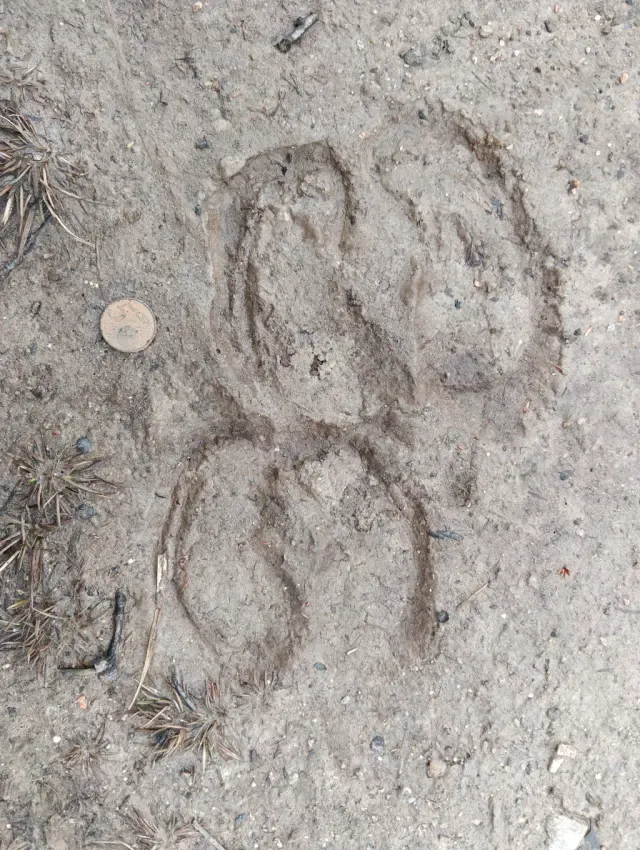
Field data
Tracks
A photograph of real sign left by Muskox. Prints vary with gait, ground and how long they have been there — treat this as one example, not a template.
Track photo:Andrés Romero BravoCC BY
On the table
Meat & cooking
Table grade 2 of 52/5
- Sold as meat in a legal market
- Has a named traditional dish
- Published way to handle and cook it
- Eaten in more than one country
- No known health advisory
Sources
Sources: Muskox — Wikipedia, Myskoxe — Wikipedia (sv), Alaska Department of Fish and Game: Muskox species profile, Alaska Department of Fish and Game: Muskox uses, Jaktförordning (1987:905) — Sveriges riksdag — read 2026-10-29
Cross-reference
Related species
Its closest relatives in the compendium, nearest kinship first.
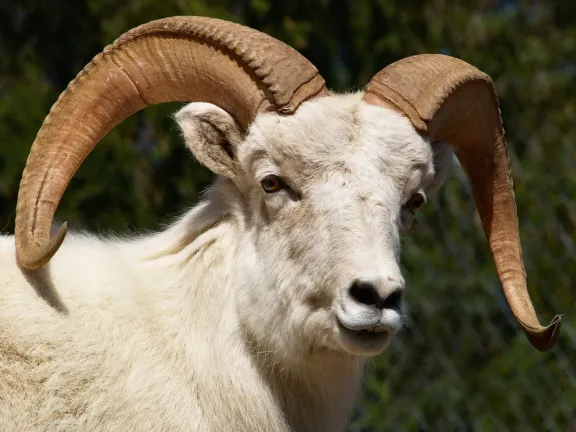
Big game
Dall sheep
Ovis dalli
Same subfamily (Caprinae)
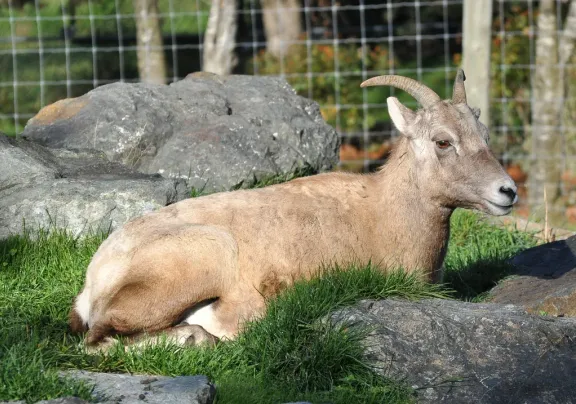
Big game
Bighorn sheep
Ovis canadensis
Same subfamily (Caprinae)
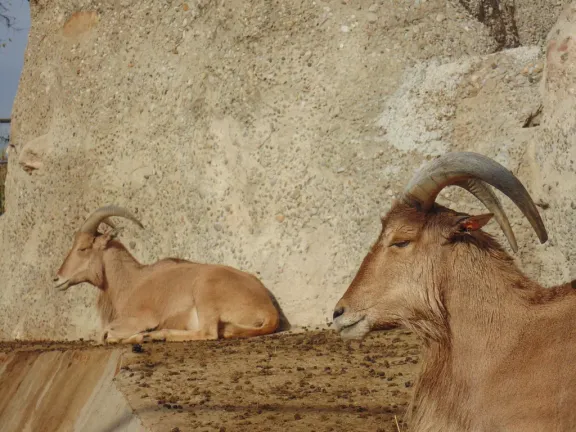
Big game
Aoudad (Barbary sheep)
Ammotragus lervia
Same subfamily (Caprinae)
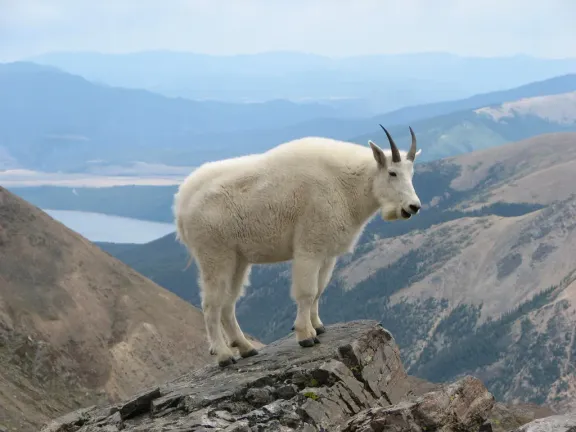
Big game
Mountain goat
Oreamnos americanus
Same subfamily (Caprinae)
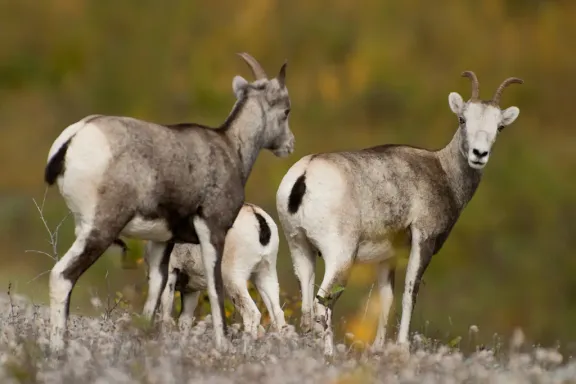
Big game
Stone sheep
Ovis dalli stonei
Same subfamily (Caprinae)
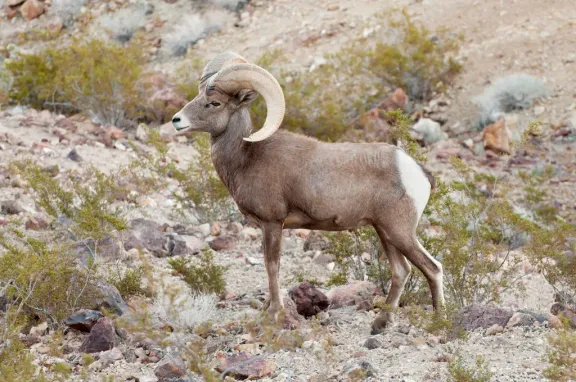
Big game
Desert bighorn sheep
Ovis canadensis nelsoni
Same subfamily (Caprinae)