Big game
East Caucasian tur
Capra cylindricornis
- Group
- Big game
- Size class
- Large (70–300 kg)
- Family
- Bovidae
Range
- Asia
- Europe
Habitat
- Mountain
Range
Countries it is found in
3 countries
- Azerbaijan
- Georgia
- Russia
Range from:ASM Mammal Diversity Database — read 2026-08-05
Chapter 01
Overview
The East Caucasian tur (Capra cylindricornis) is a wild goat of the eastern half of the Greater Caucasus, in Azerbaijan, Georgia and European Russia, listed as near threatened on the IUCN Red List. Its range runs roughly from Mount Shkhara in Georgia to Mount Babadag in Azerbaijan, between 800 and 4,000 m, though it seldom goes above 3,500 m. The western edge is unclear, since it overlaps with the West Caucasian tur. Most populations keep away from people in extremely rugged, open terrain around 3,000 m — alpine meadows and rocky ground with sparse vegetation. Where they are left undisturbed they come down into gentler and much lower country, and some populations, chiefly in Azerbaijan, live in forest all year without contact with the alpine herds. It avoids dense forest and, in winter, shaded slopes.
Chapter 02
Identification
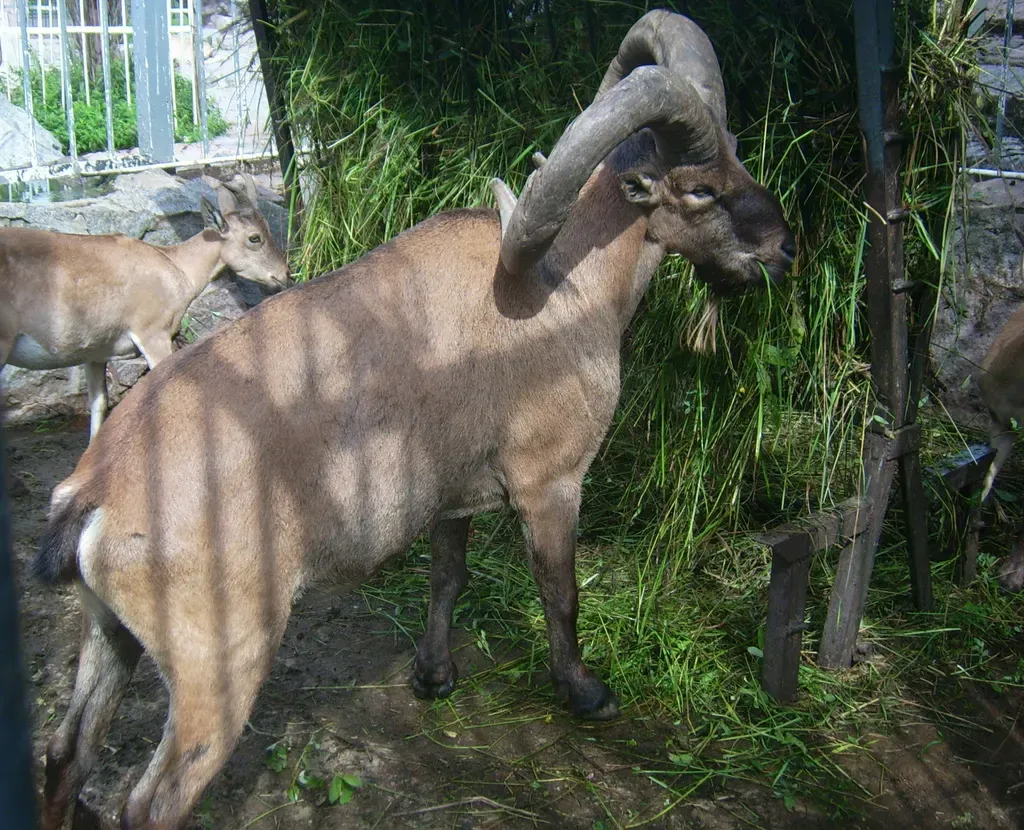
A goat with a large but narrow body and short legs, and a big difference between the sexes. Adult males stand about 105 cm at the shoulder, measure 190 cm from head to rump and weigh around 140 kg; females stand 85 cm, measure 138 cm and weigh about 56 kg. Males carry slightly lyre-shaped horns 70 to 90 cm long, females horns of only 20 to 22 cm. The summer coat is short and sandy yellow, with dirty-white underparts and dark brown stripes down the front of the legs and along the top of the tail. In winter females and young males turn slightly greyer, but adult males go a solid dark brown without the leg stripes — the mark that separates the species from the West Caucasian tur. Males grow a beard of about 12 cm by their fourth or fifth year, stiff and jutting forward rather than drooping.
Chapter 03
Behaviour
In the warm months turs feed through the late afternoon, night and morning and spend the hottest hours resting in shelter; in winter herds may stay out on open pasture all day, grazing and resting by turns. They eat almost any vegetation — forbs in spring and summer, grasses, trees and shrubs in autumn and winter — and may cover 15 to 20 km a day. Each year they climb 1,500 to 2,000 m in May and come down again in October, the adult males living higher than the females and young. Outside the rut females live in stable groups of about seven and older males in bachelor groups of about twelve. The rut runs from late November to early January; males rear and butt and horn-wrestle, sometimes rolling down steep slopes until one gives up, and mark trees by stripping bark. A single kid, rarely twins, is born in May or June after 160 to 165 days and can scramble about steep slopes within a day. Wolves and lynx take the young.
Sources
Sources: East Caucasian tur — Wikipedia, Östkaukasisk stenbock — Wikipedia (sv) — read 2026-10-29
Cross-reference
Related species
Its closest relatives in the compendium, nearest kinship first.
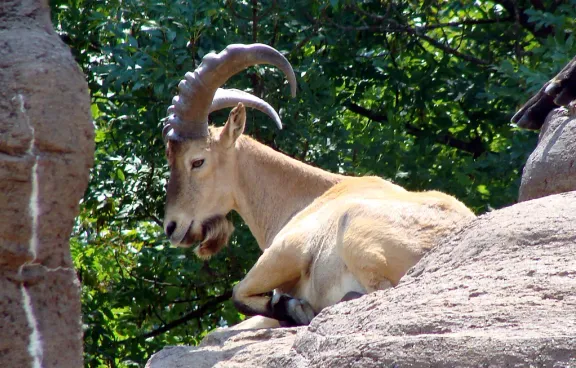
Big game
West Caucasian tur
Capra caucasica
Same genus (Capra)
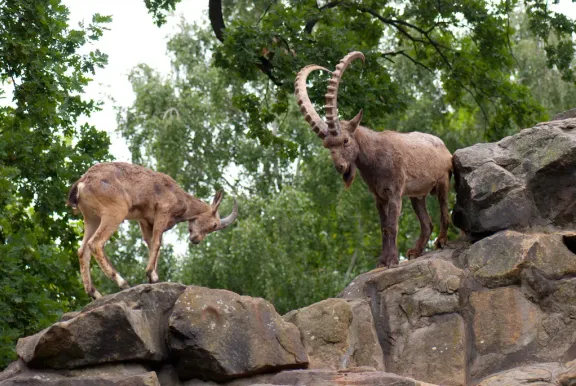
Big game
Siberian ibex
Capra sibirica
Same genus (Capra)
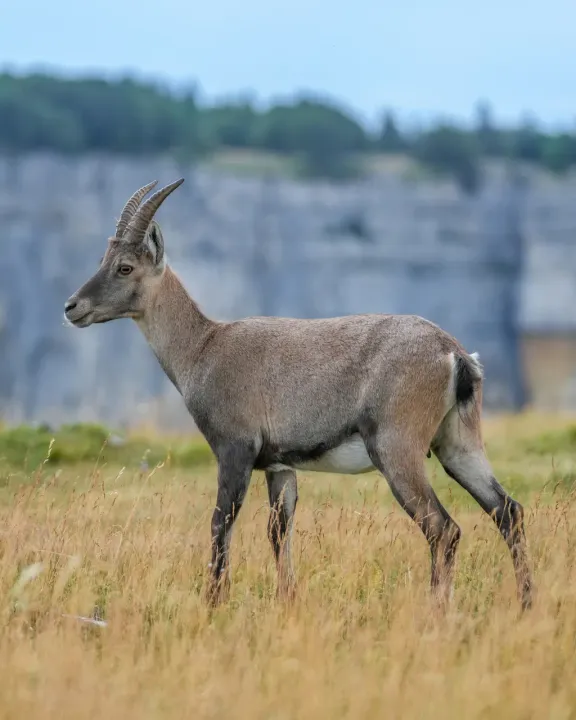
Big game
Alpine ibex
Capra ibex
Same genus (Capra)
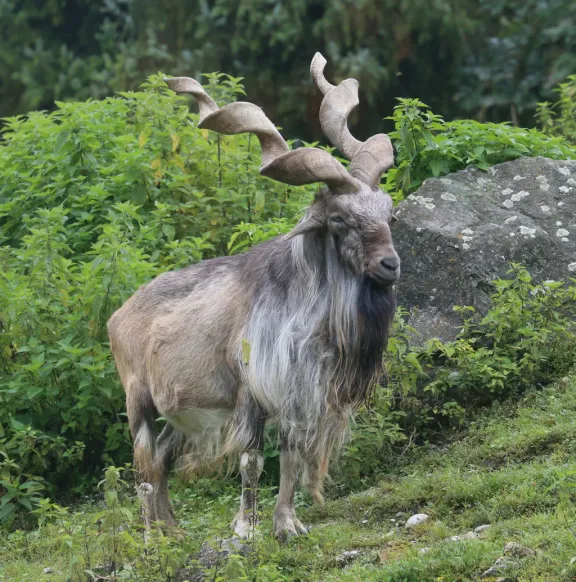
Big game
Markhor
Capra falconeri
Same genus (Capra)
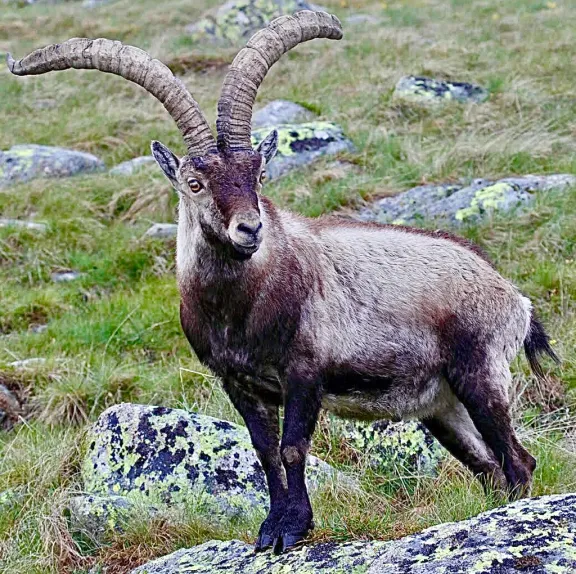
Big game
Iberian ibex
Capra pyrenaica
Same genus (Capra)
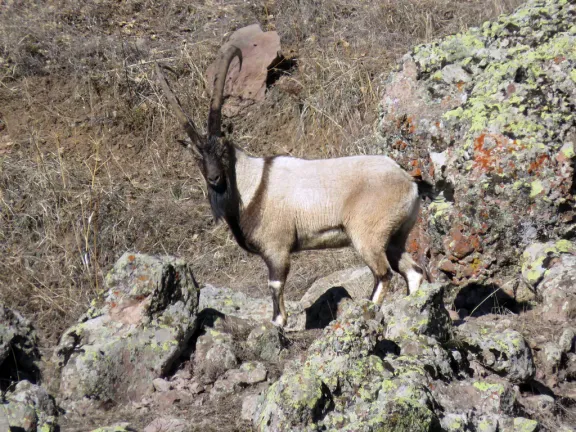
Big game
Bezoar ibex
Capra aegagrus
Same genus (Capra)