Predators & furbearers
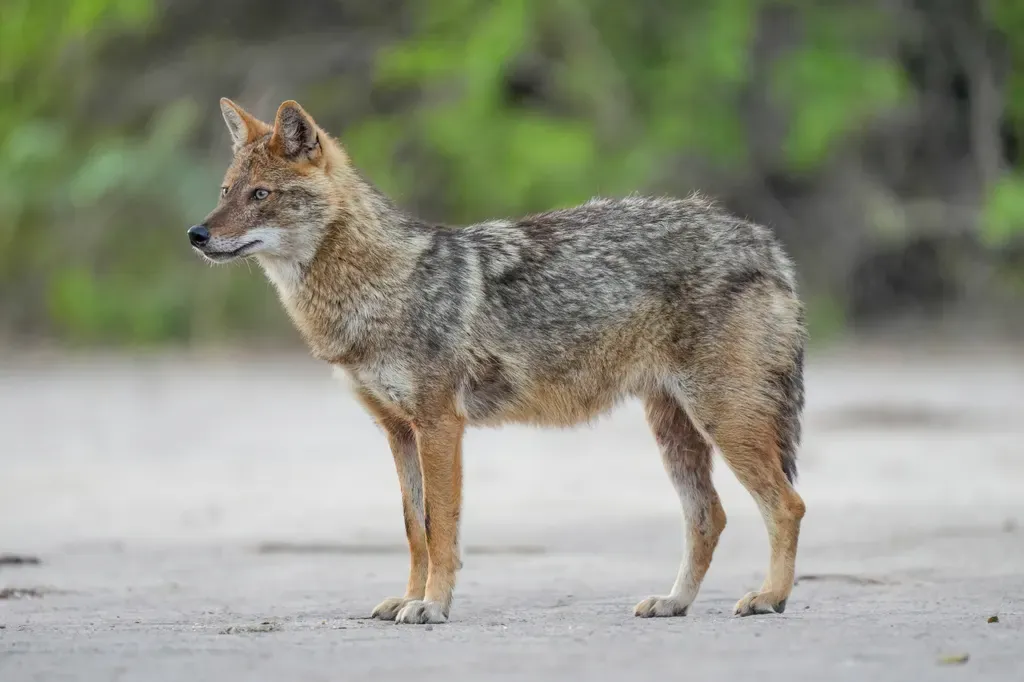
Golden jackal
Canis aureus
- Group
- Predators & furbearers
- Size class
- Medium (10–70 kg)
- Family
- Canidae
Range
- Europe
- Asia
- Africa
Habitat
- Scrub
- Farmland
Range
Countries it is found in
60 countries
- Afghanistan
- Albania
- Armenia
- Austria
- Azerbaijan
- Bahrain
- Bangladesh
- Belarus
- Bhutan
- Bosnia & Herzegovina
- Bulgaria
- Cambodia
- Croatia
- Denmark
- Estonia
- Finland
- France
- Georgia
- Germany
- Greece
- Hungary
- India
- Iran
- Iraq
Range from:ASM Mammal Diversity Database — read 2026-08-05
Chapter 01
Overview
The golden jackal (Canis aureus) is a wolf-like canid native to Eurasia. Despite the name it is not closely related to Africa's black-backed and side-striped jackals, but closer to wolves and coyotes, and it can produce fertile hybrids with both the grey wolf and the African wolf. The IUCN lists it as least concern for its wide range and high densities where food and cover are plentiful. It is most abundant in valleys and along rivers, canals, lakes and seashores, and rare in foothills and low mountains. It tolerates −25 °C and sometimes −35 °C, but is not adapted to snow and in snow country travels on paths made by larger animals or people. From southeastern Europe it is expanding into Central Europe as far as France and the Baltic, mostly into areas with few or no wolves. Estonia holds the only population adapted to the boreal zone, living on coastal grassland, alvar and reedbed. Jackals have turned up in Denmark since 2015, in eastern Finland in 2019 — one was trapped near Sodankylä inside the Arctic Circle — and in northernmost Norway in 2020.
Chapter 02
Identification
Smaller and lighter than the grey wolf, with a more elongated torso, a less prominent forehead, shorter legs and tail, and a narrower, more pointed muzzle; the feet are slender with small pads. Males measure 71–85 cm and weigh 6–14 kg, females 69–73 cm and 7–11 kg, and both stand 45–50 cm at the shoulder. The fur is coarse and fairly short, golden at the base and varying with the season from pale creamy yellow in summer to dark tawny in winter. Black, brown and white hairs on the back can suggest the dark saddle of a black-backed jackal, and the underparts are pale ginger to cream. Light markings on the throat and chest are individual enough to tell animals apart.
Chapter 03
Behaviour
An omnivorous, opportunistic forager, both predator and scavenger, whose diet follows habitat and season. In the Caucasus it hunts mainly hares and mouse-like rodents, along with pheasants, ducks, coots and passerines, and eats pears, hawthorn and grapes; in Serbia it lives largely on livestock carcasses left unremoved. It usually hunts alone or in pairs, trotting, stopping to sniff and listen, then rushing and pouncing; pairs run parallel to prey and overtake it together. The breeding pair is the basic social unit, sometimes with the current litter. Pairs are monogamous for life and the male helps dig the den and raise the pups. Jackals travel 12–15 km a night and hold home ranges of 1–20 km² depending on food. Howling is most frequent from December to April, when pairs form and breed; a single howl can draw replies from several jackals nearby, and like wolves and coyotes they answer human imitations of their howls and will approach the source. Gestation is 63 days.
Chapter 04
Hunting
In British India jackals were coursed on horseback with greyhounds, foxhounds or mixed packs as a substitute for fox hunting, valued for their endurance — one chase lasted three and a half hours. In the former Soviet Union they were not actively hunted but taken incidentally in traps or on drives for other game, and their fur was considered of low quality. Some peoples of India, among them the Kolis and Vagris of Gujarat and Rajasthan and the Narikuravas of Tamil Nadu, hunt and eat them, though most South Asian cultures consider the animal unclean. Its legal status in Europe, where some 70,000 live, differs country by country. It is fully protected in Albania, North Macedonia, Germany, Italy, Poland and Switzerland; hunted in Bosnia and Herzegovina, Bulgaria, Croatia, Hungary, Latvia, Lithuania, Romania, Serbia, Slovakia, Slovenia and Ukraine, among others; and protected by region in Austria and Turkey. In July 2026 the Netherlands recognised it as a native species. Some governments argue it is an invader rather than native wildlife. In Sweden the Hunting Ordinance does not name the golden jackal; in its 2025 proposal on hunting seasons, Svenska Jägareförbundet asked Naturvårdsverket to add it to the list of alien species that may be hunted all year to prevent damage.
Field data
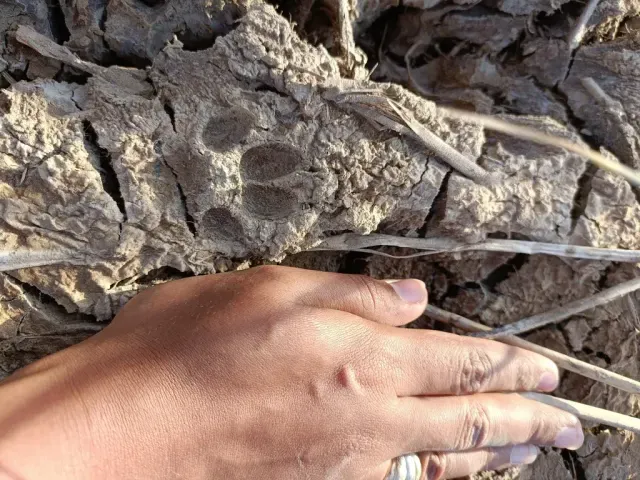
Tracks
A photograph of real sign left by Golden jackal. Prints vary with gait, ground and how long they have been there — treat this as one example, not a template.
Track photo:Malaika Mathew ChawlaCC BY
On the table
Meat & cooking
Table grade 1 of 51/5
- Sold as meat in a legal market
- Has a named traditional dish
- Published way to handle and cook it
- Eaten in more than one country
- No known health advisory
Before you eat it: Golden jackals carry trichinella: Trichinella britovi has been found in a jackal in Romania, and jackals in Hungary gave the country's first record of Trichinella spiralis. Livsmedelsverket's advice for meat from trichinella-carrying game is to have it tested or cook it through — the larvae die at about 60–65 °C in the oven and need more than 70 °C on a grill, and freezing is not a reliable way to kill them.
Sources
Sources: Golden jackal — Wikipedia, Guldschakal — Wikipedia (sv), Jaktförordning (1987:905) — Sveriges riksdag, Svenska Jägareförbundet: Förslag till nya och/eller förändrade jakttider (NV-06912-24), Livsmedelsverket: Trikiner — read 2026-10-29
Cross-reference
Related species
Its closest relatives in the compendium, nearest kinship first.
Predators & furbearers
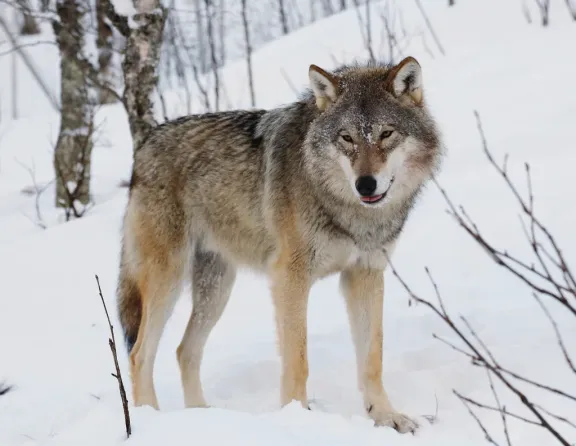
Gray wolf
Canis lupus
Same genus (Canis)
Predators & furbearers
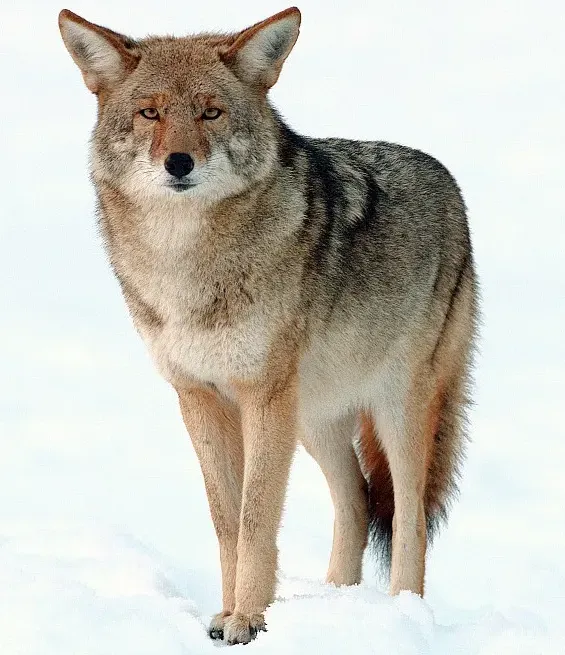
Coyote
Canis latrans
Same genus (Canis)
Predators & furbearers
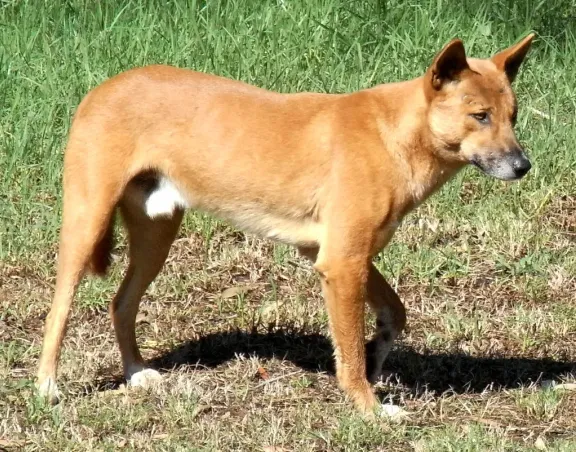
Dingo
Canis familiaris dingo
Same genus (Canis)
Predators & furbearers
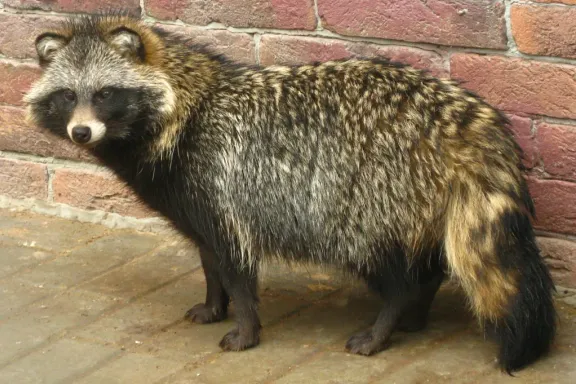
Raccoon dog
Nyctereutes procyonoides
Same family (Canidae)
Predators & furbearers
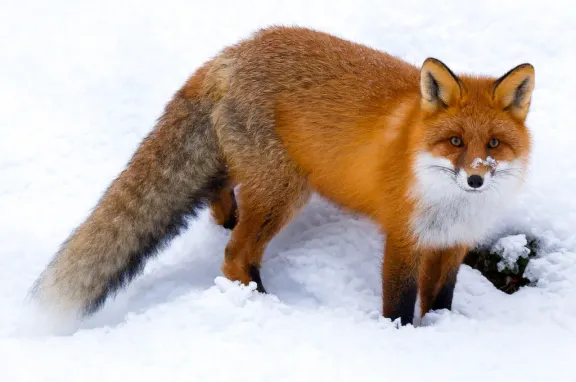
Red fox
Vulpes vulpes
Same family (Canidae)
Predators & furbearers
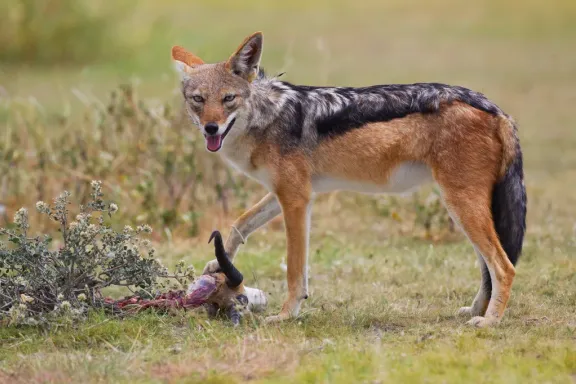
Black-backed jackal
Lupulella mesomelas
Same family (Canidae)