Predators & furbearers
Raccoon
Procyon lotor
- Group
- Predators & furbearers
- Size class
- Small (under 10 kg)
- Family
- Procyonidae
Range
- North America
- Europe
Habitat
- Forest
- Farmland
Range
Countries it is found in
18 countries
- Belgium
- Belize
- Canada
- Costa Rica
- Czechia
- El Salvador
- Germany
- Guadeloupe
- Guatemala
- Honduras
- Japan
- Luxembourg
- Mexico
- Nicaragua
- Panama
- Poland
- Russia
- United States
Range from:ASM Mammal Diversity Database, GBIF occurrence records — read 2026-08-05
Chapter 01
Overview
The raccoon (Procyon lotor) is a mammal native to North America and the largest member of the procyonid family. Its original habitats are deciduous and mixed forests, but it has spread into mountains, coastal marshes and towns. It needs trees or other vertical structures to climb when threatened, and lowland forests and marshes rich in water carry the highest densities — more than 20 animals per square kilometre, against 0.5 to 3.2 on the prairies. Escapes and deliberate introductions in the mid-20th century established it in central Europe, the Caucasus and Japan. Germany holds the largest population outside North America, descended from two pairs released at the Edersee in Hesse in 1934 and 25 animals that escaped a fur farm east of Berlin in 1945; by 2012 it was put at more than a million. Since 2016 the raccoon has been on the EU list of invasive alien species of Union concern, so it may not be imported, bred, transported, sold or released anywhere in the Union.
Chapter 02
Identification
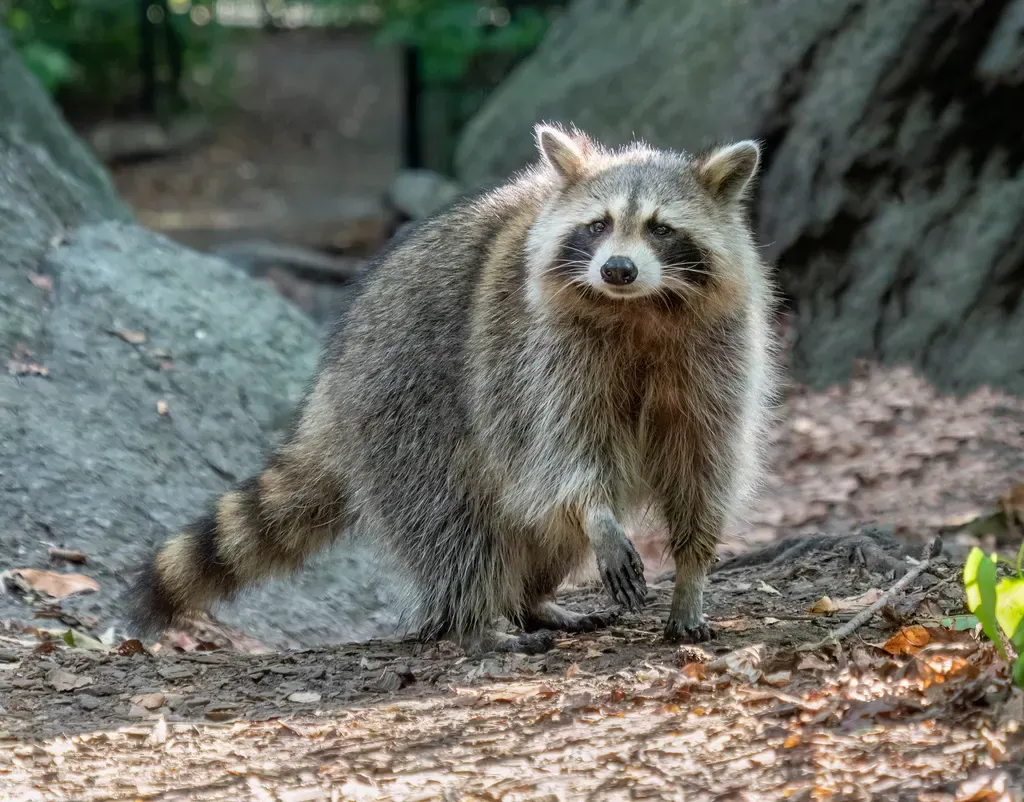
Head and body measure 40–70 cm, with a bushy tail of 20–40 cm that is usually not much over 25 cm, and a shoulder height of 23–30 cm. Weight varies more than in almost any other mammal, from 2 to 26 kg but usually 5–12 kg; males are 15–20 per cent heavier than females, and a raccoon can weigh twice as much at the start of winter as in spring. The black mask around the eyes against a white face is the defining mark, together with white-edged ears and a tail ringed light and dark. The long, stiff guard hairs are grey and to a lesser extent brown, and the dense underfur makes up almost 90 per cent of the coat. Very dark animals are commoner in Germany, because dark individuals were among those first released. Short legs on a compact body mean it cannot run fast or jump far: 16 to 24 km/h over short distances.
Chapter 03
Behaviour
Usually nocturnal, though it will forage by day when food is there to be had. The diet is about 40 per cent invertebrates, 33 per cent plants and 27 per cent vertebrates: insects and worms in spring and early summer, fruit and nuts such as acorns and walnuts in late summer and autumn to lay down winter fat. It prefers easy prey — crayfish, insects, fish, amphibians and bird eggs — and is an avid raider of bird and reptile nests. In the north it goes into a winter rest while lasting snow makes foraging hard. Related females share a common area, while unrelated males form loose groups of up to four to hold their ground in the mating season. Mating falls between late January and mid-March, triggered by lengthening days. After 63–65 days a litter of usually two to five kits is born; the males take no part in rearing, and the young stay with their mother until they disperse in late autumn.
Chapter 04
Hunting
Raccoons are hunted chiefly for their fur, and since the late 18th century American hunters have bred scent hounds — coonhounds — to tree them. The North American harvest reached about a million animals in 1946–1947, peaked at 5.2 million in 1976–1977 and fell to 0.9 million in the early 1990s as pelt prices dropped. In Germany, where it is regarded as an invasive pest and has been a game species in 14 of the 16 states since 1954, the bag grew from about 400 a year in the 1990s to 128,100 in the 2015–2016 season. Sweden has no established free-living population. Svenska Jägareförbundet, which has managed the raccoon alongside the raccoon dog since 2014, has confirmed three occurrences: two animals caught in Gothenburg's Skandia harbour in 2010, one dispatched at Gamleby in 2013 and one found dead on the beach at Falsterbo in 2014. The holder of the hunting right may shoot a raccoon all year round; under the Hunting Ordinance dogs may be used on it from 1 August to 15 April, and below ground all year. Sightings and shot animals should be reported to Jägareförbundet.
Field data
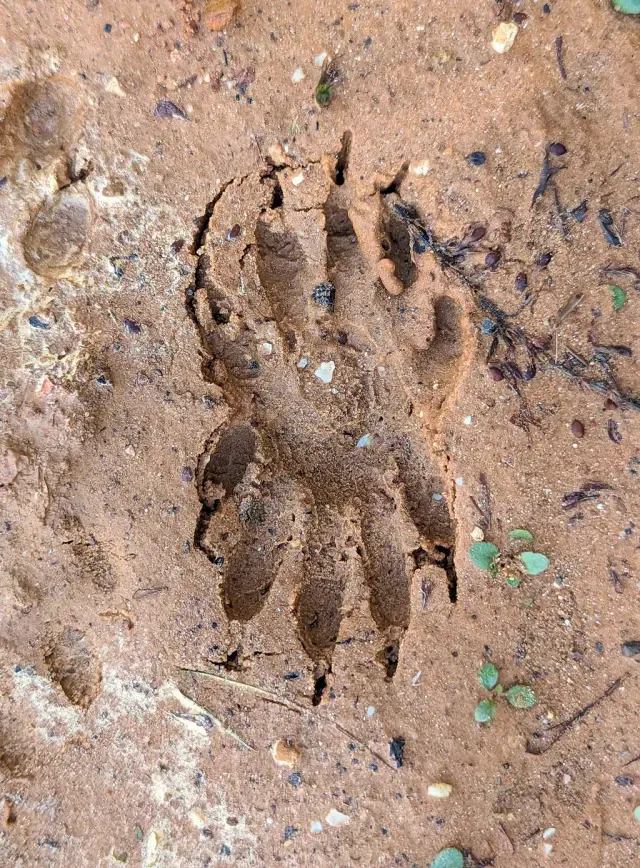
Tracks
A photograph of real sign left by Raccoon. Prints vary with gait, ground and how long they have been there — treat this as one example, not a template.
Track photo:no rights reservedCC0
On the table
Meat & cooking
Table grade 3 of 53/5
- Sold as meat in a legal market
- Has a named traditional dish
- Published way to handle and cook it
- Eaten in more than one country
- No known health advisory
Before you eat it: Trichinella infects raccoons, and undercooked raccoon meat has caused trichinosis in people. Livsmedelsverket's advice for meat from trichinella-carrying game is to have it tested or cook it through: the larvae die at about 60–65 °C in the oven and need more than 70 °C on a grill, and freezing is not a reliable way to kill them.
Sources
Sources: Raccoon — Wikipedia, Svenska Jägareförbundet: Tvättbjörn (Procyon lotor), Jaktförordning (1987:905) — Sveriges riksdag, Livsmedelsverket: Trikiner — read 2026-10-29
Cross-reference
Related species
Its closest relatives in the compendium, nearest kinship first.
Predators & furbearers
Red fox
Vulpes vulpes
Same order (Carnivora)
Predators & furbearers
Wolverine
Gulo gulo
Same order (Carnivora)
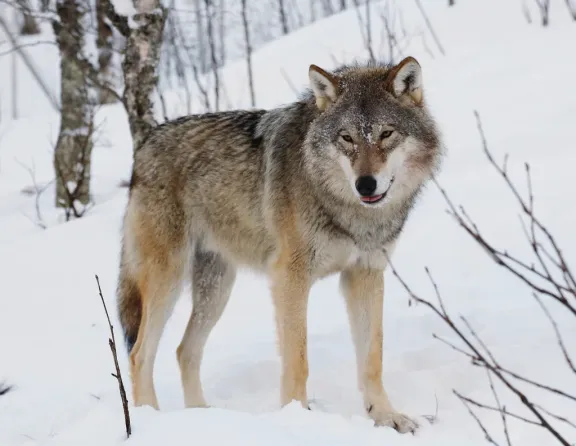
Predators & furbearers
Gray wolf
Canis lupus
Same order (Carnivora)
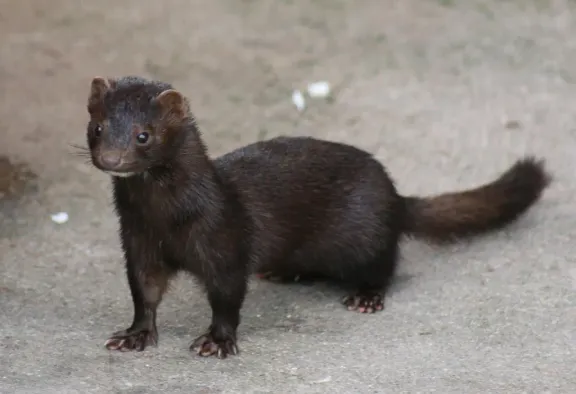
Predators & furbearers
American mink
Neogale vison
Same order (Carnivora)
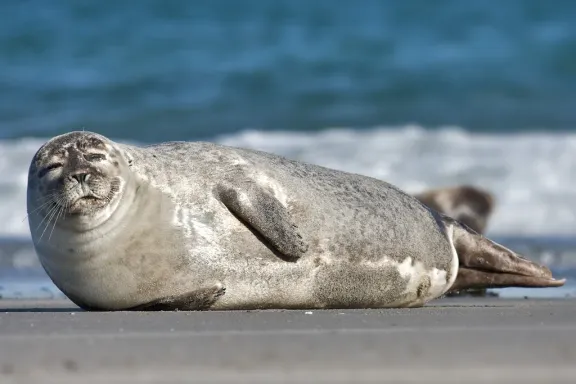
Predators & furbearers
Harbour seal
Phoca vitulina
Same order (Carnivora)

Predators & furbearers
Grey seal
Halichoerus grypus
Same order (Carnivora)