Predators & furbearers
Wolverine
Gulo gulo
- Group
- Predators & furbearers
- Size class
- Medium (10–70 kg)
- Family
- Mustelidae
Range
- North America
- Europe
- Arctic
Habitat
- Boreal forest
- Tundra
Range
Countries it is found in
9 countries
- Canada
- China
- Estonia
- Finland
- Mongolia
- Norway
- Russia
- Sweden
- United States
Range from:ASM Mammal Diversity Database — read 2026-08-05
Chapter 01
Overview
The wolverine (Gulo gulo) is the largest land-dwelling member of the weasel family — a muscular, solitary carnivore with a reputation for ferocity and strength out of proportion to its size, and the documented ability to kill prey many times larger than itself. It lives in the remote reaches of the northern boreal forest and the subarctic and alpine tundra, with the greatest numbers in northern Canada, Alaska, the mainland Nordic countries and across western Russia and Siberia. It is also native to European Russia, the Baltic states, the Russian Far East, northeast China and Mongolia. Its population has declined steadily since the 19th century through trapping, range reduction and habitat fragmentation.
Chapter 02
Identification
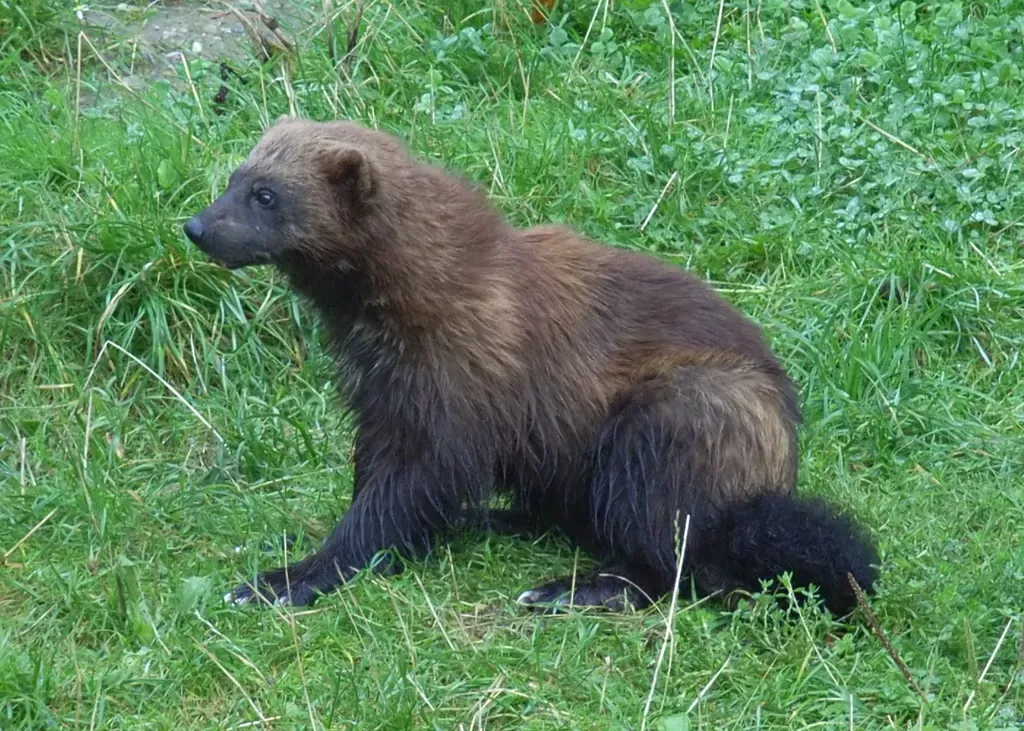
An elongated animal that carries low to the ground, with strong limbs, a broad rounded head, small eyes and short rounded ears — closest in build to a large fisher. The legs are short, but the large five-toed paws with crampon-like claws and a flat-footed, plantigrade stance let it climb over steep cliffs, trees and snow-covered peaks with real ease. An adult is about the size of a medium dog: 65–109 cm in body length, 36–45 cm at the shoulder, with a 17–26 cm tail. Males usually weigh 11–18 kg and females 8–12 kg. Exceptionally large males of up to 32 kg appear in Soviet literature, though Mammals of the Soviet Union judges such weights improbable.
Chapter 03
Behaviour
Wolverines are primarily scavengers. Most of what they eat is carrion, especially through winter and early spring — found themselves, taken after a predator such as a wolf pack has finished, or simply taken off another predator outright. They are known to follow wolf and lynx trails to reach the remains of kills. The voracious feeding style behind the nickname 'glutton', and behind the scientific name, is thought to be an adaptation to scarcity rather than appetite. It is also a powerful and versatile predator in its own right, mostly of small to medium mammals, but with records of killing prey many times its own size including adult deer. Wolverines are induced ovulators. A successful male forms lifetime relationships with two or three females that he visits occasionally, while other males go without. Mating is in summer, but implantation is delayed until early winter. Females often fail to produce young at all when food is short. Gestation runs 30–50 days and litters of two or three kits are born in spring, reaching adult size within the first year. Fathers visit their young until weaning at ten weeks. Captive wolverines live 15 to 17 years; in the wild, eight to ten is more likely.
Field data
Tracks
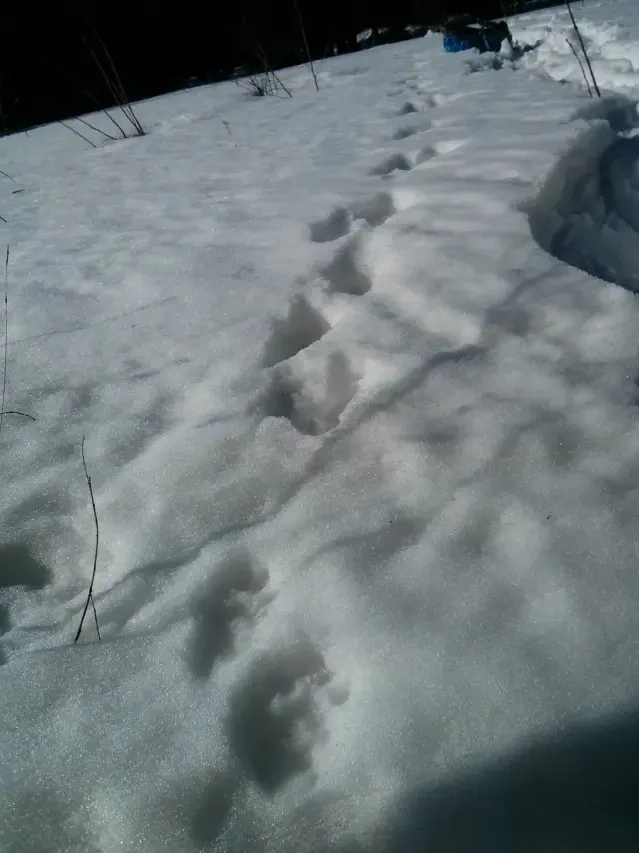
A photograph of real sign left by Wolverine. Prints vary with gait, ground and how long they have been there — treat this as one example, not a template.
Track photo:James TelfordCC BY
On the table
Meat & cooking
Table grade 1 of 51/5
- Sold as meat in a legal market
- Has a named traditional dish
- Published way to handle and cook it
- Eaten in more than one country
- No known health advisory
Before you eat it: Livsmedelsverket names wolf, lynx, fox and wolverine — along with wild boar, bear and seal — as the Swedish wild animals most likely to carry trichinella. There is no established culinary use for this species in Sweden, and meat from any trichinella-carrying animal must be tested before it is eaten; the parasite dies at around 60–65 °C in an oven but needs over 70 °C on a grill, and some cold-tolerant strains survive freezing.
Sources
Sources: Wolverine — Wikipedia, Livsmedelsverket: Trikiner — read 2026-08-05
Cross-reference
Related species
Its closest relatives in the compendium, nearest kinship first.
Predators & furbearers
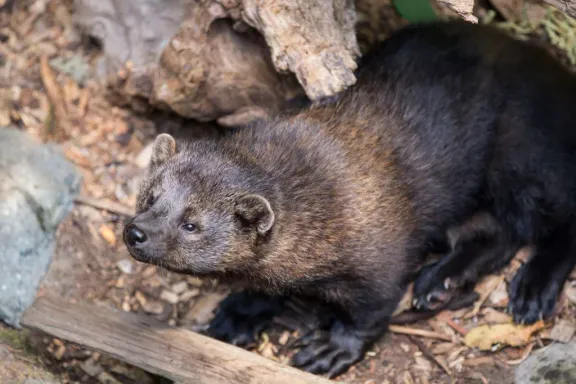
Fisher
Pekania pennanti
Same subfamily (Guloninae)
Predators & furbearers
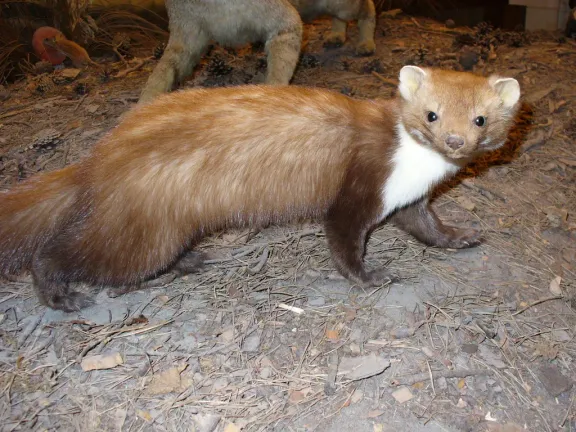
Stone marten
Martes foina
Same subfamily (Guloninae)
Predators & furbearers
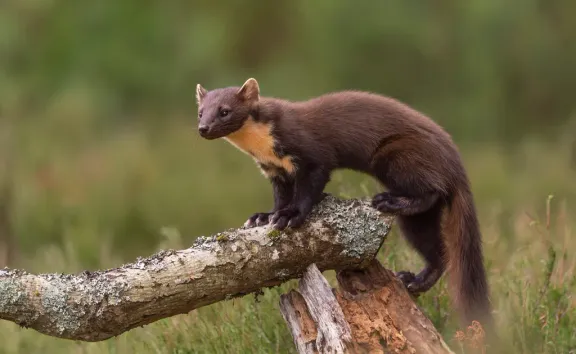
European pine marten
Martes martes
Same subfamily (Guloninae)
Predators & furbearers
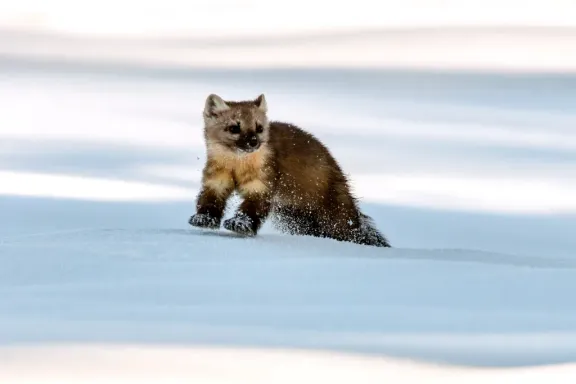
American marten
Martes americana
Same subfamily (Guloninae)
Predators & furbearers
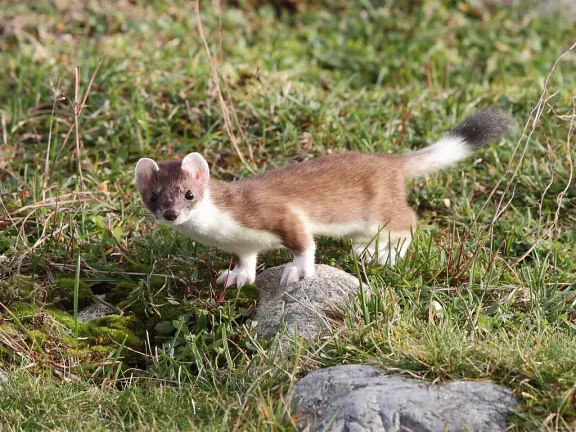
Stoat
Mustela erminea
Same family (Mustelidae)
Predators & furbearers
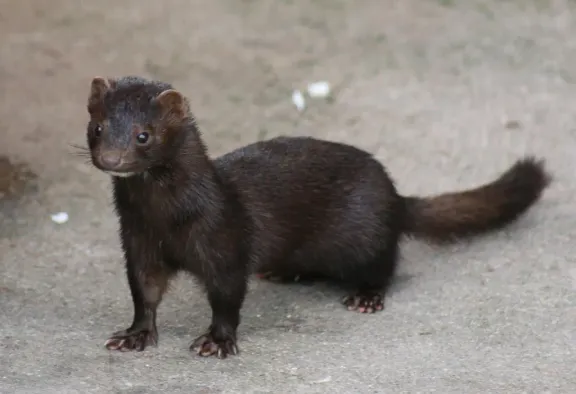
American mink
Neogale vison
Same family (Mustelidae)