Predators & furbearers
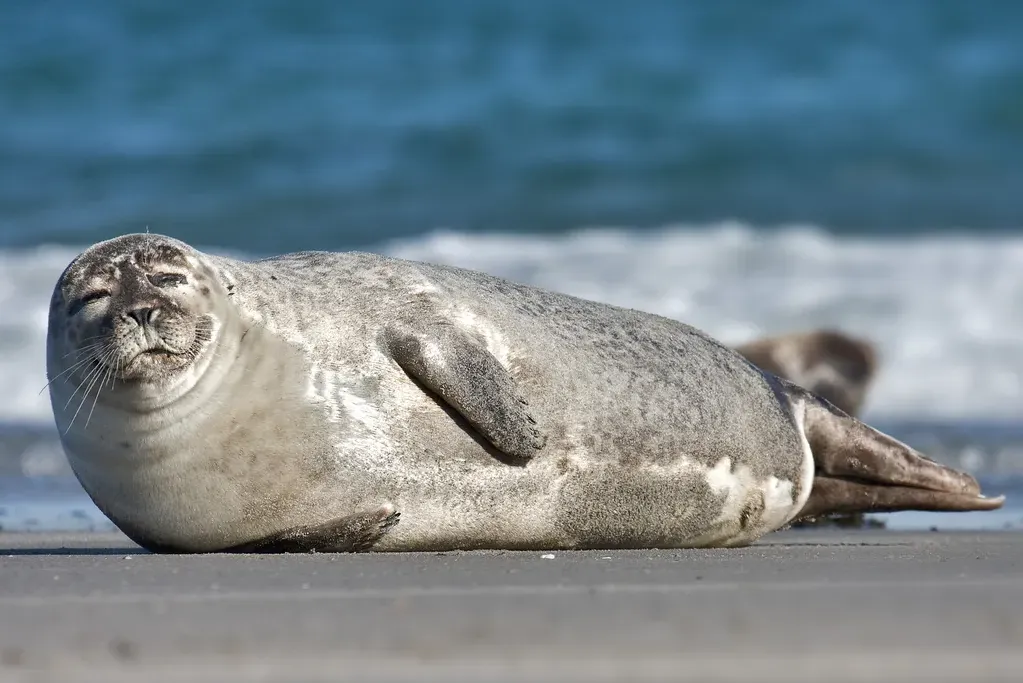
Harbour seal
Phoca vitulina
- Group
- Predators & furbearers
- Size class
- Large (70–300 kg)
- Family
- Phocidae
Range
- Europe
- North America
Habitat
- Coast
Range
Countries it is found in
22 countries
- Belgium
- Canada
- Denmark
- Finland
- France
- Germany
- Greenland
- Iceland
- Ireland
- Isle of Man
- Japan
- Mexico
- Netherlands
- Norway
- Portugal
- Russia
- Spain
- St. Pierre & Miquelon
- Svalbard & Jan Mayen
- Sweden
- United Kingdom
- United States
Range from:ASM Mammal Diversity Database, GBIF occurrence records — read 2026-08-05
Chapter 01
Overview
The harbour seal (Phoca vitulina), also called the common seal, is a true seal of temperate and Arctic coasts in the Northern Hemisphere and the most widely distributed of all pinnipeds, found along the northern Atlantic and Pacific and in the Baltic and North Seas. In Sweden it lives along the west coast and in the southern Baltic, and it is the provincial animal of Bohuslän. The world population is 350,000–500,000 and the species as a whole is not threatened, though the Greenland, Hokkaidō and Baltic populations are exceptions. Phocine distemper struck Swedish waters hard: in 1988 and again in 2002 roughly half the harbour seals along the coast died, both outbreaks starting at the Danish island of Anholt in the Kattegat.
Chapter 02
Identification
Short-bodied and short-flippered, with a rounded head and distinctive V-shaped nostrils; like other true seals it has no ear flap. Each animal carries its own pattern of spots, dark on light or light on dark, on a coat running from brownish black through tan to grey. Adults reach 1.85 m including head and flippers and weigh 55–168 kg, the females generally smaller. The profile is the quickest way to tell it from a grey seal in Swedish waters: the harbour seal's head is concave, with a well-marked forehead and muzzle, where the larger grey seal's is straight or convex.
Chapter 03
Behaviour
Harbour seals are solitary at sea but gregarious when hauled out and in the breeding season. They keep to familiar resting sites — rocky shores, sandbanks, ice or mud — seldom venture more than 20 km offshore, and will swim far up large rivers after migratory fish. Prey is mostly fish; in Swedish waters flatfish and herring are common, along with sprat, cod and sand eel. Unlike the other Swedish seals the harbour seal pups in summer, usually in mid-June, and the pup is born without a lanugo coat, so it can swim within minutes. It grows from about 9 kg at birth to 25–30 kg at weaning three to four weeks later. Courtship and mating take place under water, and moulting, shortly after breeding, keeps the seals ashore for long periods when human disturbance can drive them off.
Chapter 04
Hunting
People hunted harbour seals for meat, fur and oil in prehistoric times, and in New England bounties were paid on every seal shot until the species was all but gone from the coast. Protective measures came in the 1970s, and hunting is now illegal in most of its range; killing seals seen as a threat to fisheries remains legal in Norway and Canada. In Sweden the harbour seal has no open season. Naturvårdsverket decides on skyddsjakt and, since February 2022, may also decide on licensjakt for harbour and grey seal. Its decision for 2026–2027 allows skyddsjakt on 200 harbour seals in Västra Götaland, Halland and three municipalities in Skåne, only near commercial fishing gear that seals have damaged or in fish protection areas. Hunters shooting from a boat must have taken a seal-hunting course, and every seal shot or wounded must be reported to Naturvårdsverket by the next working day. From 1 July 2027 the Hunting Ordinance also allows seal to be hunted all year in freshwater to prevent damage.
Field data
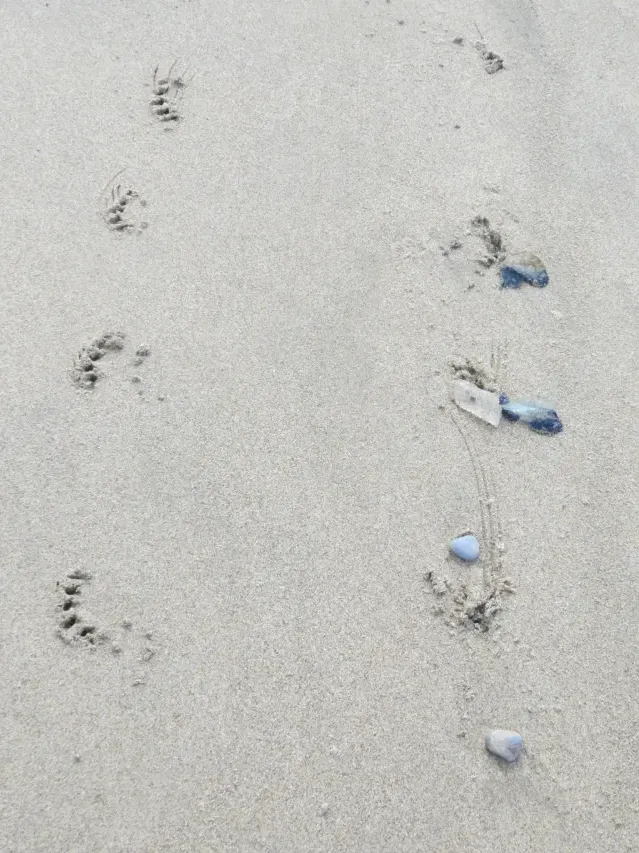
Tracks
A photograph of real sign left by Harbour seal. Prints vary with gait, ground and how long they have been there — treat this as one example, not a template.
Track photo:Garth HarwoodCC BY
On the table
Meat & cooking
Table grade 2 of 52/5
- Sold as meat in a legal market
- Has a named traditional dish
- Published way to handle and cook it
- Eaten in more than one country
- No known health advisory
Before you eat it: Livsmedelsverket names seal among the Swedish wild animals that can carry trichinella, alongside wild boar, bear, wolf, lynx, fox and wolverine. The parasite dies at around 60–65 °C when meat is cooked in an oven, but needs over 70 °C on a grill.
Traditional preparations
- Suaasat
- A traditional Inuit soup made from seal, whale, reindeer or seabirds. Inuit hunters take harbour seal among the seal species they hunt by season. Inuit cuisine — Wikipedia
Sources
Sources: Harbor seal — Wikipedia, Knubbsäl — Wikipedia, Svenska Jägareförbundet: Knubbsäl, Jaktförordning (1987:905) — Sveriges riksdag, Naturvårdsverket: Jakt på säl, Naturvårdsverket: Beslut om skyddsjakt på knubbsäl 2026–2027 (NV-25-040298), Livsmedelsverket: Trikiner, Inuit cuisine — Wikipedia — read 2026-10-29
Cross-reference
Related species
Its closest relatives in the compendium, nearest kinship first.
Predators & furbearers
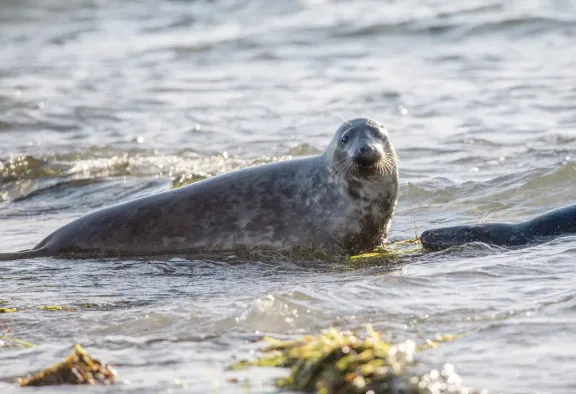
Grey seal
Halichoerus grypus
Same subfamily (Phocinae)
Predators & furbearers
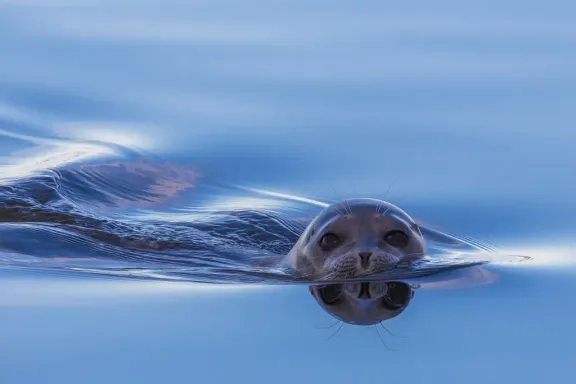
Ringed seal
Pusa hispida
Same subfamily (Phocinae)

Predators & furbearers
Gray wolf
Canis lupus
Same order (Carnivora)
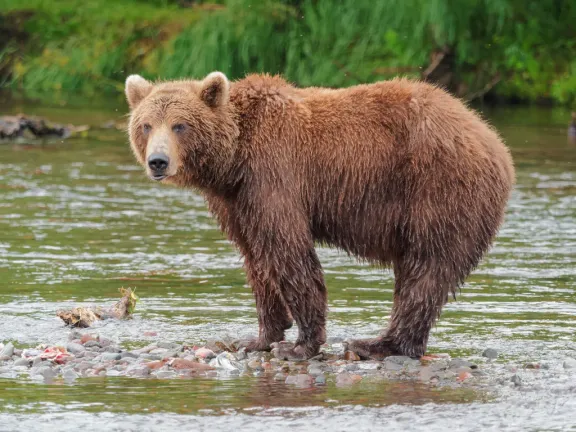
Predators & furbearers
Brown bear
Ursus arctos
Same order (Carnivora)
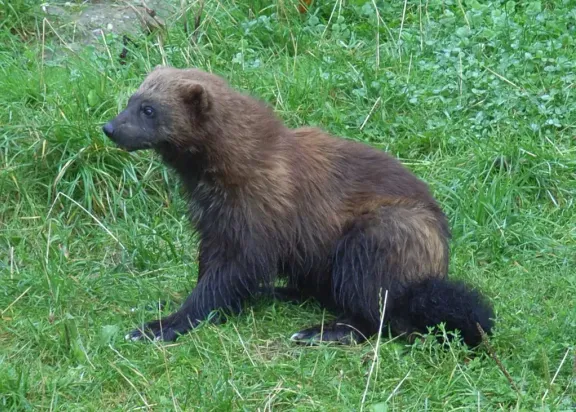
Predators & furbearers
Wolverine
Gulo gulo
Same order (Carnivora)
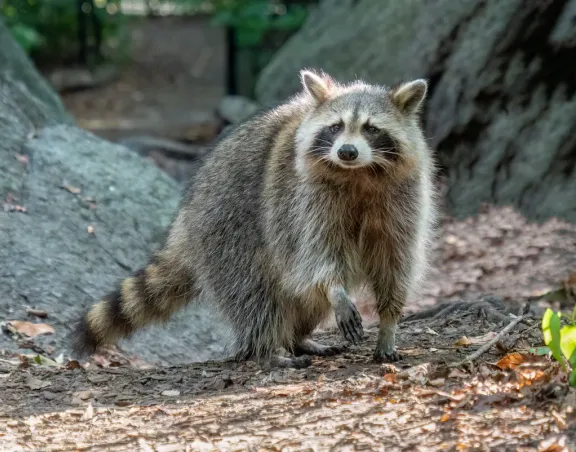
Predators & furbearers
Raccoon
Procyon lotor
Same order (Carnivora)