Predators & furbearers
Brown bear
Ursus arctos
- Group
- Predators & furbearers
- Size class
- Giant (300 kg+)
- Family
- Ursidae
Range
- North America
- Europe
- Asia
Habitat
- Forest
- Mountain
- Tundra
Range
Countries it is found in
46 countries
- Afghanistan
- Albania
- Armenia
- Azerbaijan
- Belarus
- Bosnia & Herzegovina
- Bulgaria
- Canada
- China
- Croatia
- Estonia
- Finland
- France
- Georgia
- Greece
- India
- Iran
- Iraq
- Italy
- Japan
- Kazakhstan
- Kosovo
- Kyrgyzstan
- Latvia
Range from:ASM Mammal Diversity Database — read 2026-08-05
Chapter 01
Overview
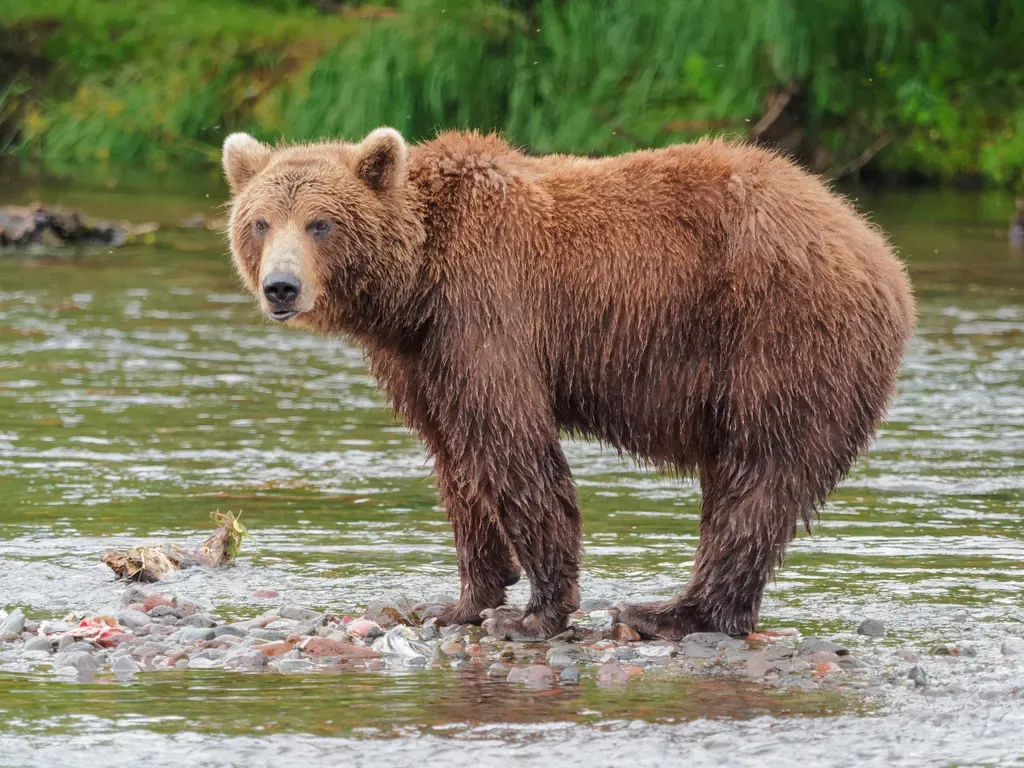
The brown bear (Ursus arctos) is a large bear of Eurasia and North America, rivalled in size among land carnivorans only by its closest relative the polar bear. It is sexually dimorphic — males larger and more compactly built — and the fur runs from cream through reddish to dark brown. It occupies the broadest range of habitats of any living bear, from sea level to 5,000 m in the Himalayas, with no clear altitudinal preference, though it generally favours semi-open country with enough vegetation to lie up in by day. Roughly 200,000 remain worldwide: Russia holds about 130,000, the United States 32,500 and Canada around 25,000. The IUCN lists the species as least concern, and it is one of only two bear species not classed as threatened — but that headline hides local extinctions. The California grizzly, Ungava brown bear, Atlas bear and Mexican grizzly were all hunted to extinction, the Syrian brown bear is gone from more than half its historic range, and the Himalayan brown bear is critically endangered on 2 per cent of its former ground.
Chapter 02
Behaviour
Activity peaks in the morning and early evening. Bears can be about at any hour, but those living where they are likely to meet people are more often fully nocturnal; where interaction is rare, most adults are crepuscular while yearlings and newly independent bears are active throughout the day. From summer through autumn a brown bear can double its spring weight, laying on up to 180 kg of fat to carry it through a lethargic winter. They are not true hibernators and wake easily, but both sexes prefer to den somewhere sheltered — a cave, a crevice, cavernous tree roots, a hollow log. Mating runs from mid-May to early July, later the further north. Females mature between four and eight years, males about a year later, when they are big enough to compete. A female comes into oestrus every three to four years and may mate with up to four males, occasionally eight. Despite the reputation, the brown bear is not markedly carnivorous: it draws up to 90 per cent of its dietary energy from plants. It eats berries, grasses, flowers, acorns, pine cones and fungi, and among bears it is uniquely equipped to dig for roots, bulbs and shoots, using long claws to open the ground and powerful jaws to bite through. In spring the mainstays are winter-killed carrion, grasses, shoots, sedges, moss and forbs; fruit matters increasingly through summer and early autumn; and roots and bulbs become critical in autumn for inland populations when the fruit crop is poor.
Field data
Tracks
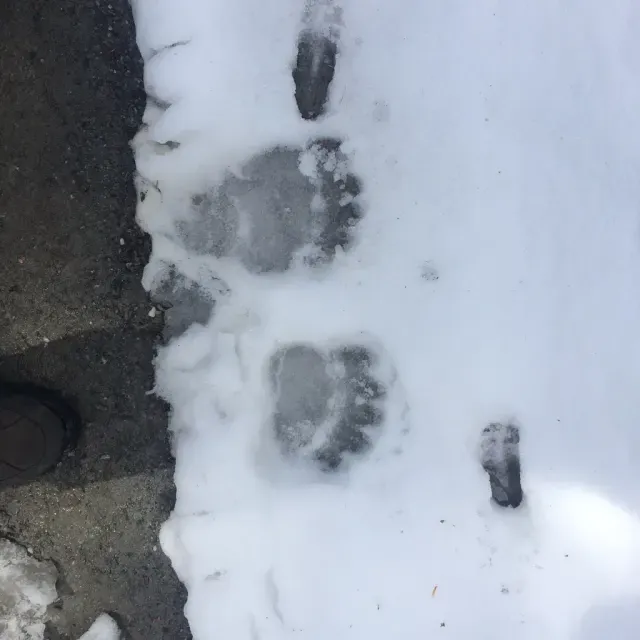
A photograph of real sign left by Brown bear. Prints vary with gait, ground and how long they have been there — treat this as one example, not a template.
Track photo:Karsten RohwederCC BY
On the table
Meat & cooking
Table grade 4 of 54/5
- Sold as meat in a legal market
- Has a named traditional dish
- Published way to handle and cook it
- Eaten in more than one country
- No known health advisory
Before you eat it: Bear carries trichinella. Livsmedelsverket names wild boar, bear, seal, wolf, lynx, fox and wolverine as the Swedish wild animals most likely to hold the parasite, and EU law requires meat from bear to be tested if it is to be sold. Test meat from a bear you shot yourself even if it is only for your own household, and cook it through — trichinella dies at around 60–65 °C in an oven, but grilling needs over 70 °C, and some cold-tolerant strains survive freezing.
Traditional preparations
- Björnstek
- Bear is eaten across the Nordic countries and North America, the haunch braised or roasted well done. It is a fatty meat and the fat has traditionally been rendered separately. Bear hunting — Wikipedia
- Bear sausage
- Because the meat must be cooked through in any case, much of a bear goes into cooked sausage and mince rather than whole cuts. Charcuterie — Wikipedia
Sources
Sources: Brown bear — Wikipedia, Livsmedelsverket: Trikiner — read 2026-08-05
Cross-reference
Related species
Its closest relatives in the compendium, nearest kinship first.
Predators & furbearers
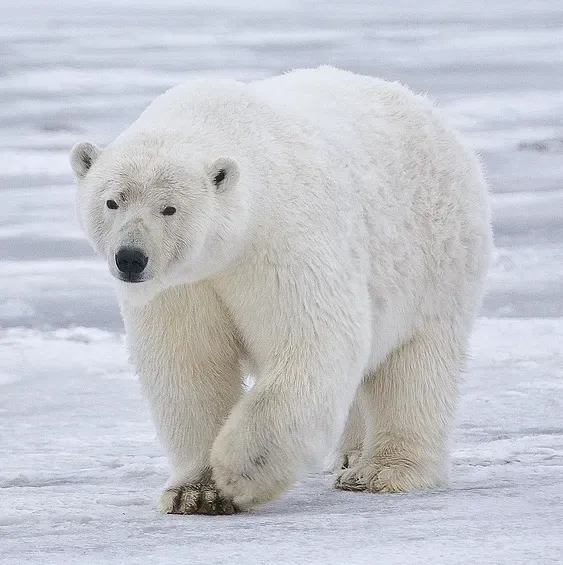
Polar bear
Ursus maritimus
Same genus (Ursus)
Predators & furbearers
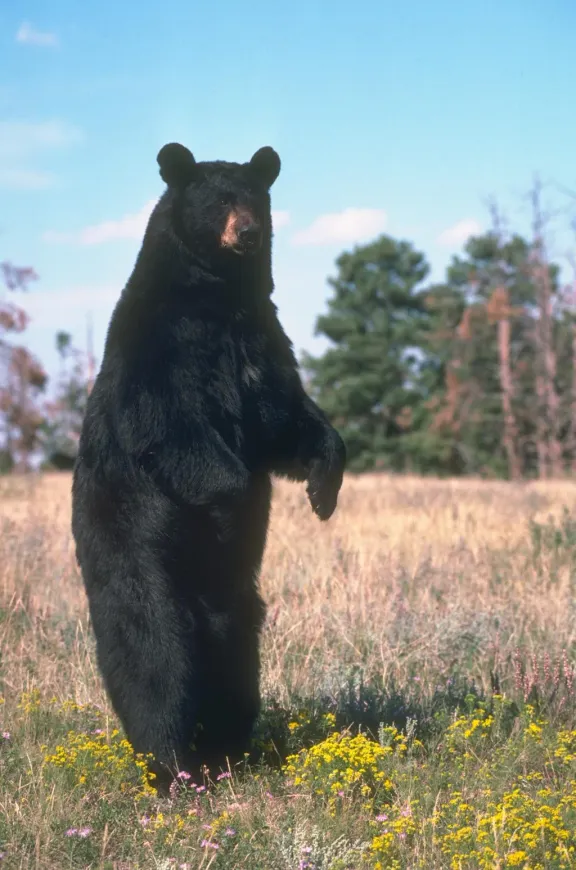
American black bear
Ursus americanus
Same genus (Ursus)
Predators & furbearers
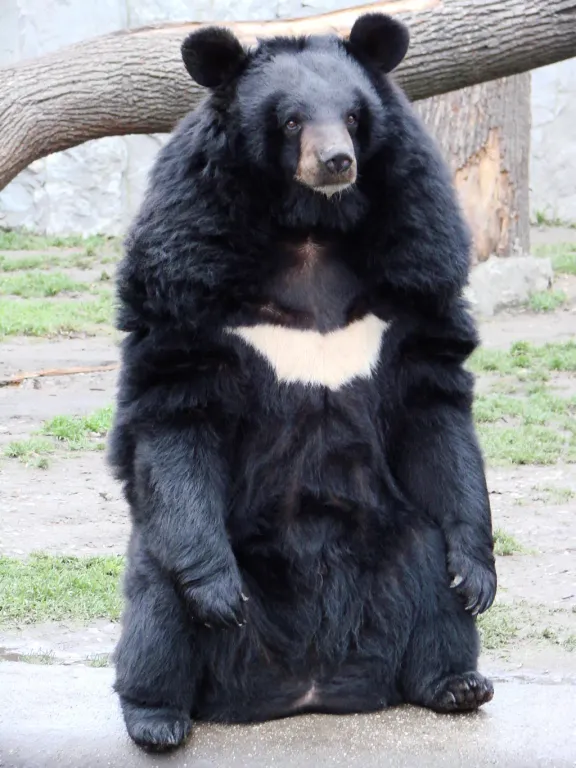
Asiatic black bear
Ursus thibetanus
Same genus (Ursus)
Predators & furbearers
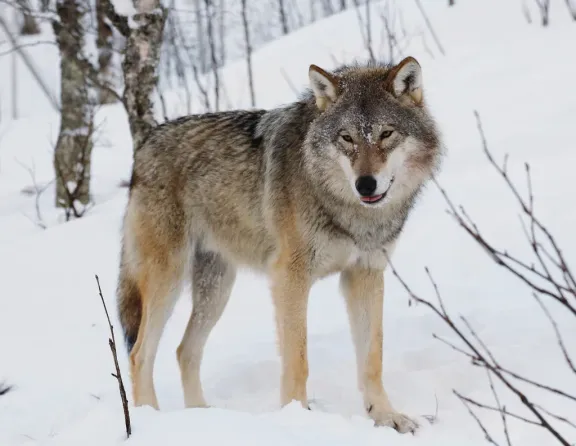
Gray wolf
Canis lupus
Same order (Carnivora)
Predators & furbearers
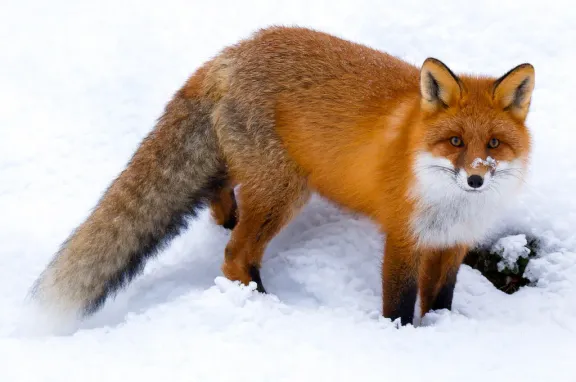
Red fox
Vulpes vulpes
Same order (Carnivora)
Predators & furbearers
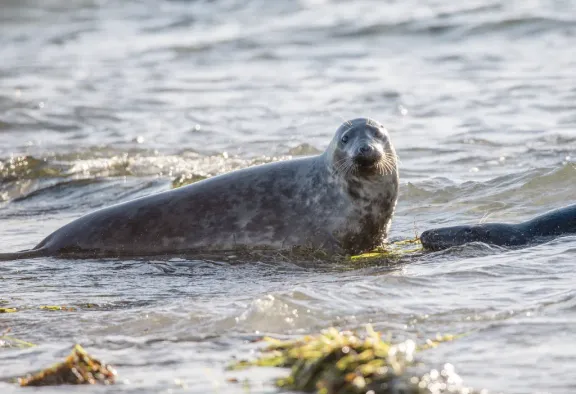
Grey seal
Halichoerus grypus
Same order (Carnivora)