Big game
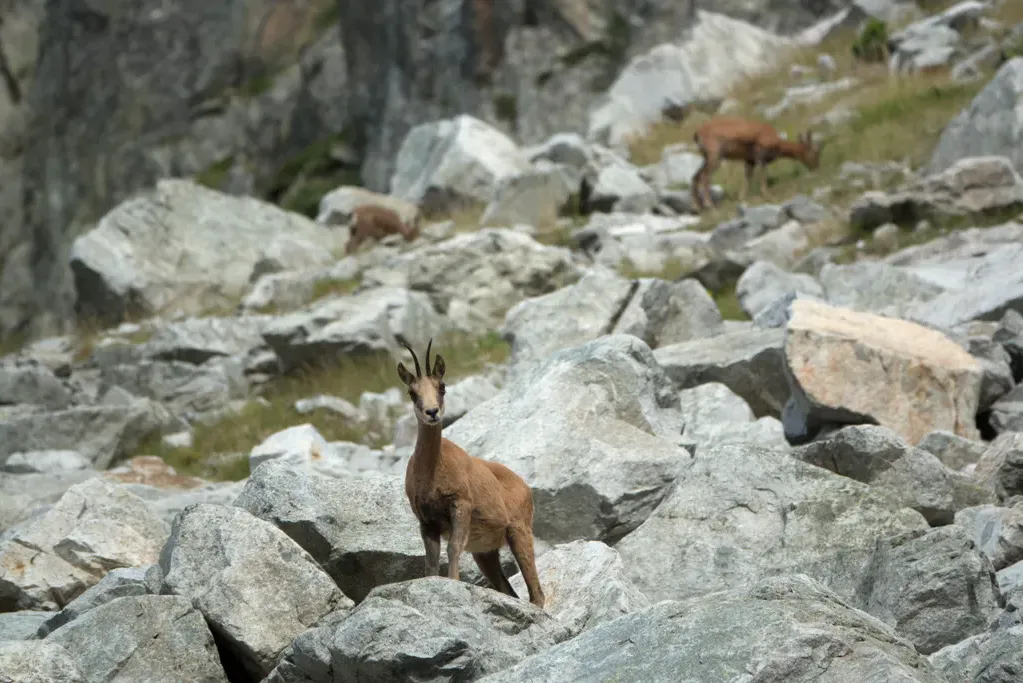
Pyrenean chamois
Rupicapra pyrenaica
- Group
- Big game
- Size class
- Medium (10–70 kg)
- Family
- Bovidae
Range
- Europe
Habitat
- Mountain
Range
Countries it is found in
4 countries
- Andorra
- France
- Italy
- Spain
Range from:ASM Mammal Diversity Database, GBIF occurrence records — read 2026-08-05
Chapter 01
Overview
The Pyrenean chamois (Rupicapra pyrenaica) is a goat-antelope of the Pyrenees and Cantabrian Mountains of Spain, France and Andorra, and of the Apennines of central Italy. It is one of the two species of the genus Rupicapra, the other being the Alpine chamois. Three subspecies are recognised: the Pyrenean chamois proper in Andorra, France and Spain, the Cantabrian chamois in Spain, and the Abruzzo chamois in central and southern Italy. It goes by many local names — isard in Catalan, Occitan and French, sarrio in Aragonese, rebeco in Spanish — and the French keep the two species apart as chamois and isard.
Chapter 02
Identification
Up to 80 cm at the shoulder, 90–130 cm long with a tail of only 3–4 cm, and 24–50 kg. The summer coat is short and ruddy brown, noticeably redder than the Alpine chamois'; the winter coat is long, dense and black or dark brown, with darker patches around the eyes and sometimes pale patches on the back of the neck, the shoulders and the flanks. Both sexes carry horns up to 20 cm long that rise and then hook backwards.
Chapter 03
Behaviour
A sure-footed, agile climber found at any elevation up to 3,000 m. It favours mountain meadows and rocky ground and generally avoids forest, moving to higher altitudes in summer. Does and their young form herds, while bucks live mostly alone outside the rut. It browses and grazes according to season on grasses, herbs, mosses, lichens and tree buds. Gestation lasts about 170 days and the doe usually bears a single kid in spring; twins are rare.
Chapter 04
Hunting
Like other chamois it was hunted almost to extinction, especially in the 1940s, for the production of chamois leather. The species has since recovered — about 50,000 mature animals were estimated in 2022 — and the IUCN lists it as least concern, though hunting and habitat loss are still named as threats. The Italian subspecies fared worst: only 300 to 400 remained in the 1990s. The Abruzzo, Lazio and Molise National Park was among the measures taken to save it, and numbers have since risen to around 1,000.
Sources
Sources: Pyrenean chamois — Wikipedia, Pyreneisk gems — Wikipedia (sv) — read 2026-10-29
Cross-reference
Related species
Its closest relatives in the compendium, nearest kinship first.
Big game
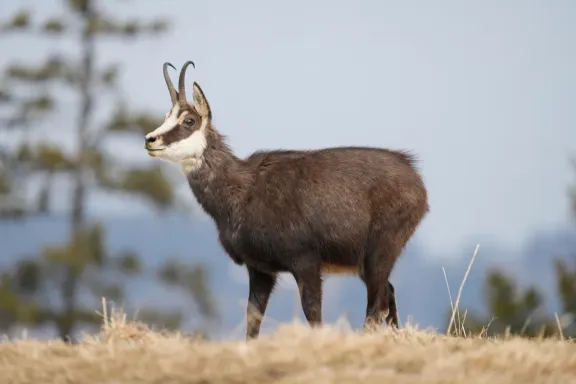
Alpine chamois
Rupicapra rupicapra
Same genus (Rupicapra)
Big game
European mouflon
Ovis gmelini musimon
Same subfamily (Caprinae)
Big game
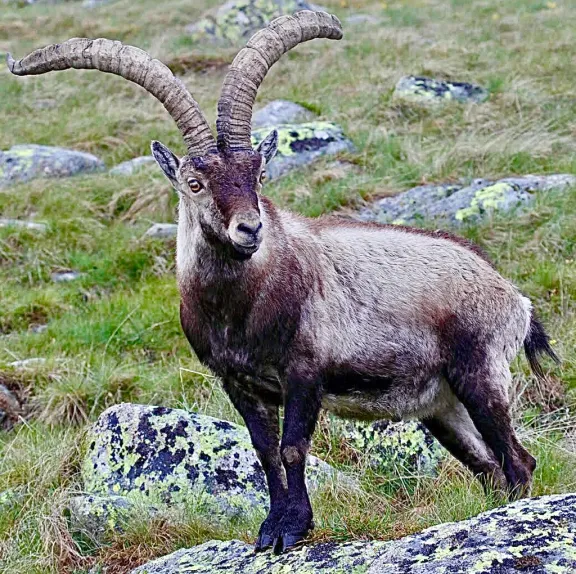
Iberian ibex
Capra pyrenaica
Same subfamily (Caprinae)
Big game
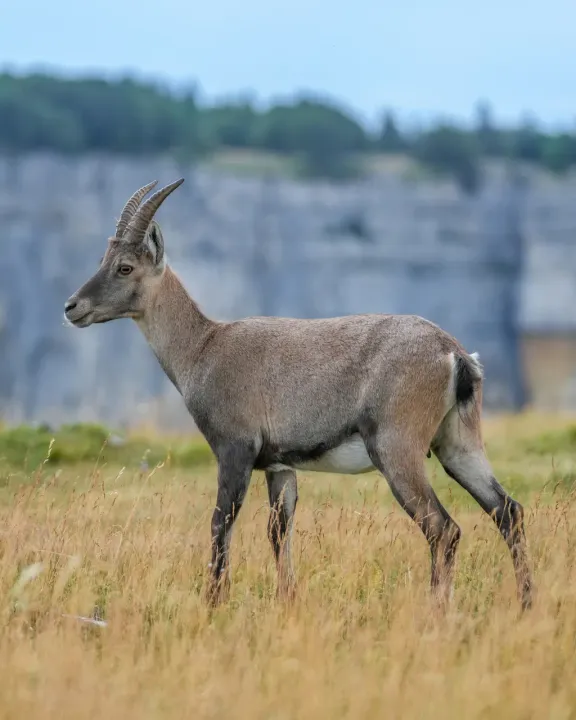
Alpine ibex
Capra ibex
Same subfamily (Caprinae)
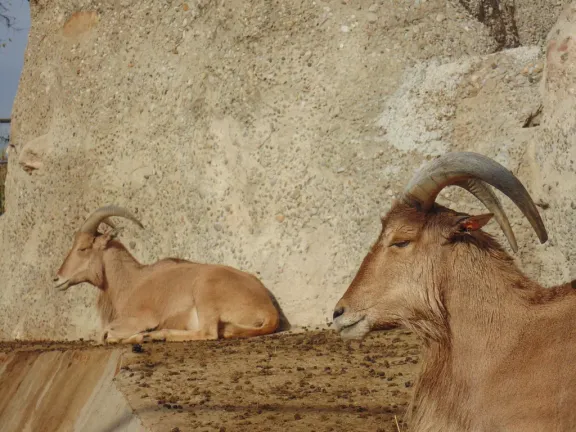
Big game
Aoudad (Barbary sheep)
Ammotragus lervia
Same subfamily (Caprinae)
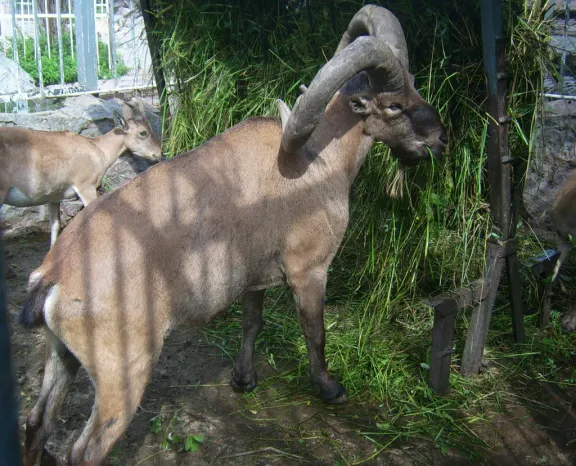
Big game
East Caucasian tur
Capra cylindricornis
Same subfamily (Caprinae)