Big game
European mouflon
Ovis gmelini musimon
- Group
- Big game
- Size class
- Medium (10–70 kg)
- Family
- Bovidae
Range
- Europe
- Asia
Habitat
- Mountain
- Forest
Range
Countries it is found in
22 countries
- Andorra
- Austria
- Belgium
- Croatia
- Cyprus
- Czechia
- Denmark
- Finland
- France
- Germany
- Hungary
- Italy
- Luxembourg
- Netherlands
- Poland
- Portugal
- Slovakia
- Slovenia
- Spain
- Sweden
- Switzerland
- Ukraine
Range from:GBIF occurrence records — read 2026-08-05
Chapter 01
Overview
The mouflon (Ovis gmelini) is a wild sheep native to Cyprus, Armenia, Azerbaijan, Georgia, Iran and two separate parts of Turkey, and is thought to be the ancestor of all domestic sheep. In the late Pleistocene it ranged across roughly the Fertile Crescent, and its typical habitat is gently rolling hills where steppe meets forest. The European mouflon of Sardinia and Corsica, carried from there to many other parts of Europe, was once taken for a relic wild subspecies. It is now regarded as a feral descendant of domestic sheep, Ovis aries musimon — no mouflon remains have been found on the neighbouring mainland or on either island before the Neolithic. In Sweden mouflon have been kept in enclosures since the 1930s and now also live free in parts of Värmland, Västergötland, Södermanland, Västmanland, Västerbotten, Östergötland and Småland, on islands off the west coast and in the Stockholm archipelago, and in northern Bohuslän; animals put out on islands spread when they cross the ice in winter.
Chapter 02
Identification
A short-haired sheep, reddish to dark brown with a dark stripe along the back, black underparts and a light saddle patch, which on rams often shows as a paler area in the middle of the back. Rams stand about 90 cm at the shoulder and weigh around 50 kg; ewes weigh around 35 kg. Rams carry heavy horns that curl backwards almost a full turn and reach 85 cm; some ewes have short horns, most have none.
Chapter 03
Behaviour
Ewes and lambs live in small flocks, while adult rams keep alone or in groups of their own. Mouflon are most active at dusk and dawn but not tied to any time of day. They graze mostly grasses and herbs, also browse leaves and twigs and strip bark in winter, and can reach 1.5 m up by standing on their hind legs. Rams keep a strict dominance hierarchy and fight for access to ewes; Svenska Jägareförbundet puts the rut in October and November. They are sexually mature at two to four, but a young ram needs about three more years to win the rank to breed, whereas ewes can breed even at low status. After five months' gestation the ewe bears one or two lambs in spring, usually in April. In their native range their enemies are mainly leopards and jackals; in Sweden, lynx and wolf.
Chapter 04
Hunting
In its native range the mouflon is protected in Armenia and Azerbaijan, and in Turkey and Iran it may be hunted only on a special licence. The Cyprus population is strictly protected under the EU Habitats Directive and has been on CITES Appendix I since November 2019. In Armenia the people of Kalavan hunted it for centuries. In Sweden mouflon have no seasonal close time: the Hunting Ordinance lists them among the alien game species that may be hunted all year, 1 July to 30 June, to prevent damage. As with moose, deer, roe deer and wild boar, a dog trained to track wounded game must be able to reach the shot site within two hours, and a driver who hits a mouflon must mark the spot and report it to the police.
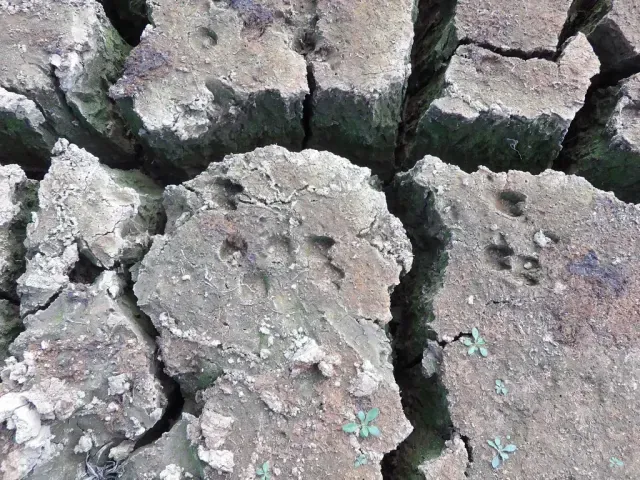
On the table
Meat & cooking
Table grade 3 of 53/5
- Sold as meat in a legal market
- Has a named traditional dish
- Published way to handle and cook it
- Eaten in more than one country
- No known health advisory
Sources
Sources: Mouflon — Wikipedia, Mufflonfår — Wikipedia (sv), Svenska Jägareförbundet: Mufflonfår, Jaktförordning (1987:905) — Sveriges riksdag, Venison — Wikipedia — read 2026-10-29
Cross-reference
Related species
Its closest relatives in the compendium, nearest kinship first.
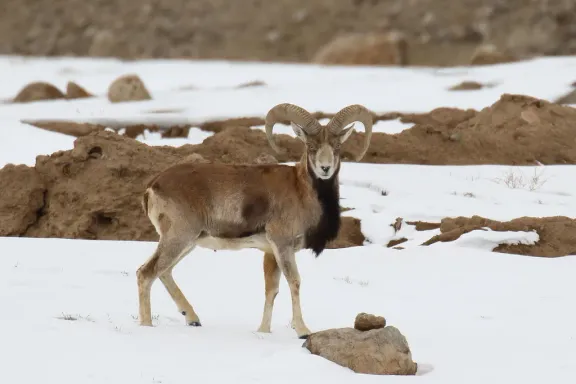
Big game
Urial
Ovis vignei
Same genus (Ovis)
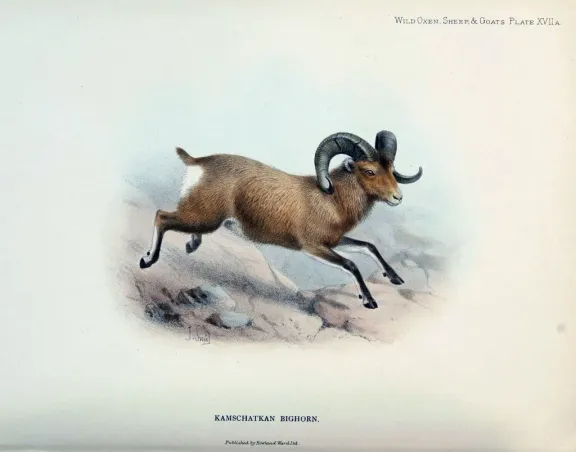
Big game
Snow sheep
Ovis nivicola
Same genus (Ovis)
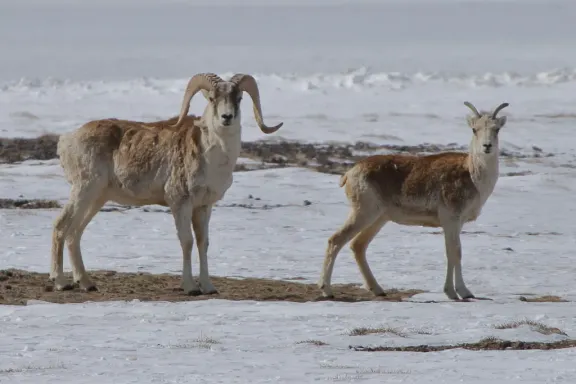
Big game
Marco Polo sheep
Ovis ammon polii
Same genus (Ovis)
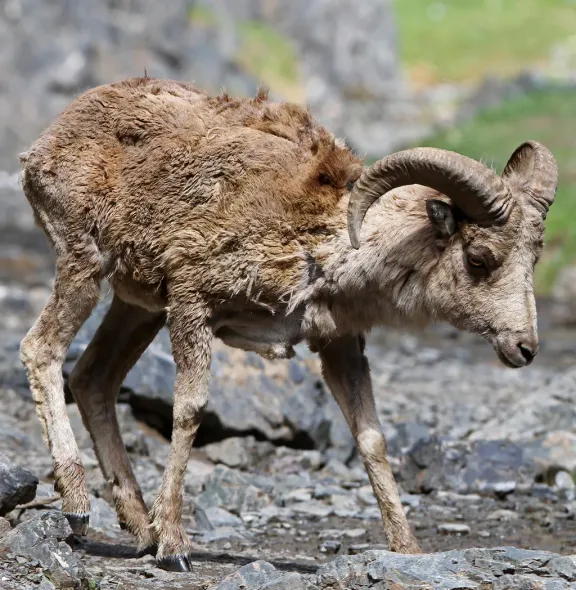
Big game
Argali
Ovis ammon
Same genus (Ovis)
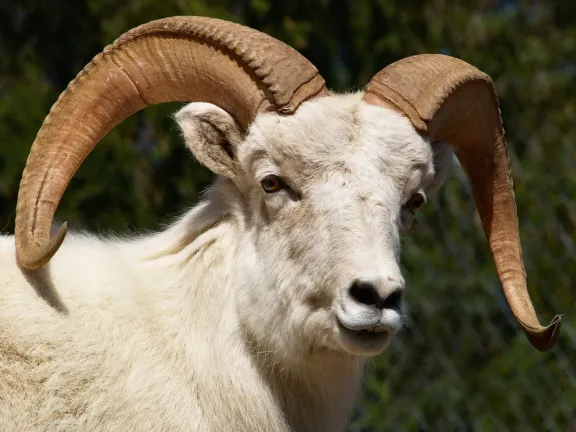
Big game
Dall sheep
Ovis dalli
Same genus (Ovis)
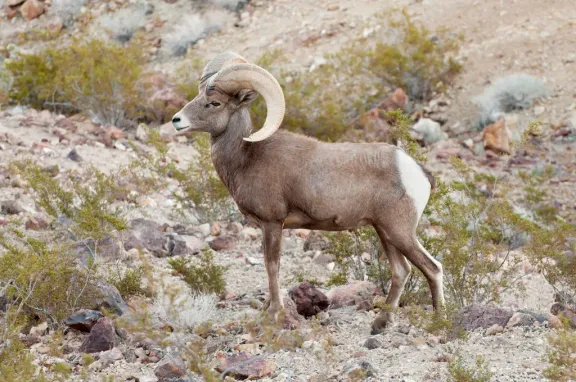
Big game
Desert bighorn sheep
Ovis canadensis nelsoni
Same genus (Ovis)