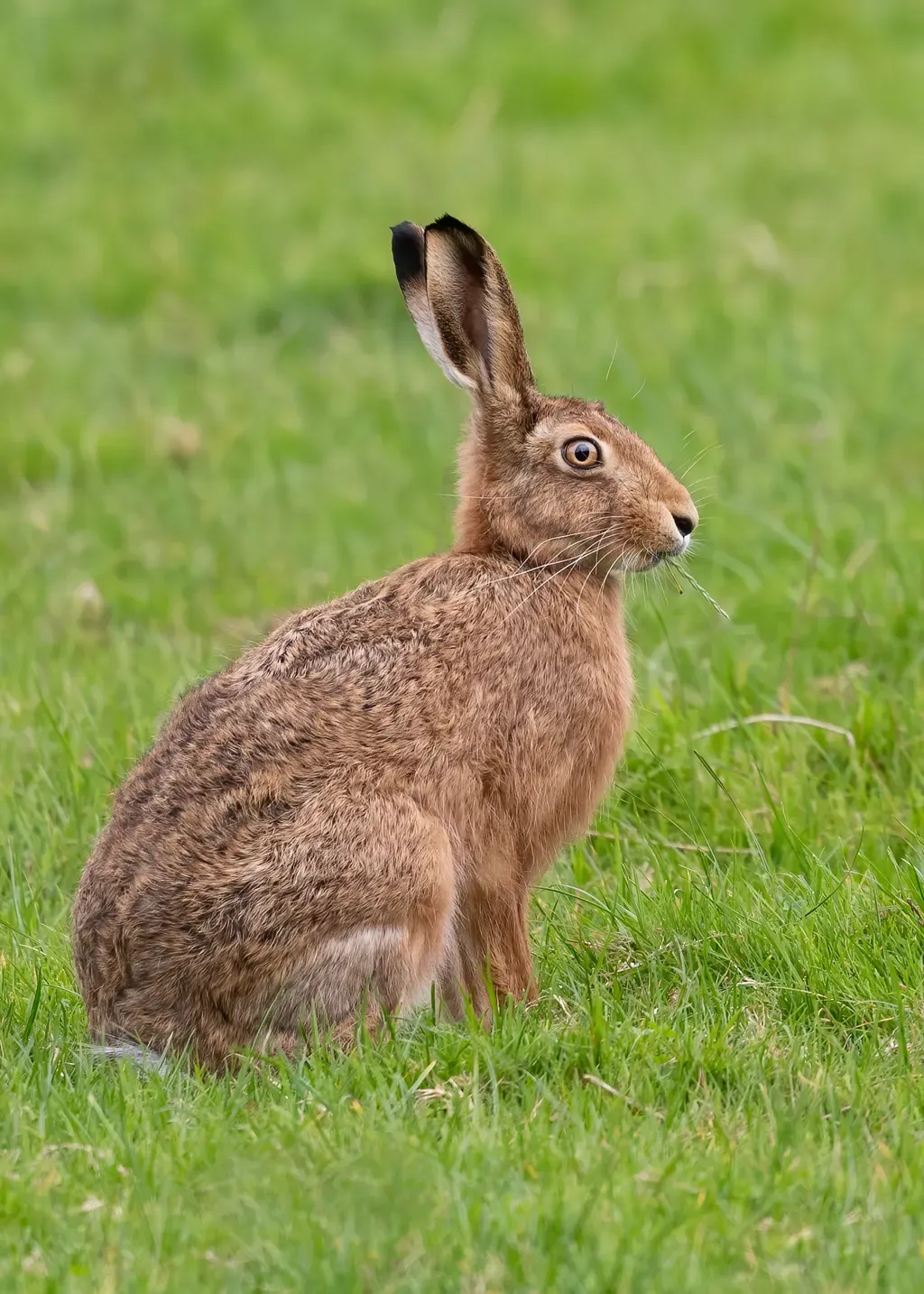
Photo:caroline leggCC BY 2.0
Small game
European hare
Lepus europaeus
- Group
- Small game
- Size class
- Small (under 10 kg)
- Family
- Leporidae
Range
- Europe
- South America
- Oceania
Habitat
- Farmland
- Grassland
Range
Countries it is found in
54 countries
- Albania
- Andorra
- Argentina
- Armenia
- Austria
- Azerbaijan
- Belarus
- Belgium
- Bosnia & Herzegovina
- Brazil
- Bulgaria
- Chile
- Croatia
- Czechia
- Denmark
- Estonia
- Finland
- France
- Georgia
- Germany
- Greece
- Hungary
- Iran
- Iraq
Range from:ASM Mammal Diversity Database, GBIF occurrence records — read 2026-08-05
Chapter 01
Overview
The European or brown hare (Lepus europaeus) is among the largest hares and is adapted to temperate open country. It is native to much of continental Europe, reaching 60°N and east into Central Asia, and is still extending its range into Siberia. It may have been introduced to Great Britain between 500 and 300 BCE, and has been introduced as a game animal to Ontario and New York State, to Brazil, Argentina, Uruguay, Paraguay, Bolivia, Chile and Peru, to the Falklands, Australia, both islands of New Zealand, the south Pacific coast of Russia and Ireland. The IUCN rates it least concern, but declines have been recorded across many areas since the 1960s, associated with agricultural intensification, climate change and increased predation. Farming has produced less diverse habitat than the hare prefers; green zones with more varied food sources have helped.
Chapter 02
Identification
The largest hare native to Europe: 55 to 65 cm head-to-body, a 7.5–14 cm tail, and 3.5–5 kg in weight. The ears run 9.4 to 11.0 cm from notch to tip, and the hind feet 14 to 16 cm. It is slenderer than the European rabbit, and its dark limb musculature is what gives it the stamina to run. It relies on high-speed endurance running rather than cover, with long powerful limbs and large nostrils to match.
Chapter 03
Behaviour
Primarily nocturnal, spending about a third of its active time foraging. By day it lies in a shallow depression in the ground called a form, only partly hidden. It can run at 70 km/h, and when a predator closes it relies on outrunning it in the open rather than going to ground. It is generally thought of as asocial but turns up in both large and small groups, and does not appear to be territorial, living in overlapping home ranges of around 300 hectares. Communication is largely visual: raised ears show interest, lowered ears warn others off. Generally nocturnal and shy, hares change their behaviour in spring, when they are active in daylight and chase one another about the fields. Diet is grasses and herbs, supplemented with twigs, buds, bark and field crops, particularly in winter. Natural predators are red foxes and large birds of prey.
Field data
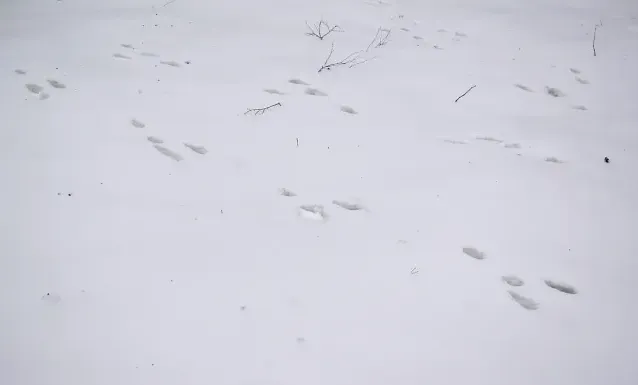
Tracks
A photograph of real sign left by European hare. Prints vary with gait, ground and how long they have been there — treat this as one example, not a template.
Track photo:Георгий Виноградов (Georgy Vinogradov)CC BY
On the table
Meat & cooking
Table grade 5 of 55/5
- Sold as meat in a legal market
- Has a named traditional dish
- Published way to handle and cook it
- Eaten in more than one country
- No known health advisory
Traditional preparations
- Hasenpfeffer
- The classic German marinated hare stew, the meat soured in wine and vinegar before braising and the sauce traditionally thickened with blood. Hasenpfeffer — Wikipedia
- Jugged hare
- Jugging is the old method: the jointed hare cooked slowly in a tightly covered vessel, historically standing in water, with the blood used to finish the sauce. Jugging — Wikipedia
Sources
Sources: European hare — Wikipedia — read 2026-08-05
Cross-reference
Related species
Its closest relatives in the compendium, nearest kinship first.
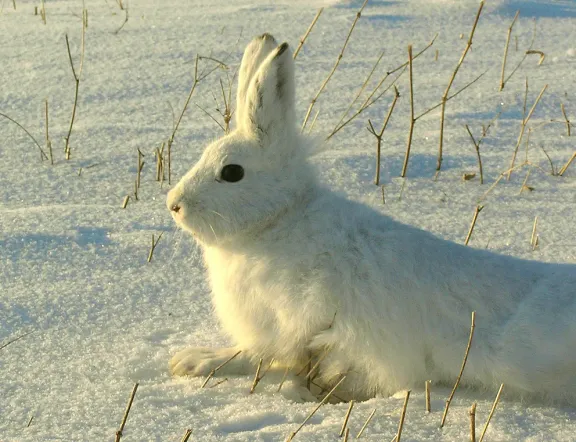
Small game
Mountain hare
Lepus timidus
Same genus (Lepus)
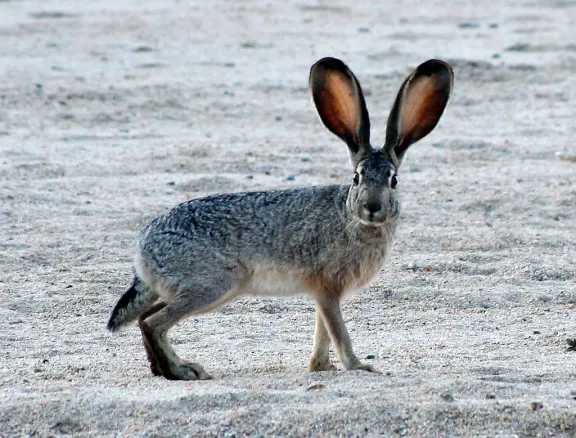
Small game
Black-tailed jackrabbit
Lepus californicus
Same genus (Lepus)
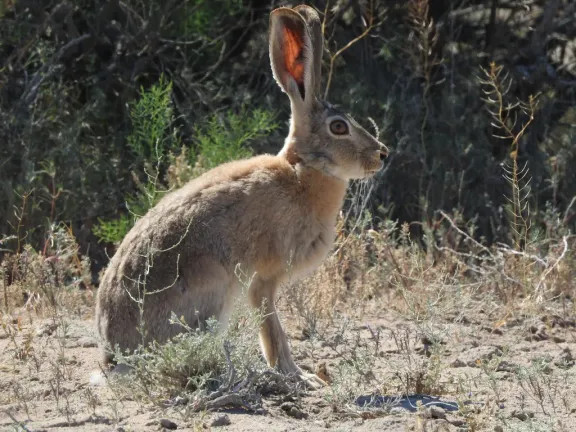
Small game
Tolai hare
Lepus tolai
Same genus (Lepus)
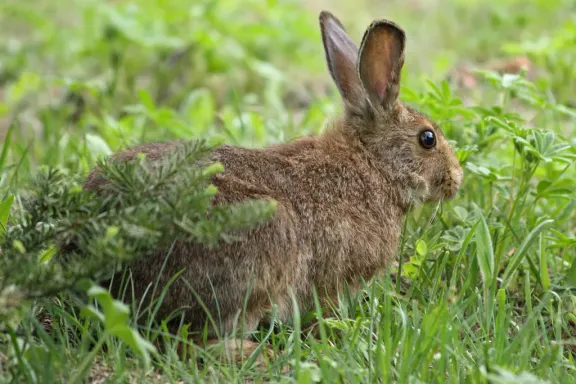
Small game
Snowshoe hare
Lepus americanus
Same genus (Lepus)
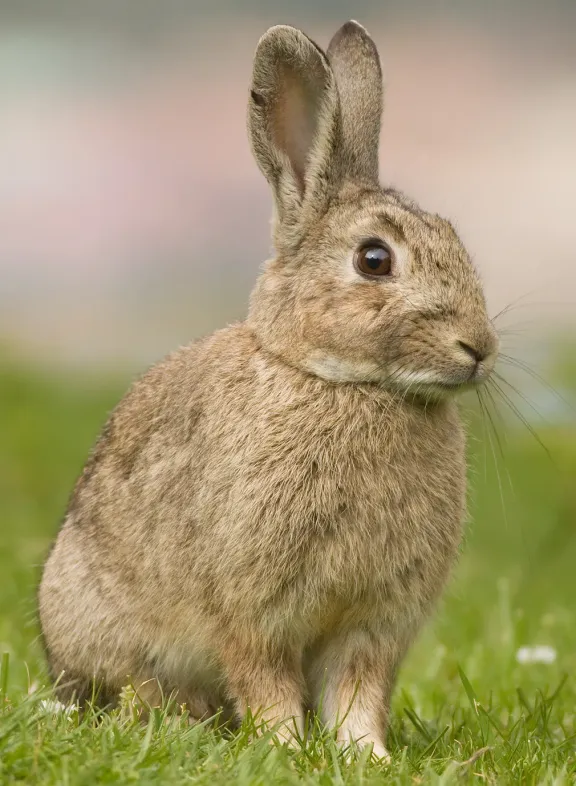
Small game
European rabbit
Oryctolagus cuniculus
Same family (Leporidae)
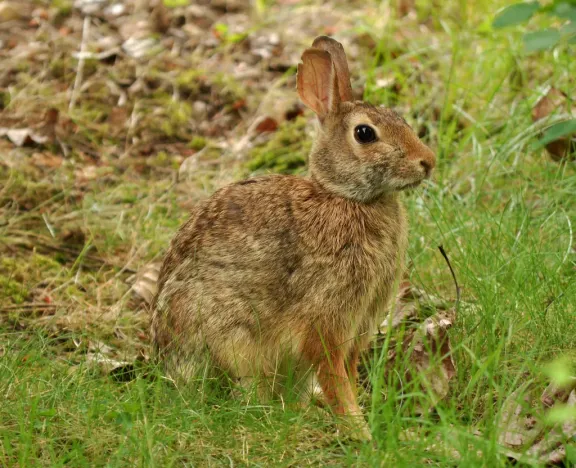
Small game
Eastern cottontail
Sylvilagus floridanus
Same family (Leporidae)