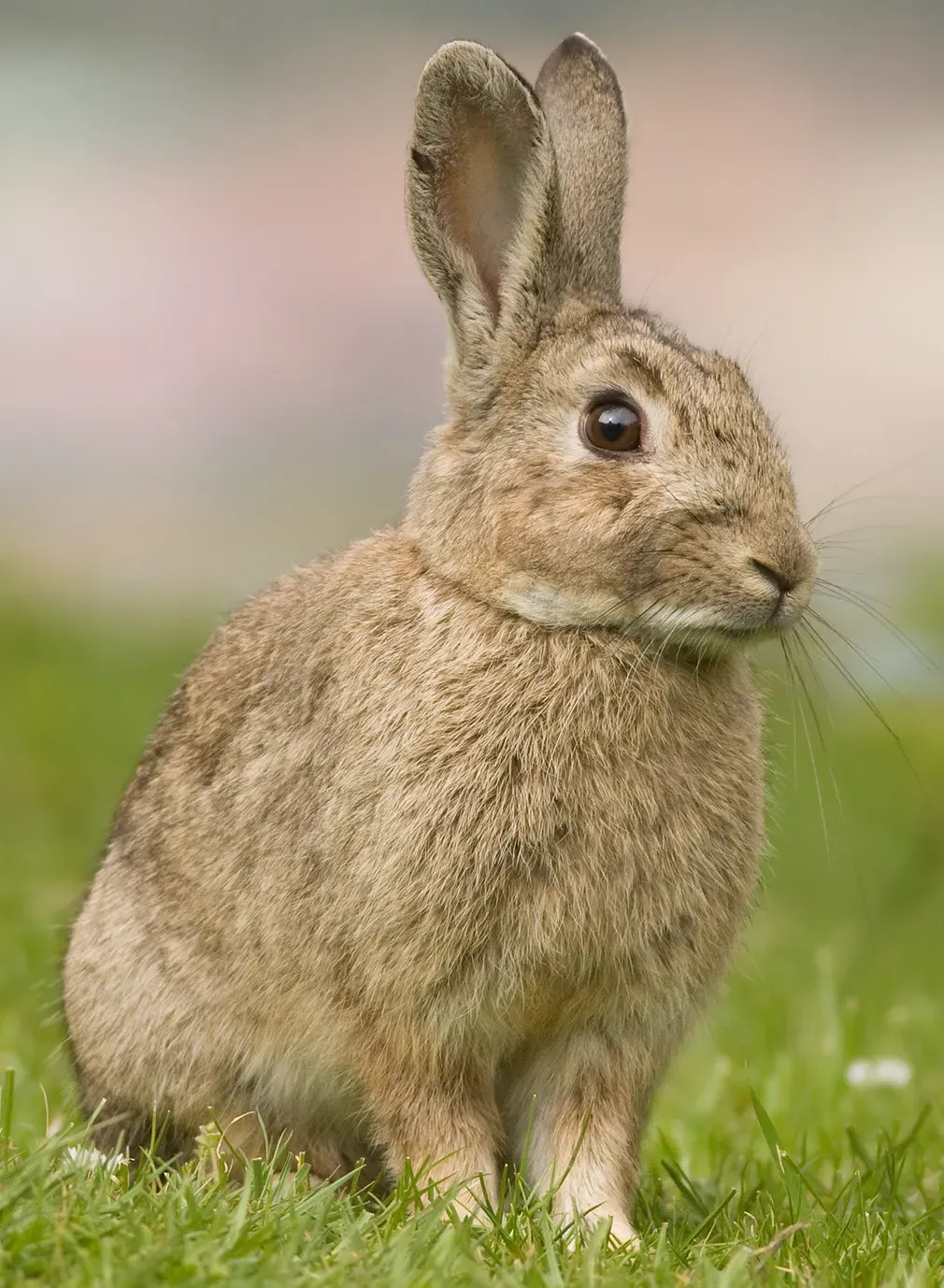
Photo:JJ HarrisonCC BY-SA 3.0
Small game
European rabbit
Oryctolagus cuniculus
- Group
- Small game
- Size class
- Small (under 10 kg)
- Family
- Leporidae
Range
- Europe
- Oceania
Habitat
- Farmland
- Scrub
Range
Countries it is found in
31 countries
- Andorra
- Argentina
- Australia
- Austria
- Belgium
- Bulgaria
- Canada
- Chile
- Czechia
- Denmark
- Egypt
- Finland
- France
- Germany
- Greece
- Hungary
- Iceland
- Ireland
- Isle of Man
- Italy
- Jersey
- Netherlands
- New Zealand
- Poland
Range from:ASM Mammal Diversity Database, GBIF occurrence records — read 2026-08-05
Chapter 01
Overview
The European rabbit (Oryctolagus cuniculus), or coney, is native to the Iberian Peninsula and south-western France and has been introduced to hundreds of places around the world. It prefers grassland and is herbivorous, feeding mainly on grasses and leaves and supplementing with berries, tree bark and field crops such as maize. The conservation picture is inverted from what its reputation suggests. It thrives in much of its introduced range while declining sharply at home: Portugal classified it near threatened in 2005, Spain reclassified it as vulnerable in 2006, and in 2018 the IUCN listed it as endangered in Spain, Portugal and France, assessing only the populations within its natural range. Two subspecies are recognised as of 2025 — the common rabbit O. c. cuniculus of southern France and north-east Spain, and the Iberian rabbit O. c. algirus of the south-west peninsula. The common rabbit is the one that has been introduced to every continent but Antarctica.
Chapter 02
Identification
Adults run 36 to 38 cm long and weigh 1.5 to 3 kg, with a 6.5–7 cm tail, hind feet of 8 to 8.9 cm and ears 7 to 8 cm long. It is smaller than either the European hare or the mountain hare, has proportionately shorter legs, and — the mark worth carrying into the field — lacks black ear tips. Size and weight track food and habitat quality closely: rabbits living on light soil with nothing but grass are noticeably smaller than those on cultivated ground.
Chapter 03
Behaviour
Rabbits live in burrow systems called warrens, holding social groups of one to five adult bucks and one to eight adult does, usually forming around a dominant male with subordinate animals of both sexes. Warrens let young be raised somewhere safe from predators, and a breeding group may extend across two or more nearby warrens. They are territorial, and even within a warren a group will defend its territory against neighbouring groups. Dominant bucks are polygynous while lower-status animals of both sexes often form monogamous pairs, which is also the pattern where females are thinly spread. Readiness to mate is signalled by 'chinning' — marking other animals and objects with a secretion from a chin gland. Bucks can be amicable with each other but fight fiercely during the breeding season, which typically starts in autumn. Grazing is heaviest close to the burrow and lighter further out, which produces a visible gradient: short, poorer vegetation near the warren, taller and more nutritious further away, where the rabbit is more exposed and spends more energy getting to it. It favours young leaves and shoots of nutritious species, particularly fescues, and in cultivated country takes sugar beet, hay and cereals, preferring winter wheat to maize.
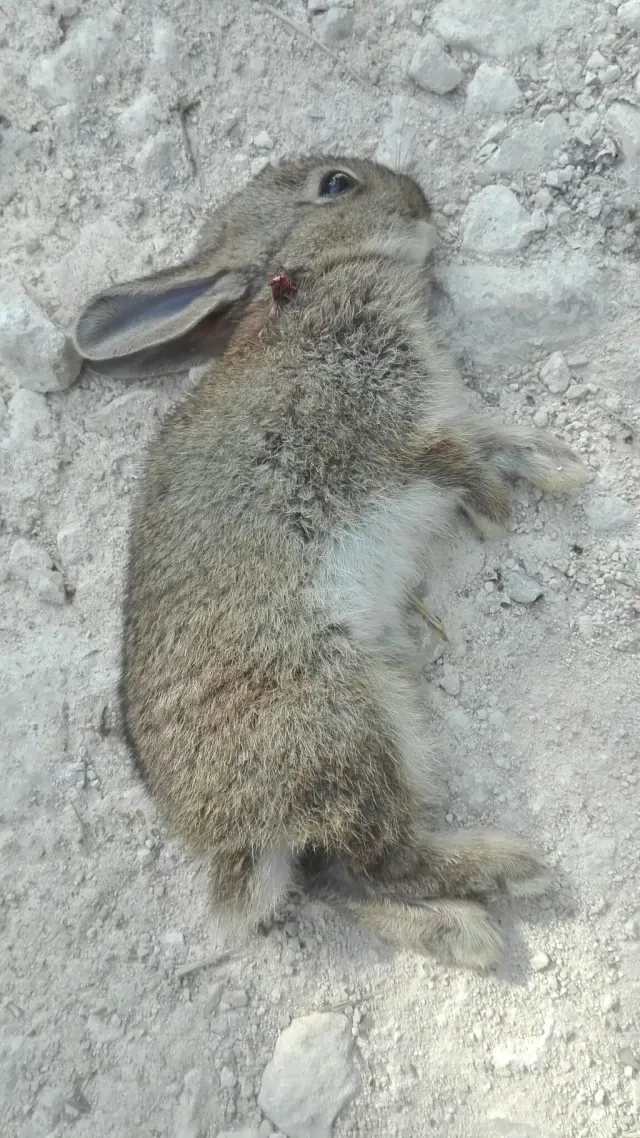
Field data
Tracks
A photograph of real sign left by European rabbit. Prints vary with gait, ground and how long they have been there — treat this as one example, not a template.
Track photo:Júlio ReisCC BY SA
On the table
Meat & cooking
Table grade 5 of 55/5
- Sold as meat in a legal market
- Has a named traditional dish
- Published way to handle and cook it
- Eaten in more than one country
- No known health advisory
Traditional preparations
- Rabbit stew
- The standard treatment across Europe — jointed and braised slowly with root vegetables, the lean meat needing moisture rather than dry heat. Rabbit stew — Wikipedia
- Terrine and pâté
- Rabbit is a traditional base for terrines and pâtés, the shoulder and trim bound with fat that the animal itself does not carry. Terrine (food) — Wikipedia
Sources
Sources: European rabbit — Wikipedia — read 2026-08-05
Cross-reference
Related species
Its closest relatives in the compendium, nearest kinship first.
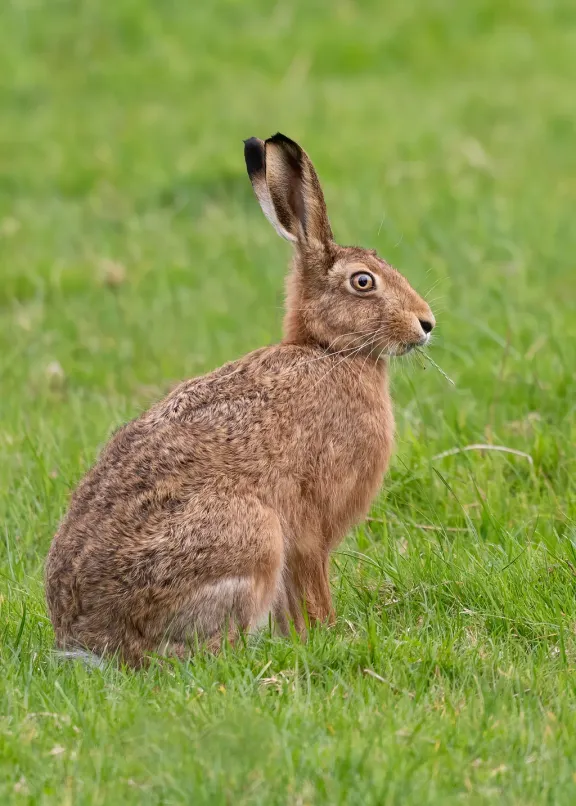
Small game
European hare
Lepus europaeus
Same family (Leporidae)
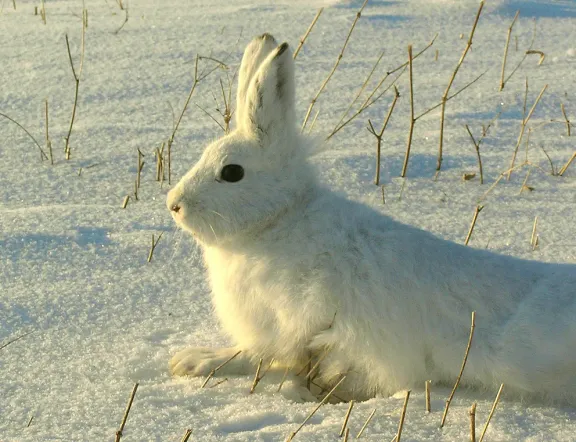
Small game
Mountain hare
Lepus timidus
Same family (Leporidae)
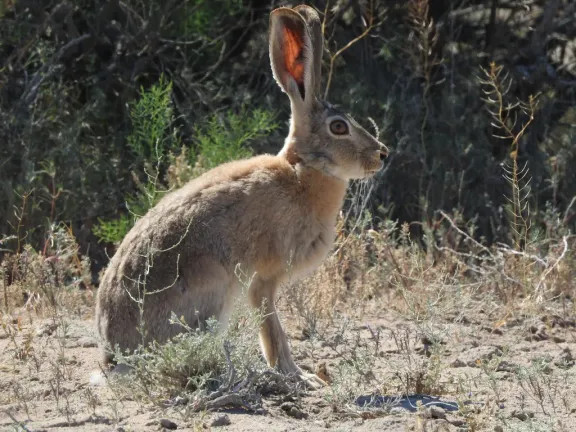
Small game
Tolai hare
Lepus tolai
Same family (Leporidae)
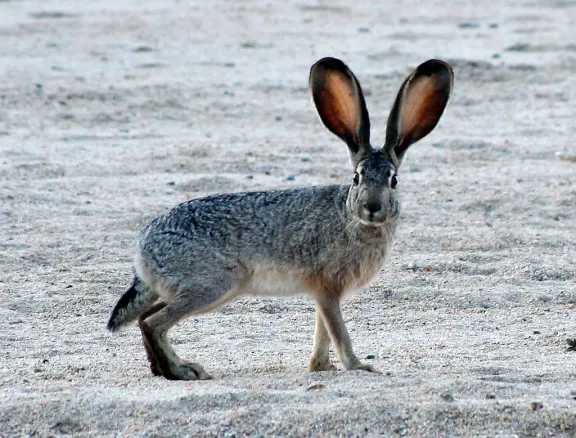
Small game
Black-tailed jackrabbit
Lepus californicus
Same family (Leporidae)
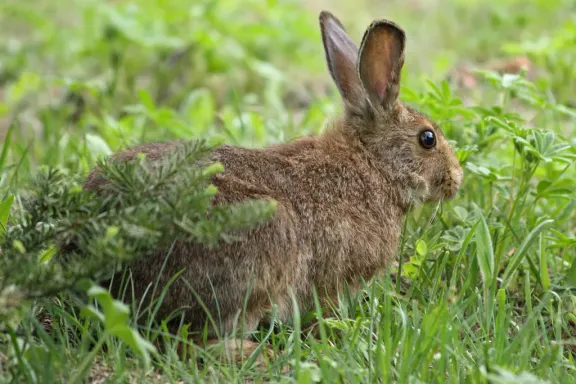
Small game
Snowshoe hare
Lepus americanus
Same family (Leporidae)
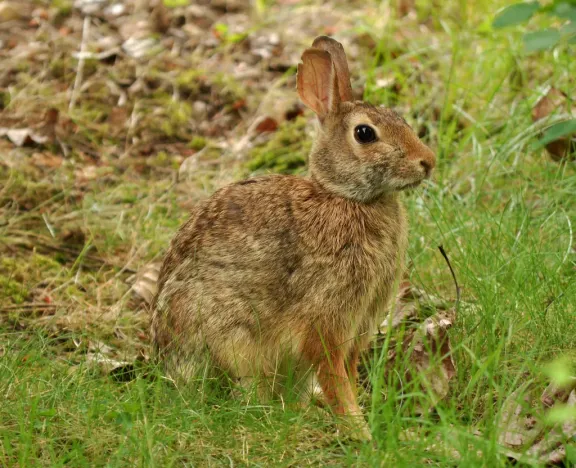
Small game
Eastern cottontail
Sylvilagus floridanus
Same family (Leporidae)