Photo:DjalickCC BY-SA 4.0
Small game
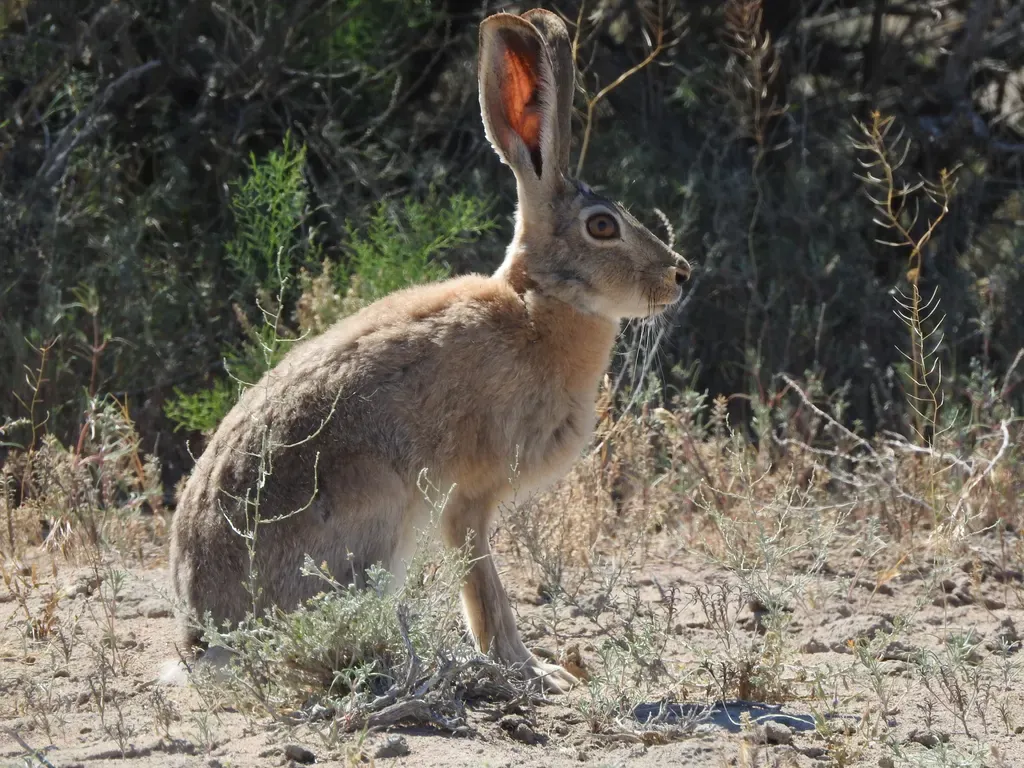
Tolai hare
Lepus tolai
- Group
- Small game
- Size class
- Small (under 10 kg)
- Family
- Leporidae
Range
- Asia
Habitat
- Desert
- Grassland
Range
Countries it is found in
10 countries
- Afghanistan
- China
- Iran
- Kazakhstan
- Kyrgyzstan
- Mongolia
- Russia
- Tajikistan
- Turkmenistan
- Uzbekistan
Range from:ASM Mammal Diversity Database — read 2026-08-05
Chapter 01
Overview
The tolai hare (Lepus tolai) is a hare of Central and East Asia, ranging from the eastern shore of the Caspian Sea through eastern Iran, Afghanistan, southern Kazakhstan, Turkmenistan, Uzbekistan and Kyrgyzstan, across southern Siberia and Mongolia to western, central and north-eastern China. Pallas described it in 1778 and took the name from the Mongol and Kalmyk word for hare. It was long lumped with the cape, European and desert hares, and the boundaries of its ten or so subspecies are still debated. It lives in semi-desert, steppe, rocky country, grassland and river valleys, usually at 600–900 m, and prefers the wetter places — it is described as abundant in the Hailar river valley — while avoiding heavily forested ground and steppe with only low vegetation. It is a widespread, fairly common species with a stable population and is listed as least concern by the IUCN and by regional lists in China and Mongolia.
Chapter 02
Identification
Head and body measure 40–59 cm, with a tail of 72–110 mm, ears of 80–120 mm and hind feet of 110–127 mm; adults weigh 1.7–2.7 kg. The upperparts vary across the range from dusty yellow to pale brown, sandy yellow or sandy grey, sometimes with darker brownish or reddish streaks, and the hips may be ochre or grey. A pale, bare greyish or ochre patch of skin surrounds the eye and runs forward towards the muzzle and back to the base of the long, black-tipped ears. The underparts and flanks are pure white, and the top of the tail carries a broad black or blackish-brown stripe. Colour shifts gradually across the range, which is why the subspecies are so hard to tell apart.
Chapter 03
Behaviour
The tolai hare is mainly active at dusk and at night, feeding on grasses, sedges, wood and bark, seeds, bulbs, shoots and roots, though it sometimes forages by day and young hares are generally more active in daylight. It digs a burrow only when breeding; otherwise it rests by day in a form scraped out with its front paws, shallow in hot weather and deeper in the cold. It breeds two or three times a year, with litters of two to six that get smaller as the season goes on. Breeding usually begins in late February and runs into March, but can start earlier or last longer, up to five months in some regions. It carries a heavy load of parasites — 22 species of ticks have been found on it — as well as fleas, flukes, tapeworms and roundworms.
Chapter 04
Hunting
Tolai hares are hunted for their meat and fur and are also used in traditional medicine. The fur trade has declined: in southern Uzbekistan the harvest fell more than tenfold between 1959 and 1977, and the population in Uzbekistan fell markedly in the later 20th century. In eastern Mongolia a steady harvest of about 1,000 hares a year is reported. Growing human populations and displacement from habitat are a potential threat, though little studied. Protected areas such as Hustai National Park cover roughly 12% of the range. At the Neolithic site of Yangjiesha on the Loess Plateau there are signs that people once lived alongside tame tolai hares.
On the table
Meat & cooking
Table grade 1 of 51/5
- Sold as meat in a legal market
- Has a named traditional dish
- Published way to handle and cook it
- Eaten in more than one country
- No known health advisory
Before you eat it: Tolai hares carry tularemia, plague and the brucellosis pathogen, and host ticks of the genera Dermacentor and Rhipicephalus, most numerous in spring and summer. Handle carcasses with gloves.
Sources
Sources: Tolai hare — Wikipedia, Lepus tolai — Wikipedia (sv) — read 2026-10-29
Cross-reference
Related species
Its closest relatives in the compendium, nearest kinship first.
Small game
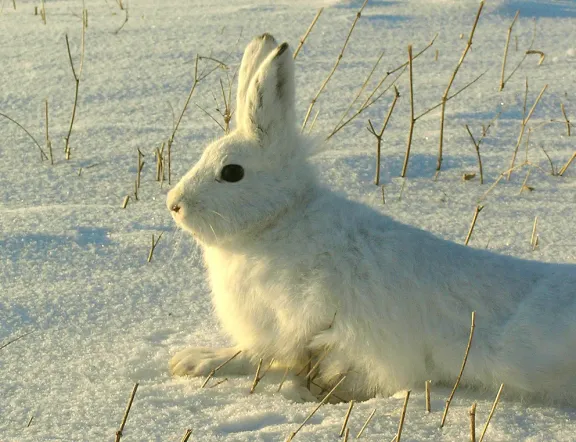
Mountain hare
Lepus timidus
Same genus (Lepus)
Small game
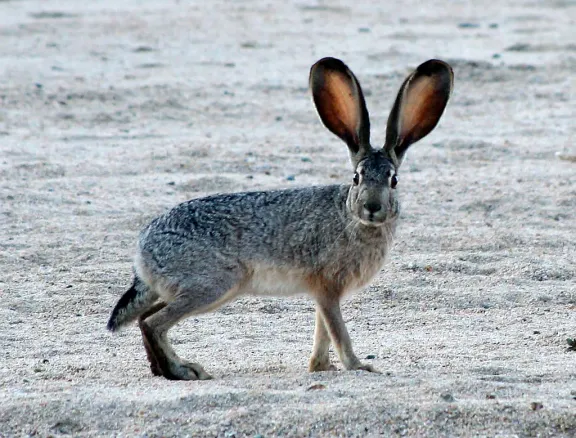
Black-tailed jackrabbit
Lepus californicus
Same genus (Lepus)
Small game
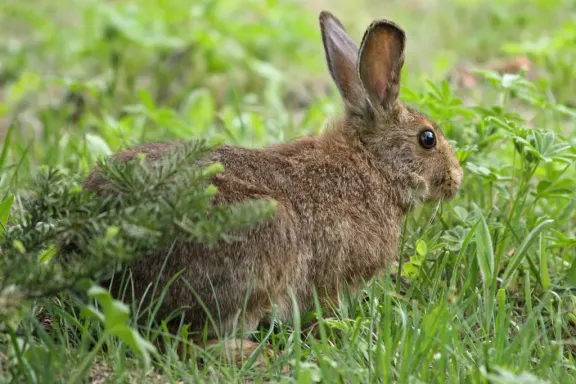
Snowshoe hare
Lepus americanus
Same genus (Lepus)
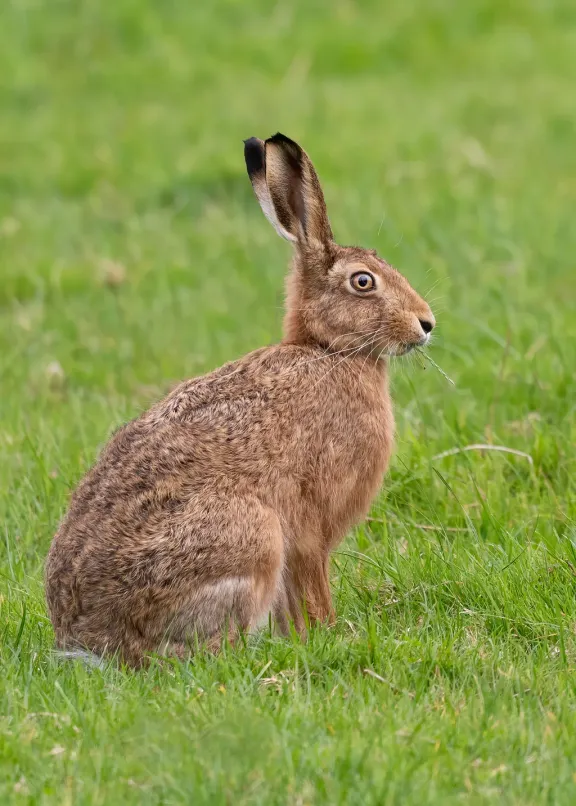
Small game
European hare
Lepus europaeus
Same genus (Lepus)
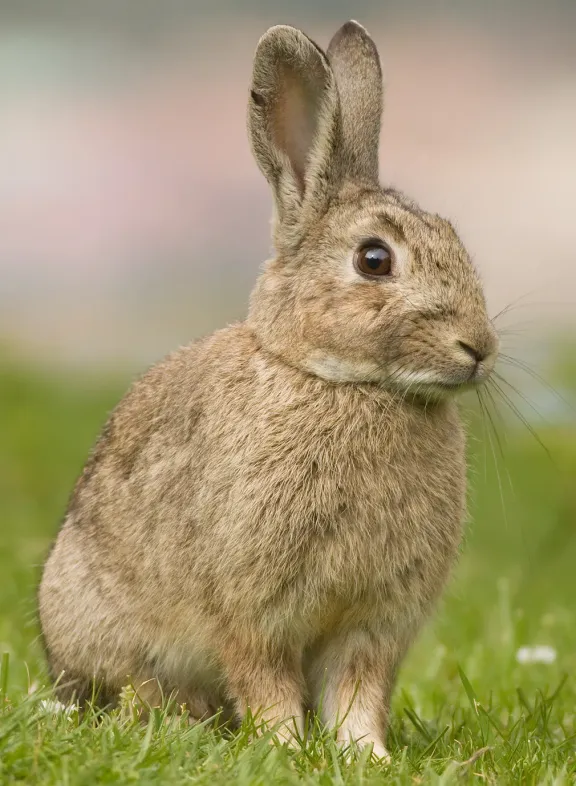
Small game
European rabbit
Oryctolagus cuniculus
Same family (Leporidae)
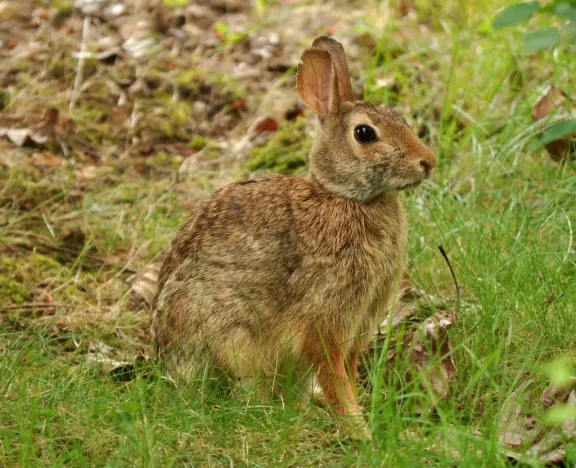
Small game
Eastern cottontail
Sylvilagus floridanus
Same family (Leporidae)