Small game
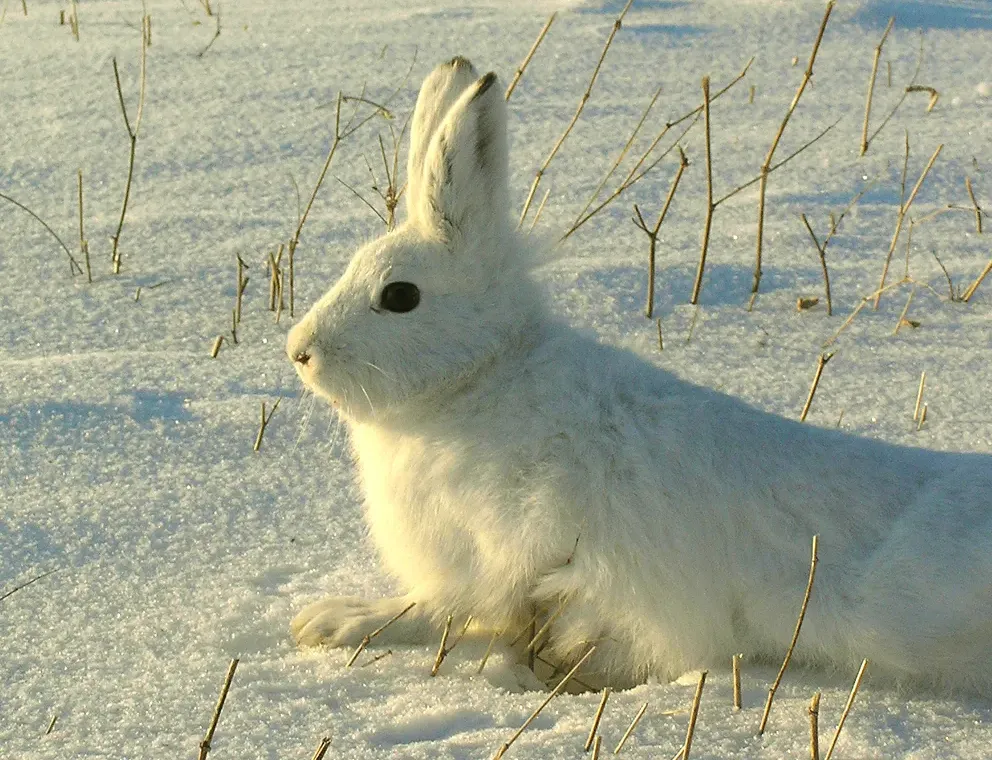
Mountain hare
Lepus timidus
- Group
- Small game
- Size class
- Small (under 10 kg)
- Family
- Leporidae
Range
- Europe
- Asia
- Arctic
Habitat
- Boreal forest
- Tundra
Range
Countries it is found in
26 countries
- Åland Islands
- Austria
- Belarus
- China
- Estonia
- Faroe Islands
- Finland
- France
- Germany
- Ireland
- Isle of Man
- Italy
- Japan
- Kazakhstan
- Latvia
- Liechtenstein
- Lithuania
- Mongolia
- Norway
- Poland
- Russia
- Slovenia
- Sweden
- Switzerland
Range from:ASM Mammal Diversity Database, GBIF occurrence records — read 2026-08-05
Chapter 01
Overview
The mountain hare (Lepus timidus) — also blue hare, tundra hare, variable hare, white hare, snow hare, alpine hare or Irish hare — is largely adapted to polar and mountainous country across the Palearctic. It runs from Fennoscandia to eastern Siberia, with isolated populations in the Alps, Scotland, the Baltics, north-eastern Poland, the Kuril Islands, Sakhalin and Hokkaidō. It has been introduced to Shetland, Orkney, the Isle of Man, the Peak District and the Faroes; an introduction to Svalbard failed and died out. In Ireland the Irish hare (L. t. hibernicus) lives on lowland pasture, coastal grassland and salt marsh rather than in the mountains at all. In the Alps it occupies 700 to 3,800 m depending on region and season.
Chapter 02
Identification
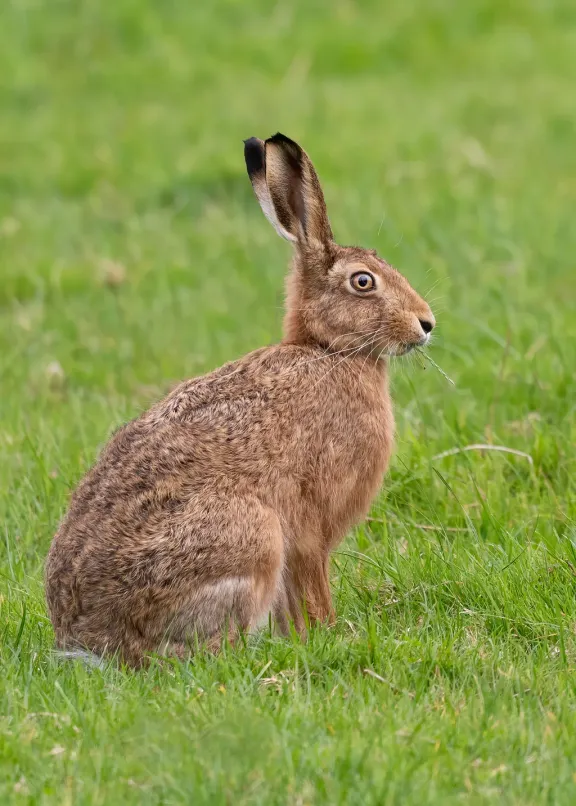
A large hare, though slightly smaller than the European hare: 45–65 cm long with a 4–8 cm tail and a mass of 2–5.3 kg, females slightly heavier than males. They can live up to twelve years. The field mark is the tail. In summer every population is some shade of brown; in preparation for winter most moult into a white or largely white pelage. But the tail stays completely white all year round, which is what separates it from the European hare, whose tail has a black upper side. The Irish subspecies is smaller and stays brown year-round, and may show a golden variation.
Chapter 03
Behaviour
Diet varies sharply by region and appears to follow the habitat the population lives in. In northern Scandinavia, where snow can cover the ground for months, hares feed on twigs and bark. Where snowfall is rare, as in Ireland, grass forms the bulk of it. Given the choice, mountain hares in Scotland and Ireland seem to prefer grazing. For a population on coastal grassland in Ireland, grasses made up over 90 per cent of the diet — a higher proportion than in the European rabbits sharing the same ground. Regionally, the mountain hare is the golden eagle's favourite prey.
Field data
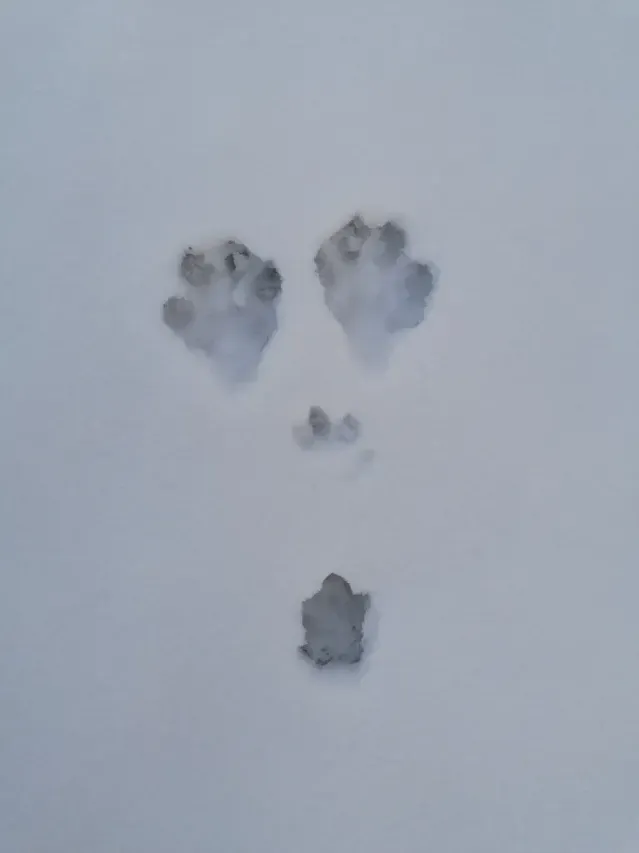
Tracks
A photograph of real sign left by Mountain hare. Prints vary with gait, ground and how long they have been there — treat this as one example, not a template.
Track photo:Евгений МаринкинCC BY
On the table
Meat & cooking
Table grade 5 of 55/5
- Sold as meat in a legal market
- Has a named traditional dish
- Published way to handle and cook it
- Eaten in more than one country
- No known health advisory
Traditional preparations
- Harstek
- The Nordic roast hare — saddle and hind legs, often marinated and served with a cream sauce and lingonberries. Jugging — Wikipedia
- Hasenpfeffer
- The German marinated stew works on mountain hare as it does on brown hare, the meat soured in wine and vinegar before braising. Hasenpfeffer — Wikipedia
Sources
Sources: Mountain hare — Wikipedia — read 2026-08-05
Cross-reference
Related species
Its closest relatives in the compendium, nearest kinship first.
Small game
European hare
Lepus europaeus
Same genus (Lepus)
Small game
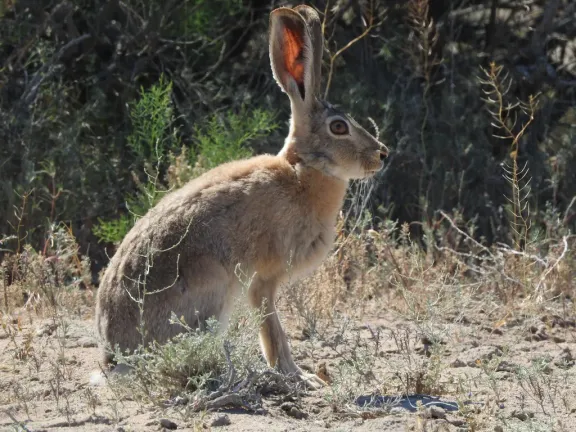
Tolai hare
Lepus tolai
Same genus (Lepus)
Small game
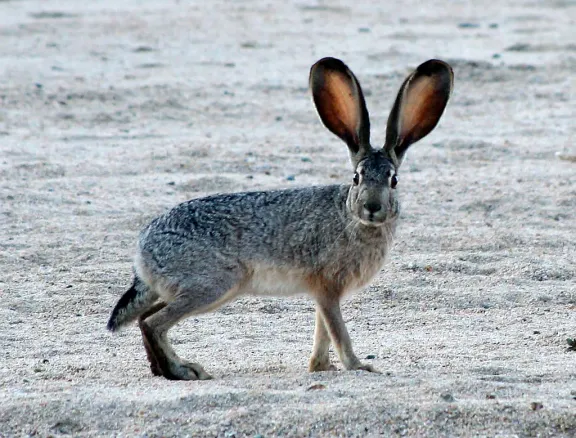
Black-tailed jackrabbit
Lepus californicus
Same genus (Lepus)
Small game
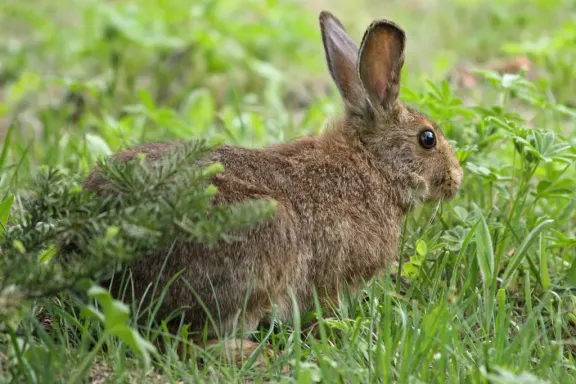
Snowshoe hare
Lepus americanus
Same genus (Lepus)
Small game
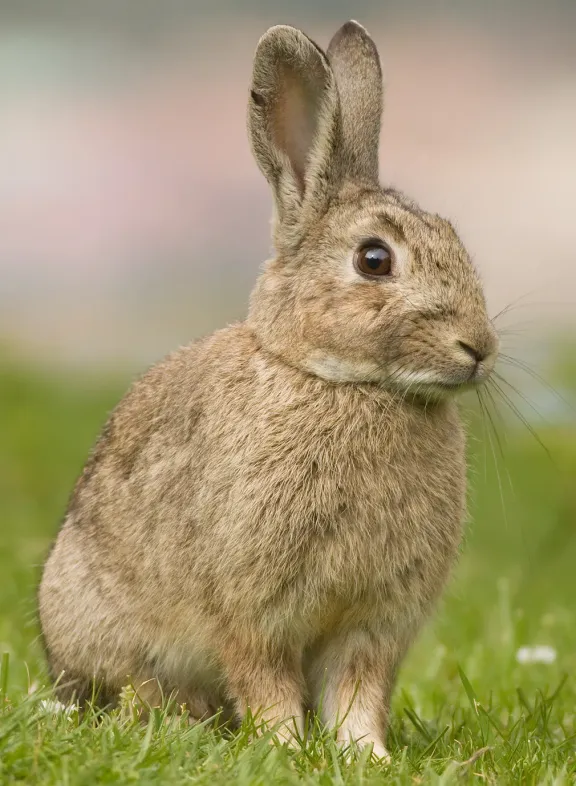
European rabbit
Oryctolagus cuniculus
Same family (Leporidae)
Small game
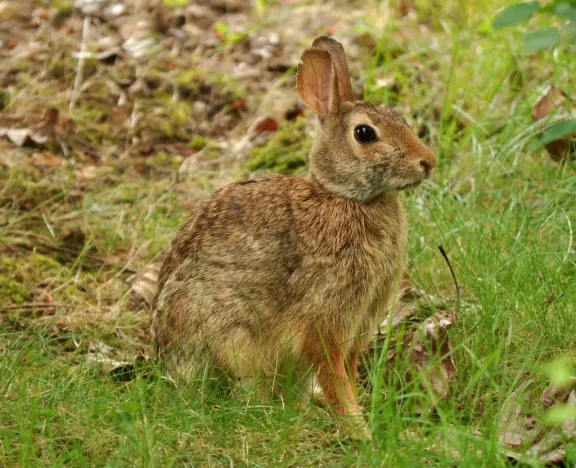
Eastern cottontail
Sylvilagus floridanus
Same family (Leporidae)