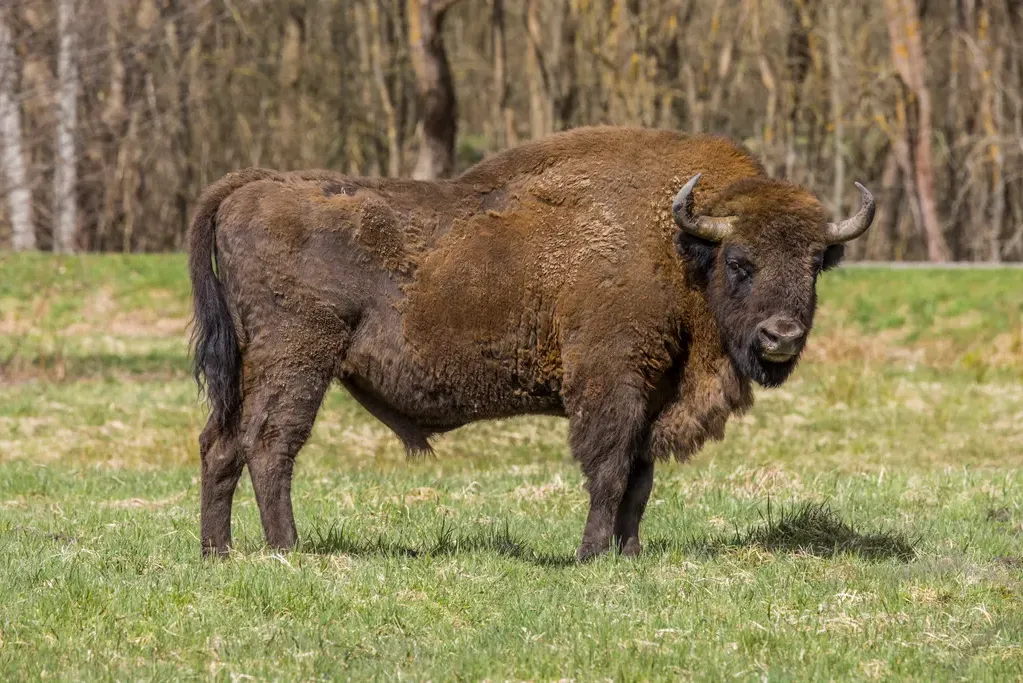
Big game
European bison
Bison bonasus
- Group
- Big game
- Size class
- Giant (300 kg+)
- Family
- Bovidae
Range
- Europe
Habitat
- Forest
Range
Countries it is found in
10 countries
- Belarus
- Bulgaria
- Germany
- Latvia
- Lithuania
- Poland
- Romania
- Russia
- Slovakia
- Ukraine
Range from:ASM Mammal Diversity Database — read 2026-08-05
Chapter 01
Overview
The European bison (Bison bonasus), or wisent, is one of the two living species of bison and the heaviest wild land animal in Europe. It disappeared from most of Europe and Asia during late antiquity and the Middle Ages, surviving into the 20th century only in northern-central Europe and the northern Caucasus, and was then hunted out of the wild altogether. Every bison alive today descends from twelve founders kept in captivity, and the modern herds are managed as two separate lines. Breeding and reintroduction since 1951 have brought it back to free-ranging herds in Poland, Lithuania, Belarus, Ukraine, Bulgaria, Romania, Russia, Slovakia, Latvia, Switzerland, Germany and the Western Caucasus, among others. The world population was around 7,500 in 2019, about half of it in Poland and Belarus, and the Białowieża Forest holds the largest free-living herd. The IUCN, which classed it as endangered in 1996, now lists it as near threatened. In Sweden it died out more than 8,000 years ago. Skansen took its first wisent in 1910 and played a large part in saving the species; today it is kept in parks such as Avesta visentpark and Eriksbergs Vilt- och Naturpark, and the European Bison Pedigree Book registered 123 animals in Sweden in 2017.
Chapter 02
Identification
Modern bulls are 2.8–3.3 m long, 1.8–2.1 m tall and 615–920 kg; cows are 2.4–2.9 m long, 1.69–1.97 m tall and 424–633 kg. In the free-ranging Białowieża population adult bulls average 634 kg and cows 424 kg, and calves are born at 15–35 kg. Both sexes carry horns. Against the American bison it is on average lighter yet slightly taller at the shoulder, with shorter hair on the neck, head and forequarters but a longer tail and longer horns. An anxious bison gives a growl-like sound, which bulls also make during the rut.
Chapter 03
Behaviour
A herd animal living in mixed groups — cows, calves, young of two to three and young bulls — of eight to 13 on average, and in small bull groups of about two. The herds are not family units; they meet, merge and split again after exchanging animals. Cows lead and decide where the group grazes, while the oldest bulls hang around the edges and step in when danger appears or during the rut. Bison do not defend territory, and herd ranges overlap widely around meadows and water. It feeds mainly on grasses, sedges and herbs and also browses shoots, twigs, bark and leaves; an adult bull can eat 32 kg a day in summer. It must drink daily and in winter breaks ice with its hooves. The rut runs from August to October, older bulls keeping those of four to six from mating; after about 264 days the cow bears a single calf. In the wild it lives 18–24 years.
Chapter 04
Hunting
People have hunted the wisent for hide, meat and drinking horns since antiquity, and hunting finished it. In the Białowieża Forest Polish-Lithuanian rulers protected it — Sigismund II Augustus made poaching a bison there punishable by death in the mid-16th century — but during the First World War German troops killed 600 for sport, meat, hides and horns. The last wild bison in Poland was shot in 1921 and the last in the world was killed by poachers in the western Caucasus in 1927, leaving 48 in zoos. Free-ranging bison still meet the rifle when they stray. In September 2017 a bull that swam the Oder from Poland, the first wild bison seen in Germany for more than 250 years, was shot by hunters on the authorities' order.
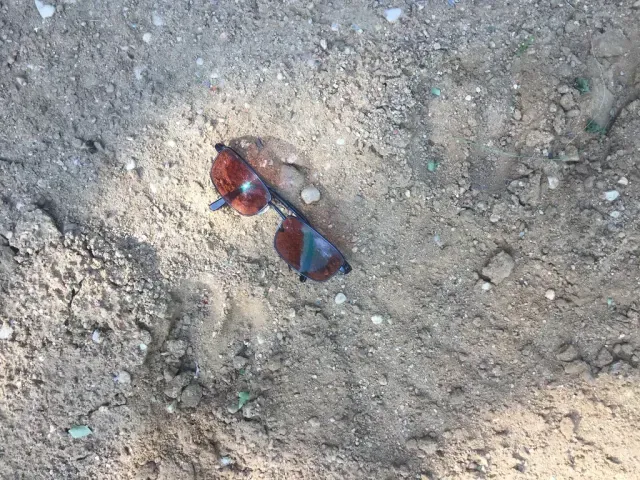
Field data
Tracks
A photograph of real sign left by European bison. Prints vary with gait, ground and how long they have been there — treat this as one example, not a template.
Track photo:Andre HosperCC BY
Sources
Sources: European bison — Wikipedia, Visent — Wikipedia (sv) — read 2026-10-29
Cross-reference
Related species
Its closest relatives in the compendium, nearest kinship first.
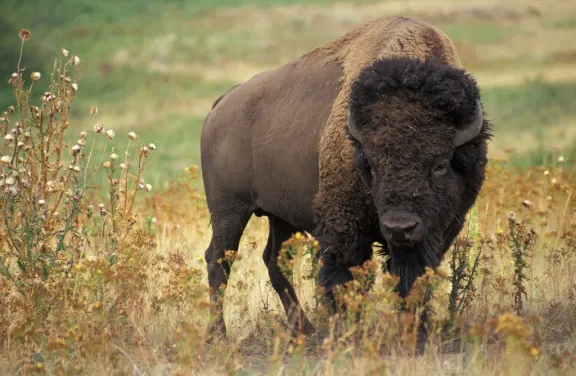
Big game
American bison
Bison bison
Same genus (Bison)
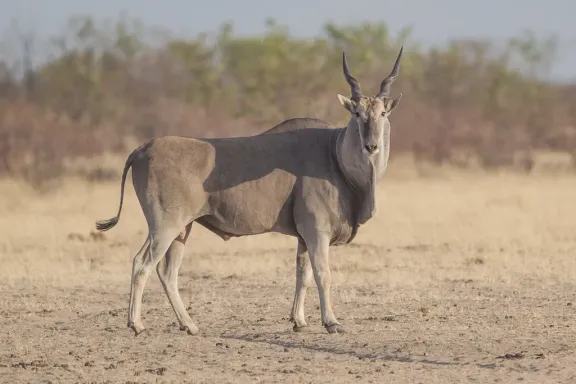
Big game
Common eland
Taurotragus oryx
Same subfamily (Bovinae)
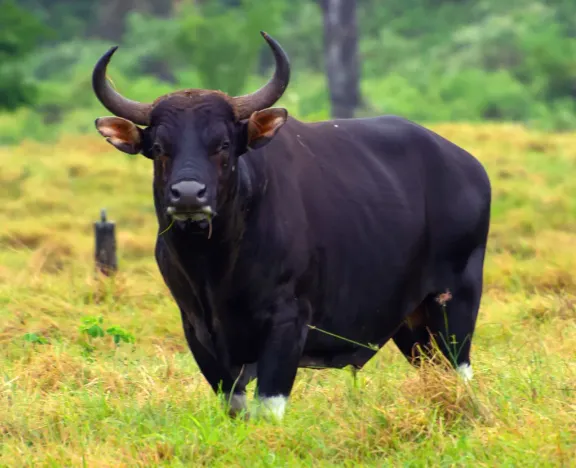
Big game
Banteng
Bos javanicus
Same subfamily (Bovinae)
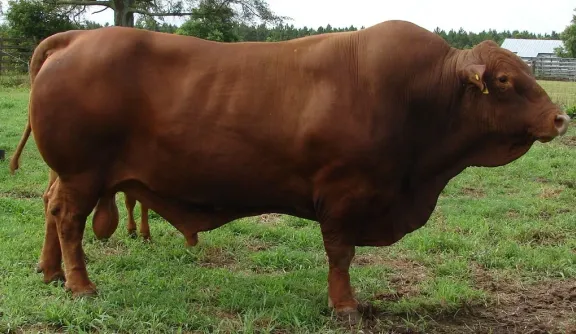
Big game
Feral cattle (scrub bull)
Bos taurus
Same subfamily (Bovinae)
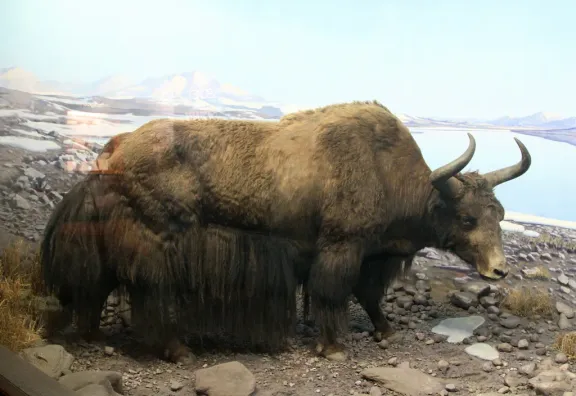
Big game
Wild yak
Bos mutus
Same subfamily (Bovinae)
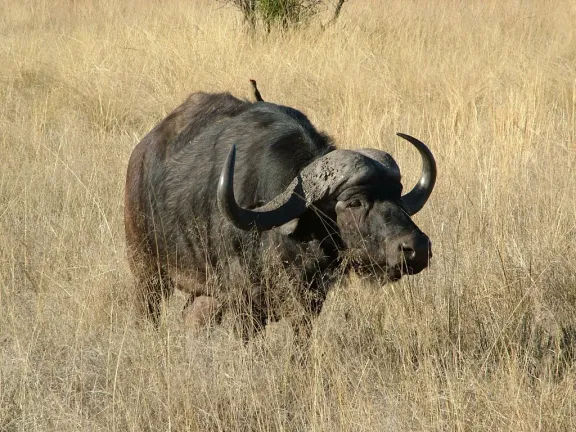
Big game
Cape buffalo
Syncerus caffer
Same subfamily (Bovinae)