Small game
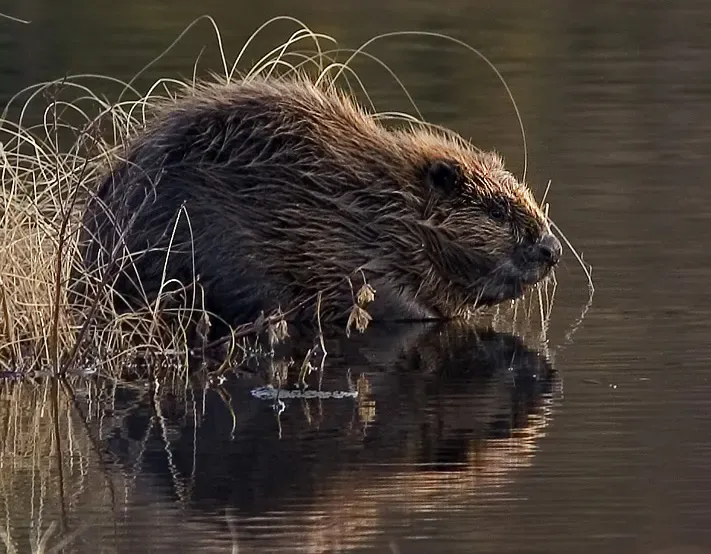
European beaver
Castor fiber
- Group
- Small game
- Size class
- Medium (10–70 kg)
- Family
- Castoridae
Range
- Europe
- Asia
Habitat
- Wetland
Range
Countries it is found in
35 countries
- Austria
- Belarus
- Belgium
- Bosnia & Herzegovina
- Bulgaria
- China
- Croatia
- Czechia
- Denmark
- Estonia
- Finland
- France
- Germany
- Hungary
- Italy
- Kazakhstan
- Latvia
- Liechtenstein
- Lithuania
- Luxembourg
- Mongolia
- Montenegro
- Netherlands
- Norway
Range from:ASM Mammal Diversity Database, GBIF occurrence records — read 2026-08-05
Chapter 01
Overview
The Eurasian beaver (Castor fiber) is a beaver widespread across Eurasia, with a rapidly increasing population of at least 1.5 million as of 2020 — a recovery from as near extinction as a large mammal gets. It was hunted for both its fur and its castoreum, a scent-gland secretion believed to have medicinal properties, and by the early 20th century only about 1,200 animals survived in eight relict populations from France to Mongolia. Conservation began in 1923 in the Soviet Union with the Voronezh Nature Reserve; between 1934 and 1977 roughly 3,000 beavers from Voronezh were reintroduced into 52 regions from Poland to Mongolia. It now lives from western, southern, central and eastern Europe through Scandinavia and Russia to China and Mongolia, with about half the world population in Russia, and the IUCN lists it as least concern. Part of why it recovered at all is that beavers hold enough genetic diversity to come back from as few as three individuals, and are monogamous animals that select mates genetically different from themselves.
Chapter 02
Identification
One of the largest living rodents and the largest native to Eurasia: 80–100 cm head-to-body with a 25–50 cm tail, weighing 11–30 kg. By known average weights it appears to be the world's second heaviest rodent after the capybara, and it is slightly larger and heavier than the North American beaver. One exceptional specimen weighed 31.7 kg. Fur colour varies by region rather than by age or sex — light chestnut-rust dominates in Belarus, blackish brown in the Sozh river basin of Russia, and both brown and blackish-brown in the Voronezh reserve.
Chapter 03
Behaviour
The beaver is a keystone species: it does not merely live in a landscape, it makes one. By damming it creates wetland that houses water vole, otter and water shrew; by coppicing waterside trees and shrubs it drives their regrowth into dense cover for birds and other animals. The dams trap sediment, improve water quality, recharge groundwater and increase cover and forage for trout and salmon. Even bat abundance and diversity rise, apparently because the gaps opened in the forest make it easier for them to navigate. Beavers have one litter a year. The female is in oestrus for only 12 to 24 hours, between late December and May but peaking in January. Unlike most rodents, pairs are monogamous and stay together across multiple breeding seasons. Gestation averages 107 days and litters average three kits, ranging from two to six. Most do not breed until three years old, though about 20 per cent of two-year-old females do. They are herbivores, eating water and riverbank plants — tubers, shoots, twigs, leaves, buds, the rootstocks of cattails and water lilies — and trees such as willow, aspen and birch, including softwood bark. Long appendices and the microorganisms in them let them digest bark cellulose. Daily intake is around 20 per cent of body weight.
Field data
Tracks
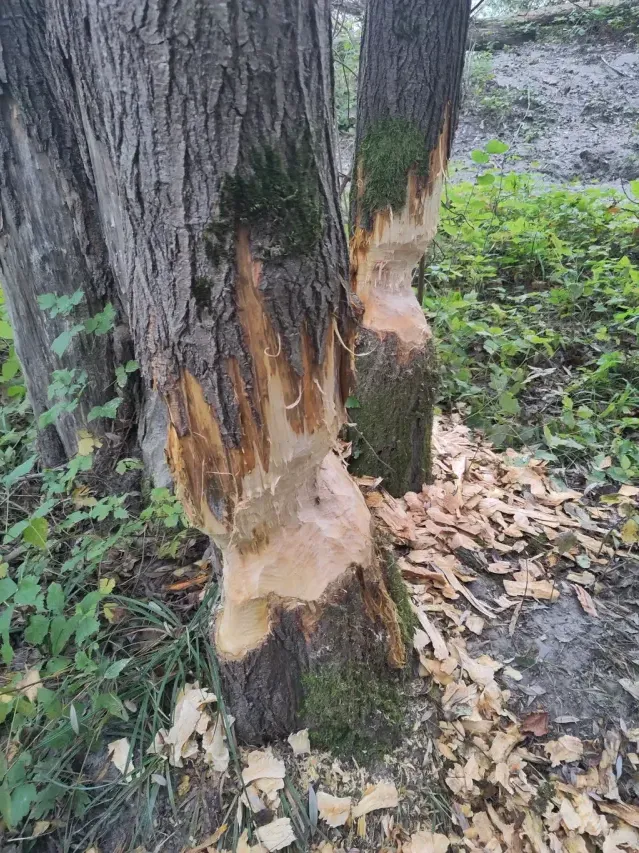
A photograph of real sign left by European beaver. Prints vary with gait, ground and how long they have been there — treat this as one example, not a template.
Track photo:Lucy Milan NeuhausCC BY
On the table
Meat & cooking
Table grade 3 of 53/5
- Sold as meat in a legal market
- Has a named traditional dish
- Published way to handle and cook it
- Eaten in more than one country
- No known health advisory
Traditional preparations
- Beaver tail
- The fatty tail is the traditionally prized part and was historically eaten in Catholic Europe during fasts, the animal having been classed with the fish. Beaver — Wikipedia
Sources
Sources: Eurasian beaver — Wikipedia — read 2026-08-05
Cross-reference
Related species
Its closest relatives in the compendium, nearest kinship first.
Small game
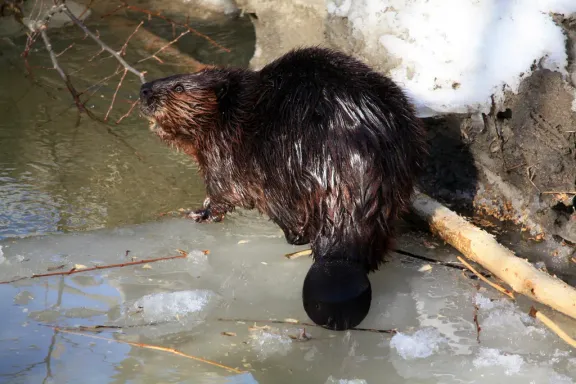
American beaver
Castor canadensis
Same genus (Castor)
Small game
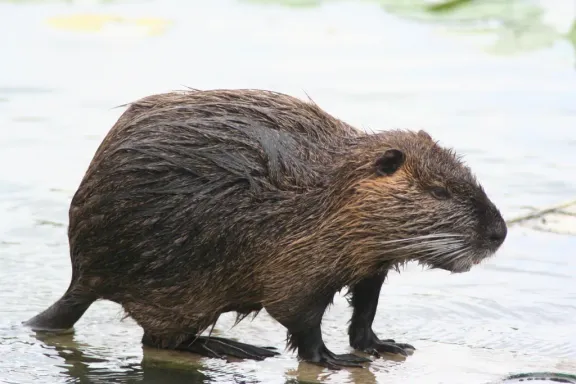
Nutria (coypu)
Myocastor coypus
Same order (Rodentia)
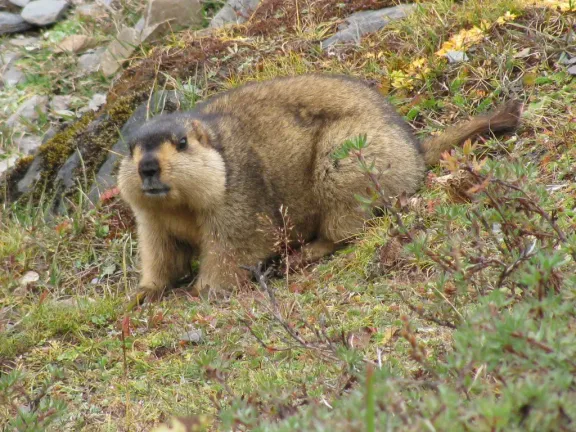
Small game
Himalayan marmot
Marmota himalayana
Same order (Rodentia)
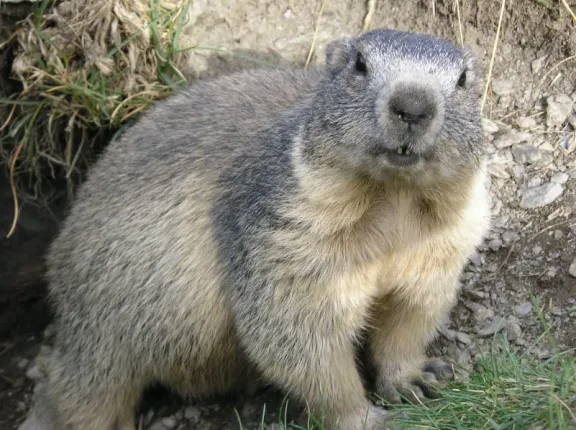
Small game
Alpine marmot
Marmota marmota
Same order (Rodentia)
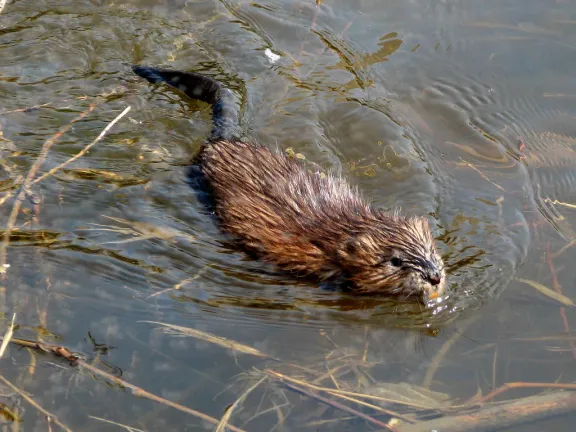
Small game
Muskrat
Ondatra zibethicus
Same order (Rodentia)
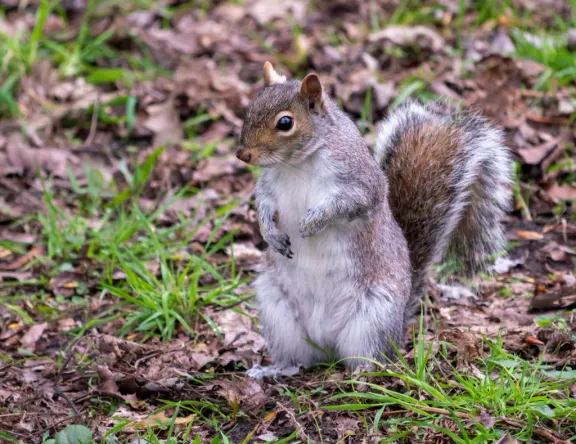
Small game
Eastern gray squirrel
Sciurus carolinensis
Same order (Rodentia)