Predators & furbearers
European badger
Meles meles
- Group
- Predators & furbearers
- Size class
- Medium (10–70 kg)
- Family
- Mustelidae
Range
- Europe
- Asia
Habitat
- Forest
- Farmland
Range
Countries it is found in
43 countries
- Albania
- Austria
- Belarus
- Belgium
- Bosnia & Herzegovina
- Bulgaria
- Croatia
- Czechia
- Denmark
- Estonia
- Finland
- France
- Germany
- Greece
- Hungary
- Ireland
- Israel
- Italy
- Japan
- Kosovo
- Latvia
- Liechtenstein
- Lithuania
- Luxembourg
Range from:ASM Mammal Diversity Database, GBIF occurrence records — read 2026-08-05
Chapter 01
Overview
The European badger (Meles meles) is a mustelid native to Europe, West Asia and parts of Central Asia, listed as least concern on the IUCN Red List thanks to a wide range and a large, stable population thought to be growing in some regions. In the UK it is the only badger, and simply 'the badger'. It is native across almost the whole continent, from Portugal and Ireland to Russia and Finland. The boundary with the Asian badger is the Volga, the European species holding the western bank. In central Europe badgers have become more abundant in recent decades as rabies has receded, and numbers have risen in western Europe including Great Britain — though in areas of intensive agriculture it has declined through habitat loss, and in some places it is hunted as a pest.
Chapter 02
Identification
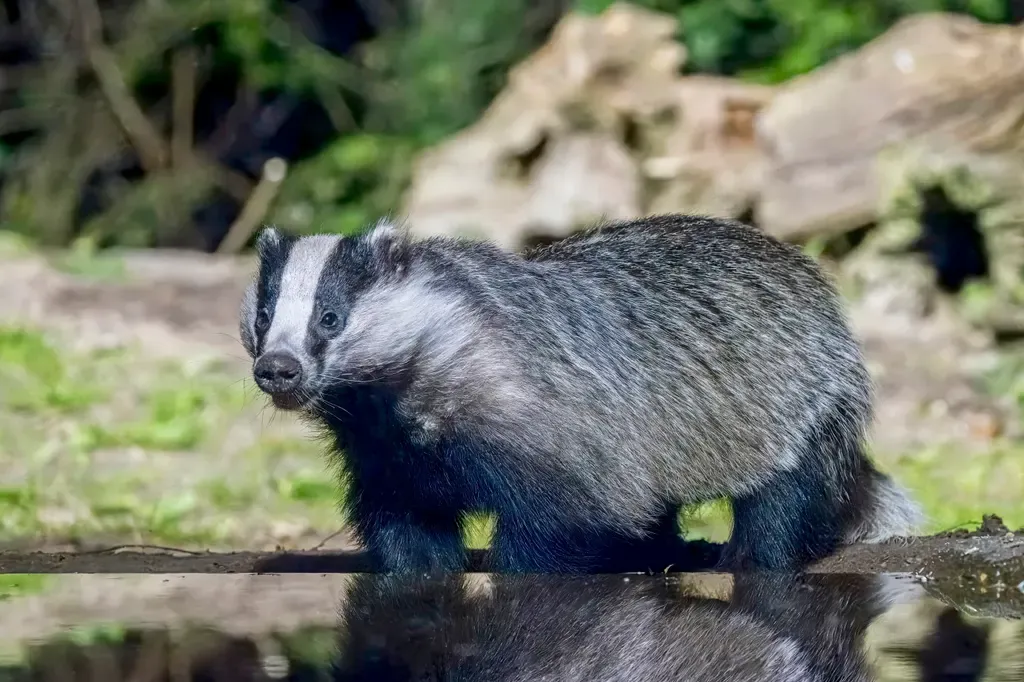
A powerfully built animal with a small head, thick short neck, stocky wedge-shaped body and short tail. The feet are plantigrade or semi-digitigrade and short, five toes on each, with bare lower surfaces. The limbs are short and massive. The claws are the diagnostic detail: strong, elongated and blunt-ended for digging, not retractable, and the hind claws wear down with age — an old badger may have them almost completely worn away. The snout is muscular and flexible for digging and probing, the eyes small, the ears short and tipped with white, with whiskers on the snout and above the eyes. Boars typically have broader heads, thicker necks and narrower tails than sows. Weight swings with the season, from 7–13 kg in spring to 15–17 kg in autumn before the winter sleep.
Chapter 03
Behaviour
The European badger is the most sociable of all the badgers, forming groups of six adults on average, with recorded groups of up to 23. Group size seems to relate to habitat. Territories can be as small as 30 ha under optimal conditions and as large as 150 ha on marginal ground, and are readable on the ground by their communal latrines and well-worn paths. Territorial aggression is mainly a male business, with large powerful boars asserting dominance over smaller males and sometimes intruding into neighbouring territories during the early-spring mating peak. Oestrus lasts four to six days and can occur at any time of year, peaking in spring. Boars are usually fertile from January to May, with spermatogenesis declining in summer; sows usually begin ovulating in their second year. Matings peak February to May. Badgers are among the least carnivorous of the Carnivora — highly adaptable, opportunistic omnivores. Earthworms are the single most important food, followed by large insects, carrion, cereals, fruit and small mammals including rabbits, mice, rats, voles, shrews, moles and hedgehogs. They will destroy wasp nests and eat the occupants, combs and envelope, their thick skin and pelt protecting them from the stings.
Chapter 04
Hunting
European badgers are of little significance to the hunting economy, though they are hunted locally. The recorded methods are jaw traps, ambushing at the sett with guns, smoking them out of their burrows, and using specially bred dogs such as fox terriers and dachshunds to dig them out. They are notoriously durable animals. The thick, loose skin is covered in long protective hair, and the heavily ossified skull lets them shrug off most blunt trauma and shotgun pellets.
Field data
Tracks
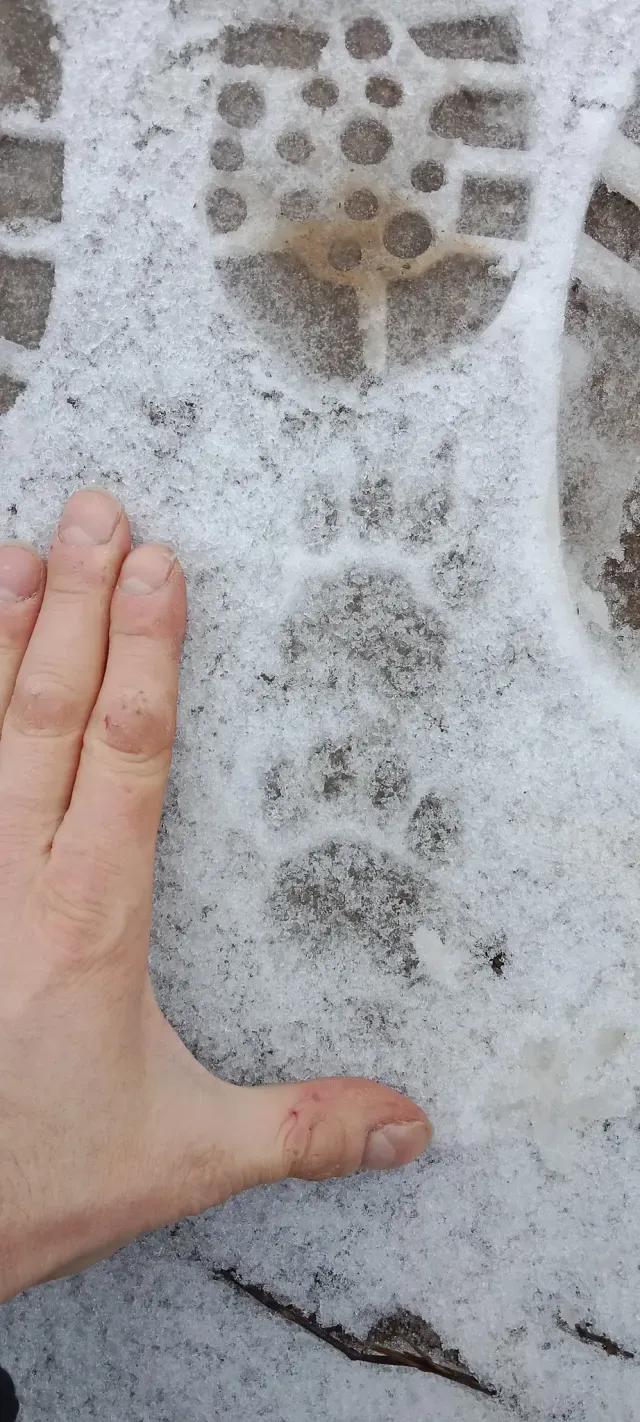
A photograph of real sign left by European badger. Prints vary with gait, ground and how long they have been there — treat this as one example, not a template.
Track photo:Oleksii VasyliukCC BY
Sources
Sources: European badger — Wikipedia — read 2026-08-05
Cross-reference
Related species
Its closest relatives in the compendium, nearest kinship first.
Predators & furbearers
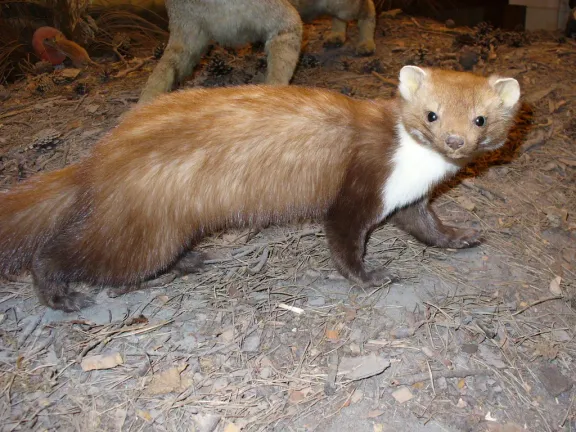
Stone marten
Martes foina
Same family (Mustelidae)
Predators & furbearers
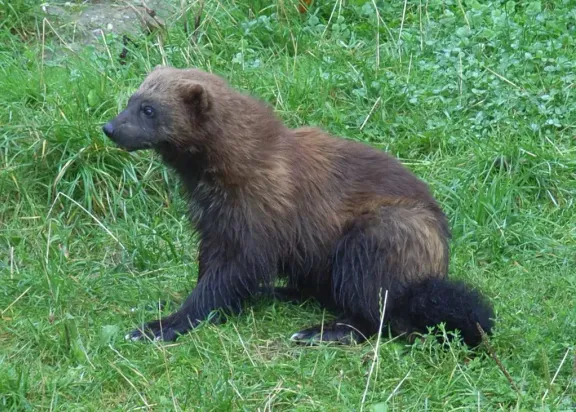
Wolverine
Gulo gulo
Same family (Mustelidae)

Predators & furbearers
European pine marten
Martes martes
Same family (Mustelidae)
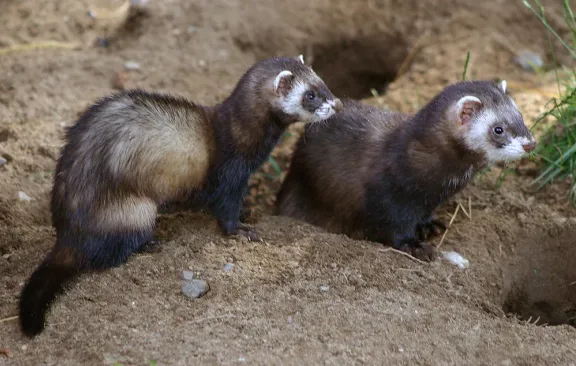
Predators & furbearers
European polecat
Mustela putorius
Same family (Mustelidae)
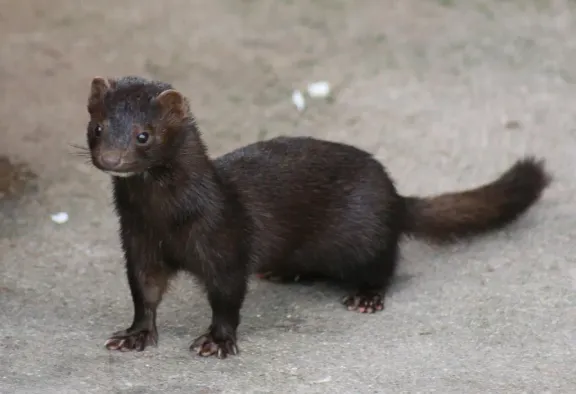
Predators & furbearers
American mink
Neogale vison
Same family (Mustelidae)
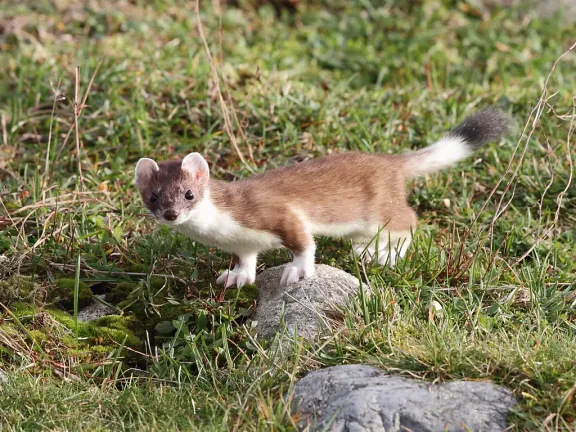
Predators & furbearers
Stoat
Mustela erminea
Same family (Mustelidae)