Predators & furbearers
Stoat
Mustela erminea
- Group
- Predators & furbearers
- Size class
- Small (under 10 kg)
- Family
- Mustelidae
Range
- Europe
- North America
- Arctic
Habitat
- Farmland
- Tundra
Range
Countries it is found in
47 countries
- Afghanistan
- Austria
- Belarus
- Belgium
- Bosnia & Herzegovina
- Canada
- Croatia
- Czechia
- Denmark
- Estonia
- Finland
- France
- Georgia
- Germany
- Hungary
- India
- Ireland
- Isle of Man
- Italy
- Japan
- Kazakhstan
- Kyrgyzstan
- Latvia
- Liechtenstein
Range from:ASM Mammal Diversity Database, GBIF occurrence records — read 2026-08-05
Chapter 01
Overview
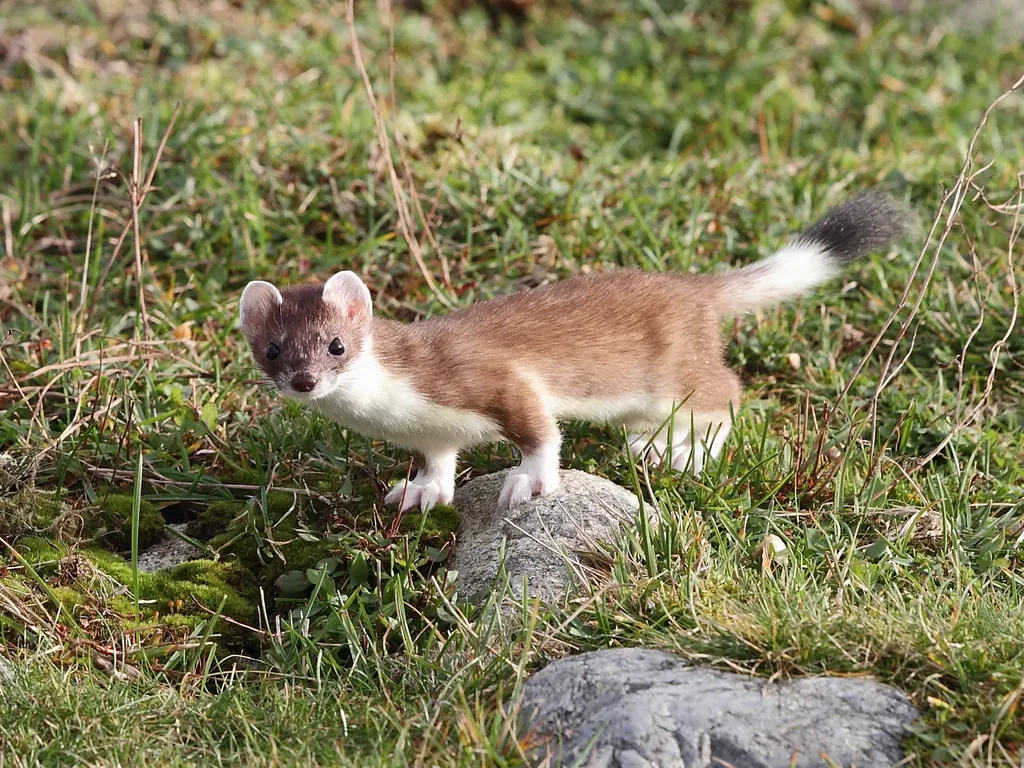
The stoat (Mustela erminea), also the Eurasian ermine, is a mustelid native to Eurasia and the northern parts of North America. Its wide circumpolar distribution puts it at least concern on the IUCN Red List. The name ermine is used especially of the pure white winter coat, and of the fur: it was used by Catholic monarchs in the 15th century, sometimes as the mozzetta cape, and has long been used on the ceremonial robes of members of the House of Lords. Formerly treated as a single very widely distributed species, M. erminea was split in a 2021 study into three: M. erminea proper in Eurasia and Alaska, M. richardsonii across most of North America, and M. haidarum on several islands off the Pacific Northwest coast. In Europe it is found as far south as 41°N in Portugal and on most islands except Iceland, Svalbard, the Mediterranean islands and some small North Atlantic islands. Its vertical range runs from sea level to 3,000 m.
Chapter 02
Behaviour
Mating occurs in the northern hemisphere between April and July. In spring the male's testes enlarge, accompanied by rising plasma testosterone; spermatogenesis takes place in December, and males are fertile from May to August, after which the testes regress. The female is usually in heat only briefly, triggered by changes in day length, and copulation can last as long as an hour. Stoats are not monogamous, and litters are often of mixed paternity. They undergo embryonic diapause — the embryo does not implant in the uterus immediately, which is what stretches the interval between mating and birth. Mouse-like rodents predominate in the diet, but the stoat regularly takes larger rodents and lagomorphs, including individuals far larger than itself. In Russia its prey includes water voles, common hamsters and pikas, which it overpowers in their burrows. Small birds, fish and shrews are of secondary importance, and amphibians, lizards and insects rarer still. It also takes lemmings. In Great Britain rabbits are an important food source.
Field data
Tracks
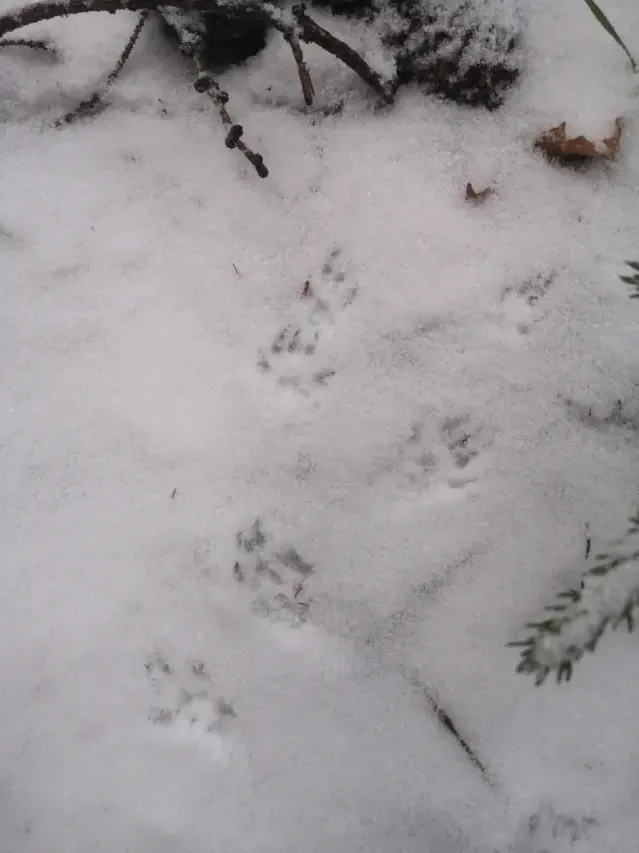
A photograph of real sign left by Stoat. Prints vary with gait, ground and how long they have been there — treat this as one example, not a template.
Track photo:no rights reservedCC0
Sources
Sources: Stoat — Wikipedia — read 2026-08-05
Cross-reference
Related species
Its closest relatives in the compendium, nearest kinship first.
Predators & furbearers
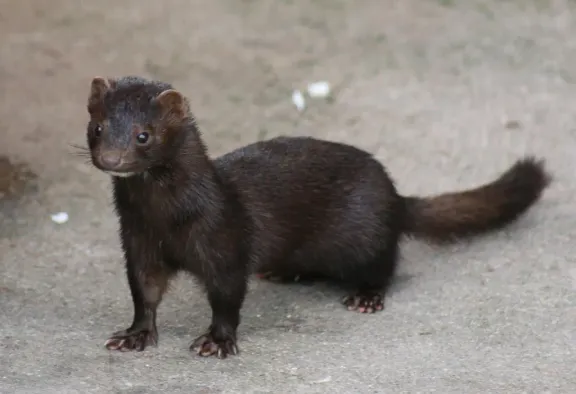
American mink
Neogale vison
Same genus (Mustela)
Predators & furbearers
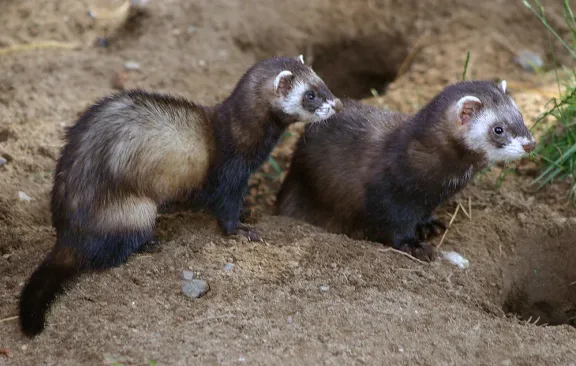
European polecat
Mustela putorius
Same genus (Mustela)
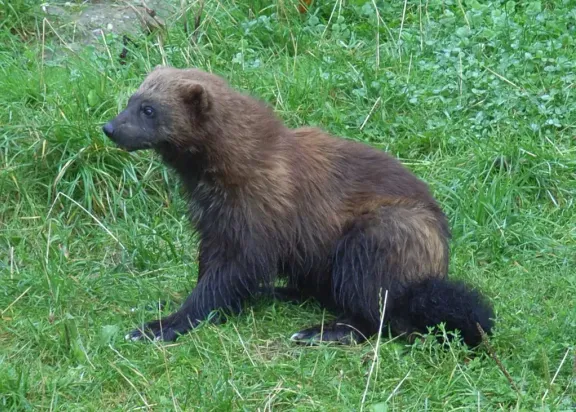
Predators & furbearers
Wolverine
Gulo gulo
Same family (Mustelidae)
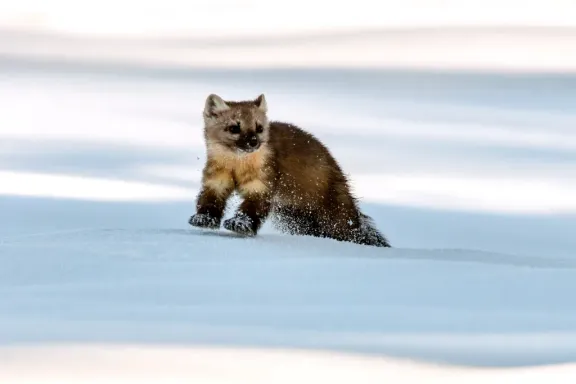
Predators & furbearers
American marten
Martes americana
Same family (Mustelidae)
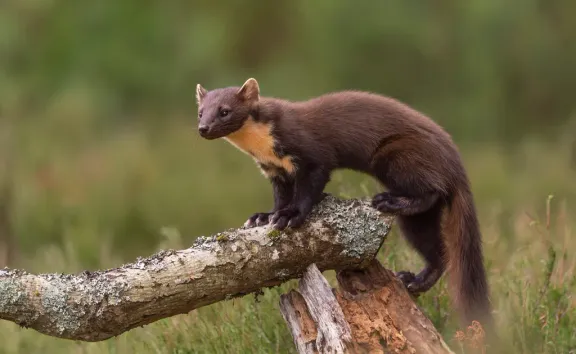
Predators & furbearers
European pine marten
Martes martes
Same family (Mustelidae)
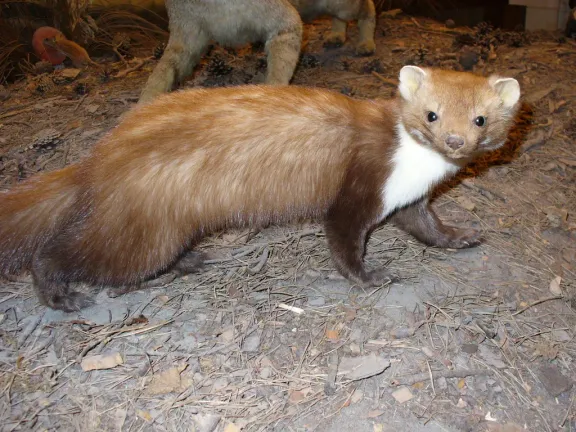
Predators & furbearers
Stone marten
Martes foina
Same family (Mustelidae)