Predators & furbearers
Eurasian lynx
Lynx lynx
- Group
- Predators & furbearers
- Size class
- Medium (10–70 kg)
- Family
- Felidae
Range
- Europe
- Asia
Habitat
- Boreal forest
- Forest
Range
Countries it is found in
41 countries
- Afghanistan
- Armenia
- Austria
- Azerbaijan
- Belarus
- Bosnia & Herzegovina
- Bulgaria
- China
- Croatia
- Czechia
- Estonia
- Finland
- France
- Georgia
- Germany
- Hungary
- India
- Iran
- Iraq
- Kazakhstan
- Kyrgyzstan
- Latvia
- Liechtenstein
- Lithuania
Range from:ASM Mammal Diversity Database, GBIF occurrence records — read 2026-08-05
Chapter 01
Overview
The Eurasian lynx (Lynx lynx) is one of four lynx species, widely distributed from northern, central and eastern Europe through Central Asia and Siberia to the Tibetan Plateau and the Himalayas. It lives in temperate and boreal forest up to 5,500 m. Despite that spread it is under pressure from habitat loss and fragmentation, poaching and the depletion of its prey. It wants rugged country with plenty of hiding places and stalking cover — rocky steppe, mixed forest-steppe, boreal and montane forest, depending on where you are. In the more mountainous parts of its range it drops to the lowlands in winter, following prey and avoiding deep snow: for all its adaptations it handles loose deep snow badly and cannot survive where depths exceed 100 cm. It tends to be scarcer where wolves are common, and wolves have been reported to attack and even eat lynx. The lynx is on CITES Appendix II and listed as protected under Appendix III of the Berne Convention. Hunting it is illegal in many range countries, the exceptions being Estonia, Latvia, Russia, Armenia and Iraq. Since 2005 the Norwegian government has set national population goals, with quotas decided by a committee drawn from the county assemblies.
Chapter 02
Identification
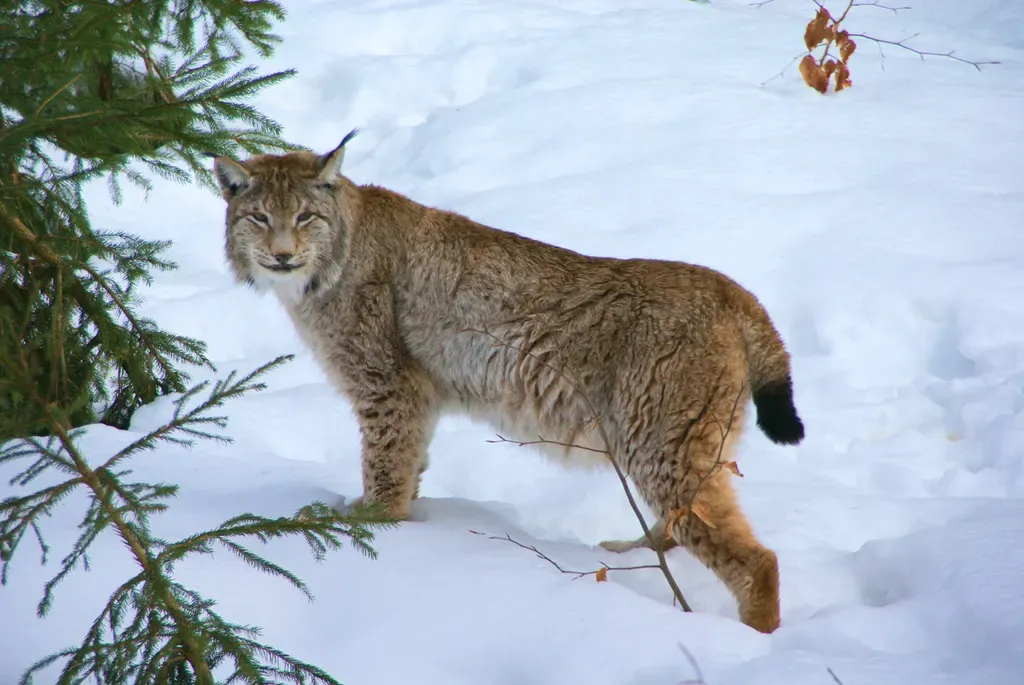
A relatively short reddish or brown coat marked with black spots, highly variable in number and pattern, whitish on the underparts, neck and chin. Animals at the southern end of the range are more brightly coloured and more heavily spotted. The winter coat is much thicker and runs from silver-grey to greyish brown, and some animals show dark brown stripes on forehead and back. The legs are powerful and relatively long, with large webbed and furred paws that work as snowshoes. The tail is short and bobbed with an all-black tip; the ears carry black tufts; the ruff is long and grey-and-white. It is the largest of the four lynx species — males 76–106 cm in body length, females 73–99 cm, standing 55–75 cm at the shoulder.
Chapter 03
Behaviour
Mainly nocturnal or crepuscular, though it will hunt by day when food is short, spending daylight asleep in dense thickets or other concealment. Adults live alone. A hunting range runs anywhere from 20 to 450 km² depending on prey, with males covering much larger areas than females, and female ranges tending to be exclusive rather than overlapping. A lynx may travel up to 20 km in a night, though half that is more typical, patrolling all parts of its range and scent-marking with faeces, urine and scrapes. It is an ambush predator that also stalks, sneaking in and jumping on prey using both sight and hearing, often climbing onto high rocks or fallen trees to scan. It is powerful enough to have killed adult deer of at least 150 kg. Recorded prey includes hares, rabbits, marmots, squirrels, dormice, muskrats, martens, grouse, red foxes, wild boar, chamois, young moose, roe deer, red deer and reindeer — it is the only lynx that preferentially takes ungulates. Mating runs January to April, the female usually in oestrus once for four to seven days, with a second oestrus common if the first litter is lost. Gestation is 67 to 74 days. Dens are built in secluded spots under overhanging branches or tree roots and lined with feathers, deer hair and dry grass. Kittens weigh 240 to 430 g at birth, open their eyes after ten to twelve days, take solid food at six to seven weeks and reach adult colouring at about eleven weeks.
Field data
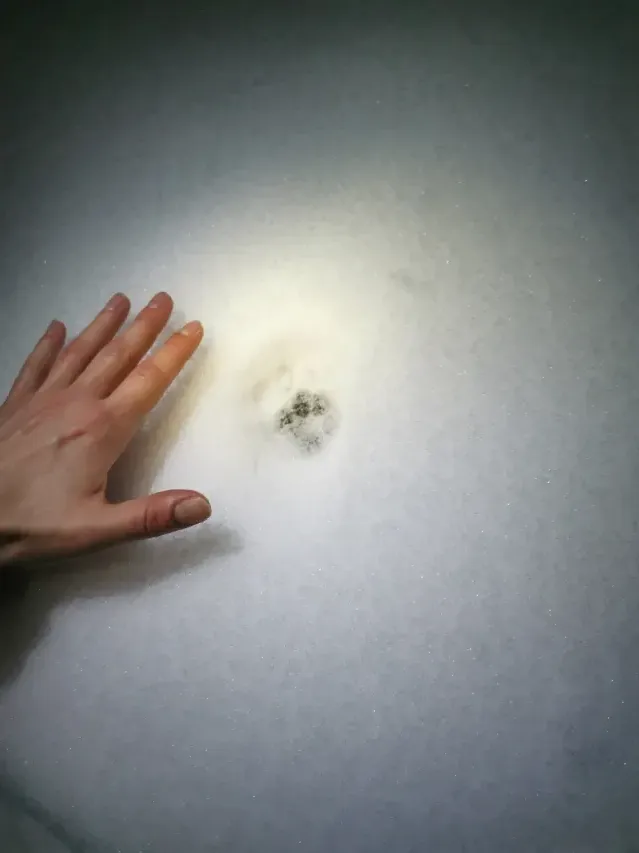
Tracks
A photograph of real sign left by Eurasian lynx. Prints vary with gait, ground and how long they have been there — treat this as one example, not a template.
Track photo:Bernadette KavanaughCC BY
On the table
Meat & cooking
Table grade 1 of 51/5
- Sold as meat in a legal market
- Has a named traditional dish
- Published way to handle and cook it
- Eaten in more than one country
- No known health advisory
Before you eat it: Livsmedelsverket names wolf, lynx, fox and wolverine — along with wild boar, bear and seal — as the Swedish wild animals most likely to carry trichinella. There is no established culinary use for this species in Sweden, and meat from any trichinella-carrying animal must be tested before it is eaten; the parasite dies at around 60–65 °C in an oven but needs over 70 °C on a grill, and some cold-tolerant strains survive freezing.
Sources
Sources: Eurasian lynx — Wikipedia, Livsmedelsverket: Trikiner — read 2026-08-05
Cross-reference
Related species
Its closest relatives in the compendium, nearest kinship first.
Predators & furbearers
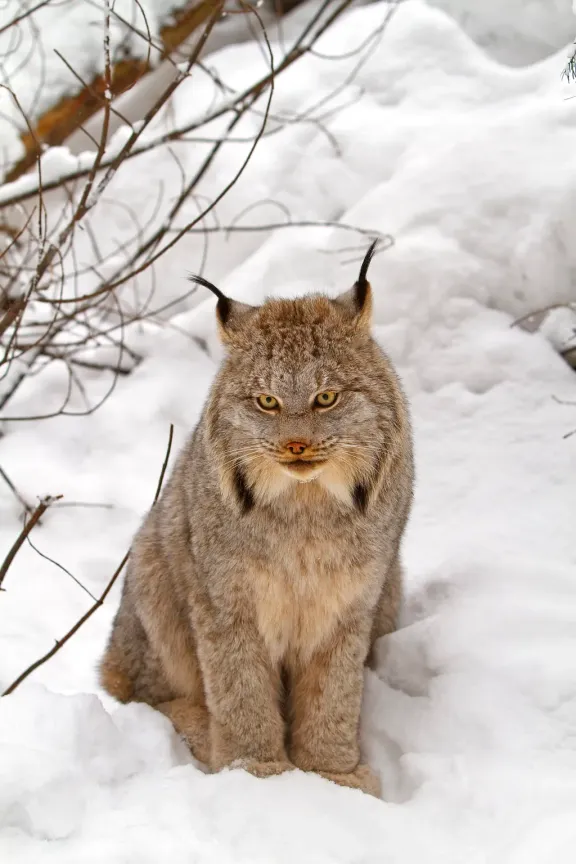
Canada lynx
Lynx canadensis
Same genus (Lynx)
Predators & furbearers
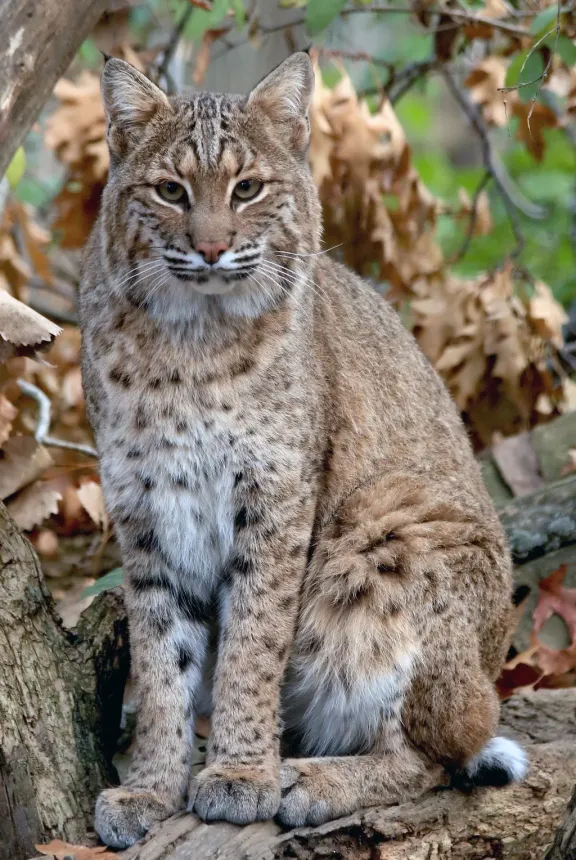
Bobcat
Lynx rufus
Same genus (Lynx)
Predators & furbearers
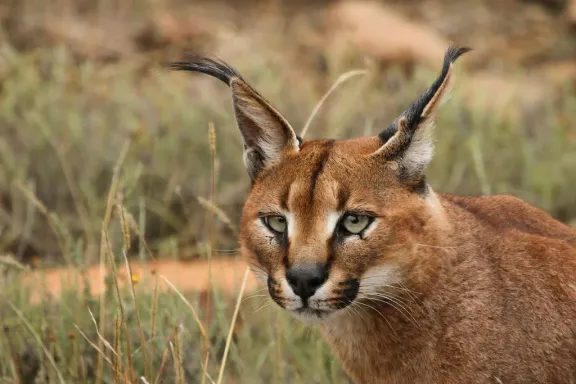
Caracal
Caracal caracal
Same subfamily (Felinae)
Predators & furbearers
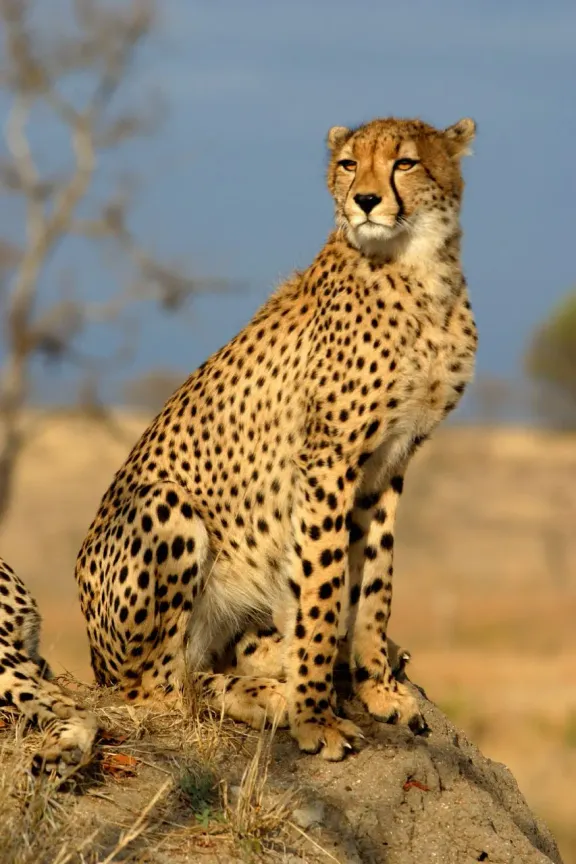
Cheetah
Acinonyx jubatus
Same subfamily (Felinae)
Predators & furbearers
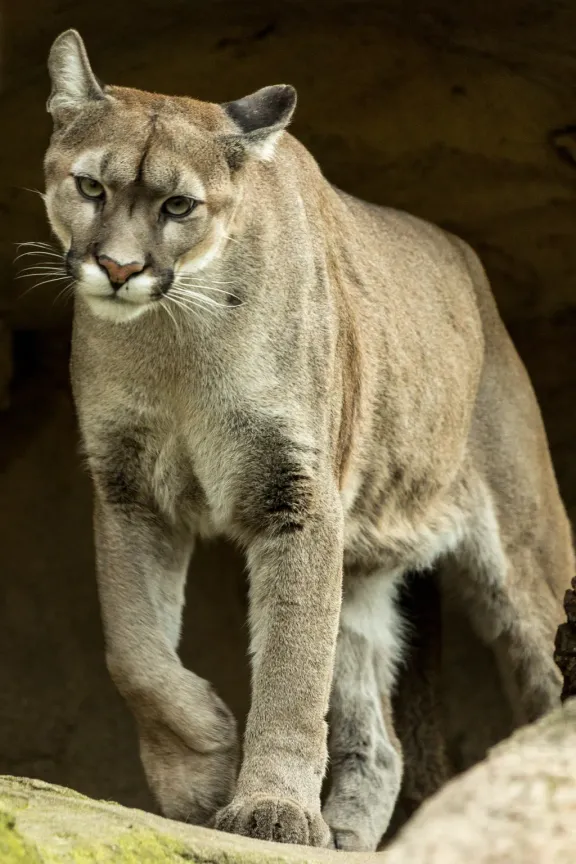
Cougar
Puma concolor
Same subfamily (Felinae)
Predators & furbearers
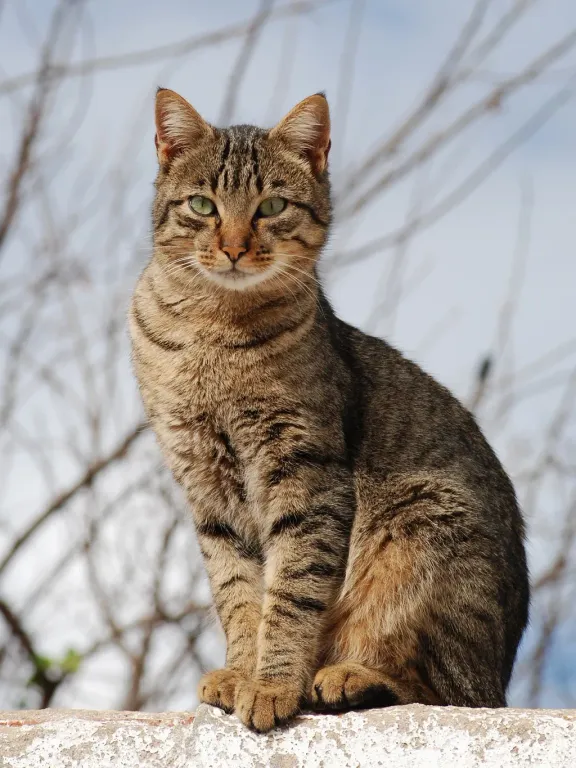
Feral cat
Felis catus
Same subfamily (Felinae)