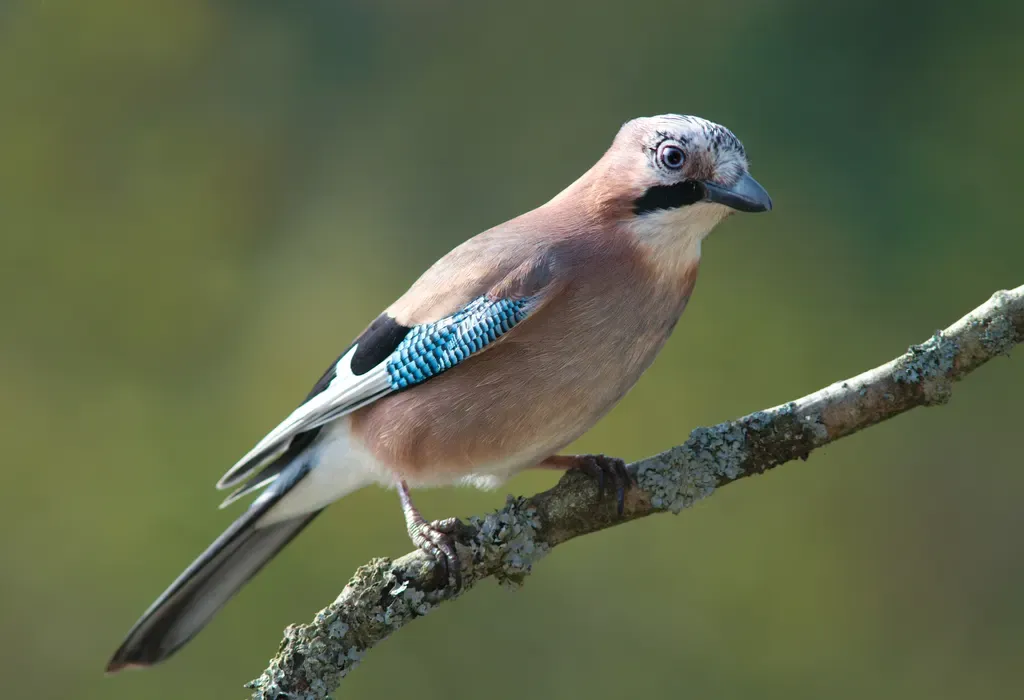
Photo:Luc ViatourCC BY-SA 3.0
Upland birds
Eurasian jay
Garrulus glandarius
- Group
- Upland birds
- Size class
- Small (under 10 kg)
- Family
- Corvidae
Range
- Europe
- Asia
Habitat
- Forest
Range
Countries it is found in
80 countries
- Åland Islands
- Albania
- Algeria
- Andorra
- Armenia
- Austria
- Azerbaijan
- Bangladesh
- Belarus
- Belgium
- Bhutan
- Bosnia & Herzegovina
- Bulgaria
- Cambodia
- China
- Croatia
- Cyprus
- Czechia
- Denmark
- Estonia
- Finland
- France
- Georgia
- Germany
Range from:Wikipedia country bird lists, GBIF occurrence records — read 2026-08-05
Chapter 01
Overview
The Eurasian jay (Garrulus glandarius) is a passerine of the crow family, a woodland bird occurring over a vast region from western Europe and north-west Africa to the Indian subcontinent and on to the eastern seaboard of Asia. Linnaeus described it in 1758 as Corvus glandarius, with 'Europa' as the locality, restricted to Sweden by Ernst Hartert in 1903. It is now one of three species in the genus Garrulus, established in 1760.
Chapter 02
Identification
A relatively small corvid, about the size of a jackdaw, 34–35 cm long with a 52–58 cm wingspan. The nominate race has light rufous to pinkish brown body plumage. The marks worth carrying: a whitish throat bordered on each side by a prominent black moustache stripe, a whitish forehead and crown streaked with black, a bright blue panel on the upper wing, and a black tail.
Chapter 03
Behaviour
Jays normally first breed at two years old, occasionally at one. Both sexes build the nest, usually in a fork or on a branch close to the trunk at 2–5 m, very occasionally on a building, on a base of twigs 3–15 mm thick. Feeding both in trees and on the ground, it takes a wide range of invertebrates including many pest insects, acorns, beech and other seeds, fruit such as blackberries and rowan berries, young birds and eggs, bats and small rodents. The diet shifts with the season, but what makes the jay notable is its prolific caching of food — acorns above all, buried for the winter.
Field data
Tracks
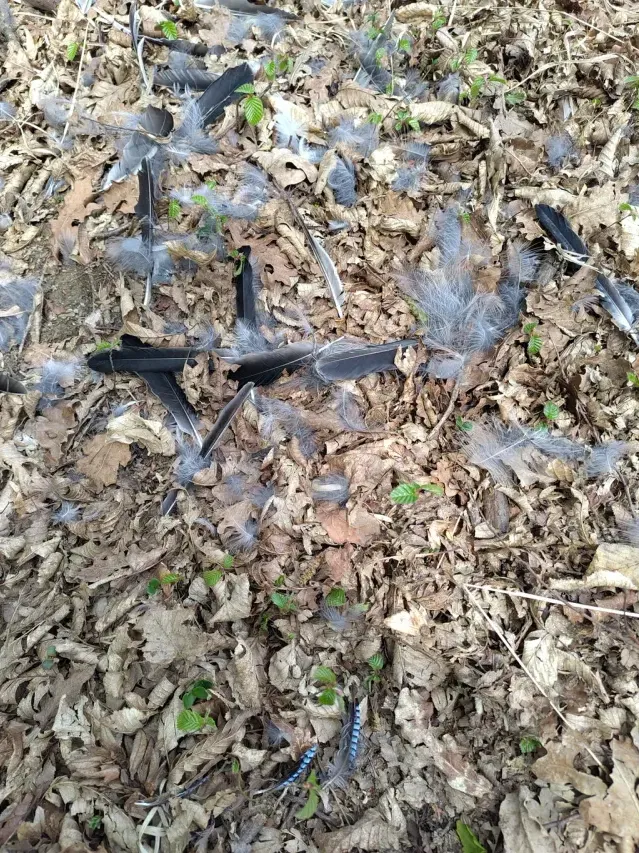
A photograph of real sign left by Eurasian jay. Prints vary with gait, ground and how long they have been there — treat this as one example, not a template.
Track photo:Simone BoccaCC BY SA
Sources
Sources: Eurasian jay — Wikipedia — read 2026-08-05
Cross-reference
Related species
Its closest relatives in the compendium, nearest kinship first.
Upland birds
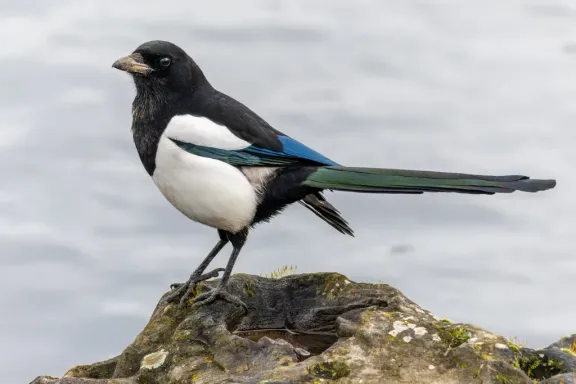
Eurasian magpie
Pica pica
Same family (Corvidae)
Upland birds
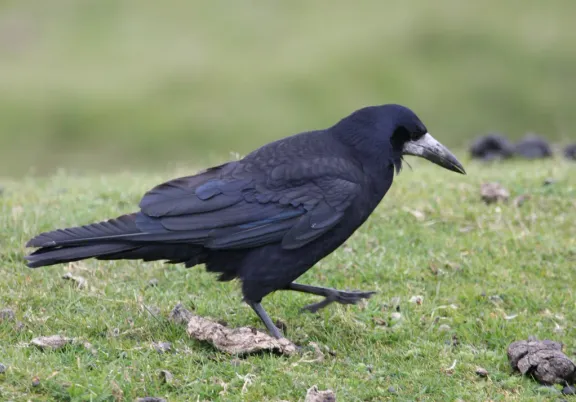
Rook
Corvus frugilegus
Same family (Corvidae)
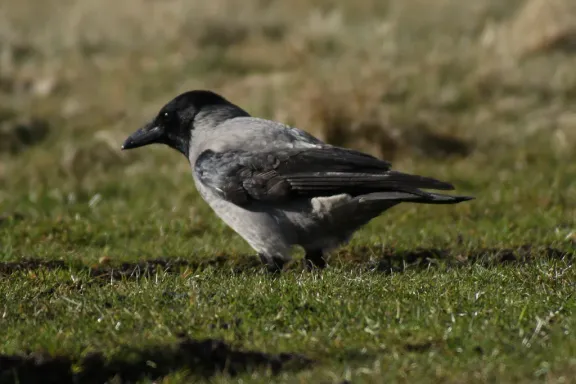
Upland birds
Hooded crow
Corvus cornix
Same family (Corvidae)
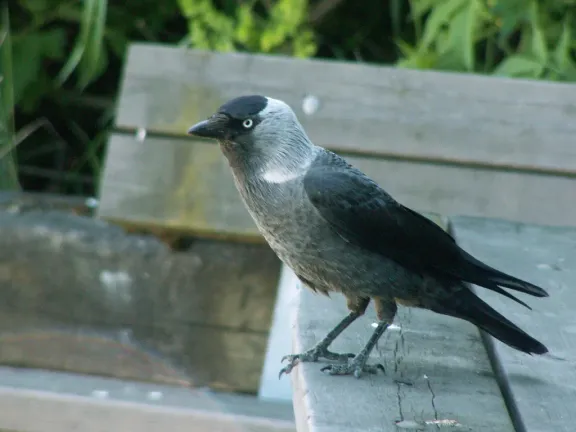
Upland birds
Western jackdaw
Coloeus monedula
Same family (Corvidae)
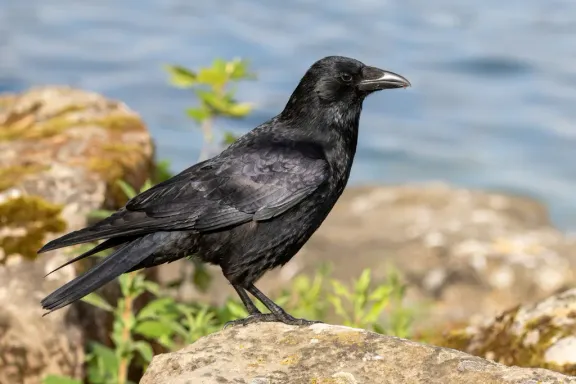
Upland birds
Carrion crow
Corvus corone
Same family (Corvidae)
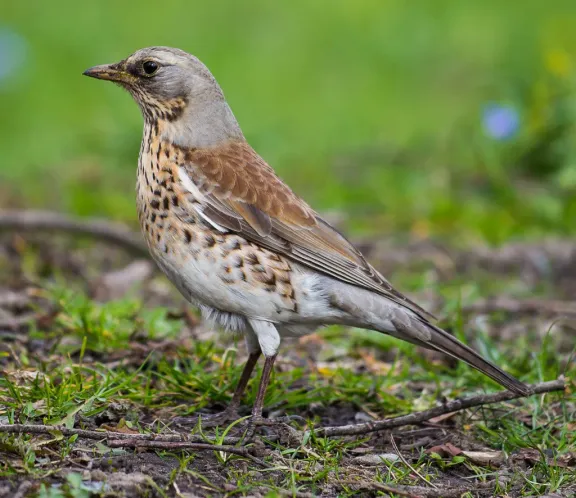
Upland birds
Fieldfare
Turdus pilaris
Same order (Passeriformes)