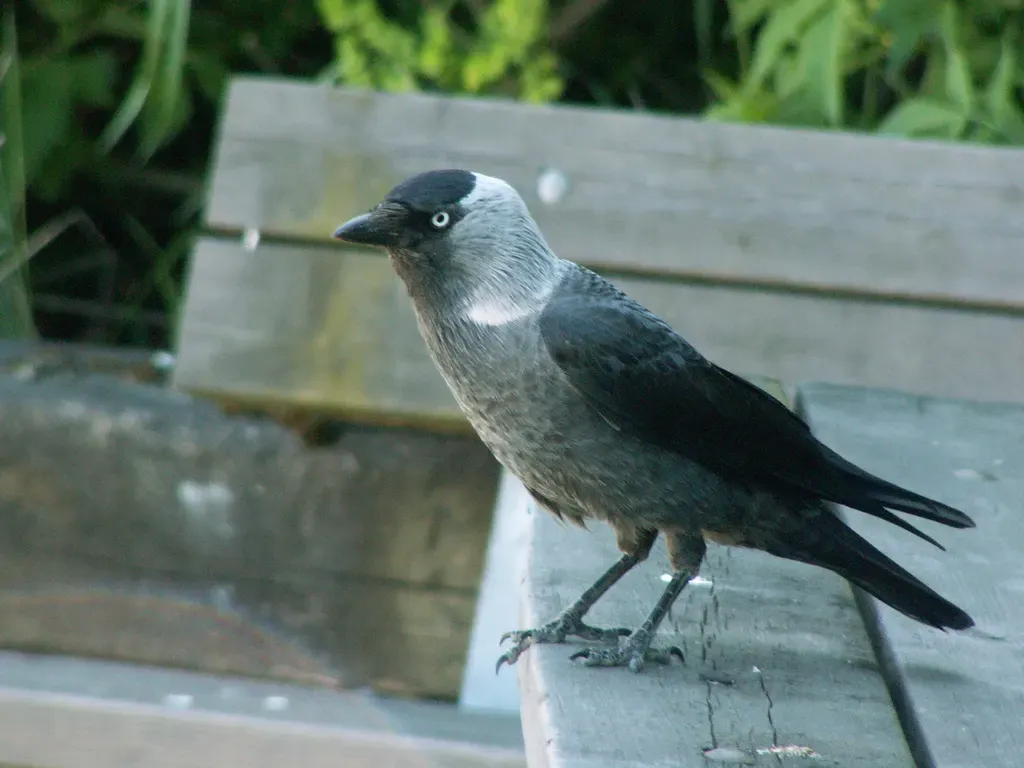
Upland birds
Western jackdaw
Coloeus monedula
- Group
- Upland birds
- Size class
- Small (under 10 kg)
- Family
- Corvidae
Range
- Europe
Habitat
- Farmland
Range
Countries it is found in
67 countries
- Åland Islands
- Albania
- Algeria
- Armenia
- Austria
- Azerbaijan
- Belarus
- Belgium
- Bosnia & Herzegovina
- Bulgaria
- Croatia
- Cyprus
- Czechia
- Denmark
- Estonia
- Faroe Islands
- Finland
- France
- Georgia
- Germany
- Gibraltar
- Greece
- Hungary
- Iran
Range from:Wikipedia country bird lists, GBIF occurrence records — read 2026-08-05
Chapter 01
Overview
The western jackdaw (Coloeus monedula) is a small, gregarious crow found across Europe, western Asia and north-west Africa. Linnaeus named it Corvus monedula, from the Latin for money, after its supposed fondness for picking up coins; DNA work has since moved it and the Daurian jackdaw to their own genus, Coloeus. It lives in farmland, open woodland, coastal cliffs and towns. The nominate Nordic jackdaw breeds in southern Sweden, south-eastern Norway and Denmark. In Sweden the species occurs in the south and centre and along the Norrland coast to Norrbotten, and many birds stay through the winter. It is increasing: the Swedish population was estimated at 199,000 pairs in 2018.
Chapter 02
Identification
A compact crow 34–39 cm long, weighing around 240 g, with shiny black plumage, light grey cheeks, nape and neck, slate-grey underparts and a short, stout black bill. The adult's greyish-white iris is distinctive at close range; juveniles have light blue eyes that turn brownish before whitening at about a year. The Nordic subspecies has a pale nape and a light grey partial collar. It is smaller than the crow and rook. Jackdaws often fly in tight flocks with quick wingbeats, which can make them look like pigeons at a distance. The main call, often given in flight, is a metallic, squeaky chyak or kak.
Chapter 03
Behaviour
Jackdaws pair for life, and pairs stay together within the flock. Flocks grow in autumn and gather at dusk at communal roosts; 40,000 birds have been recorded at a single winter roost at Uppsala. Konrad Lorenz described the linear pecking order of a jackdaw colony, in which a female takes her mate's rank on pairing. The birds are wary in the countryside but tame in towns. They nest in cavities in trees, cliffs and buildings — often chimneys and ventilation shafts — filling a crevice with sticks until a platform forms; about five pale blue, speckled eggs are laid and the young fledge in four to five weeks. Jackdaws are omnivorous, eating insects, snails, grain, seeds and fruit, eggs and chicks, carrion and food waste; plant food makes up most of the diet outside the breeding season.
Chapter 04
Hunting
The jackdaw has been hunted as a pest, though less heavily than other crows: it was named in the English Vermin Act of 1532, was notorious for raiding cherries, and was killed on game estates for taking eggs. In the United Kingdom it is one of a very small number of birds that may legally be used as decoys or caught in cage traps, and as of 2003 the EU Birds Directive listed it among the species that may be hunted. In Sweden the hunting ordinance gives kaja, kråka and skata one open season: 16 July–30 April in Västernorrland, Jämtland, Västerbotten and Norrbotten, and 1 July–15 April in the rest of the country. Outside the season, bilaga 4 lets the holder of the hunting rights shoot the jackdaw all year inside a facility to prevent damage, on land with agricultural crops or commercial horticulture where it is causing damage, on commission from the municipal environmental board, and at airports for flight safety. From 1 July 2027 its nests and eggs may also be destroyed and the young killed where a nest in a house or farmyard causes serious damage or nuisance.
Sources
Sources: Western jackdaw — Wikipedia, Kaja — Wikipedia (svenska), Svenska Jägareförbundet: Kaja, Jaktförordning (1987:905) — Sveriges riksdag — read 2026-10-29
Cross-reference
Related species
Its closest relatives in the compendium, nearest kinship first.
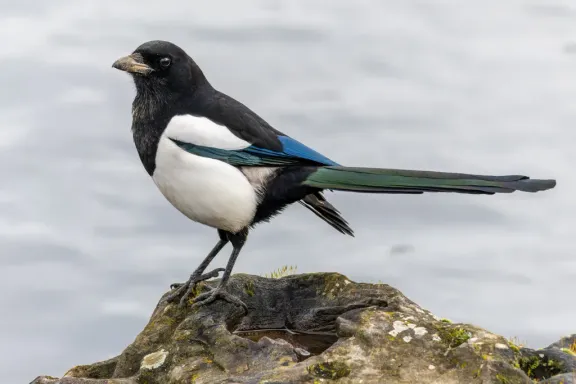
Upland birds
Eurasian magpie
Pica pica
Same family (Corvidae)
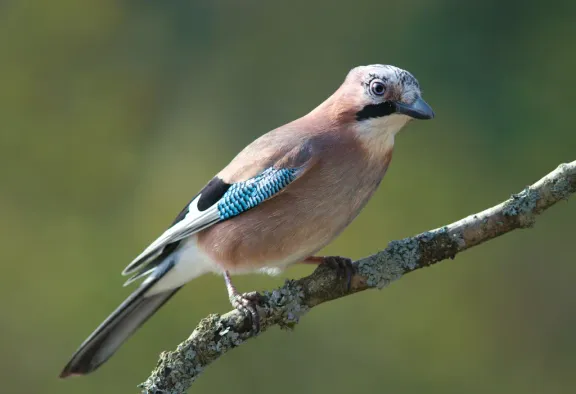
Upland birds
Eurasian jay
Garrulus glandarius
Same family (Corvidae)
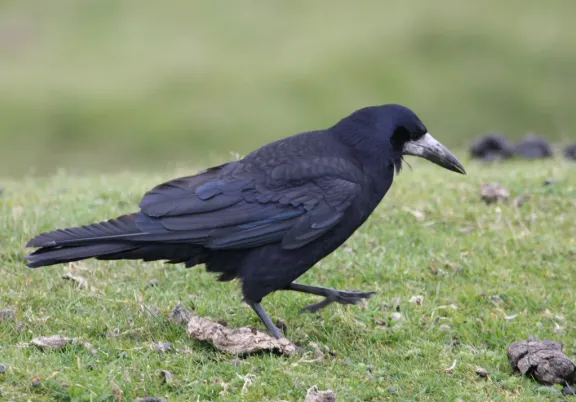
Upland birds
Rook
Corvus frugilegus
Same family (Corvidae)
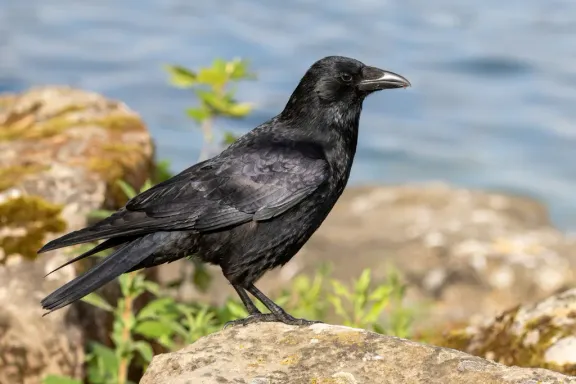
Upland birds
Carrion crow
Corvus corone
Same family (Corvidae)
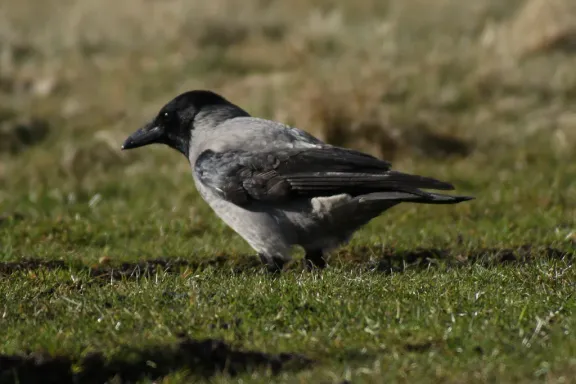
Upland birds
Hooded crow
Corvus cornix
Same family (Corvidae)
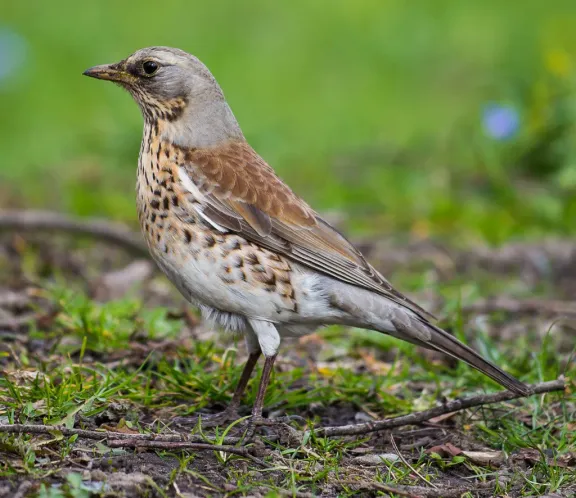
Upland birds
Fieldfare
Turdus pilaris
Same order (Passeriformes)