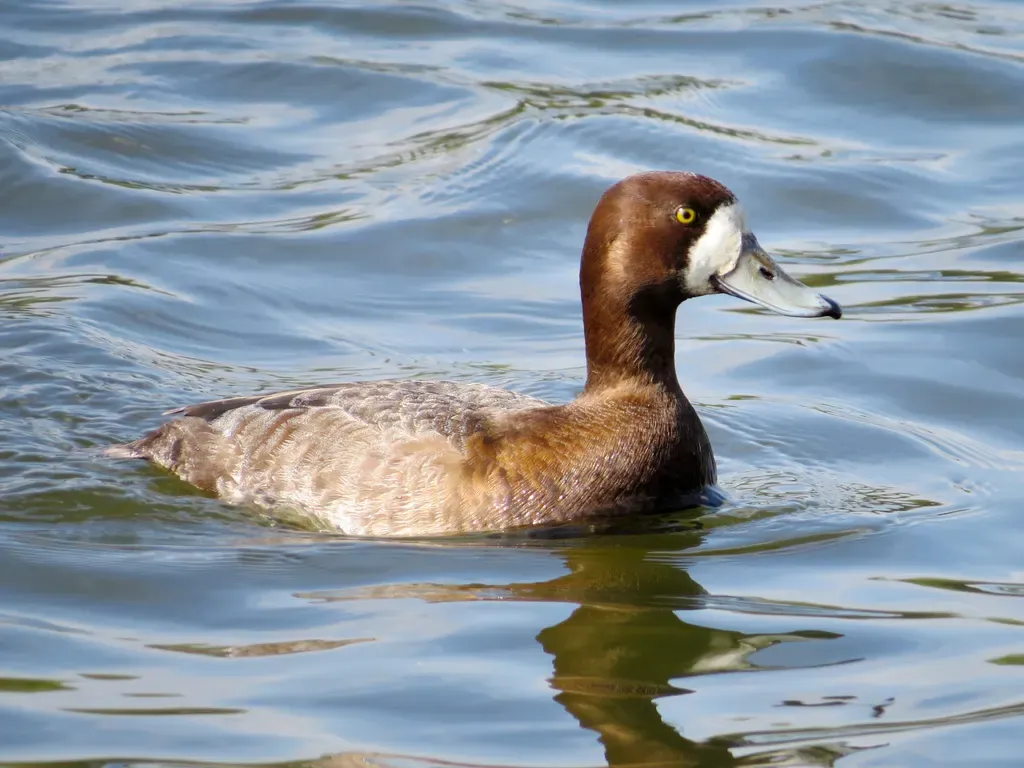
Photo:MPFCC BY-SA 4.0
Waterfowl
Greater scaup
Aythya marila
- Group
- Waterfowl
- Size class
- Small (under 10 kg)
- Family
- Anatidae
Range
- North America
- Europe
- Arctic
Habitat
- Coast
- Wetland
Range
Countries it is found in
60 countries
- Albania
- Armenia
- Austria
- Azerbaijan
- Belarus
- Belgium
- Bermuda
- Bosnia & Herzegovina
- Bulgaria
- Canada
- China
- Croatia
- Cuba
- Czechia
- Denmark
- Estonia
- Faroe Islands
- Finland
- France
- Georgia
- Germany
- Gibraltar
- Greece
- Hong Kong SAR China
Range from:Wikipedia country bird lists, GBIF occurrence records — read 2026-08-05
Chapter 01
Overview
The greater scaup (Aythya marila) — just scaup in Europe, 'bluebill' in North America — is a mid-sized diving duck, larger than the closely related lesser scaup and tufted duck. Linnaeus described it in 1761 with Lapland as the type locality; marila is Greek for charcoal embers. The English name probably comes from 'scaup', a Scots and northern English word for a shellfish bed, where the birds feed in winter. Two subspecies are accepted, the Eurasian marila and the North American nearctica. It breeds within the Arctic Circle around the pole — Iceland, the north of the Scandinavian Peninsula including much of the northern Baltic and the high Scandinavian mountains, northern Russia and Siberia, Alaska and northern Canada — on marshy lowland tundra and islands in freshwater lakes. In winter it moves to coastal bays and estuaries, in Europe from the British Isles and southern tip of Sweden to Denmark and the coast from Brittany to Poland. It is listed as least concern, though scaup numbers have fallen steadily since the 1980s.
Chapter 02
Identification
The greater scaup is 39–56 cm long with a 71–84 cm wingspan and weighs 726–1,360 g, about 20 per cent heavier and 10 per cent longer than the lesser scaup. It has a light blue bill with a small black nail and yellow eyes. The drake has a dark head glossed green to purple, a glossy black breast, neck and tail, a pale grey vermiculated back and bright white belly and flanks; a white stripe runs along the upper wing from the speculum towards the tip. Legs and feet are grey in both sexes. The female is brown with similar but duller white wing markings and a white band at the base of a slightly duller blue bill. Juveniles resemble females. Telling greater from lesser scaup in the field is hard: the greater has a rounder head, more extensive white in the wing and a larger, wider bill with a slightly larger nail.
Chapter 03
Behaviour
Greater scaup dive for their food and eat it at the surface: mainly molluscs, aquatic plants and aquatic insects, with small crustaceans in summer. They can dive 6–10 m and stay under for up to a minute, and in winter gather in rafts that can number thousands. Drakes court hens with a soft, quick whistle from late winter into spring, on the way back to the breeding grounds, and the courtship ends in monogamous pairs. Pairs nest close together in colonies near water, on islands, shorelines or floating mats of vegetation. Once the female has laid, the drake leaves for a large lake to moult, sometimes several hundred kilometres away — from northern Scandinavia to the IJsselmeer in the Netherlands, for example. The female lays six to nine olive-buff eggs and incubates them for 24–28 days; the ducklings feed themselves soon after hatching but cannot fly until 40–45 days old.
Chapter 04
Hunting
Greater scaup are a popular game bird in North America and Europe, hunted in Denmark, Germany, Greece, France, the United Kingdom and Ireland, and in Iran for both sport and commercial reasons. They must be shot on the wing with shotguns, a demanding target at up to 121 km/h. Hunters shoot from shorelines, open-water blinds and layout boats — low, kayak-like boats the hunter lies inside — and often set decoys to mimic a raft of scaup, leaving an open area for the birds to land. Leg rings reported by hunters yield data on migration, harvest and survival. In Sweden the greater scaup has no open season in the Hunting Ordinance, either in its current form or in the version that takes effect on 1 July 2027.
On the table
Meat & cooking
Table grade 3 of 53/5
- Sold as meat in a legal market
- Has a named traditional dish
- Published way to handle and cook it
- Eaten in more than one country
- No known health advisory
Before you eat it: About 80 per cent of North American greater scaup winter along the urbanised Atlantic Flyway and carry high levels of organic contaminants and heavy metals: all 107 birds in one study had traces of lead, cadmium, nickel and other metals in their tissues, with cadmium highest in the kidneys and copper and manganese in the liver.
Traditional preparations
- Roast wild duck
- The scaup is named among the wild ducks commonly eaten in Europe; wild duck is usually roasted briefly and served rare. Duck as food — Wikipedia
- Salmis
- Roast game bird, duck among them, sliced rare and reheated in a sauce of the roasting juices or game stock enriched with wine or brandy. Salmis — Wikipedia
Sources
Sources: Greater scaup — Wikipedia, Jaktförordning (1987:905) — Sveriges riksdag — read 2026-10-29
Cross-reference
Related species
Its closest relatives in the compendium, nearest kinship first.
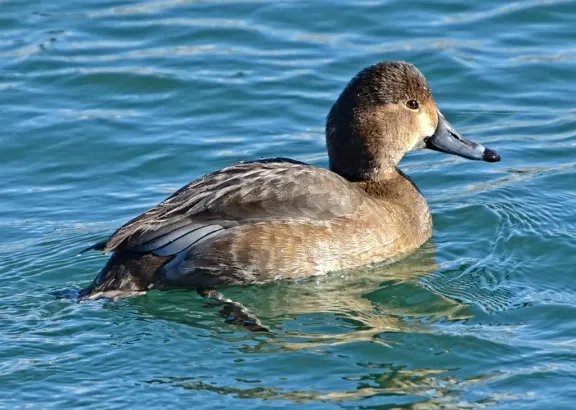
Waterfowl
Redhead
Aythya americana
Same genus (Aythya)
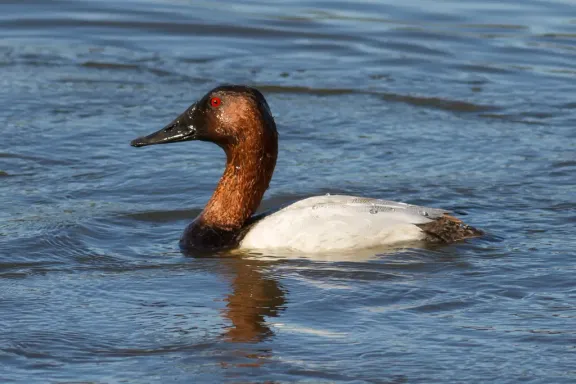
Waterfowl
Canvasback
Aythya valisineria
Same genus (Aythya)

Waterfowl
Common pochard
Aythya ferina
Same genus (Aythya)
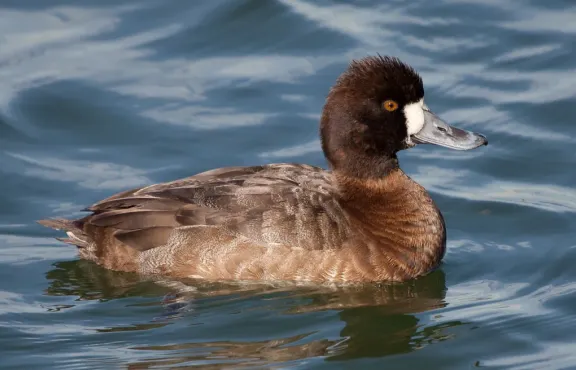
Waterfowl
Lesser scaup
Aythya affinis
Same genus (Aythya)
Waterfowl
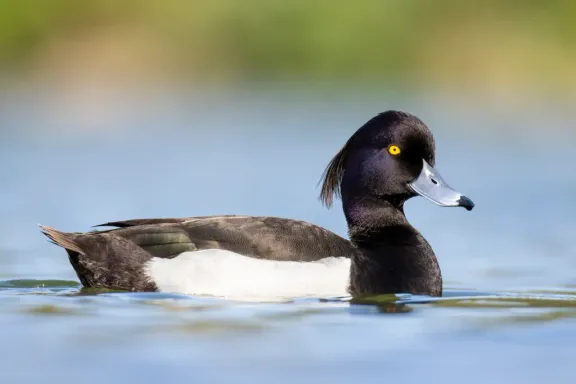
Tufted duck
Aythya fuligula
Same genus (Aythya)
Waterfowl
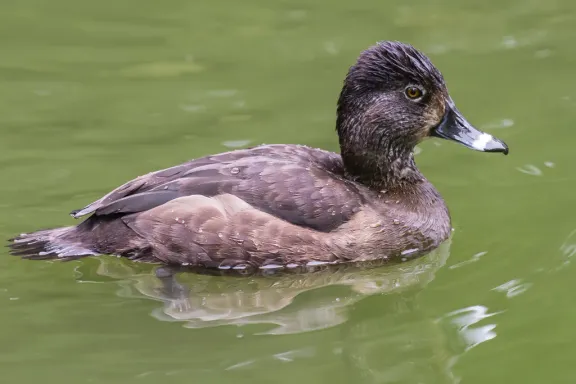
Ring-necked duck
Aythya collaris
Same genus (Aythya)